
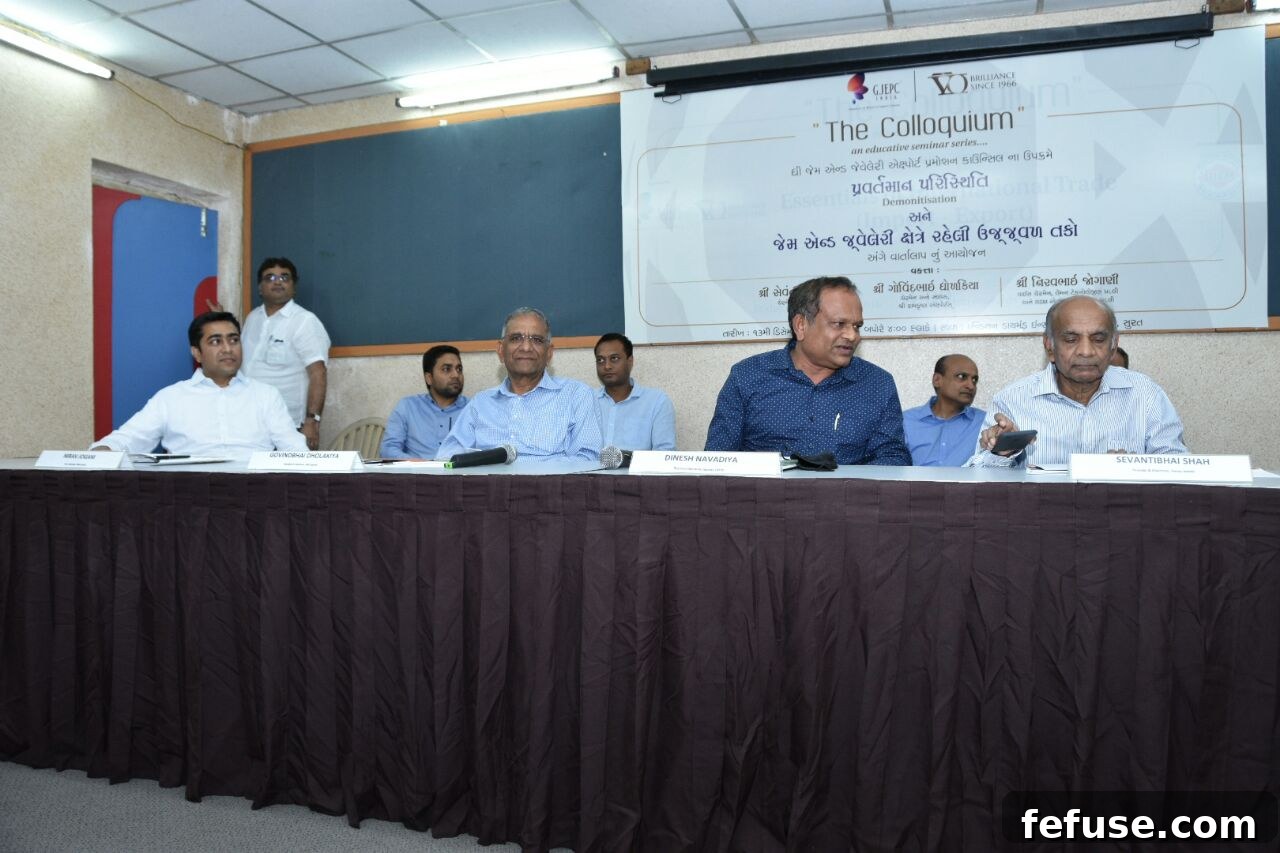
The Gem & Jewellery Export Promotion Council (GJEPC), Gujarat Region, a pivotal organization fostering the growth of India’s illustrious gem and jewellery sector, recently hosted a highly significant seminar in Surat titled ‘Demonetisation and Opportunities for G&J Sector’. This strategic gathering, drawing the participation of over 50 key members from the trade, highlighted the industry’s proactive approach to understanding and leveraging profound economic transformations. Surat, globally recognized as the heartland of diamond manufacturing and a crucial trading hub, served as the fitting venue for this discussion, reflecting its indispensable role in steering the direction of the Indian gem and jewellery market. The seminar was meticulously designed not merely as a forum for intellectual exchange, but as a robust platform to equip industry stakeholders with essential knowledge and foresight to navigate the evolving economic terrain, particularly in the aftermath of the Indian government’s monumental demonetisation policy.
The Indian government’s demonetisation initiative, implemented in November 2016, represented a bold economic reform with far-reaching objectives. It aimed to combat illicit financial activities, including black money and counterfeit currency, curtail terrorist financing, and fundamentally propel the nation towards a more formalized and digitized economy. While this policy initially presented a unique set of challenges across various sectors, especially for industries with a historically significant reliance on cash transactions like the gem and jewellery sector, the GJEPC promptly recognized the critical need to guide its members. The Council aimed to help them not just survive, but thrive, by identifying and capitalizing on the long-term opportunities arising from these changes. This forward-looking stance by the GJEPC underscored the industry’s deep commitment to modernization, enhanced transparency, and sustainable development, ensuring its continued pre-eminence on the global stage amidst a dynamic economic climate.
A Panel of Luminaries: Guiding the Industry Forward
The seminar featured an eminent panel of industry veterans and financial experts, each contributing a wealth of experience and invaluable insights to the discourse. Their presentations meticulously dissected the nuances of the evolving economic environment and its specific implications for the gem and jewellery sector. Through their collective expertise, the speakers demystified the complexities surrounding the demonetisation policy and outlined concrete, actionable strategies for effective adaptation and sustainable growth within the industry.
Shri S.P. Shah, the revered founder and chairman of Venus Jewels, an enterprise celebrated for its unwavering commitment to ethical practices and unparalleled excellence in the global diamond industry, shared his profound wisdom. Shri Shah’s address likely focused on the paramount importance of integrity, fostering transparency, and seamlessly integrating new regulatory frameworks into business operations. He would have underscored how a steadfast commitment to ethical sourcing and responsible business conduct not only ensures regulatory compliance but also cultivates enduring trust among discerning consumers and international partners alike. His perspective was particularly vital in guiding businesses towards a smoother transition into more formalized operational paradigms, reinforcing the principle that sustained success is intrinsically linked with adherence to national and global standards of corporate governance and accountability. For a sector characterized by its intricate and often opaque supply chains, his emphasis on streamlined processes and greater accountability provided a clear, strategic roadmap for effectively navigating the post-demonetisation era.
Further enriching the dialogue was Shri Govindbhai Dholakiya, the esteemed Founder & Chairman of Shree Ramakrishna Exports, a globally acclaimed leader in diamond manufacturing and exports. Shri Dholakiya’s contribution would have revolved around strategically leveraging the new economic environment to significantly bolster India’s global competitive edge within the gem and jewellery sector. Drawing from his extensive experience in international trade, he would have adeptly articulated how augmented transparency and heightened formalization within the domestic market could profoundly enhance confidence among international buyers, investors, and stakeholders. He undoubtedly highlighted the immense potential for expanding export markets by rigorously aligning with international best practices in financial reporting, operational efficiency, and regulatory compliance. Moreover, his discourse would have likely emphasized the critical importance of strategic investments in cutting-edge technology, comprehensive skill development programs, and judicious market diversification, all designed to ensure that Indian gem and jewellery exports remain exceptionally robust and resilient against unforeseen global economic fluctuations. His insights served as a powerful impetus, encouraging trade members to perceive demonetisation not as a formidable obstacle, but rather as a potent catalyst for refining their operational efficiencies and significantly expanding their international footprint.
The critical financial and regulatory dimensions were expertly illuminated by CA Nirav Jogani, Vice Chairman of RSM Astute Consulting. As a prominent authority in financial advisory, CA Jogani’s presentation would have meticulously delved into the intricate aspects of financial compliance, the landscape of taxation reforms, and the inevitable, accelerated shift towards a predominantly digital economy. He would have offered practical, actionable guidance on adeptly navigating the complexities of the then-emerging tax regimes, including the anticipated Goods and Services Tax (GST), which was strategically designed to further formalize and streamline the Indian economy. His unparalleled expertise was instrumental in advising businesses on the imperative adoption of digital payment solutions, the maintenance of scrupulously meticulous financial records, and ensuring stringent adherence to anti-money laundering (AML) regulations and other financial compliance frameworks. CA Jogani’s session was pivotal in empowering trade members with the requisite tools and understanding to implement robust financial management strategies, effectively mitigate inherent risks, and strategically capitalize on the burgeoning opportunities presented by an increasingly formalized and transparent financial system. He emphatically stressed that embracing a sophisticated digital financial infrastructure is not merely a regulatory mandate, but a strategic imperative that confers significant competitive advantages in terms of operational efficiency, cost-effectiveness, and sustainable growth.
GJEPC’s Vision: Transforming Challenges into Growth
In his welcoming address to the distinguished speakers and the engaged audience, Shri Dinesh Navadiya, Regional Chairman of GJEPC, articulately presented the foundational philosophy and core objective behind organizing such a timely and critically important seminar. Shri Navadiya emphatically stated that the Council’s paramount aim was to function as an authoritative beacon of guidance and an impeccable source of accurate, verified information for its invaluable trade members, particularly in light of the government’s transformative demonetisation decision. He highlighted that during periods of significant economic transition, the dissemination of misinformation or a pervasive lack of clarity could severely impede industry progress, thus rendering the Council’s role in providing authentic, insightful perspectives absolutely indispensable. The seminar was conceptualized not simply as an information-sharing session, but rather as a dynamic, interactive platform specifically engineered to foster constructive dialogue and collective strategizing. The central theme revolved around how the initial challenges posed by demonetisation could be astutely identified, meticulously analyzed, and then intelligently converted into tangible, substantial opportunities for the accelerated growth and enduring sustainable development of the Gem & Jewellery (G&J) sector. This resolute and proactive stance adopted by the GJEPC unmistakably exemplifies its unwavering commitment to vigilantly safeguarding the multifaceted interests of its members and vigorously propelling the entire industry forward, thereby ensuring its continuous vibrancy, innovation, and undisputed global leadership.
Emerging Opportunities for the G&J Sector Post-Demonetisation
The seminar not only highlighted the immediate adjustments required but also cast a clear light on the myriad of long-term opportunities that emerged for the gem and jewellery sector in the wake of demonetisation. This economic upheaval, while disruptive, served as a powerful catalyst for positive, structural changes:
Enhanced Transparency and Formalization: Demonetisation significantly accelerated the shift from an informal to a more formalized economy. For the G&J sector, this meant greater transparency in transactions, improved record-keeping, and a reduction in cash-based dealings. This formalization not only streamlined operations but also built greater trust among consumers and made businesses more amenable to institutional financing.
Digital Transformation and E-commerce Adoption: The drive towards a cashless economy spurred the rapid adoption of digital payment methods, online transactions, and e-commerce platforms. Jewellery businesses, traditionally reliant on physical storefronts, were encouraged to embrace digital marketing, online sales channels, and secure digital payment gateways. This opened up new avenues for reaching a broader customer base, both domestically and internationally, and modernized the purchasing experience.
Improved Access to Finance and Banking: With a greater emphasis on documented transactions and formal banking channels, G&J businesses found improved access to institutional credit and financial services. Banks became more willing to lend to businesses with transparent financial records, fostering growth and allowing for investments in technology and expansion. This reduced reliance on informal credit sources, providing greater financial stability.
Strengthened Compliance and Regulatory Adherence: Demonetisation, followed by the introduction of GST, pushed the industry towards stronger adherence to tax regulations and anti-money laundering (AML) norms. While initially challenging, this move ultimately enhanced the sector’s reputation, ensuring that Indian jewellery products met global standards for ethical trade and financial compliance, thereby opening doors to new international markets and partnerships.
Boost to Global Competitiveness and Exports: A more transparent and formalized domestic market directly translated into enhanced credibility on the global stage. Indian gem and jewellery exporters, operating under stringent compliance frameworks, found it easier to secure international contracts and expand their global footprint. This bolstered India’s position as a reliable and ethical supplier in the international market, attracting foreign investment and collaborative ventures.
Increased Consumer Trust and Ethical Sourcing: The emphasis on transparency post-demonetisation helped in building greater consumer confidence. Buyers became more assured about the authenticity and ethical sourcing of their purchases. Businesses that embraced these changes proactively were able to differentiate themselves, cultivate stronger brand loyalty, and appeal to a growing segment of ethically conscious consumers.
Interactive Q&A: Addressing the Trade’s Queries
Following the meticulously crafted and profoundly insightful presentations delivered by each of the distinguished speakers, the seminar seamlessly transitioned into a highly anticipated and critically important interactive Question & Answer (Q&A) session. This segment proved to be exceptionally valuable, affording the actively engaged audience, comprising over 50 prominent trade members, the unique opportunity to directly interact with the eminent experts. Attendees eagerly seized this chance to pose incisive and pertinent questions, seeking comprehensive clarification on various intricate aspects of demonetisation’s multifaceted impact on their respective businesses. Queries spanned a wide spectrum, encompassing immediate operational challenges, strategies for navigating regulatory complexities, and forward-looking approaches to capitalize on future growth opportunities. The speakers, drawing upon their extensive expertise, adeptly addressed concerns ranging from the practicalities of new compliance requirements and the strategic adoption of digital payment solutions to shifts in market sentiment and complexities in the supply chain. This dynamic and direct exchange of ideas was instrumental in dispelling lingering doubts, exploring pragmatic solutions, and ultimately fostering a significantly clearer and more unified understanding of the strategic path forward for the entire sector. The vibrant intellectual discourse during this session powerfully underscored the industry’s profound eagerness to embrace necessary change and adapt proactively, thereby effectively transforming potential economic obstacles into tangible, strategic advantages for long-term prosperity.
The Road Ahead: A Resilient and Progressive Industry
The seminar, orchestrated with meticulous foresight by the GJEPC in Surat, ultimately stood as a resounding testament to the inherent resilience, remarkable adaptability, and forward-thinking ethos that define the Indian Gem & Jewellery sector. It unequivocally reinforced the compelling notion that while sweeping economic reforms, such as demonetisation, can indeed present formidable initial hurdles and necessitate significant adjustments, they simultaneously act as exceptionally potent catalysts for essential and transformative structural evolution. By vigorously fostering an environment of heightened transparency, actively encouraging widespread digital adoption, and placing an uncompromising emphasis on systemic formalization, the demonetisation policy inadvertently laid down a robust and enduring groundwork for the emergence of a more resilient, unequivocally compliant, and globally competitive industry. The invaluable insights, strategic guidance, and expert perspectives meticulously shared by an unparalleled constellation of industry leaders and astute financial experts at the GJEPC’s seminal Surat gathering proved absolutely instrumental in deftly guiding trade members. It empowered them to not only embrace these profound changes but to proactively integrate them into their core business models, thereby ensuring that India’s illustrious and glittering legacy within the global gem and jewellery market continues to shine with unparalleled brilliance, firmly built upon unshakeable foundations of integrity, relentless innovation, and an unwavering commitment to achieving enduring excellence.