
EU Sanctions on Russia: The Uncut Debate Over Diamonds
As the conflict in Ukraine continues, the European Union has consistently sought to exert economic pressure on Russia through a series of unprecedented sanctions. Yesterday, the European Commission unveiled its proposal for an eighth comprehensive round of these measures, targeting various sectors of the Russian economy. However, a notable omission from this latest package has drawn significant attention and debate across the bloc: the absence of any mention regarding a ban on Russian diamonds. This ongoing deliberation highlights the complex challenges and divergent interests within the EU as it strives to maintain a united front against Moscow while safeguarding its own economic stability. The decision regarding Russian diamonds underscores a deep division among member states, revealing the intricate balance between geopolitical strategy and national economic concerns.
The Evolving Landscape of EU Sanctions Against Russia
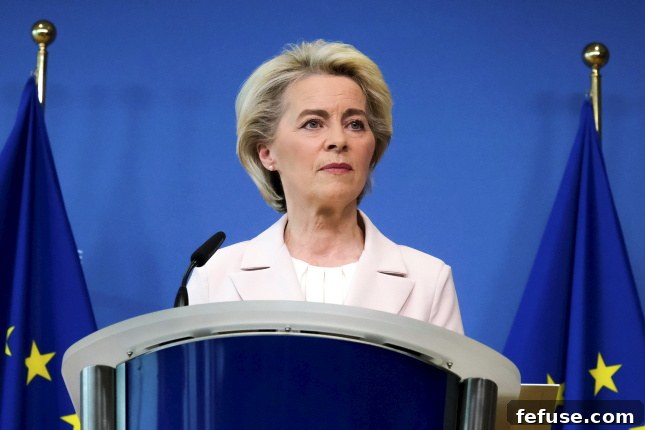
Since Russia’s full-scale invasion of Ukraine in February, the European Union has implemented a robust and escalating series of punitive measures. These sanctions have targeted key pillars of the Russian economy, including its energy sector, financial institutions, defense industry, and elite individuals. The primary objective has been to cripple Russia’s ability to finance its war efforts, destabilize its economy, and deter further aggression. Each successive package has aimed to tighten the screws, increasing the economic cost for Moscow. European Commission President Ursula von der Leyen, articulating the intent behind the new proposals, emphasized the delivery of “a new package of biting sanctions.” These measures are expected to further restrict Russia’s access to vital technologies, cut off additional revenue streams, and deepen the isolation of its economy from global markets. The comprehensive nature of these sanctions reflects the EU’s commitment to supporting Ukraine and punishing Russian aggression, despite the significant economic repercussions often felt within Europe itself.
The Glaring Absence: Why Russian Diamonds Remain Untouched
While the EU has moved decisively on many fronts, the issue of Russian diamonds has remained a contentious point, conspicuously absent from sanction lists. This stands in stark contrast to the United States, which swiftly sanctioned rough diamonds from Russia shortly after the invasion. The EU, however, has not followed suit, leading to persistent calls from some member states and international observers for a more unified approach. Russia is the world’s largest producer of rough diamonds by volume, with its state-owned company Alrosa dominating a significant portion of the global market. These diamonds represent a substantial revenue stream for the Kremlin, estimated at billions of euros annually, which critics argue is directly contributing to its war chest. The reluctance to impose a ban suggests a deep-seated apprehension within the EU about the potential economic fallout, illustrating the delicate balancing act between geopolitical objectives and the protection of domestic industries.
A Divided European Front on Diamond Sanctions
The debate over diamond sanctions has exposed a clear divergence among EU member states. A vocal group of countries, including Poland, Estonia, Latvia, and Lithuania, has reportedly spearheaded calls for a ban on Russian diamonds. These Baltic states, alongside Poland, share borders with or are in close proximity to Russia, and often hold a more hawkish stance on Moscow due to historical experiences and current security concerns. For them, cutting off all possible revenue streams, no matter how politically or economically challenging, is a moral imperative and a crucial step in weakening Russia’s war machine. They argue that excluding diamonds undermines the overall effectiveness and moral consistency of the EU’s sanctions regime. Proponents of a ban emphasize that targeting such a lucrative sector would not only have a significant financial impact on Russia but also send a powerful symbolic message of unified resolve, reinforcing the EU’s commitment to isolating Moscow on all fronts.
Belgium’s Pivotal Role and Economic Concerns
Central to the EU’s hesitation on diamond sanctions is the position of Belgium, home to Antwerp, one of the world’s most significant diamond trading and processing centers. Antwerp has historically been a global hub for rough and polished diamonds, boasting a highly specialized ecosystem of traders, cutters, polishers, and jewelers. Belgium has repeatedly stated that it does not oppose sanctions in principle, acknowledging the moral imperative to act against Russian aggression. However, the nation has voiced profound concerns that an outright ban on Russian diamonds would inflict far greater harm on Europe’s diamond industry, particularly in Antwerp, than on Russia itself. Belgian officials and industry leaders fear that such a ban would simply divert the trade of Russian diamonds to other global hubs, such as Dubai or India, without significantly impacting Russia’s earnings. This shift could lead to substantial job losses in Europe, erode Antwerp’s competitive edge, and potentially foster a black market for Russian diamonds, making traceability and control even more challenging. The complex interplay of global supply chains and the fungible nature of diamonds make enforcing a ban particularly intricate, posing a formidable challenge for the EU.
The Global Diamond Market: Russia’s Influence and Vulnerabilities
To fully grasp the implications of a potential diamond sanction, it’s crucial to understand Russia’s profound influence on the global diamond market. Alrosa, Russia’s state-owned diamond mining giant, is responsible for approximately 30% of the world’s rough diamond supply by volume. These diamonds are extracted primarily from mines in Siberia and then exported globally, often passing through trading centers like Antwerp, Dubai, and Mumbai for cutting, polishing, and eventual retail distribution. The intricate supply chain means that Russian diamonds are often mixed with stones from other origins, making it exceptionally difficult to ascertain the exact provenance of a polished diamond once it enters the retail market. This “mingling” phenomenon presents a major hurdle for any sanction regime, as it complicates efforts to prevent Russian stones from reaching consumers through indirect channels. Furthermore, the global diamond industry is highly interconnected, and a sudden removal of such a significant supply could lead to price volatility, supply shortages, and a restructuring of trade routes, all of which weigh heavily on the EU’s considerations. The economic vulnerabilities of major diamond processing hubs, particularly within the EU, are therefore a critical factor in the ongoing debate.
The Path Forward: Prague Summit and Beyond
The discussion surrounding Russian diamonds is far from over. EU leaders are scheduled to convene in Prague on October 6th to discuss new measures against Russia, and it is highly anticipated that the contentious issue of diamond sanctions will be revisited. Any new EU sanction package requires the unanimous consent of all 27 member states, a condition that grants any single country, like Belgium, the power to veto proposals it deems harmful to its national interests. This unanimity rule often leads to prolonged negotiations, compromises, and, at times, the exclusion of certain measures. While an outright ban on Russian diamonds may face continued resistance, alternative solutions or phased approaches could be explored. These might include stricter traceability requirements, a luxury goods import ban that implicitly affects high-value diamonds, or targeted sanctions on specific individuals or entities within Alrosa that are not directly involved in the mass market trade. The upcoming summit will be a critical forum for diplomatic efforts to bridge the divide, find common ground, and demonstrate the EU’s continued resolve to impose meaningful costs on Russia while mitigating adverse impacts on its own economy.
Beyond Economics: The Ethical and Geopolitical Dimensions
The debate over Russian diamonds extends beyond purely economic considerations, delving into significant ethical and geopolitical dimensions. The concept of “blood diamonds” or “conflict diamonds” gained prominence decades ago, highlighting the moral imperative to avoid financing conflicts through the trade of precious stones. While Russian diamonds are not conflict diamonds in the traditional sense, directly funding a war through their sale raises similar ethical concerns for consumers and the luxury industry. Many international organizations and human rights groups advocate for a comprehensive ban, arguing that any revenue stream for the Russian government, regardless of its size relative to oil and gas, is morally objectionable. From a geopolitical perspective, the EU’s ability to present a united and unwavering front against Russia is crucial. Perceived inconsistencies or weaknesses in its sanctions regime could be exploited by Moscow and undermine the bloc’s credibility on the global stage. The decision on diamonds will thus not only impact Russia’s finances but also shape perceptions of the EU’s commitment, moral compass, and strategic coherence in the face of ongoing aggression.
Conclusion: A Complex Balancing Act for the European Union
The ongoing debate within the European Union regarding sanctions on Russian diamonds encapsulates the profound complexities faced by the bloc in its response to the war in Ukraine. It represents a delicate balancing act between moral imperatives, economic self-interest, and geopolitical strategy. While there is broad consensus on the need to punish Russia for its aggression, the specifics of how and where to apply pressure continue to generate friction. The upcoming meeting of EU leaders in Prague will be a pivotal moment, determining not only the fate of Russian diamonds within the European market but also demonstrating the EU’s capacity for unity and resilience in the face of immense pressure. Whether diamonds will ultimately be included in future sanction packages remains uncertain, but the conversation itself highlights the intricate challenges of modern economic warfare and the often-unforeseen consequences of geopolitical decisions on global industries.