
GJEPC Charts Ambitious Course for India’s Gem & Jewellery Sector Amidst Global Shifts
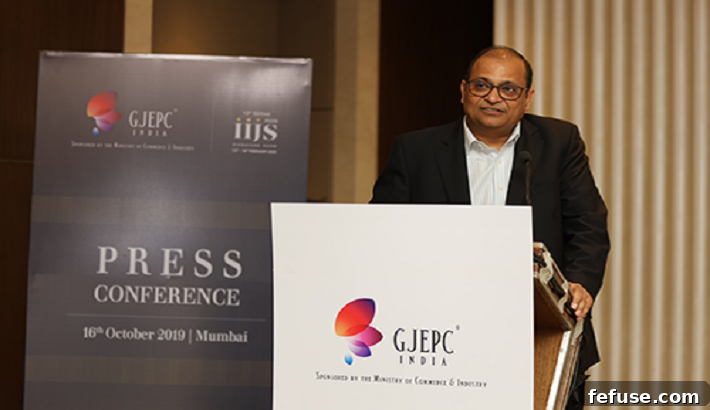
The Gem & Jewellery Export Promotion Council (GJEPC), a pivotal institution for India’s vibrant gem and jewellery industry, convened a significant press interaction in Mumbai on October 16, 2019. This crucial gathering served as a platform for industry leaders to address the current landscape, highlight ongoing challenges, unveil strategic initiatives, and articulate a bold vision for the sector’s future growth and global standing.
The press conference featured a distinguished panel of speakers, including GJEPC Chairman, Pramod Kumar Agrawal; Vice-Chairman, Colin Shah; Convener of the Exhibitions Sub-Committee (National), Mansukh Kothari; and Executive Director, Sabyasachi Ray. Also in attendance was Shailesh Sangani, a valued Member of the Exhibitions Sub-Committee (National). Their collective insights provided a comprehensive overview of the industry’s strengths, vulnerabilities, and the proactive measures being implemented to ensure its sustained success.
A Legacy of Excellence: GJEPC’s Impact and Vision for Growth
GJEPC Chairman, Pramod Kumar Agrawal, commenced the interaction by offering an illuminating overview of the Indian gem and jewellery industry, underscoring its profound achievements and the multitude of initiatives championed by the Council. With a formidable five-decade history, the GJEPC proudly represents a vast network of over 7,000 member-exporters, collectively driving India’s gem and jewellery exports to an impressive US$ 40.45 billion in the fiscal year 2018-19. This dynamic sector stands as a cornerstone of the Indian economy, contributing a significant 7% to the nation’s Gross Domestic Product (GDP), accounting for 12.25% of the country’s total merchandise exports, and providing livelihoods to a staggering 4.64 million people across the value chain.
Navigating Global Headwinds and Charting a Resilient Future
Despite its robust performance, Agrawal candidly acknowledged the complex challenges confronting the industry, both domestically and on the international stage. He noted a discernible downturn in gem and jewellery exports for the current financial year, projecting an approximate year-on-year drop of 7.5% for FY 2019-20. This candid assessment underscored the necessity for strategic intervention and adaptation in a volatile global market.
However, the Chairman’s outlook remained firmly optimistic, reiterating the GJEPC’s ambitious target: to escalate exports to US$75 billion and generate an additional two million jobs within the next five years. This aspirational goal, Agrawal asserted, is well within reach, given India’s formidable position as the fifth-largest player in the global gem and jewellery market, commanding a 6.4% share. By strategically expanding its reach and enhancing its capabilities, India is poised to capture a larger market share, thereby strengthening both its global standing and total export volumes.
Pioneering Initiatives for Industry Modernization and Welfare
Agrawal elaborated on a series of transformative initiatives designed to bolster the industry’s infrastructure, enhance product quality, and ensure the welfare of its vast workforce. These include:
- Jewellery Park: The pioneering development of a dedicated Jewellery Park in Mumbai, envisioned as a state-of-the-art hub to consolidate manufacturing, foster innovation, and attract investment.
- Common Facility Centres (CFCs): Four CFCs are already operational, with plans sanctioned for an additional 13 across key manufacturing clusters. These centers provide MSMEs access to advanced technology and shared infrastructure, democratizing access to modern production capabilities.
- Gem Bourse: A dedicated Gem Bourse slated for establishment in Jaipur, aiming to streamline trading and foster a more transparent and efficient market for precious stones.
- Swasthya Ratna & Swasthya Kosh: A comprehensive health insurance scheme, Swasthya Ratna, coupled with Swasthya Kosh, a fund specifically raised to ensure the long-term sustainability and reach of health insurance benefits for industry workers.
- Parichay Card: An industry-specific identity card, akin to India’s Aadhar, designed to create a verified database of workers and facilitate access to various welfare schemes and benefits.
- Workshop Upgradation: A focused program aimed at modernizing and upgrading workshops across the sector, particularly within the MSME segment, by integrating cutting-edge technology and improving working conditions.
The Chairman emphasized that these measures are critical for upgrading product quality, particularly for Micro, Small, and Medium Enterprises (MSMEs), by providing essential infrastructure, including state-of-the-art technology, and significantly contributing to the welfare and skill development of the workforce.
Furthermore, Agrawal highlighted the GJEPC’s robust marketing and promotional strategies, including Buyer-Seller Meets, an active presence at national and international exhibitions, and extensive promotional campaigns. These campaigns, often undertaken in collaboration with the Diamond Producers Association (DPA) and independently, are designed to fortify market presence in existing territories and penetrate promising new markets, thereby ensuring sustained demand for Indian gems and jewellery.
He concluded this segment by commending the unwavering support from the Government, which has introduced numerous measures aimed at enhancing the Ease of Doing Business for the gem and jewellery export sector, demonstrating a shared commitment to its prosperity.
Market Realities: Deep Dive into Diamonds, Gold, and Policy Reforms
GJEPC Vice-Chairman Colin Shah provided a more granular analysis of the current market scenario, dissecting the challenges faced by both the diamond and gold segments.
The Diamond Dilemma: De-stocking, Demand, and Finance
Shah painted a challenging picture for diamond manufacturing, describing it as operating at an all-time low. This downturn was primarily attributed to significant de-stocking efforts by major retailers in the United States, leading to an imbalance where supply considerably outstripped demand. Consequently, profit margins have been severely compressed, forcing several diamond manufacturing units to cease operations and resulting in widespread layoffs for workers in the sector. A critical bottleneck identified by Shah was the severe inadequacy of bank finance available to the industry, further exacerbating the operational pressures on manufacturers.
Gold’s Shifting Sands: Tariffs, Prices, and Consumer Preferences
Turning his attention to the gold sector, Shah underscored the dampening effect of the increased import duty on gold, which had risen from 10% to 12.5%. This policy change had a substantial impact on imports, with September 2019 figures plummeting to just 37 tonnes, a stark contrast to the 197 tonnes imported during the same month in the previous year. He also noted the record-high rupee price of gold, reaching Rs. 40,000 per 10 grams, which has significantly curtailed consumer demand. This challenge is further complicated by evolving consumer preferences, particularly among millennial buyers who are increasingly shifting towards alternative forms of jewellery and investment. Again, Shah highlighted the persistent issue of inadequate bank finance for smaller manufacturers, a recurring theme across the industry.
Government’s Proactive Reforms Catalyzing Growth
Shah echoed the Chairman’s sentiments regarding the Government’s proactive and positive policy interventions. He elaborated on several recently introduced measures designed to invigorate the jewellery sector:
- Re-introduction of the Replenishment Scheme: A crucial policy revival aimed at facilitating the smooth import of precious metals for export-oriented jewellery manufacturing.
- Abolition of One-to-One Correlation: The removal of the direct link between the import of precious metals and the export of jewellery, offering greater operational flexibility to exporters.
- 3% IGST Exemption: Exemption from 3% Integrated Goods and Services Tax (IGST) on the supply of gold, silver, and platinum by nominated agencies to exporters, reducing tax burden and improving liquidity.
- Increased Jobwork Period in SEZs: Extension of the jobwork period in Special Economic Zones (SEZs) from 28 to 45 days, providing manufacturers with more time for processing and finishing.
- Abolition of IGST on Re-import of Goods: Removal of IGST on goods re-imported after being exported through exhibitions or export promotion tours, simplifying logistics and reducing costs for promotional activities abroad.
- GST Rate Reduction on Semi-Precious Stones: A significant reduction in the Goods and Services Tax (GST) rate on cut and polished semi-precious stones, from 3% to a mere 0.25%, fostering competitiveness in this segment.
These policy reforms collectively represent a strong governmental commitment to de-stressing the industry, boosting exports, and enhancing India’s competitive edge in the global market.
Strengthening India’s Brand on the Global Stage
Shah also detailed the GJEPC’s extensive promotional activities, which include an annual contribution of US$ 2 million towards the Diamond Producers Association’s (DPA) globally renowned “Real is Rare” campaign. Furthermore, a substantial corpus of US$1 million has been earmarked for a targeted promotional campaign in the Middle East, a key market for Indian jewellery exports, aimed at strengthening brand recall and driving demand. Beyond these generic campaigns, Shah highlighted the GJEPC’s concerted efforts in an image-building exercise, designed to proactively communicate the industry’s inherent value, ethical practices, and positive societal contributions to all stakeholders, countering any misconceptions.
Further demonstrating its commitment to social responsibility, the GJEPC continues its impactful “Jewellers for Hope” initiative. Each year, this program disburses Rs. 1 crore to three deserving organizations dedicated to the welfare and betterment of various segments of society, embodying the industry’s philanthropic spirit.
Empowering the Workforce and Fostering MSME Growth
The concluding address by Executive Director Sabyasachi Ray provided in-depth insights into the GJEPC’s crucial welfare schemes and initiatives aimed at empowering the workforce and strengthening the MSME sector.
Parichay Card: A Digital Identity for Gems & Jewellery Artisans
Ray meticulously detailed the vision behind the Parichay Card, emphasizing its objective to create a verified and authentic digital database of gems and jewellery workers. He underscored that the Parichay Card is more than just an identity document; it is an instrument through which workers can access a myriad of benefits, crucially including health insurance. This initiative is complemented by the GJEPC’s comprehensive cluster mapping efforts, which aim to identify the specific needs and infrastructure gaps in various manufacturing centers, alongside a robust workforce mapping exercise. The latter is designed to provide a precise understanding of the industry’s human capital, enabling targeted support and assistance. Ray proudly announced that total enrollments and applications for the Parichay Card currently stand at an impressive 260,950, reflecting widespread adoption and recognition of its value.
Comprehensive Health Coverage with Swasthya Ratna
The Parichay Card is intrinsically linked to the Swasthya Ratna, a highly subsidized health insurance scheme that has been making a tangible difference for five years. This vital scheme today extends its protective cover to a staggering 521,659 lives within the gem and jewellery community, offering critical financial security and access to healthcare.
Ray also highlighted the growing prominence of MyKYCBank, a secure and efficient platform designed to facilitate due diligence and foster transparency in business relationships within the industry. Its increasing traction in recent years underscores its importance in building trust and promoting ethical practices.
Innovating for MSME Excellence: The ‘Model Workshops’ Initiative
A significant portion of Ray’s address focused on the GJEPC’s dedicated efforts on the MSME front. The Council is actively working to inform entrepreneurs about various applicable government schemes, guiding them on how to establish more organized, transparent, and compliant businesses. Crucially, the GJEPC is committed to providing MSMEs with essential infrastructure and technology at exceptionally reasonable prices, bridging the gap between small-scale operations and modern production capabilities.
In a pioneering announcement, Ray unveiled a new initiative: “model workshops.” These innovative workshops will be established in different manufacturing centers, serving as blueprints for ideal operational efficiency, technological integration, and best practices. These “model workshops” are intended to be emulated by entrepreneurs in the surrounding areas, thereby catalyzing sector-wide improvement in productivity, quality, and working standards.
The press interaction clearly demonstrated the GJEPC’s unwavering commitment to fostering a resilient, ethical, and globally competitive gem and jewellery industry in India. Through a multi-pronged approach encompassing policy advocacy, infrastructure development, worker welfare, market promotion, and technological empowerment, the Council is steadfastly paving the way for a brighter future for this economically vital sector. The blend of strategic foresight, collaborative action with the government, and a deep understanding of market dynamics positions India’s gem and jewellery industry for sustained growth and an even greater global impact.
Source: gjepc.org