
Signet Jewelers Navigates Challenging UK Retail Landscape Amidst Q1 FY2020 Performance
The global jewelry retail sector continues to evolve at a rapid pace, shaped by shifts in consumer behavior, economic uncertainties, and the accelerating digital transformation. In this dynamic environment, Signet Jewelers, a prominent player with well-known brands like H Samuel and Ernest Jones in the UK, has been actively adapting its strategies. The first quarter of Fiscal Year 2020 presented a mixed bag of results for the retail giant, highlighting both the persistent challenges within the traditional brick-and-mortar segment and the encouraging momentum observed in its digital channels. These quarterly figures offer a crucial glimpse into the ongoing efforts by Signet to reposition itself for long-term success amidst a demanding market backdrop. Understanding these trends is key to grasping the broader shifts impacting high street retailers and specialized luxury markets alike, as companies like Signet strategize to remain relevant and profitable in an increasingly competitive landscape.
UK Operations Face Headwinds as Same-Store Sales Decline
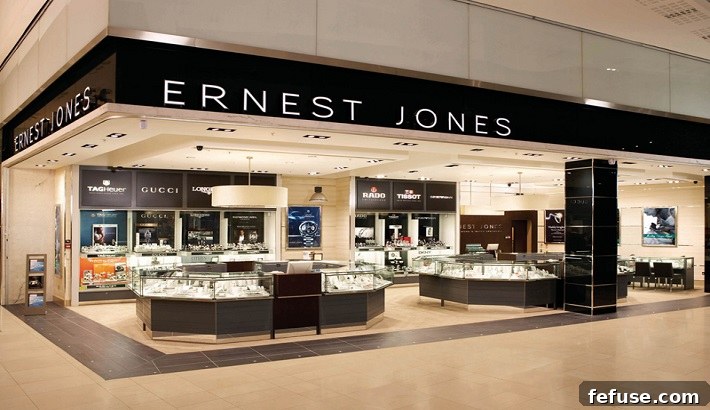
Signet’s UK operations, encompassing its beloved high street jewelers H Samuel and Ernest Jones, experienced a noticeable downturn in performance during the first quarter of FY2020. Same-store sales for the segment decreased by 5.2%, amounting to £87.6 million. This decline underscores the significant pressures faced by physical retail establishments across the United Kingdom. Factors such as fluctuating consumer confidence, the persistent shadow of Brexit uncertainty, and the general trend of diminishing footfall on traditional high streets have all contributed to a particularly challenging operating environment for non-essential goods retailers, including those in the jewelry sector. The economic climate at the time led many consumers to tighten their belts, prioritizing essential spending over discretionary luxury items, directly impacting sales volumes for jewelers.
A deeper dive into the UK figures reveals a complex picture. While the Average Transaction Value (ATV) saw a slight increase of 0.2%, suggesting that customers who did make purchases might have opted for slightly higher-priced items or larger baskets, the number of transactions across H Samuel and Ernest Jones collectively fell by a more substantial 5.4%. This disparity indicates that fewer customers were visiting stores and making purchases, a critical metric for any retail business. Despite the modest uptick in the value of each transaction, the significant reduction in overall transaction volume ultimately drove the negative same-store sales performance. This trend highlights a broader industry challenge where attracting and retaining foot traffic is paramount, and retailers must innovate to convert fewer visits into more meaningful sales interactions. The shift reflects a consumer base that, when choosing to buy jewelry, might be more deliberate in their purchases, potentially leading to higher value per transaction, but the overall frequency of these purchases is clearly decreasing in physical stores.
The retail giant explicitly stated that sales declined across various categories within its UK portfolio, confirming that the difficult operating environment was not confined to a single product line but was a pervasive issue. This broad-based decline further emphasizes the systemic nature of the challenges faced by Signet’s UK brands, signaling a need for comprehensive strategic adjustments rather than isolated tactical responses. Both H Samuel and Ernest Jones, with their distinct market positioning – H Samuel typically offering more accessible jewelry and gifts, and Ernest Jones focusing on premium diamonds and watches – felt the squeeze of reduced consumer spending and changing shopping habits. Their collective performance serves as a barometer for the health of the broader UK jewelry market, indicating a period of significant transition and adaptation.
Signet’s Global Performance Reflects Broader Retail Shifts
Beyond its UK segment, Signet Jewelers’ total sales across all its brands and geographies amounted to $1.43 billion (£1.1 billion) for the 13 weeks ending May 4, 2019. On a reported basis, this represented a 3.3% decrease year-over-year. When adjusted for currency fluctuations, on a constant currency basis, the decline was slightly less pronounced at 2.6%. This global picture largely mirrors the challenges observed in the UK, indicating that while some markets may perform better than others, the overarching retail landscape demands strategic adaptation from large players like Signet. The difference between reported and constant currency figures highlights the impact of exchange rate volatility on international businesses, offering a clearer view of underlying operational performance.
The total same-store sales performance across Signet’s entire portfolio also registered a decline, falling by 1.3% year-over-year. This broad-based dip affected nearly all of the company’s brands, with a notable exception: Piercing Pagoda. This particular brand managed to defy the trend, demonstrating resilience and growth where others struggled. Piercing Pagoda, often situated in mall kiosks and catering to a different demographic with a focus on affordable piercing services and jewelry, likely benefited from its unique business model and customer base, which appears less susceptible to the broader retail headwinds affecting traditional jewelry stores. Its success provides an interesting case study in market segmentation and diversified offerings within the jewelry sector, suggesting that niche markets with specific service propositions can still thrive even when general retail faces obstacles. This growth points to the importance of specialized offerings and direct customer engagement in an evolving retail landscape.
E-commerce Emerges as a Key Growth Driver and Strategic Priority
Amidst the challenges faced by brick-and-mortar stores, Signet’s e-commerce channel emerged as a significant silver lining, showcasing robust growth and underscoring its pivotal role in the company’s future strategy. E-commerce sales for the quarter reached $154.3 million (£121.3 million), marking a healthy 5.3% increase year-over-year. This growth is particularly encouraging given the overall decline in total sales and brick-and-mortar same-store sales, which saw a 2.0% decrease. The divergence between online and offline performance clearly illustrates the paradigm shift occurring in retail, where digital channels are increasingly becoming the preferred avenue for consumer engagement and transactions, even for high-value items like jewelry.
The expanding influence of online sales is also reflected in its increasing contribution to Signet’s overall revenue. E-commerce sales accounted for 10.8% of total sales in the first quarter, an improvement from 9.9% in the prior year quarter. This upward trajectory highlights the accelerating shift in consumer purchasing habits towards digital platforms, even for considered purchases like jewelry. Signet’s ability to capture a growing share of the online market is a testament to its investments in digital infrastructure, user experience, and omnichannel capabilities. As physical retail grapples with evolving consumer preferences and declining foot traffic, a strong and continually growing e-commerce presence is not just an advantage but a fundamental necessity for sustainable growth in the modern retail landscape. This strategic pivot allows Signet to reach customers wherever they choose to shop, offering convenience, broader selections, and personalized digital experiences that complement its physical store network, creating a more cohesive and resilient retail ecosystem.
The growth in e-commerce is not merely about having an online store; it reflects a sophisticated understanding of digital consumer journeys. Successful online platforms for jewelry retailers often involve high-quality visual content, virtual try-on experiences, detailed product information, and seamless customer service integration. Signet’s investment in these areas likely contributed to its positive e-commerce results, positioning it strongly to capitalize on the continued digital migration of consumer spending. This digital strength also offers a buffer against the volatility of physical store performance, providing a crucial growth engine that can mitigate some of the headwinds faced on the high street. The increasing percentage of sales coming from online channels signals a long-term strategic advantage that Signet is actively cultivating.
Leadership’s ‘Path to Brilliance’ Transformation Initiatives
Virginia C. Drosos, Signet’s chief executive officer, provided insights into the company’s performance and strategic direction. While acknowledging the challenges in same-store sales, which were at the low end of their guidance, she highlighted positive developments elsewhere. “We delivered operating profit above our guidance range and strong free cash flow in the first quarter,” Drosos remarked. This statement is crucial as it indicates effective cost management and financial discipline within the company, demonstrating that despite sales pressures, Signet is successfully optimizing its operational efficiency and maintaining a healthy financial position. The generation of strong free cash flow is particularly important, providing the company with flexibility for strategic investments, debt reduction, and weathering economic uncertainties.
Recognizing the sales trends experienced year-to-date and the softening retail traffic, Signet is prudently narrowing its Fiscal 2020 guidance. This adjustment reflects a realistic outlook on the current market conditions while simultaneously reaffirming the company’s commitment to its long-term strategic vision. Drosos emphasized that the company “remain[s] focused on executing our Path to Brilliance transformation initiatives to improve the trajectory of our same store sales and drive higher profitability over the long-term.” The ‘Path to Brilliance’ is a comprehensive, multi-year strategy designed to revitalize Signet’s business model. It encompasses several key pillars, including accelerating digital growth, optimizing its store footprint, enhancing product innovation, modernizing customer experiences through omnichannel integration, and fostering a culture of agility and efficiency across the entire organization. This holistic approach aims to address current challenges while building a sustainable foundation for future growth.
These transformation initiatives are vital for Signet to adapt to the new retail paradigm. By investing in areas such as personalized marketing, seamless omnichannel integration, and curated product assortments, Signet aims to rebuild relevance with consumers and stimulate demand. The focus on improving same-store sales trajectory isn’t merely about reversing declines; it’s about creating a sustainable model where physical stores complement digital channels, offering unique experiences that cannot be replicated online. Simultaneously, the drive for higher profitability over the long-term suggests a commitment to operational excellence, supply chain optimization, and a prudent approach to capital allocation, ensuring that Signet remains a leader in the competitive jewelry retail landscape for years to come. The ‘Path to Brilliance’ represents a proactive and necessary evolution for a major retailer navigating the complexities of the 21st-century market, aiming to leverage its brand equity and market position for renewed success.
Strategic Store Optimisation and Footprint Reduction
A cornerstone of Signet’s ‘Path to Brilliance’ strategy involves a significant rationalization and optimization of its store footprint. In Fiscal Year 2020, the company anticipates closing approximately 150 stores, with 44 of these closures having already occurred in the first quarter. This aggressive but strategic approach to store closures reflects a broader industry trend where retailers are consolidating their physical presence to focus on more profitable locations and adapt to the increasing shift towards online shopping. By reducing its overall store count, Signet aims to enhance the profitability of its remaining stores, improve operational efficiency, and better align its physical assets with current consumer purchasing patterns. These closures are not haphazard; they are data-driven decisions designed to eliminate underperforming locations and strengthen the overall retail network.
The long-term impact of this strategy is considerable. By the end of Fiscal Year 2020, Signet projects that it will have reduced its store base by an impressive 13% over a three-year period, spanning Fiscal Years 2018 through 2020. This substantial reduction is not merely about cost-cutting; it’s about reshaping the company’s physical presence to be more agile, impactful, and financially sound. The closures are typically focused on underperforming locations or those in areas with declining foot traffic, allowing resources to be reallocated to digital growth initiatives, store remodels in prime locations, and other strategic investments. Furthermore, the company has indicated limited new store openings for the full year, signaling a clear shift from expansion-driven growth to a more concentrated strategy focused on maximizing performance from its optimized store portfolio. This disciplined approach ensures that every remaining store contributes meaningfully to Signet’s overall profitability and brand equity, fostering a stronger, more resilient retail ecosystem that can adapt to future market changes.
Outlook and Future Trajectory in a Dynamic Retail Landscape
Signet Jewelers operates within an undeniably complex and ever-changing retail environment. The first quarter of FY2020 served as a clear indicator of both the systemic challenges facing traditional retail, particularly in the UK, and the crucial opportunities presented by digital transformation. While same-store sales declines underscore the need for continued strategic adaptation, the robust growth in e-commerce sales offers a powerful testament to the company’s ability to pivot and capture new market share online. The strategic store closures, guided by the ‘Path to Brilliance,’ represent a disciplined approach to optimizing the physical footprint, ensuring that Signet’s brick-and-mortar presence is not only efficient but also complements its expanding digital reach, creating a truly integrated omnichannel experience for customers.
Looking ahead, Signet’s commitment to its transformation initiatives, as articulated by CEO Virginia C. Drosos, remains paramount. Success will hinge on its ability to execute these strategies effectively: fostering seamless omnichannel experiences, continually innovating its product offerings to meet evolving tastes, leveraging data to personalize customer interactions, and maintaining operational excellence across all facets of its business. The emphasis on strong free cash flow and profitability amidst revenue challenges suggests a financially prudent approach, positioning the company to invest wisely in its future and navigate potential economic headwinds. As the retail landscape continues to evolve, Signet Jewelers’ journey through its ‘Path to Brilliance’ will be closely watched, serving as a significant example of how established retailers adapt, innovate, and thrive in an increasingly digital-first world, ultimately aiming to deliver enduring value to both customers and shareholders through a modernized and resilient business model.
News Source: professionaljeweller