
Global Gold Demand Soars in Q2 2025: Investment Drives Safe-Haven Appeal Amidst Volatility
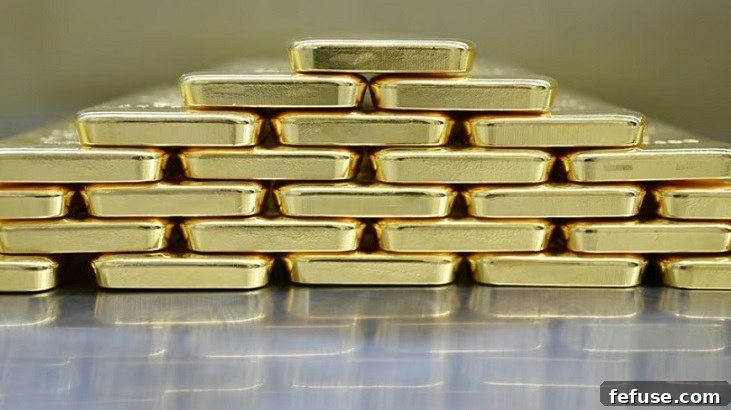
In the second quarter of 2025, global gold demand experienced a significant uptick, climbing 3% year-on-year to reach an impressive 1,248.8 metric tons. This notable increase, as reported by the esteemed World Gold Council (WGC), was overwhelmingly propelled by a sharp surge in investment activity. The quarter saw investment demand for the precious metal skyrocket by a remarkable 78%, effectively offsetting areas of weakness in other segments of the market. This robust performance unequivocally underscored gold’s enduring and critical role as a preferred safe-haven asset, particularly during periods characterized by a volatile and uncertain macroeconomic environment. Investors, grappling with a myriad of global challenges, increasingly turned to gold to preserve wealth and mitigate risks, reaffirming its intrinsic value as a store of value.
The precious metal’s appeal was further amplified by an impressive price rally observed since the beginning of the year. Spot gold prices surged by an astounding 26%, briefly touching an unprecedented all-time high of \$3,500 per troy ounce in April. This monumental price milestone reflected a confluence of powerful market forces. Persistent market uncertainty, fueled by an intricate web of unstable trade dynamics, escalating geopolitical tensions across various regions, and lingering inflationary concerns, consistently pushed investors towards gold-backed financial products and physical holdings. The ongoing shifts in global economic policy, coupled with the potential for currency devaluations in certain major economies, have further cemented gold’s status as a reliable hedge against systemic risks. The WGC’s report meticulously detailed how these macro-level anxieties translated directly into a tangible surge in gold’s desirability, positioning it as a cornerstone of diversified investment portfolios seeking resilience.
Navigating the Investment Landscape: Bars, Coins, and the ETF Phenomenon
Delving deeper into the varied landscape of investment vehicles, the second quarter of 2025 revealed distinct patterns. Demand for gold bars, a traditional and tangible form of gold investment, saw a healthy increase of 21%. This indicated a renewed interest among investors who prefer direct ownership of physical gold, valuing its immutability and the security it offers. Conversely, interest in gold coins continued its downward trajectory, likely influenced by factors such as higher premiums associated with numismatic value or manufacturing, and potentially a preference for the more liquid and standardized bar format. The dynamic in this segment highlights a nuanced shift in investor preferences, where practicality and cost-efficiency often weigh heavily against collectibility.
However, the true standout in the investment arena was the performance of physically backed gold Exchange Traded Funds (ETFs). These instruments experienced their strongest half-year inflows since early 2020, a period also marked by significant global economic uncertainty following the onset of the COVID-19 pandemic. The resurgence in gold ETF demand in Q2 2025 powerfully reinforced gold’s broad appeal amidst pervasive market anxiety. Gold ETFs offer investors a convenient, cost-effective, and highly liquid way to gain exposure to the price of gold without the complexities of physical storage or insurance. Their accessibility makes them particularly attractive to both institutional investors seeking strategic hedges and retail investors looking for easily tradable assets that can be quickly added or removed from portfolios. The significant inflows into these ETFs are a clear indicator of a widespread investor consensus that current market conditions necessitate a robust allocation to safe-haven assets, with gold leading the charge.
This robust demand for gold ETFs is not merely a transient trend but reflects a deeper understanding among investors of gold’s role in portfolio diversification. As equity markets exhibit increased volatility and bond yields remain susceptible to interest rate fluctuations, gold provides a valuable uncorrelated asset. Institutional funds, pension schemes, and even sovereign wealth funds are increasingly incorporating gold ETFs into their strategies, recognizing their ability to mitigate downside risk during periods of economic contraction or geopolitical stress. The transparency and regulatory oversight associated with these financial products further contribute to their allure, making them a preferred choice for those seeking efficient and secure exposure to the gold market without the logistical challenges associated with holding large quantities of physical bullion directly. The remarkable inflows signify a long-term strategic shift towards gold as an essential component of resilient investment portfolios, especially as global economic uncertainties show no signs of abating in the near term.
The Paradox of Price: Jewellery Demand Takes a Hit
While investment demand soared, the physical demand picture, particularly concerning jewellery consumption, painted a starkly different story. Global jewellery consumption, which traditionally stands as the largest segment of physical gold use, experienced a substantial contraction, falling by 14% to 341 tons. This marked its weakest level since the third quarter of 2020, highlighting the profound impact of soaring gold prices on discretionary spending. The elevated price of gold acted as a significant deterrent for buyers, particularly in price-sensitive markets such as India and China. These two economic powerhouses, culturally deeply intertwined with gold, collectively saw their share of global jewellery demand drop below 50%. This occurrence is rare, having happened only for the third time in the last five years, underscoring the exceptional nature of the current market dynamics.
In markets like India, where gold jewellery plays an integral role in cultural festivities, weddings, and traditional gifting, consumers are highly sensitive to price fluctuations. High prices can lead to a deferral of purchases, a shift towards lower-carat gold, or even a reduction in the size and intricacy of jewellery items. The economic landscape in these regions, including factors such as disposable income levels and local inflation, further compounded the impact of global gold prices. Similarly, in China, a rapidly evolving consumer market, while gold remains a popular form of savings and gifting, consumers demonstrated greater caution. The combination of high gold prices and broader economic concerns within China may have prompted consumers to prioritize essential spending or divert funds towards other investment avenues perceived as offering better value or higher immediate returns, away from purely discretionary luxury purchases. This sharp decline in jewellery demand serves as a crucial counterbalance to the robust investment figures, illustrating the dual nature of gold as both a speculative asset and a deeply ingrained cultural commodity.
The weakening in jewellery consumption underscores the elasticity of demand in these key markets. When gold prices reach record highs, the “wealth effect” of higher gold value in one’s existing holdings might be offset by the deterrent effect on new purchases. For many consumers, especially in emerging economies, gold jewellery represents a significant financial outlay. Consequently, when prices are at historical peaks, the decision to purchase becomes more challenging, leading to a noticeable slowdown in buying activity. This segment of the gold market acts as an important barometer of consumer sentiment and economic affordability, often reacting inversely to the trends observed in investment demand during periods of high price appreciation. The WGC’s data for Q2 2025 thus paints a comprehensive picture of a market deeply divided by the impact of price, with investors embracing the surge while traditional consumers retrench.
Central Bank Purchases: A Strategic Pause, Not a Retreat
The trend in central bank gold buying also exhibited a loss of momentum during the second quarter of 2025. Official sector purchases totaled 166.5 tons, representing a 21% decline year-on-year. While this figure might initially suggest a cooling off of central bank appetite for gold, the World Gold Council provided crucial context. The WGC noted that this figure includes meticulous estimates of unreported buying, acknowledging that not all central bank transactions are publicly disclosed in real-time. Moreover, while the WGC has revised its full-year forecast for central bank purchases downward, it emphatically stated that the long-term strategic move by central banks away from U.S. dollar assets in favor of gold remains firmly intact.
Central banks globally continue to view gold as an essential component of their foreign exchange reserves for several compelling reasons. Diversification away from a single dominant reserve currency, such as the U.S. dollar, is a key strategic imperative for many nations seeking to reduce geopolitical risks and insulate their economies from potential currency volatility. Gold offers a reliable hedge against inflation and provides an uncorrelated asset that can stabilize overall reserve portfolios during periods of global economic turbulence. The underlying motivations for central bank gold accumulation are fundamentally long-term, driven by macroeconomic stability, reserve management, and geopolitical considerations rather than short-term market fluctuations. Therefore, a quarterly dip in reported purchases, even a significant one, does not necessarily signal a reversal of the broader de-dollarization trend or a fundamental shift in central banks’ enduring conviction in gold’s value as a strategic reserve asset. Instead, it might reflect tactical pauses, re-evaluations of purchasing timelines, or the timing of specific, often undisclosed, transactions by sovereign entities.
The continued commitment to gold by central banks, even with a temporary deceleration in buying, highlights its perceived role as a “currency of last resort” and a guarantor of financial sovereignty. In an increasingly fragmented global economic and political landscape, the intrinsic value and universal acceptance of gold provide a unique level of security that fiat currencies, with their inherent counterparty risks, cannot fully match. This strategic accumulation by monetary authorities worldwide underscores gold’s enduring significance beyond mere investment or consumer goods, positioning it as a foundational element of national wealth and financial resilience against an unpredictable future. Thus, while the pace may vary from quarter to quarter, the direction of travel for central bank gold reserves remains decidedly upward over the long haul, as nations seek greater autonomy and stability in their financial holdings.
Supply Side Dynamics: Recycling Muted Despite Record Prices
On the supply side, the market dynamics revealed another interesting facet: gold recycling grew by 4% to 347.2 tons. However, this increase was considered relatively muted, especially given the backdrop of record-high gold prices. Historically, higher gold prices often incentivize consumers to sell off old or unused jewellery and gold items, thereby boosting the supply of recycled gold. The fact that recycling activity remained somewhat subdued despite these lucrative prices points to deeper behavioral and economic factors at play, particularly in key markets.
In India, a nation with a deep cultural connection to gold and a significant hub for recycling, consumers demonstrated a unique inclination. Rather than outright selling their old jewellery for cash, many were more inclined to trade it in for new pieces or use it as collateral for loans. This trend highlights the cultural significance of gold as both an asset and a sentimental item. For many Indian households, gold jewellery is not just an investment but also a part of their heritage, a status symbol, and a crucial financial safety net to be leveraged during times of need rather than liquidated entirely. Using gold as collateral for loans provides immediate liquidity without requiring a complete divestment, allowing families to retain ownership of their cherished items while addressing short-term financial requirements. This nuanced approach to gold recycling suggests that while the economic incentive to sell is present due to high prices, it is often outweighed by cultural attachment, the desire for new jewellery, or the strategic use of gold as an accessible form of credit. The WGC’s observation underlines the complex interplay between price action, cultural values, and immediate financial needs in shaping the overall supply of gold to the market.
The relatively modest increase in recycling despite record prices further illustrates the “sticky” nature of gold ownership in traditional markets. Unlike other commodities, where supply quickly reacts to price signals, gold held by individuals often carries emotional and cultural weight that makes outright selling a less straightforward decision. This phenomenon impacts the overall gold supply, preventing a sudden flood of recycled gold onto the market even during periods of extreme price appreciation. This stability in recycled supply, coupled with steady mine production (not detailed in the original extract but a constant factor), contributes to the overall equilibrium of the gold market. Understanding these intricate supply-side dynamics is crucial for forecasting future price movements and overall market stability, especially given the contrasting behaviors observed between investment demand and physical consumer sales.
Outlook and Future Trends: What Lies Ahead for Gold?
Looking ahead into the second half of 2025, the World Gold Council anticipates further upside for gold ETFs. This projection is underpinned by the expectation of continued global macroeconomic uncertainty, which historically bolsters demand for safe-haven assets. Factors such as persistent inflation concerns, evolving interest rate policies by major central banks, and ongoing geopolitical instability are likely to maintain a strong investor appetite for gold exposure through easily accessible and liquid instruments like ETFs. Institutional investors, in particular, are expected to continue allocating capital to these products as part of their broader risk management strategies, seeking to hedge against potential downturns in equity markets and currency fluctuations.
However, the WGC also prudently noted that retail investment, particularly in physical gold products like bars and coins, could ease slightly as prices remain elevated. While high prices attract institutional money seeking capital gains and portfolio diversification, they can act as a barrier to entry for individual retail investors who might find gold prohibitively expensive. This implies a potential divergence in investment behavior, with institutional and sophisticated investors continuing to drive ETF demand, while everyday retail buyers might temper their purchases. The sustained high price environment could also lead to profit-taking by some retail investors who bought gold at lower prices, further contributing to a slight moderation in new retail inflows. The overall outlook, therefore, suggests a nuanced landscape where gold’s appeal as a strategic asset remains strong, but its accessibility and affordability for different segments of the market will continue to shape demand patterns.
The future trajectory of gold in H2 2025 will also be significantly influenced by global economic growth forecasts, the strength of the U.S. dollar, and any new geopolitical flashpoints that may emerge. Should economic data point towards a recession, or if global trade tensions escalate further, gold’s safe-haven appeal could intensify beyond current expectations. Conversely, a significant improvement in global economic sentiment or a sustained period of risk-on market behavior could moderate gold’s ascent. The World Gold Council’s projections serve as a valuable guide, emphasizing that while gold’s role as a protective asset is firmly established, its market dynamics are continuously shaped by a complex interplay of economic indicators, geopolitical events, and investor psychology. Ultimately, gold remains a bellwether for global confidence, reflecting the collective anxieties and strategic positioning of both individual investors and sovereign entities in an ever-evolving financial landscape.
Conclusion: Gold’s Enduring Appeal in a Changing World
The second quarter of 2025 presented a fascinating dichotomy within the global gold market. A surging investment demand, particularly through gold ETFs, robustly propelled overall demand, underscoring gold’s vital role as a safe-haven asset amidst widespread macroeconomic uncertainty and geopolitical tensions. This era of high volatility and record-breaking spot prices, peaking at \$3,500 per troy ounce, reaffirmed investor confidence in gold as a reliable store of value and a critical portfolio diversifier. However, this strength in investment was starkly contrasted by a notable decline in physical jewellery consumption, especially in price-sensitive markets like India and China, where high prices impacted traditional purchasing habits.
Similarly, while central bank buying experienced a quarterly slowdown, the WGC’s analysis consistently highlighted that this was likely a tactical pause within an overarching, long-term strategic shift towards diversifying reserves away from the U.S. dollar. On the supply side, gold recycling, despite showing growth, remained relatively subdued, revealing the deep cultural attachment and strategic leveraging of gold as collateral in key regions rather than outright liquidation. As we look towards the latter half of 2025, the WGC anticipates continued strength in gold ETFs, driven by ongoing market anxieties, even as retail investment might temper slightly due to elevated prices. This comprehensive overview of Q2 2025 reinforces gold’s multifaceted nature – a crucial investment, a cultural cornerstone, and a strategic national asset – ensuring its enduring appeal in an increasingly complex and unpredictable global financial ecosystem.