
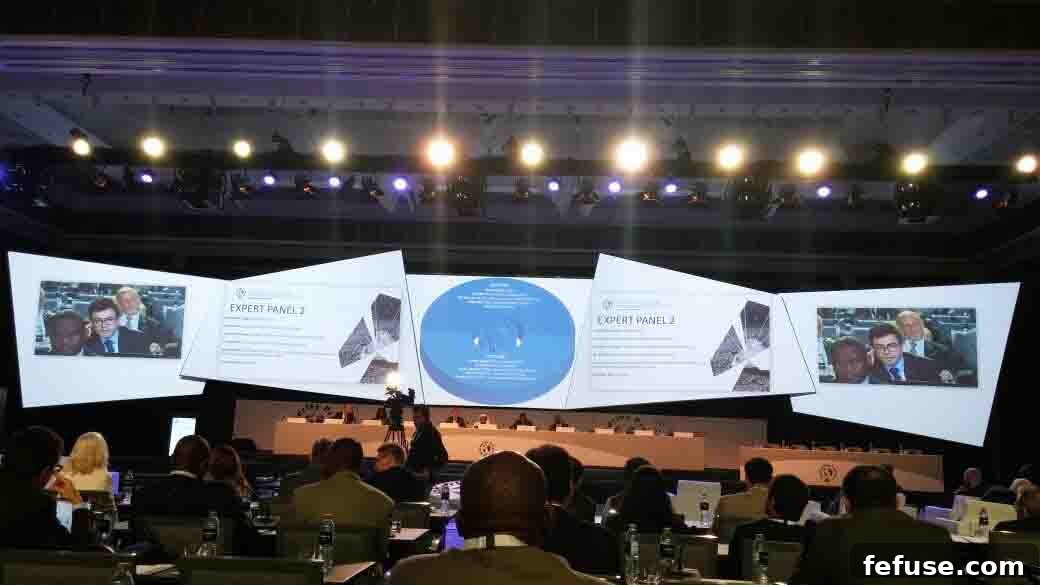
Kimberley Process Annual Plenary Meeting: Driving Transparency and Ethical Sourcing in the Global Diamond Industry
The global diamond industry convened for a critical five-day engagement as the Annual Plenary Meeting of the Kimberley Process (KP) commenced on November 13, concluding on November 17. This crucial gathering served as a pivotal platform for dialogue, debate, and decision-making on the future of ethical diamond sourcing, bringing together representatives from governments, industry, and civil society to reinforce the commitment to eradicating conflict diamonds from the global supply chain.
Understanding the Kimberley Process: A Pillar of Responsible Trade
The Kimberley Process Certification Scheme (KPCS) stands as an international initiative established in 2003 to prevent the flow of “conflict diamonds” – rough diamonds used by rebel movements to finance wars against legitimate governments – from entering the mainstream legitimate diamond market. Its robust framework brings together over 80 countries, along with representatives from the diamond industry and civil society organizations, under a unique tripartite structure. The KPCS implements a certification system that ensures rough diamonds are certified as ‘conflict-free’ by participating states, thereby fostering consumer confidence and upholding the integrity of the diamond trade.
Annual Plenary Meetings are the highest decision-making bodies of the Kimberley Process. They provide an indispensable forum for participants to review the scheme’s effectiveness, address emerging challenges, and adopt resolutions that guide the KP’s future direction. Each meeting plays a crucial role in maintaining the scheme’s relevance and adaptability in an ever-evolving global landscape.
Key Agendas Dominating the Discussions at the UAE Plenary
Under the stewardship of the UAE Kimberley Process Chair, Ahmed bin Sulayem, the 2023 Annual Plenary Meeting was poised to tackle several significant proposals and ongoing challenges. According to a release issued on the eve of the meeting, two principal topics were high on the agenda, alongside an intensive Third Forum on Rough Valuation:
1. Strengthening Governance: The Proposal for a Permanent Secretariat
One of the most far-reaching proposals discussed was the establishment of a permanent secretariat for the Kimberley Process, potentially under the auspices of the United Nations. Currently, the KP operates with a rotating chairmanship, which, while promoting broad participation, can lead to inconsistencies in institutional memory, policy implementation, and administrative efficiency. A permanent secretariat would provide much-needed continuity, professionalize administrative functions, and offer a dedicated body to oversee compliance, data collection, and communication across all participants. This move is seen by many as a vital step towards enhancing the KP’s effectiveness, legitimacy, and long-term sustainability as a crucial mechanism for ethical trade.
2. Empowering Oversight: Creating an Independent Fund for NGOs
Civil society organizations (CSOs) play an absolutely critical role within the Kimberley Process. Acting as watchdogs and advocates, they provide independent monitoring, report on compliance issues, and bring vital perspectives from the ground. Their active participation is essential for the credibility and effectiveness of the KP. The proposal to create an independent fund for NGOs involved in the initiative aimed to ensure their financial independence and operational capacity. Currently, many NGOs rely on ad-hoc funding, which can be precarious. An independent fund would bolster their ability to conduct research, participate in meetings, and monitor diamond supply chains without external pressures, thereby strengthening the integrity and oversight of the entire Kimberley Process.
Navigating Complexities: The Third Forum on Rough Diamond Valuation
A significant portion of the Plenary Meeting was dedicated to the Third Forum on Rough Valuation. This forum, building upon previous sessions held in association with organizations like the OECD and the Antwerp World Diamond Centre (AWDC), underscored the persistent and complex challenges surrounding the accurate valuation of rough diamonds. Fair and transparent valuation is paramount for several reasons: it ensures producing countries receive appropriate revenues, helps combat illicit trade, and maintains equity across the supply chain.
However, reaching a consensus on methodology remains elusive. During the discussions, distinct viewpoints emerged:
- Alluvial Producers: Representatives from countries rich in alluvial diamond deposits advocated for robust capacity building at the ground level. Their focus was on equipping local communities and governmental bodies with the knowledge, tools, and infrastructure necessary to accurately assess the value of rough diamonds extracted within their borders. This approach emphasizes local empowerment and resource optimization.
- Traders and Industry: On the other hand, diamond traders and larger industry players emphasized the need to create a panel of independent experts. Their argument centered on the complexities of diamond characteristics – cut, color, clarity, and carat weight – which require specialized knowledge for precise valuation. An expert panel, they argued, could develop and standardize methodologies that are fair, consistent, and globally accepted.
Despite intensive discussions, the forum concluded without a consensus decision on a unified valuation methodology. This highlights the deep-seated complexities and diverse interests within the diamond supply chain, necessitating continued dialogue and collaborative efforts to bridge these gaps for equitable and transparent trade.
India’s Diplomatic Push: Aiming for Leadership in the KP
India, a global powerhouse in the diamond industry – particularly in cutting and polishing, processing approximately 90% of the world’s rough diamonds – played a significant diplomatic role at the Plenary. The Indian delegation engaged in numerous meetings with key counterparts from the European Union, China, and Australia. The primary objective of these consultations was to build consensus for India’s strategic proposal to assume the Kimberley Process Vice Chair position in 2018 and subsequently the Chair in 2019.
This initiative follows a previous joint proposal in May of the same year, where India and the EU had put forward an arrangement for India to serve as Vice Chair in 2017 and Chair in 2018. India’s consistent ambition for leadership roles within the KP reflects its immense contribution to the diamond value chain and its commitment to upholding the principles of responsible sourcing. Securing these positions would allow India to play a more direct and influential role in shaping the future policies and operational framework of the Kimberley Process, further embedding transparency and ethical practices within the global diamond trade.
A Global Assembly: Distinguished Participants and Speakers
The Plenary Meeting underscored the global reach and importance of the Kimberley Process, with representatives from 81 countries attending the discussions. This broad international participation highlights a collective global commitment to maintaining a conflict-free diamond trade.
The inaugural session featured keynote addresses from several distinguished figures, setting the tone for the week’s deliberations:
- H.E. Abdullah Al Saleh, Undersecretary for Foreign Trade & Industry, UAE Ministry of Economy, provided insights from a governmental and economic perspective, emphasizing the importance of sustainable trade practices.
- Ahmed Bin Sulayem, the UAE Kimberley Process Chair, shared his vision and priorities for the KP, reflecting on the progress made during his chairmanship and the challenges ahead.
- Andrey Polyakov, President of the World Diamond Council (WDC), represented the industry’s perspective, highlighting its ongoing efforts to ensure responsible business conduct and supply chain integrity.
Beyond the Plenary: The Evolving Landscape of Ethical Diamond Sourcing
While the Annual Plenary Meeting addresses immediate concerns and proposals, the Kimberley Process continues to face broader challenges. Discussions often extend to the evolving definition of “conflict diamonds” to encompass a wider range of abuses, the need for enhanced due diligence across the supply chain, and the integration of technological solutions for tracking and tracing diamonds. The commitment demonstrated by participants at this meeting signifies an ongoing dedication not just to maintaining the KPCS, but to continuously adapting it to meet new ethical and humanitarian challenges in the diamond sector.
The dialogue around governance, funding for civil society, and transparent valuation methods reflects a maturity within the KP, moving beyond its foundational mandate to address systemic improvements that will ensure its enduring relevance and effectiveness. These discussions are crucial for reinforcing consumer confidence and promoting a diamond industry that is unequivocally a force for good.
Conclusion: A Shared Vision for a Responsible Future
The 2023 Kimberley Process Annual Plenary Meeting in the UAE was more than just a series of formal discussions; it was a reaffirmation of a shared global commitment to responsible diamond trade. By addressing complex issues such as rough diamond valuation, the establishment of a permanent secretariat, and the independent funding of NGOs, the KP continues to evolve, striving for greater transparency, efficiency, and ethical integrity.
The outcomes of this meeting, including the diplomatic efforts of nations like India and the insights shared by global leaders, will undoubtedly shape the trajectory of the Kimberley Process in the coming years. As the diamond industry navigates an increasingly scrutinizing global market, the ongoing dedication to eradicating conflict diamonds and upholding the highest ethical standards remains paramount, ensuring that every diamond tells a story of beauty, rarity, and responsible sourcing.
Source: gjepc.org