
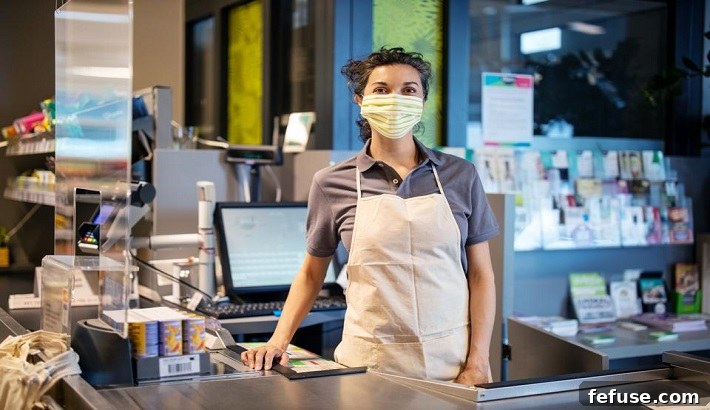
Prioritizing Essential Retail Workers for COVID-19 Vaccination: The NRF’s Urgent Appeal
The National Retail Federation (NRF) has issued a compelling call to the Centers for Disease Control and Prevention (CDC), urging the immediate inclusion of the nation’s 32 million retail workers in the critical second phase of COVID-19 vaccinations, known as Phase 1b. This phase has already commenced in some states and is slated to begin in many others in the coming weeks, making the NRF’s plea particularly timely and impactful. The federation emphasizes that acknowledging and prioritizing these frontline workers is not merely about protecting individuals but about safeguarding the intricate web of daily life for American consumers and accelerating the nation’s economic recovery.
The Critical Plea for Retail Workforce Inclusion in Phase 1b
In a direct letter addressed to Dr. José R. Romero, who chairs the CDC’s Advisory Committee on Immunization Practices (ACIP), NRF CEO Matthew Shay articulated the indispensable role of the retail sector. Shay underscored that “Retail is a fundamental part of the daily lives of American consumers, providing a variety of goods for sale through a multitude of channels, via stores online curbside pickup buy online, pickup in store and delivery to almost any location.” This statement highlights the multifaceted nature of modern retail, which extends far beyond traditional brick-and-mortar stores, encompassing a sophisticated network that ensures access to essential goods and services across the country. The NRF’s request is a respectful but firm demand for ACIP to “consider the importance, and interconnected nature, of the retail industry as it weighs the proper distribution of limited supplies of vaccines approved for use to prevent an infection of COVID-19.” This consideration, they argue, is vital for a comprehensive and effective national vaccination strategy.
Unpacking the Indispensable Role of Retail in American Life
The retail industry serves as the lifeblood of communities, acting as a critical conduit between producers and consumers. It encompasses a vast ecosystem, from large department stores and supermarkets to small independent boutiques and pharmacies, all contributing to the economic vitality and social fabric of the nation. During the height of the pandemic, while many sectors paused, retail workers remained on the front lines, ensuring that households had access to necessities like food, medicine, cleaning supplies, and other essential goods. This tireless dedication, often under challenging and uncertain circumstances, underscored their role as true essential workers. Their continuous operation, facilitated by diverse channels such as e-commerce, curbside pickup, and home delivery, ensured that supply chains remained robust and that consumers could continue their daily routines as safely as possible. Beyond basic necessities, retail also provides goods that enhance quality of life, contribute to mental well-being, and drive innovation, making its uninterrupted function integral to a thriving society. The industry is not just a commercial enterprise; it’s a vital public service infrastructure, connecting communities and sustaining livelihoods.
The Unique Vulnerabilities and Sacrifices of Frontline Retail Staff
Matthew Shay powerfully argued that retail workers have endured unparalleled economic instability and personal risk throughout the pandemic. They have faced “lost paychecks and stop-and-start employment like few others,” grappling with the financial precarity brought on by lockdowns, fluctuating consumer demand, and evolving safety protocols. More critically, their roles inherently involve direct and frequent interaction with the public, exposing them to a higher risk of COVID-19 transmission. Unlike some other professions, remote work is often not an option for frontline retail staff who are responsible for stocking shelves, operating cash registers, assisting customers, and managing inventory in physical locations. This constant public-facing exposure places them in a category of high-risk essential workers, warranting similar protective measures as healthcare professionals or first responders. The psychological toll of working under such conditions – the anxiety of potential exposure, the stress of enforcing health guidelines, and the emotional burden of supporting a community in crisis – cannot be overstated. Vaccinating these individuals is not just an act of fairness; it is a strategic imperative to protect a workforce that has consistently put itself at risk for the greater good.
Retailers as Pivotal Partners in National Vaccination Efforts
Beyond advocating for their own workforce, the NRF presented a compelling case for how retailers can actively contribute to the broader national vaccination campaign. Shay stated, “retailers can also assist the CDC and state public health professionals in safely distributing the vaccine to the greater population at the appropriate time. Through our efficient supply chains and vast network of physical store locations, retailers can facilitate community vaccination efforts.” This proposal is a testament to the logistical prowess and widespread reach of the retail sector. Many large retailers, particularly those with in-store pharmacies, already possess the necessary infrastructure, including cold chain storage, trained personnel, and established patient flow management systems, to administer vaccines efficiently and safely. By transforming accessible store locations into community vaccination centers, retailers can significantly alleviate the burden on traditional healthcare facilities, reduce wait times, and expand vaccine access to underserved populations. This collaborative model leverages existing private sector capabilities to bolster public health initiatives, offering a pragmatic and scalable solution to accelerate vaccine distribution across diverse geographic and demographic segments of the population.
Furthermore, the NRF CEO asserted that allowing retailers to host vaccination centers offers a critical advantage by “keep[ing] people from gathering in large crowds at any one location.” This decentralized approach is vital for managing public health safety during mass vaccination campaigns, minimizing congestion, and ensuring social distancing. Such efforts, he noted, would also naturally “facilitate the vaccination of greater numbers of the retail workforce” itself, creating a dual benefit. Perhaps most significantly, Shay highlighted the potential for positive social impact, stating that “acceptance of vaccinations by the diverse retail workforce can assist in positive behavioral modeling for the entire society.” Given the wide demographic representation within retail, their visible participation in vaccination efforts can build trust, dispel misinformation, and encourage broader public acceptance of the vaccine, particularly within hesitant communities. This makes the retail workforce not just recipients of the vaccine, but powerful advocates for public health.
Navigating State-Specific Vaccination Protocols and the Need for Cohesion
The decentralized nature of vaccine rollout in the United States has led to individual states establishing their own specific protocols, procedures, and prioritization hierarchies. While most states generally adhere to the demographic order recommended by the CDC, beginning with frontline healthcare workers and elderly citizens residing in nursing facilities (Phase 1a), there is significant variability in the subsequent phases. For many states, Phase 1b typically includes highly vulnerable populations such as individuals in homeless shelters and migrant labor camps, as well as those with high-risk medical conditions and/or disabilities. This phase is designed, at a minimum, to provide vaccine access to the most at-risk segments of the U.S. population. The NRF’s argument is that the sheer size of the U.S. retail workforce – 32 million strong – combined with their essential function and high-contact roles, unequivocally places them within the spirit and intent of Phase 1b prioritization, particularly given their direct interaction with the general public on a daily basis. A more unified approach or clearer federal guidance that acknowledges the unique role of retail workers could streamline state-level decisions and ensure more equitable and efficient vaccine distribution.
Shay explicitly conveyed this sentiment, writing, “Given the size of the U.S. retail workforce and importance in supporting individuals, households, and families across the country, we believe the ACIP should place a significant emphasis on these workers as soon as [is] practical.” This emphasizes that the magnitude of the retail workforce, coupled with its foundational role in sustaining daily life for millions of Americans, necessitates their prompt inclusion. Delaying vaccination for this critical group not only jeopardizes their health but also creates vulnerabilities in the broader economic and social infrastructure. The NRF’s advocacy seeks to bridge the gap between general CDC guidelines and the practical realities faced by states, pushing for a robust national recognition of retail workers as essential contributors who require priority protection to maintain societal functionality and aid in the country’s recovery.
The Broader Societal and Economic Benefits of Vaccinating Retail Workers
Vaccinating the retail workforce extends far beyond individual protection; it is a strategic investment in public health and economic recovery. A vaccinated retail sector can significantly boost consumer confidence, encouraging a return to more normal shopping patterns and, consequently, stimulating economic activity. When consumers feel safe visiting stores and interacting with staff, the retail economy, a major driver of national GDP and employment, can rebound more swiftly. This not only safeguards the livelihoods of millions of retail employees but also has a ripple effect across supply chains and related industries. Furthermore, protecting retail workers contributes directly to public health by reducing potential transmission points within communities. As frontline individuals interacting with a vast cross-section of the population, their vaccination minimizes the risk of spreading the virus to countless customers and fellow employees, thereby strengthening community immunity. It also ensures the continuity of essential services, preventing disruptions that could arise from widespread illness among retail staff. Ultimately, prioritizing these workers is a testament to their invaluable contribution during an unprecedented crisis and an essential step towards a healthy and prosperous post-pandemic future.
Conclusion: A Call for Recognition and Strategic Action
The National Retail Federation’s urgent appeal to the CDC to include the 32 million retail workers in Phase 1b of COVID-19 vaccinations is more than a simple request; it is a critical strategic imperative for the nation’s health and economic recovery. The arguments are clear: retail workers are essential, facing high exposure and economic hardship, and the retail industry itself possesses unique capabilities to aid in the vaccine rollout. By leveraging their vast network and logistical expertise, retailers can become invaluable partners in accelerating national immunization efforts. Acknowledging their indispensable role and prioritizing their vaccination would not only offer crucial protection to a vital segment of the workforce but also instill confidence in the public, hasten economic revitalization, and foster a collective sense of security. The time for recognizing and acting on the essential nature of the retail workforce is now, ensuring their well-being and, by extension, the health and prosperity of the entire nation. This collaborative approach between public health bodies and the private sector is crucial for navigating the complexities of the pandemic and building a more resilient future.