
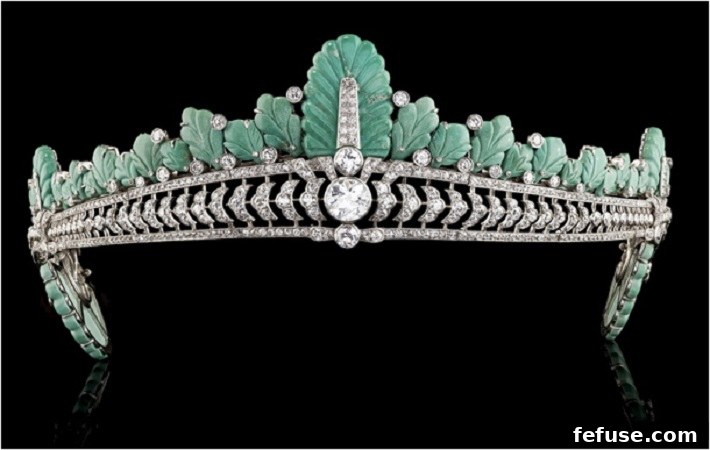
The Dazzling Cartier Turquoise & Diamond Tiara of Nancy Astor: A Record-Breaking Sale and Enduring Legacy
A truly spectacular piece of British political and design history recently captivated the auction world, as a rare Cartier turquoise and diamond tiara, once a prized possession of Nancy, Viscountess Astor, achieved an astonishing $1.1 million (£889,400) at Bonhams London. This monumental sum was more than double its high estimate of $434,000 (£350,000), highlighting the immense allure of jewels with exceptional provenance and historical significance. The sale marks a pivotal moment for collectors and historians alike, bringing an iconic treasure back into the public consciousness after nearly a century of private ownership.
An Art Deco Masterpiece: The Tiara’s Exquisite Design and Eastern Inspiration
The tiara itself is a breathtaking example of Art Deco elegance, a testament to Cartier’s unparalleled craftsmanship during its most innovative period. At its heart lies a magnificent old brilliant-cut diamond, encircled by an intricate dance of other old brilliant, rose, and single-cut diamonds, each meticulously placed to maximize its sparkle. However, what truly sets this piece apart are its distinctive features: three exquisitely fluted turquoise plumes. These vibrant, sky-blue elements rise gracefully from diamond-set stems, creating a dramatic and exotic silhouette. This unique design choice beautifully echoes the Eastern design influences—specifically drawing inspiration from Egyptian, Persian, and Indian artistry—that profoundly captivated Cartier’s creative direction in the early 20th century. The fascination with these ancient cultures and their rich decorative motifs led to some of Cartier’s most iconic and avant-garde creations, making this tiara a prime example of that innovative era.
The choice of turquoise, a gem historically revered across numerous cultures for its beauty and symbolic properties, further enhances the tiara’s exotic appeal. Paired with the timeless brilliance of diamonds, the turquoise plumes create a striking contrast, transforming the piece from a mere accessory into a wearable work of art. Every facet of the tiara speaks to the meticulous attention to detail and the artistic vision that defined Cartier’s golden age, particularly its London branch, which was renowned for its bespoke commissions for the British aristocracy and global elite.
A Legacy Forged in London: Cartier’s Golden Era and Aristocratic Patronage
Dating back to circa 1930, this magnificent tiara was originally commissioned by Lord Astor from Cartier London. At this specific juncture, Cartier London was widely considered to be at the zenith of its artistry and influence, crafting pieces that perfectly blended European sophistication with exotic inspirations. The commission by Lord Astor, a prominent figure in British aristocracy, underscores the significance and prestige associated with owning a bespoke Cartier creation during this period. The Astor family, known for their immense wealth, political connections, and refined taste, consistently sought out the finest artisans and designers for their personal collections, and this tiara is a shining example of their discerning patronage.
For nearly a century, this exceptional piece had largely remained out of public view, held within the private collections of the Astor family and their descendants. Its reappearance at auction sparked considerable excitement among historians, jewellery enthusiasts, and collectors, offering a rare glimpse into a bygone era of luxury and political power. The tiara not only represents a pinnacle of jewellery design but also serves as a tangible link to one of Britain’s most influential families and a pivotal figure in its political landscape.
Nancy Astor: A Pioneering Woman in British Politics and Society
Its original owner, Nancy Astor (1879–1964), occupies a profoundly special and pioneering place in British political history. Born in Virginia, USA, as Nancy Witcher Langhorne, she transcended her background as an American-born socialite to become the first woman to take a seat in the House of Commons, following her landmark election in 1919. Her victory was not merely a personal triumph but a monumental step forward for women’s representation in politics, shattering centuries of male-dominated parliamentary tradition. Astor’s entry into Parliament marked the beginning of a remarkable career where she championed numerous causes, fearlessly advocating for social reforms.
During her 26 years as a Member of Parliament for Plymouth Sutton, she campaigned passionately for issues such as raising the legal drinking age, expanding women’s suffrage, and promoting children’s welfare. She was a vocal advocate for temperance and morality, often clashing with her male counterparts in a political arena still largely unprepared for a woman’s voice. Her tenure was characterized by a potent blend of wit, determination, and a willingness to challenge the status quo, making her a figure of both admiration and controversy.
Beyond her groundbreaking political career, Nancy Astor was also renowned for her vibrant presence as a hostess to Britain’s elite at Cliveden, the magnificent Astor family estate in Buckinghamshire. Cliveden became a legendary hub for social, political, and intellectual gatherings, where Astor presided over glittering dinners and lively discussions, often attracting prime ministers, literary figures, and foreign dignitaries. Her salon at Cliveden was instrumental in shaping public opinion and fostering political discourse, further cementing her influence in both the social and political spheres. The Cartier tiara, with its bold design and regal presence, would undoubtedly have been a perfect accessory for such a formidable and charismatic woman, gracing many of these historic occasions and symbolizing her unique position at the intersection of aristocracy, politics, and social reform.
The Auction Event: A Testament to Enduring Value and Provenance
The dramatic sale result at Bonhams underscored the immense and growing demand for historic jewels with strong provenance, especially those tied to iconic women and storied eras. Jean Ghika, Bonhams’ Global Head of Jewellery, eloquently captured the multifaceted significance of the sale:
“This tiara represents a remarkable convergence of history, craftsmanship, and cultural exchange. Its turquoise plumes and diamond detailing embody Cartier London’s golden era—when global influences were seamlessly woven into fine jewellery. That it belonged to a trailblazing woman like Nancy Astor only adds to its legacy, making it an extraordinarily desirable piece for collectors worldwide. The record-breaking price is a clear indicator of the market’s appreciation for such unique artefacts that tell compelling stories.”
The exceptional price realized for the tiara reflects not only its intrinsic value as a Cartier masterpiece but also the powerful narrative it embodies. Collectors are increasingly seeking out pieces that offer more than just aesthetic appeal; they desire items with a tangible connection to history, items that have been worn by figures who shaped their times. The association with Nancy Astor, a woman who defied societal norms and left an indelible mark on British politics, elevates the tiara from a mere jewel to a historical artifact, a wearable symbol of progress and enduring influence.
The Enduring Allure of Historic Jewels: Connecting Past and Present
The auction’s outcome is a clear indicator of a broader trend in the luxury market: the increasing value placed on items that carry a rich historical narrative. Jewels like Nancy Astor’s Cartier tiara serve as powerful reminders of the people and events that shaped our world. They are more than just beautiful objects; they are custodians of stories, symbols of power, elegance, and societal change. The allure of provenance transforms a precious stone and metal into an irreplaceable piece of heritage, connecting the present owner to a lineage of historical figures and momentous occasions.
In a world increasingly focused on the ephemeral, these timeless treasures offer a sense of continuity and permanence. The Cartier turquoise and diamond tiara, having graced the head of such a formidable and pioneering woman, continues its journey, now as a newly celebrated icon. Its dramatic reappearance and record-breaking sale ensure that its legacy, intertwined with the artistry of Cartier and the indomitable spirit of Nancy Astor, will continue to inspire and fascinate for generations to come. This sale wasn’t just about a piece of jewellery; it was about the enduring power of history, artistry, and the remarkable individuals who leave their mark on both.