
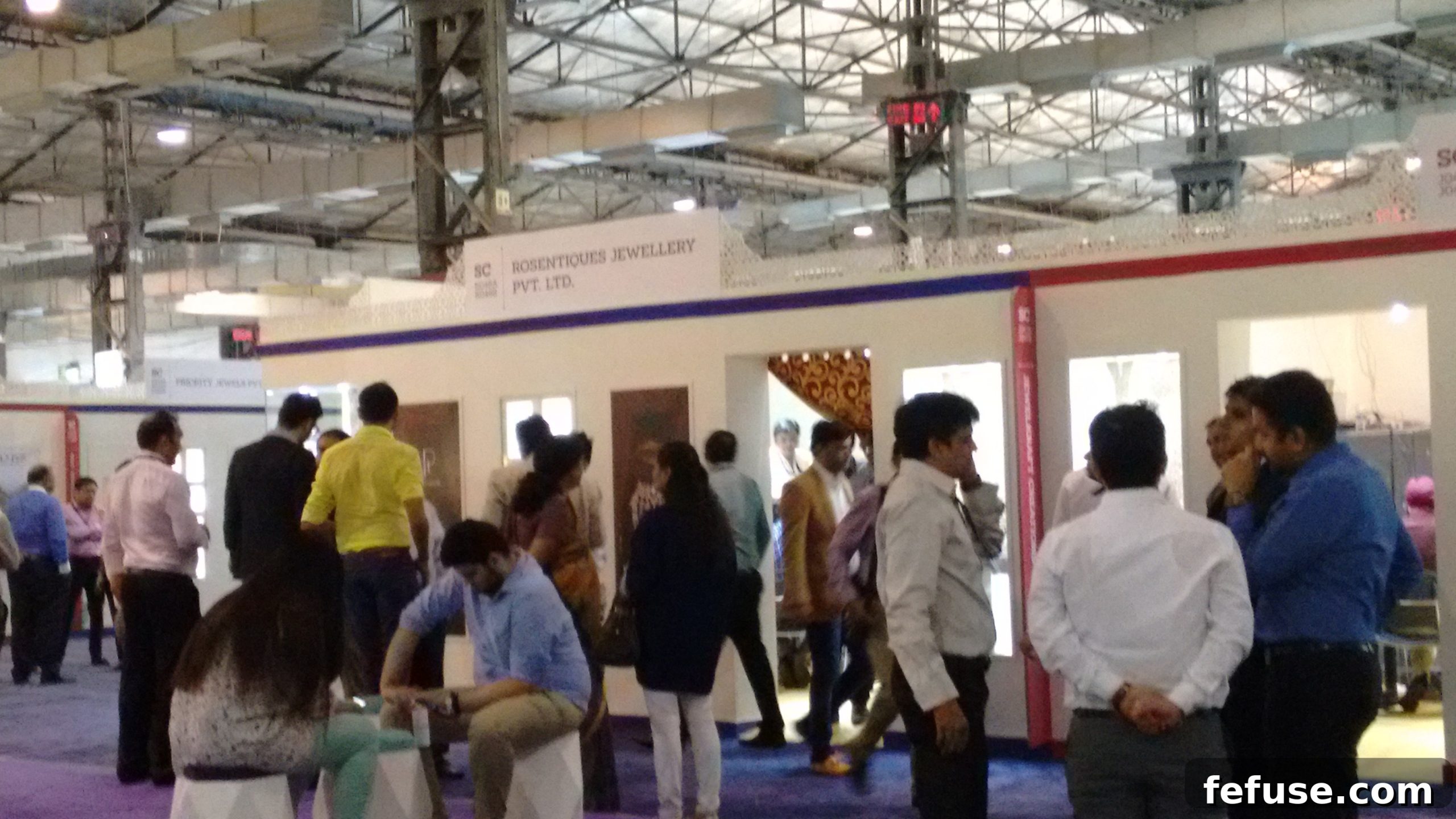
Signature IIJS Shines: Design Dominance and Evolving Market Dynamics in Indian Jewellery
The recent Signature IIJS exhibition proved to be a pivotal event, unequivocally underscoring a critical shift in the jewellery industry: design is no longer a mere embellishment but a central, indispensable element. This paradigm change is largely propelled by an increasingly discerning consumer base that seeks distinctiveness and personal expression in their adornments. With an astounding array of options available, overarching trends might appear subtle, yet a deeper dive reveals a vibrant tapestry of innovation where there truly is something for everyone.
Unveiling Key Design Trends: Asymmetry Takes Center Stage
While diversity reigned supreme, one particular design trend conspicuously captured attention this year: multi-stringed necklaces featuring “pendants” artfully positioned off-shoulder or at other unconventional points, breaking away from the traditional central bottom placement. This embrace of asymmetry marks a bold departure from conventional aesthetics, offering a fresh, modern appeal. These statement necklaces appeared in a multitude of captivating forms:
- Mixed Metal Chains: Combinations of various gold chains, some delicate with tiny gold beads, others robust machine-made links, creating intriguing textures and visual depth.
- Layered Gemstone Strands: Beautifully arranged layers of coloured gemstones, offering a symphony of hues and sparkle.
- Diamond Draping: In more luxurious iterations, strings of diamonds cascaded elegantly, providing unparalleled brilliance.
The overarching theme here was clear: asymmetry. This playful yet sophisticated approach to necklace design allows for greater creativity and individuality, reflecting a consumer desire for jewellery that tells a unique story rather than conforming to established norms.
Leading Jewelers Share Insights: A Pulse on the Indian Market
The exhibition offered a valuable platform for industry leaders to share their perspectives on current market conditions and design innovations. Their insights paint a comprehensive picture of a dynamic sector responding to evolving consumer preferences and economic realities.
Rosentiques: Crafting Innovation Across Polki, Diamond, and Platinum
Rosentiques, a renowned jewellery manufacturer and wholesaler operating exclusively in the B2B space, exemplifies the commitment to design. Bolstered by an eight-member dedicated design and product development team, the company consistently unveils fresh, trend-setting collections for IIJS each year. Rosentiques specializes in three distinct categories: exquisite polki, brilliant diamond, and sophisticated platinum jewellery.
This year, their polki collection captivated attendees by expertly blending traditional charm with contemporary elegance. Polki pieces were artfully combined with very light shades of emeralds, resulting in captivating creations that exuded a soothing pastel allure – a refreshing take on classic Indian artistry. Their diamond jewellery collection drew inspiration from the serene beauty of the lotus flower, translating its delicate petals and graceful form into stunning wearable art. What truly sets Rosentiques apart, particularly in the platinum segment, is their unique approach. While platinum is often favored for its purity and strength in minimalist designs, Rosentiques is among the rare few who dare to create substantial, statement pieces embellished with both coloured gemstones and diamonds. This innovative use of platinum, typically reserved for solitaire settings or simpler designs, showcases a pioneering spirit.
Amish Kothari of Rosentiques highlighted a truly magnificent offering: a large pair of chandelier earrings, resplendent with diamonds and studded with deep, dark emeralds, featuring a delicate spray of diamonds artfully climbing up one side. “We have developed special manufacturing methods to be able to create these intricate and important pieces,” Kothari affirmed, underscoring the advanced craftsmanship and technical expertise required to bring such complex designs to life.
Gold Star Jewellery: The Rise of Lightweight Affordability
Alkesh Shah, representing Gold Star Jewellery Pvt Ltd., a company celebrated for its collection of delicately designed diamond jewellery, provided crucial insights into current market trends. Shah noted a clear shift in consumer buying patterns, stating, “In the current market, it is jewellery up to Rs. 3,00,000 which is doing well.” While Gold Star Jewellery certainly offers more elaborate and expensive pieces, the dominant demand is for lightweight, more affordably priced options. “Customers want a bigger look for their cash,” Shah explained, indicating a preference for designs that offer significant visual impact without a prohibitive price tag. This trend is particularly pronounced in the northern Indian market, where consumers prioritize perceived value and visual grandeur. In contrast, the southern market continues to place a strong emphasis on diamond quality and intrinsic value, reflecting regional variations in consumer preferences.
Despite these challenges, Shah conveyed an optimistic outlook. He observed that customers who had adopted a ‘wait-and-watch’ approach over the preceding two months were now showing readiness to engage, leading to a show that performed “better than expected.” This suggests a cautious but undeniable return of consumer confidence in the market.
Tanvirkumar & Company (Moksh): Navigating a Flat Market
Milan Chokshi of Tanvirkumar & Company, the parent company of the acclaimed Moksh brand, largely echoed Shah’s sentiments regarding price sensitivity but added further dimensions to the market analysis. Chokshi noted that “price points are going down,” indicating a broader trend of value-seeking behavior. Retailers, he observed, were not yet making aggressive purchasing decisions. Instead, their focus was primarily on “replacing old categories,” rather than expanding inventories with entirely new stock. This cautious approach translates into a greater demand for more generic, bread-and-butter items that offer reliable sales.
Tanvirkumar & Company, through its Moksh brand, is renowned for its scintillating designs incorporating coloured gemstones and diamonds. Chokshi specifically highlighted the enduring popularity of their necklaces and earrings, particularly those set in rose gold and featuring fancy-shaped diamonds. Despite the success of these specific lines, Chokshi offered a more circumspect view of the overall market. He characterized the market as “mainly flat,” expressing concerns about a lack of growth across luxury segments and even Fast-Moving Consumer Goods (FMCGs) generally. “There are no new store openings, no expansion of retail capacity,” he lamented, attributing this stagnation to a perceived “very little new wealth creation taking place” in the broader economy. This macro-economic perspective adds a layer of complexity to the seemingly positive performance of certain segments.
K. Girdharlal: Specializing in Diamond-Studded Bangles
From Surat, a hub of India’s diamond industry, K. Girdharlal brought its specialized offerings to Signature IIJS. While the majority of their business lies within the diamond segment, they showcased their distinct expertise in diamond-studded bangles. Nayan Jain of K. Girdharlal elaborated on their niche: “We have a niche in single line bangles using diamonds from 20 points up to one carat, generally.” These finely crafted bangles cater to a premium segment, with prices ranging approximately from Rs. 6,00,000 to Rs. 10,00,000. Beyond their signature single-line designs, the company also presented an array of bangles featuring diverse patterns intricately studded with smaller diamonds, catering to a wider aesthetic preference within the high-value bangle market.
Exhibition Dynamics and Overall Market Sentiment
The Signature Club segment, strategically located in the heart of Hall 1, served as a microcosm of the exhibition’s overall success. While the Signature IIJS exhibition might not have attracted the overwhelming throngs characteristic of the larger IIJS event in August, companies within this exclusive section reported consistent activity. A regular, steady stream of discerning clients ensured that most businesses in the Signature Club remained continuously engaged, facilitating meaningful interactions and transactions. In contrast, some exhibitors situated around the periphery of the exhibition reported a comparatively duller business environment, indicating the importance of strategic positioning and brand visibility within such large-scale events.
Further corroborating the prevailing sentiment, representatives from Varakrupa Jewellers and Diam Jewellery, both located outside the main Signature Club section, echoed the observations regarding market preferences. They confirmed that large, overtly expensive pieces were not moving as readily. Both companies emphasized that design has become an “extremely important aspect” for business success in today’s competitive landscape. Varakrupa Jewellers, focusing entirely on gold, and Diam Jewellery, primarily showcasing diamond jewellery often accented with coloured gemstones, both affirmed the critical role of innovative and appealing designs in attracting and retaining customers.
Despite the nuanced challenges and shifts reported by individual jewelers, the unanimous verdict from across the exhibition floor was clear: Signature IIJS had performed better than initial expectations. This outcome underscores the resilience of the Indian jewellery market and its capacity for adaptation and innovation in response to evolving consumer demands and economic conditions.
News Source: gjepc.org