
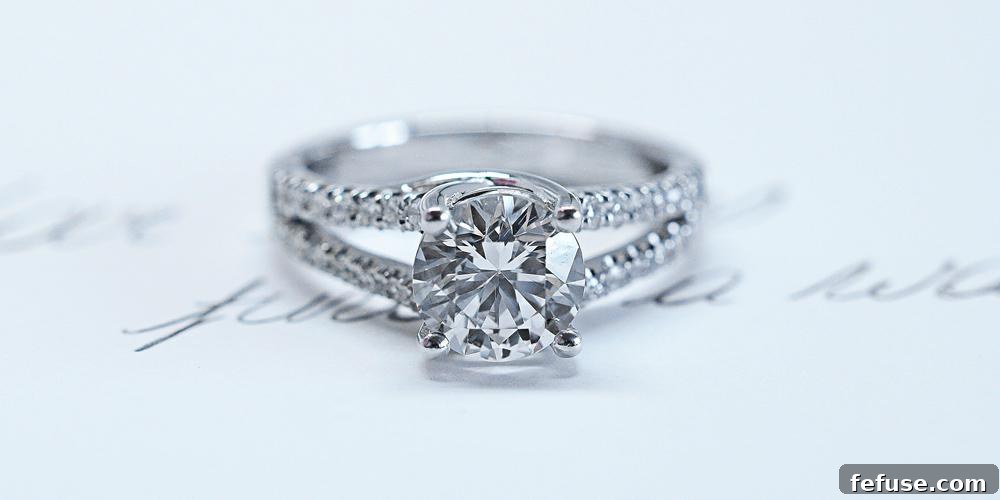
Determining the accurate value of a diamond ring is a crucial process, whether you’re looking to purchase, insure, or resell your precious piece. It’s more complex than simply looking at a price tag, involving a careful examination of the stone’s inherent qualities, its market standing, and the value of its setting. This comprehensive guide will walk you through every essential step to determine the true price of a diamond ring, ensuring you have a clear understanding of its worth.
The Ultimate Guide to Determining Your Diamond Ring’s True Value
A diamond ring isn’t just a beautiful piece of jewelry; it’s often a significant investment and a cherished symbol. Understanding its true value requires a methodical approach, dissecting both the diamond itself and the metal that cradles it. From the moment of purchase to potential resale, knowing how to accurately assess its worth empowers you with confidence and informed decision-making. This guide breaks down the essential factors and provides a clear roadmap for anyone looking to understand their diamond ring’s monetary worth.
Unlocking the Diamond’s Worth: The Fundamental 4 Cs
The foundation of a diamond’s value lies in its unique characteristics, universally known as the 4 Cs: Carat, Cut, Color, and Clarity. These four factors are meticulously graded by gemological laboratories and significantly impact a diamond’s price, forming the core of any professional valuation.
1. Carat: Weight, Not Size
Often misunderstood, carat refers specifically to a diamond’s weight, not its physical dimensions or size. One carat is equivalent to 200 milligrams. Generally, the higher the carat weight, the rarer and more valuable the diamond tends to be, assuming all other C’s are equal. However, it’s crucial to remember that a larger carat weight doesn’t automatically guarantee a larger appearance on the finger; the diamond’s cut plays a significant role in how large and brilliant it visually presents. Diamonds just below popular whole or half-carat marks (e.g., 0.90 ct instead of 1.00 ct) can offer significant value savings with minimal visual difference.
2. Cut: The Sparkle Factor
The cut is arguably the most critical of the 4 Cs, as it dictates a diamond’s brilliance, fire, and scintillation – essentially, how much it sparkles and interacts with light. A masterfully cut diamond reflects light optimally, creating breathtaking sparkle, regardless of its carat weight or color. The term ‘cut’ refers not only to the diamond’s shape (e.g., round, princess, oval) but, more importantly, to its proportions, symmetry, and polish. Reputable grading labs like GIA (Gemological Institute of America) assess cut quality on a comprehensive scale ranging from Excellent to Poor. An excellent cut can make a diamond appear brighter, larger, and more lively, substantially enhancing both its visual appeal and its monetary value.
3. Color: The Absence of Tint
Diamond color is graded on a precise scale from D (absolutely colorless) to Z (light yellow or brown tint). Truly colorless diamonds (D, E, F grades) are the rarest and command the highest prices because they allow white light to pass through unobstructed, maximizing brilliance. As you move down the scale towards Z, the diamond exhibits a more noticeable yellow or brown hue. While many people prefer colorless diamonds, it’s worth noting that some unique diamonds with intense “fancy” colors (like pink, blue, or vivid yellow) are exceptions to this scale and are graded differently, often being exceedingly rare and highly valuable in their own right.
4. Clarity: Flawless Beauty
Clarity refers to the absence of inclusions (internal characteristics) and blemishes (external imperfections) within a diamond. The GIA clarity scale ranges from Flawless (FL) to Included (I3). Flawless diamonds are exceptionally rare and are completely free of any visible imperfections under 10x magnification. Most diamonds have some level of inclusions, which are natural birthmarks formed during their creation. Diamonds graded VS1 (Very Slightly Included) or SI1 (Slightly Included) often offer excellent value, as their inclusions are typically not visible to the naked eye, a characteristic often referred to as “eye-clean.”
The Paramount Importance of Certification
To ensure an objective and accurate assessment of a diamond’s quality characteristics, it should always be verified by an independent, reputable gemological laboratory. Organizations such as the Gemological Institute of America (GIA), the American Gem Society (AGS), and the International Gemological Institute (IGI) provide detailed grading reports that objectively assess the 4 Cs. A certified diamond ensures transparency, instills confidence in its stated quality, and significantly simplifies the process of accurately determining its market value. This certification is indispensable for both initial purchase decisions and any future transactions, whether for insurance or resale purposes.
Assessing the Retail Market Price of Your Diamond Ring
Once you have a firm grasp of your diamond’s specific quality through its 4 Cs and professional certification, the next crucial step is to research its current retail market price. This involves a systematic comparison of your stone to others with identical or very similar specifications.
Effective Comparison Methods for Market Value
To find a reliable indication of your diamond’s market price, conduct thorough and strategic research:
- Online Retailers: Begin by browsing major online diamond retailers. Utilize their advanced search filters to input your diamond’s exact specifications – carat weight, color grade, clarity grade, cut grade, and shape. Compare prices for loose diamonds that precisely match your stone’s characteristics. Aim to gather at least 5-10 comparable results to establish a robust average.
- Local Jewelers: Visit several reputable local jewelers and inquire about the price of loose diamonds with specifications similar to yours. This approach can provide valuable insight into pricing trends specific to your geographical area, though it’s important to note that brick-and-mortar stores often have higher operational overheads compared to online retailers.
- Professional Appraisal Services: For the most professional, unbiased, and officially recognized assessment, seriously consider obtaining an independent appraisal from a certified gemologist. An appraisal provides an official document estimating the replacement value of your ring, primarily for insurance purposes. This appraised value is typically higher than its immediate resale value but serves as a crucial benchmark.
For instance, if your ring features a 0.75 carat round brilliant diamond with a G color, VS2 clarity, and an Excellent cut, meticulously search for loose diamonds possessing these precise attributes across various online platforms and local establishments to establish a realistic average market value.
Beyond the 4 Cs: Other Factors Influencing Retail Price
While the 4 Cs are the primary determinants, several other elements can subtly, yet significantly, influence a diamond’s retail price:
- Fluorescence: Some diamonds exhibit fluorescence, usually blue, when exposed to ultraviolet (UV) light. While often undetectable in natural light, strong blue fluorescence can sometimes cause very colorless (D-F) diamonds to appear milky or oily, potentially leading to a slight discount in value. Conversely, for lower color grades (I-M), fluorescence can occasionally make them appear whiter, which might modestly increase their appeal.
- Brand and Origin: Designer brands often command a premium due to their established reputation, extensive marketing, and exclusive designs. The ethical origin of the diamond (e.g., conflict-free sourcing, specified mine origin) can also be a significant factor for environmentally and ethically-minded consumers, though it typically doesn’t impact the price as directly as the 4 Cs.
- Treatments and Enhancements: Be aware if your diamond has undergone any treatments or enhancements (e.g., High-Pressure High-Temperature – HPHT, laser drilling, fracture filling). While some treatments are common and accepted within the industry, they generally reduce a diamond’s value compared to an untreated natural stone of similar quality. It is legally mandated and ethically crucial that any treatments are fully disclosed on the certification.
Evaluating the Value of the Metal Setting
The diamond ring’s setting, while secondary to the primary stone, contributes significantly to its overall aesthetic and intrinsic value. Its worth is primarily determined by the type of precious metal used, its purity, and the intricacy of the design and craftsmanship.
1. Identify the Precious Metal
Common precious metals utilized for diamond rings include:
- Gold: Highly versatile and available in various colors such as classic yellow gold, modern white gold (an alloy with white metals), and romantic rose gold (an alloy with copper). Gold’s purity is meticulously measured in karats (K).
- Platinum: A naturally white, extremely dense, and highly durable metal, renowned for its hypoallergenic properties and exceptional resistance to tarnish. Platinum is often a premium choice due to its rarity and physical characteristics.
- Palladium: Another naturally white precious metal, part of the platinum family, offering similar properties like durability and hypoallergenic qualities but generally lighter in weight and less common in contemporary engagement rings.
The specific metal chosen will have a direct impact on the cost, primarily due to differing market prices per gram and varying densities.
2. Determine Metal Purity
For gold, purity is precisely indicated by its karat mark. 24K gold is considered 100% pure, but it is too soft and malleable for practical everyday jewelry. Common purities for diamond rings include:
- 18K Gold: Comprises 75% pure gold (typically marked with “750”). It offers a rich, vibrant color and good durability.
- 14K Gold: Contains 58.3% pure gold (marked with “585”). This is a very popular choice due to its superior durability and more affordable price point compared to 18K.
- 10K Gold: Consists of 41.7% pure gold (marked with “417”). It is the most durable of the common gold alloys but has the lowest pure gold content.
Platinum jewelry is almost always highly pure, typically 90% to 95% pure (marked PT900 or PT950), which contributes to its density and often higher cost compared to gold alloys.
3. Weigh the Metal and Calculate Its Intrinsic Value
Once you have accurately identified the metal type and its purity, you can proceed to assess its intrinsic melt value. This process involves a few key steps:
- Weighing the Ring: Ideally, the most accurate method is to weigh the ring without the diamond(s) to obtain a precise metal weight. Professional jewelers possess specialized scales capable of this.
- Current Market Price: Research and find the current spot price for gold, platinum, or palladium per gram or per ounce. These prices fluctuate daily and can be found on financial news websites.
- Calculation: Multiply the metal’s pure weight (e.g., total weight of ring metal minus stones, then multiplied by its purity percentage) by its current market spot price. For example, for a 14K gold ring, you would use 58.3% of the total gold weight in your calculation.
It’s important to keep in mind that this calculation provides the raw material’s scrap value. The artistry, brand reputation, and intricate design complexity of the setting also contribute significantly to its retail price, though this premium diminishes considerably when assessing its melt or scrap metal value.
Understanding Your Diamond Ring’s Resale Value
A critical distinction that every owner must make is between a diamond ring’s retail market price and its subsequent resale value. When you sell a diamond ring, you will almost invariably receive less than its original retail purchase price, and often less than its current retail replacement value as determined by an appraisal.
Why Resale Value Differs Significantly from Retail
The discrepancy between retail and resale prices arises from several fundamental economic and business reasons:
- Wholesale vs. Retail Markup: Jewelers and professional diamond buyers operate on established profit margins. They acquire stones at wholesale prices and then apply a markup to cover their overheads, marketing, and profit when selling at retail. When buying from an individual, they must factor in their own potential profit margin, meaning they will pay you less than the wholesale price they would pay a regular supplier.
- Business Guarantees and Services: Established wholesalers provide jewelers with crucial business advantages such as quality guarantees, flexible return policies, preferential financing arrangements, and extensive marketing support. An individual seller, unlike a professional supplier, cannot offer these assurances, thereby increasing the perceived risk for the buyer and influencing their offer.
- Market Liquidity: Diamonds, while valuable, are not highly liquid assets like cash or easily traded stocks. Reselling them can require significant time, effort, and market exposure. Professional buyers factor this inherent illiquidity into their offers.
- Condition and Market Trends: The overall condition of the ring (any wear and tear, damage to the setting, or minor chips on the diamond) and prevailing market trends for specific styles, cuts, or sizes can also significantly influence its resale value. Timeless designs and classic cuts tend to hold value better.
Realistic Resale Expectations and Avenues
Generally, when selling a diamond ring, you should expect to receive a percentage of the diamond’s current retail value, not its original purchase price.
- Selling to Jewelers or Professional Diamond Buyers: If you opt to sell to a professional buyer, such as a local jeweler or a dedicated diamond buyer, expect offers typically ranging from 20% to 50% of the current retail replacement value. The exact percentage depends heavily on the diamond’s overall quality, its current desirability in the market, prevailing demand, and the buyer’s specific business model and inventory needs.
- Online Consignment or Marketplaces: Platforms such as eBay, specialized online diamond resale sites, or consignment services can potentially yield a higher return, perhaps in the range of 40% to 70% of the retail value. However, this avenue requires more significant effort on your part, including professional photography, meticulous listing details, active communication with potential buyers, and managing shipping and potential returns. It can also take longer to finalize a sale.
- Private Sales (Friends, Family, or Direct Buyers): Selling privately, perhaps to someone you know, through personal networks, or via secure local classifieds, often offers the best chance of maximizing your return. In such direct-to-consumer scenarios, you might achieve 60% to 80% of the current retail value, especially if the buyer appreciates the specific piece and you can provide all original documentation and certification. This is frequently considered the “best deal” scenario, as you effectively bypass the middleman’s profit margin.
Possessing original certifications (GIA, AGS) and receipts will significantly help in securing a better resale price, as these documents provide undeniable, objective proof of the diamond’s quality and origin, building crucial trust with potential buyers.
Putting It All Together: A Step-by-Step Valuation Process
To accurately and confidently determine your diamond ring’s comprehensive value, meticulously follow these methodical steps:
- Obtain Professional Certification: If your diamond lacks a recent certificate from a reputable, independent gemological laboratory (such as GIA or AGS), strongly consider getting it appraised and certified. This objective, third-party report is the absolute cornerstone of any accurate valuation.
- Thoroughly Understand the 4 Cs: Familiarize yourself intimately with your diamond’s specific Carat, Cut, Color, and Clarity grades as detailed on its certificate. These are the primary value drivers.
- Research Market Price for the Diamond: Utilize online retailers, diamond databases, and recent sales data to find the current average retail price for a loose diamond with identical 4 Cs, shape, and fluorescence characteristics.
- Assess Metal Value: Accurately identify the type and purity of the precious metal used in the setting (e.g., 14K gold, PT950 platinum). Calculate its intrinsic scrap value based on its precise weight and current daily market rates for that metal.
- Consider Setting Design & Craftsmanship: Acknowledge that intricate, custom, or designer setting designs add a premium to the initial retail value. However, be aware that this premium for craftsmanship often diminishes significantly during resale, as buyers primarily focus on the diamond and metal’s intrinsic worth.
- Factor in Realistic Resale Expectations: Be pragmatic about the inherent difference between a diamond ring’s retail replacement value and what you might realistically receive if selling it. Decide on your preferred selling channel (professional dealer, online marketplace, private sale) and adjust your expectations for the potential return accordingly.
- Consult a Professional Appraiser (for Insurance or Formal Valuation): For insurance purposes, estate planning, or any situation requiring a formal, legally recognized valuation, always consult a certified independent gemologist or appraiser. They can provide a comprehensive valuation report.
Conclusion: Empowering Your Diamond Ring Decisions
Every diamond ring possesses a unique story, intricate characteristics, and consequently, a unique monetary value. By meticulously examining its core components – the universally recognized 4 Cs of the diamond and the specific characteristics of its precious metal setting – you can arrive at a truly well-informed and confident assessment of its worth. Whether you are in the exciting process of buying, contemplating selling, or simply seeking to fully understand the significant asset you already possess, this detailed and systematic approach equips you with the comprehensive knowledge needed to navigate the often-intricate world of diamond valuation. Remember, diligent research, objective assessment, and realistic expectations are your best allies in making confident and intelligent decisions about your precious diamond ring.