
Global Diamond Industry Forges Unity: Landmark Agreement on Common Nomenclature to Boost Trust and Transparency
In a significant stride towards greater clarity, consistency, and consumer confidence, the leading entities of the international diamond and jewellery industry have announced a landmark agreement. The World Federation of Diamond Bourses (WFDB), the International Diamond Manufacturers Association (IDMA), and CIBJO, the World Jewellery Confederation, have successfully finalized a pivotal accord establishing common nomenclature for the trade of diamonds and diamond jewellery worldwide. This collaborative effort marks a crucial moment for the industry, promising enhanced uniformity and reliability across all sectors, from the initial stages of production to the final retail experience.
This groundbreaking initiative is set to redefine how diamonds and diamond jewellery are described and traded, providing a unified language that will mitigate confusion and foster a more transparent marketplace for both industry professionals and consumers alike. The agreement underscores a collective commitment to upholding the highest standards of integrity and clarity in the global diamond trade.
A Unified Language for the Global Diamond Market
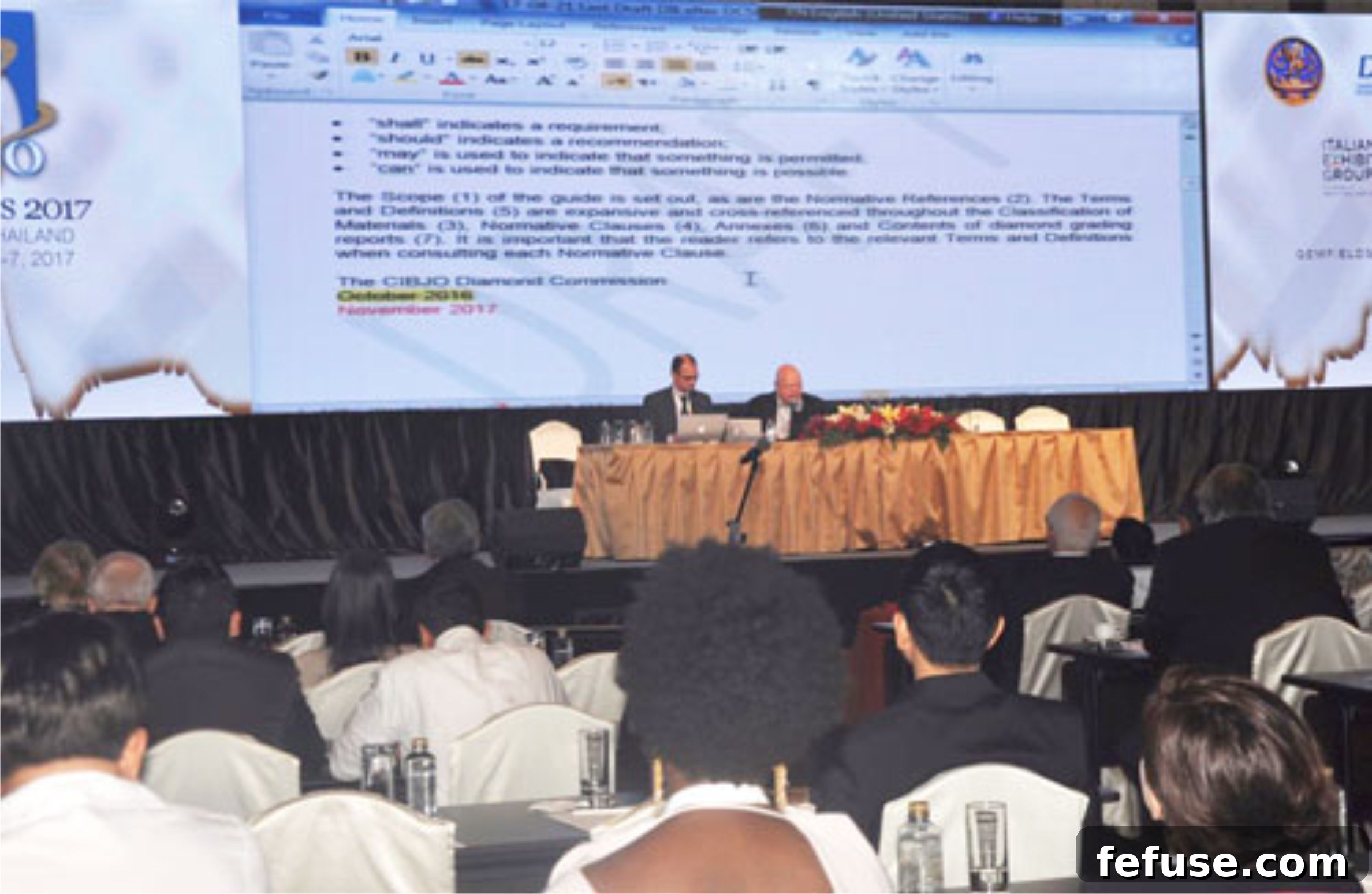
The agreement was formally concluded during the ongoing CIBJO Congress, an influential gathering held in the vibrant city of Bangkok. This momentous decision followed the unanimous approval of key amendments requested by the International Diamond Council (IDC) to the comprehensive CIBJO Diamond Book. These amendments, integral to the overarching agreement between the three influential organizations, received endorsement during a critical meeting of the Diamond Commission, affirming the industry’s readiness for standardized terminology.
Consequently, the terms and definitions meticulously outlined in the IDC’s authoritative Rule Book and CIBJO’s renowned Diamond Blue Book will now be fully harmonized. This alignment eliminates previous discrepancies and ambiguities, creating a single, definitive reference point that benefits every participant in the diamond pipeline. From professional traders and manufacturers to retailers and, most importantly, the end consumer, everyone will now operate under a shared understanding of diamond characteristics, classifications, and terminologies.
The consolidation of these standards represents a significant leap forward in reducing potential misinterpretations and fostering seamless communication across international borders. It ensures that whether a diamond is being graded in Antwerp, manufactured in Mumbai, or sold in New York, the descriptive language used will be consistent and universally understood, thereby streamlining trade processes and enhancing transactional trust.
Elevating Consumer Confidence and Industry Standards
The implications of this agreement extend far beyond mere technical definitions; they fundamentally aim to strengthen trust and foster an environment of unwavering confidence among buyers. CIBJO President Gaetano Cavalieri articulated this profound vision, stating that consumers can now rely on a singular, consistent set of rules describing diamonds. He emphasized that this agreement with WFDB-IDMA “serves the interest of both the industry and the marketplace,” highlighting its dual benefit for commercial operations and robust consumer protection.
Echoing this sentiment, WFDB President Ernie Blom hailed the agreement as a “major step forward.” Blom asserted that “creating a single, universally applicable book will combat any confusion in the market about nomenclature,” underscoring the preventative power of standardized language. The elimination of ambiguous or conflicting terms is expected to significantly reduce misunderstandings and potential misrepresentations, thereby solidifying the integrity of diamond transactions globally and safeguarding the reputation of the industry.
Udi Sheintal, the CIBJO Diamond Commission President, further elaborated on the profound impact of this standardization. He confidently stated that the existence of a common reference point will unequivocally enhance consumer confidence. In an age where discerning product authenticity and understanding intrinsic value is paramount, a unified nomenclature provides the clarity and assurance consumers seek when making significant purchases of diamonds and diamond jewellery. This clarity empowers consumers to make informed decisions, secure in the knowledge that the terms used are globally recognized and consistently applied.
The Foundational Role of IDC and CIBJO Blue Books
This momentous agreement is built upon decades of dedicated work by these esteemed organizations, whose efforts have consistently aimed at establishing and maintaining high standards within the diamond industry. The International Diamond Council (IDC) was established in 1975 by its founders, the WFDB and IDMA, with the explicit mission to provide universally accepted standards of nomenclature for polished diamonds within the international diamond trade. Its Rule Book has long served as a cornerstone for defining and grading diamonds, providing essential guidelines for professionals across the globe.
Similarly, CIBJO’s Blue Books are renowned for their comprehensive and continuously updated guidelines for the entire jewellery sector. These books are not static documents but are constantly reviewed and revised to ensure they remain current with evolving market conditions, technological advancements, and emerging industry best practices. This dynamic approach ensures that the standards reflect the latest scientific understanding and market realities, maintaining their relevance and authority over time. The rigorous review process involves experts from various fields, ensuring that the guidelines are robust and reflective of global best practices.
The synergy between the IDC Rule Book and the CIBJO Diamond Blue Book, now fully harmonized, represents a robust framework designed to uphold the highest levels of accuracy and integrity. This framework is vital in a globalized market where diamonds traverse numerous borders and are handled by a diverse array of professionals before reaching the consumer. Standardized nomenclature ensures consistent communication and evaluation at every stage of this complex journey, reinforcing the credibility of the diamond supply chain.
Navigating the Future: The Challenge of Synthetic Diamonds
Beyond the immediate agreement on nomenclature for natural diamonds, the meeting of the Diamond Commission also delved into another critical and increasingly relevant topic: the need for distinct Harmonized System (HS) codes for synthetic diamonds. This discussion highlights the industry’s proactive approach to addressing the growing presence and distinct characteristics of lab-grown diamonds in the market, ensuring appropriate classification for a rapidly evolving segment.
Why Separate HS Codes are Crucial for Synthetic Diamonds
The Harmonized System (HS) is a globally recognized numerical classification system for traded products, managed by the World Customs Organisation (WCO). Its primary purpose is to classify goods based on their type, composition, and use, thereby facilitating international trade, customs procedures, and data collection. Currently, only India and China have implemented specific HS codes for synthetic diamonds, leaving a significant gap in global classification that impacts numerous facets of the trade.
The absence of universally recognized, separate HS codes for synthetic diamonds presents several formidable challenges:
- Clarity in Trade Statistics: Without distinct codes, it becomes exceedingly difficult to accurately track the true volume and value of synthetic diamonds traded internationally. This lack of precise data hinders market analysis, impedes informed policy decisions, and obscures the actual size and growth trajectory of the synthetic diamond sector.
- Preventing Misrepresentation: Separate codes are indispensable in helping customs authorities and traders clearly distinguish between natural and synthetic diamonds. This distinction is critical in reducing the potential for misdeclaration, accidental commingling, or, in the worst-case scenario, fraudulent practices that could undermine market integrity and consumer trust.
- Fair Taxation and Tariffs: Different types of diamonds, due to their origin, production methods, and market value, may be subject to varying duties and taxes across different jurisdictions. Unique HS codes are essential to ensure the accurate and equitable application of these fiscal measures, preventing unfair competition or revenue loss for governments.
- Regulatory Compliance: Specific codes are vital for supporting the effective implementation of a myriad of regulations pertinent to either natural or synthetic diamonds. These might include rules related to origin tracking, ethical sourcing standards, environmental impact declarations, or specific import/export restrictions. Without distinct codes, enforcing such regulations becomes a complex and often imprecise task.
Udi Sheintal underscored the urgency of this issue, stating, “We want the national organizations to lobby their government to put some pressure on the World Customs Organisation (WCO) to make the change.” This call to action emphasizes the need for a concerted, global effort to update international trade classifications to reflect the evolving landscape of the diamond market, ensuring that regulatory frameworks keep pace with technological advancements and market dynamics.
Engaging with Synthetic Diamond Manufacturers for Common Nomenclature
In a forward-thinking and inclusive move, Sheintal also proposed that CIBJO should initiate outreach to synthetic diamond manufacturers. The objective is to explore possibilities for associating them with CIBJO in an appropriate format and to encourage their adoption of the same nomenclature standards that apply to natural diamonds. This proactive engagement acknowledges the legitimate and growing place of synthetic diamonds in the market and seeks to integrate them responsibly within existing industry frameworks, rather than letting a bifurcated market develop without common rules.
Sheintal clarified that his idea, at this stage, was focused purely on “reaching out” – initiating dialogue, understanding perspectives, and identifying common ground – rather than the immediate formation of a formal committee or group. This cautious yet inclusive approach aims to foster collaboration and ensure that the entire diamond sector, encompassing both natural and synthetic products, operates under a consistent and transparent set of guidelines. Ultimately, this will benefit the consumer by ensuring clarity regardless of their diamond choice, and help maintain overall market integrity by preventing confusion and promoting fair practices across all segments.
The Broader Vision: Trust, Transparency, and Sustainability
The recent agreements and discussions by WFDB, IDMA, and CIBJO underscore a broader, overarching vision for the diamond and jewellery industry – one built on unwavering trust, complete transparency, and long-term sustainability. By harmonizing nomenclature, the industry is not just streamlining trade; it is actively fortifying its reputation and safeguarding consumer confidence against potential confusion, deception, or erosion of value.
This commitment to clarity is especially vital in an era where consumers are increasingly conscious of product origin, ethical sourcing, environmental impact, and verified quality. A unified language provides the foundational bedrock upon which robust certification systems, responsible supply chains, and transparent marketing practices can be built and communicated effectively to a discerning global audience.
Furthermore, the proactive discussions surrounding distinct HS codes for synthetic diamonds demonstrate a forward-looking perspective. The industry is recognizing and adapting to technological advancements and significant market shifts, ensuring that regulatory frameworks evolve alongside innovation. This adaptive capacity is crucial for maintaining the relevance, integrity, and sustainable growth of the diamond sector for generations to come, ensuring its continued prosperity in an ever-changing world.
Conclusion: A Unified Path Forward for the Diamond Industry
The agreement reached by WFDB, IDMA, and CIBJO on common nomenclature for diamonds and diamond jewellery represents a monumental achievement for the global industry. It signifies a powerful collective commitment to clarity, consistency, and, most importantly, enduring consumer trust. By harmonizing key terminologies and actively addressing emerging challenges like the proper classification of synthetic diamonds, these leading organizations are charting a unified, progressive path forward.
This collaborative spirit promises a more transparent, equitable, and understandable marketplace, where both trade professionals and consumers can operate with greater confidence and understanding. As the diamond industry continues to evolve and innovate, these foundational agreements will serve as the bedrock for ethical practices, informed purchasing decisions, and sustained growth, ensuring the timeless allure and inherent value of diamonds for years to come.
News Source: gjepc.org