
De Beers Navigates Challenging Diamond Market with Strategic Production Adjustments in Q2 2024
The global natural diamond market continues to face a complex landscape, characterized by fluctuating demand and cautious consumer spending. In its latest Production Report for the Second Quarter of 2024, De Beers, a leading global diamond company, revealed a significant 15 per cent decline in its global diamond production. This downturn underscores persistent weaknesses in market demand, marking yet another quarter of subdued activity for the luxury sector.
The first half of 2024 (H1) paints an even starker picture, with De Beers recovering a total of 16.5 million carats. This figure represents a substantial 19 per cent decrease compared to the same period in 2023, signaling a sustained strategic shift towards managing supply in response to prevailing market conditions. The company’s proactive measures aim to balance supply with demand, thereby supporting price stability in a delicate economic environment.
Deep Dive into Q2 2024 Production Figures
During the second quarter of 2024, De Beers’ total diamond recovery amounted to 6.4 million carats. This figure is notably lower than the 7.6 million carats recovered year-on-year in Q2 2023, reflecting a deliberate strategy to reduce output. This decision aligns with the broader objective of maintaining market equilibrium and preventing an oversupply that could further depress prices for natural diamonds.
The impact of these production adjustments was most acutely felt in Botswana, a nation that forms the backbone of De Beers’ mining operations, accounting for approximately two-thirds of its total global output. Production in Botswana saw a significant 19 per cent reduction, highlighting the country’s central role in the company’s overall production strategy and its sensitivity to market fluctuations. This strategic scaling back in a key producing region underscores De Beers’ commitment to a disciplined approach to supply management.
Jwaneng Mine: At the Forefront of Strategic Production Cuts
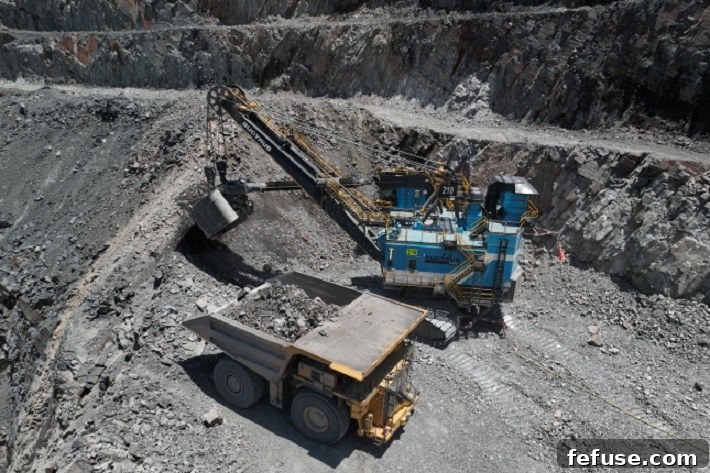
A primary driver behind Botswana’s reduced output was the intentional lower production from the Jwaneng mine. De Beers attributed this to “short-term changes in plant feed mix at Jwaneng to process existing surface stockpiles.” Jwaneng, widely recognized as De Beers’ largest and most valuable diamond deposit, experienced a substantial 36 per cent drop in output during the quarter, falling from 2.5 million carats to 1.9 million carats.
This operational adjustment at Jwaneng is not merely a reaction to weak demand but a calculated strategic maneuver. By prioritizing the processing of existing surface stockpiles, De Beers aims to optimize its inventory management, reduce operational costs associated with extracting new ore, and carefully control the volume of new diamonds entering the market. This approach helps to prevent an accumulation of unsold inventory and supports the perceived scarcity and value of natural diamonds.
Regional Production Variances Across the Portfolio
Beyond Botswana, De Beers’ other key mining regions also exhibited varied production performances. Namibia, another significant contributor to the company’s marine diamond output, saw an 8 per cent decrease in production. Canada experienced a marginal 1 per cent slip, indicating a relatively stable but slightly reduced operational footprint in that region.
In contrast, South Africa stood out as an exception, recording an 8 per cent increase in production. This localized growth may be attributed to specific operational efficiencies, higher ore grades, or differing market strategies for the types of diamonds recovered in the region. However, this increase was not enough to offset the larger declines observed in Botswana and Namibia, which collectively have a more substantial impact on De Beers’ overall global production figures.
Navigating Market Weakness: Demand, Inventory, and Capital Management
The persistent “weak demand” cited by De Beers reflects broader macroeconomic challenges impacting consumer discretionary spending. Factors such as inflation, rising interest rates, and geopolitical uncertainties have collectively dampened consumer confidence, particularly in the luxury goods sector. Diamonds, being a quintessential luxury item, are often among the first purchases to be deferred during economic downturns.
De Beers’ strategy to intentionally lower production is a direct response to these market realities. It allows the company to avoid flooding the market with excess supply, which could lead to further price erosion and instability. Instead, by carefully managing the flow of diamonds, De Beers aims to maintain the intrinsic value and desirability of natural diamonds, preserving their appeal as symbols of love, commitment, and enduring value.
The initial production guidance for the year, as outlined in De Beers’ report, remained unchanged at 26 million to 29 million carats. However, its parent company, Anglo American, has provided a more cautious outlook. Anglo American indicated that the original full-year production forecast of 29 million to 32 million carats could very well be further reduced. This potential downward revision is primarily aimed at managing working capital more effectively and preserving cash in the prevailing weak market conditions.
This strategic emphasis on working capital and cash preservation underscores Anglo American’s prudent financial management in a challenging environment. By reducing production, the company can minimize the capital tied up in inventory, optimize cash flow, and ensure financial resilience during periods of reduced demand. It reflects a cautious but necessary approach to safeguard the long-term health of both De Beers and its parent company.
Broader Implications for the Natural Diamond Industry
De Beers’ production cuts and Anglo American’s revised guidance send a clear signal across the natural diamond industry. It highlights the continued pressure on miners to adapt to a changing market, where consumer preferences and economic conditions play a crucial role. The industry is also contending with the growing presence of lab-grown diamonds, which offer a more affordable alternative, further compelling natural diamond producers to reinforce the unique value proposition of their products.
To counteract these challenges, De Beers and the wider industry are expected to double down on marketing efforts that emphasize the rarity, heritage, and emotional significance of natural diamonds. Initiatives focusing on provenance, ethical sourcing, and sustainability will likely gain even more prominence, as discerning consumers increasingly seek transparency and responsible practices in their luxury purchases.
De Beers’ Future Outlook and Adaptability
Looking ahead, De Beers’ ability to navigate these market headwinds will be critical. The company’s strategic adjustments in Q2 2024 demonstrate its agility and commitment to maintaining market stability. While the short-term outlook remains cautious, especially with potential further production cuts, these measures are designed to position De Beers for a stronger rebound when market conditions improve.
The long-term health of the natural diamond market will depend on a delicate balance between supply discipline and the successful stimulation of consumer demand. De Beers, with its extensive experience and leadership position, is well-placed to influence both aspects. Through continued innovation in mining, responsible environmental and social practices, and compelling storytelling, the company aims to ensure that natural diamonds retain their coveted status in the global luxury market for generations to come. The coming quarters will be pivotal in determining the effectiveness of these strategic adjustments and the trajectory of the natural diamond industry’s recovery.