
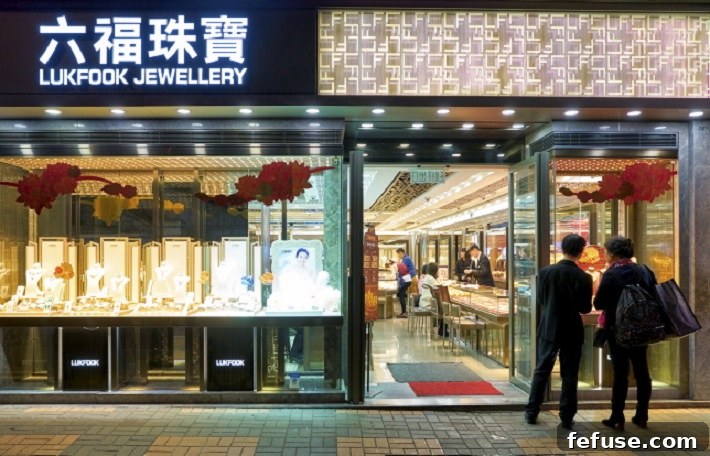
Luk Fook Faces Significant Headwinds: Revenue Slumps Amid Soaring Gold Prices and Cautious Consumer Sentiment
The global luxury retail sector, particularly the jewelry segment, is navigating a complex landscape marked by economic volatility and shifting consumer behaviors. Leading this challenging narrative is Luk Fook Holdings (International) Limited, one of Hong Kong’s most prominent jewelry chains. The company recently disclosed its half-year financial results, painting a sobering picture of a market grappling with unprecedented pressures. Luk Fook reported a substantial 27 percent slump in its half-year revenue, a clear indicator of the difficult environment. This financial downturn was accompanied by strategic operational adjustments, including the closure of 175 of its over 3,500 retail jewelry stores, as the company seeks to adapt to a surge in gold prices and persistently weak consumer demand.
The six-month period ending 30 September proved particularly challenging for the venerable jewelry retailer. Earnings for this crucial half-year were recorded at $700 million, a figure that starkly contrasts with previous periods of robust growth. Luk Fook attributed this significant decline to a confluence of “various challenges including macroeconomic uncertainties, further rising gold prices and cautious consumer sentiment, coupled with a high base effect.” These factors collectively created a formidable barrier to sustained growth, forcing the company to re-evaluate its market approach and operational efficiency in key regions.
The Golden Dilemma: Soaring Prices and Their Impact on Sales
At the heart of Luk Fook’s financial struggles lies the dramatic appreciation in gold prices. During the six-month reporting period, gold experienced a substantial 23 percent increase, reaching new historical highs. While gold is often seen as a safe-haven asset, its escalating cost poses a unique challenge for jewelers like Luk Fook. For consumers, the sharp rise in gold prices translates directly into higher purchase costs, making luxury gold and platinum products less accessible or desirable. This direct correlation was evident in Luk Fook’s performance, as sales of its gold and platinum products witnessed a significant 24 percent drop.
The dynamics of gold in the jewelry market are intricate. While some consumers may view gold purchases as an investment, many acquire gold jewelry for its aesthetic value, cultural significance, or as gifts. When prices spike rapidly, the perceived value-for-money diminishes, prompting potential buyers to postpone purchases or opt for less expensive alternatives. This hesitation directly impacts sales volumes, even if profit margins on individual higher-priced items might be maintained or even slightly improved. The overall effect on the market was palpable, with Luk Fook reporting that its overall same-store sales plummeted by a staggering 34 percent, underscoring the widespread impact of cautious consumer spending exacerbated by precious metal costs.
Macroeconomic Headwinds and Shifting Consumer Psychology
Beyond the immediate impact of gold prices, Luk Fook highlighted “macroeconomic uncertainties” and “cautious consumer sentiment” as pivotal challenges. These broad terms encompass a range of global and regional economic pressures that have dampened discretionary spending. High inflation rates in many major economies have eroded household purchasing power, while rising interest rates make borrowing more expensive, further tightening consumer budgets. Geopolitical tensions and concerns about a potential global economic slowdown also contribute to a pervasive sense of caution, prompting consumers to prioritize essential expenditures over luxury goods.
For a company operating extensively in markets like Hong Kong and mainland China, the economic health of these regions is paramount. A slower-than-expected economic recovery in China post-pandemic, coupled with ongoing property market concerns and youth unemployment, has undoubtedly contributed to a decline in consumer confidence. When individuals feel uncertain about their economic future, they tend to defer large, non-essential purchases like high-value jewelry. This cautious sentiment creates a challenging environment for retailers, requiring innovative strategies to re-engage customers and stimulate demand, even in the face of persistent economic headwinds.
Navigating the “High Base Effect” and Post-Pandemic Momentum
Adding another layer of complexity to Luk Fook’s current performance is what the company termed a “high base effect.” This refers to comparing the current period’s results against a particularly strong previous period, making the current downturn appear more severe. The context for this high base was Luk Fook’s impressive performance in March, when the company reported a robust 28 percent increase in revenue. This surge was primarily driven by a significant influx of tourists post-Covid, particularly in key markets like Hong Kong, which experienced a strong rebound in visitor arrivals and retail spending after years of pandemic-related restrictions.
The post-Covid recovery initially spurred a wave of “revenge spending” as consumers, freed from lockdowns, indulged in travel and luxury purchases. This created an exceptionally high benchmark for comparison. However, as the initial enthusiasm waned and broader economic realities set in, the momentum from this post-pandemic surge proved difficult to sustain. The subsequent slowdown indicates a normalization of consumer behavior rather than a complete collapse, but it undeniably makes the current performance metrics look less favorable when juxtaposed against that period of extraordinary, albeit temporary, growth. Understanding this “high base effect” is crucial for a balanced assessment of Luk Fook’s current position.
Operational Streamlining: The Impact of Store Closures
In response to these multifaceted challenges, Luk Fook has not remained passive. The closure of 175 retail jewelry stores out of its extensive network of over 3,500 outlets is a significant strategic move. This decision reflects a broader industry trend where retailers are re-evaluating their physical footprints to optimize operational efficiency and profitability. Store closures can be a difficult but necessary step to shed underperforming locations, reduce overheads, and concentrate resources on more profitable or strategically important stores.
This streamlining effort suggests a focus on sustainable growth over sheer volume. By consolidating its retail presence, Luk Fook aims to improve the productivity of its remaining stores, enhance the customer experience in key locations, and potentially invest more in its digital channels. The scale of these closures – representing a notable portion of its global network – underscores the severity of the market conditions and the company’s commitment to adapting its business model for long-term resilience. While these closures will undoubtedly incur one-off costs, they are intended to pave the way for a more agile and profitable operation in the future.
Financial Deep Dive: Profits Under Pressure
The detailed financial figures released by Luk Fook further illustrate the extent of the challenges faced. Beyond the revenue slump, the company experienced significant pressure on its profitability. Gross profits for the six-month period were down 14 percent to $228 million. This indicates that even before accounting for operating expenses, the core profitability from sales of goods was affected, likely due to a combination of lower sales volumes and potentially shifts in product mix or inventory management complexities related to gold prices.
The decline was even more pronounced at the net profit level, which fell by a stark 56 percent to $54 million. The greater percentage drop in net profit compared to gross profit suggests that operating expenses, administrative costs, or other non-operating factors had a disproportionately negative impact on the company’s bottom line. This could include costs associated with store closures, higher marketing expenses to combat weak demand, or increased financing costs. Such a significant reduction in net profit highlights the urgent need for cost control measures and efficient operational management to restore profitability in a tough market.
CEO’s Strategic Outlook: Adapting to New Realities
Despite the challenging numbers, CEO Wong Wai Sheung offered a measured and forward-looking perspective on the company’s strategy. He acknowledged the immediate impact of soaring gold prices on sales performance but expressed confidence in the company’s ability to mitigate these effects. “Although the spike in gold prices may affect sales performance, an increase in profit margin will help mitigate the impact of the decline in sales,” Wong Wai Sheung stated. This suggests that while fewer items might be sold, the higher price of gold itself, coupled with potentially stable or increased margins per unit, could help cushion the blow to overall profitability.
Furthermore, Wong Wai Sheung articulated a hopeful outlook regarding consumer adaptation. He commented, “Sales of the gold products are expected to resume to the normal levels after consumers adapt to the high gold prices.” This perspective hinges on the belief that after an initial period of sticker shock, consumers will gradually adjust to the new price points for gold, particularly given its cultural significance and investment appeal in many Asian markets. This adaptation period, however, requires strategic engagement from retailers, potentially through diversified product offerings, enhanced customer service, and targeted marketing campaigns that emphasize value beyond just price. Luk Fook will likely focus on leveraging its brand strength and extensive network to guide consumers through this transition and rekindle demand for its precious metal offerings.
The Path Forward: Innovation and Resilience in Luxury Retail
Luk Fook’s half-year results serve as a microcosm for the broader challenges facing the luxury jewelry sector. Companies operating in this space must contend with volatile commodity markets, unpredictable economic conditions, and evolving consumer preferences. The strategic responses from Luk Fook, including operational streamlining through store closures and a clear focus on managing profit margins, demonstrate a proactive approach to these headwinds. The company’s reliance on consumer adaptation to higher gold prices, combined with its established brand loyalty and extensive market penetration, offers a glimmer of hope for future recovery.
The path forward for Luk Fook and its industry peers will likely involve a blend of strategic innovation, enhanced digital engagement, and a relentless focus on efficiency. Diversifying product lines beyond pure gold, exploring new design aesthetics, and personalizing the customer experience will be crucial. While the immediate outlook remains cautious, the luxury market has historically demonstrated remarkable resilience. As global economic conditions stabilize and consumers adjust to new market realities, Luk Fook aims to be well-positioned to capitalize on renewed demand and continue its legacy as a leading name in the jewelry retail landscape.