
India’s Diamond Industry Under Pressure: Navigating the G7 Sanctions on Russian Diamonds
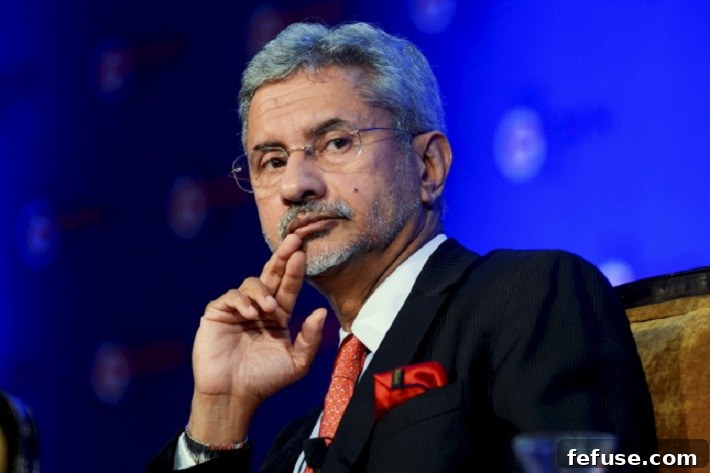
The global diamond industry, a beacon of luxury and intricate craftsmanship, finds itself at a critical juncture following the G7’s decisive move to impose sanctions on Russian diamonds. While the sanctions aim to curtail Moscow’s revenue streams in response to geopolitical events, their ripple effect is poised to create significant economic dislocation, particularly for nations heavily integrated into the diamond supply chain. Among these, India stands out, with its External Affairs Minister, Subrahmanyam Jaishankar, explicitly stating that these measures are set to inflict the most severe blow on the South Asian nation’s thriving diamond sector.
Jaishankar’s candid remarks, delivered to an assembly of young business leaders in Surat, India’s undisputed diamond hub, underscore the profound concern permeating the industry. He articulated India’s multi-pronged strategy: “Our effort is to delay [this ban], to soften it and best of all, not let this happen at all.” This statement highlights the urgency and the high stakes involved, elevating the issue to a “priority” for the Indian government. The commitment to finding a viable solution in the coming days reflects the deep-seated economic implications these sanctions present, not just for the industry elite but for a vast workforce.
Understanding the Scope and Impact of the G7 Sanctions
The latest wave of G7 sanctions, which came into effect on March 1, 2024, specifically targets Russian diamonds weighing one carat or more. A crucial aspect of these new restrictions is their comprehensive nature: they cover all goods, irrespective of where they have been cut and polished. This distinction is vital because it represents a significant shift from previous regulatory frameworks. Earlier US restrictions, for instance, often permitted the import of Russian-origin goods that had undergone significant processing or transformation in other countries. This allowance created a pathway for Russian diamonds to enter global markets after being cut and polished in centers like India, effectively “diluting” their Russian origin for customs purposes.
The G7’s updated approach closes this loophole, mandating a more stringent tracing mechanism for diamonds regardless of their processing location. This move is designed to ensure that no Russian diamonds above the specified carat weight can enter G7 markets, thereby maximizing pressure on Russia’s diamond revenues. However, the implementation of such a comprehensive ban presents immense practical challenges, particularly regarding the complex global supply chain of rough and polished diamonds, and has profound implications for processing hubs like India.
India’s Pivotal Role in the Global Diamond Industry
India’s prominence in the global diamond industry cannot be overstated. The city of Surat, located in the state of Gujarat, is often referred to as the “diamond capital of the world,” processing an astonishing 90% or more of the world’s rough diamonds. This massive industry is a cornerstone of India’s economy, contributing significantly to its exports and employing millions directly and indirectly. The entire value chain, from sorting and grading to cutting, polishing, and setting, is a testament to generations of skilled craftsmanship and entrepreneurial spirit.
The Indian diamond sector is not merely about large corporations; it comprises a vast network of small and medium-sized enterprises (SMEs) that form the backbone of the processing industry. These businesses rely heavily on a consistent supply of rough diamonds, a significant portion of which historically originates from Russia, supplied primarily by Alrosa, the world’s largest diamond producer. The integration of Russian rough diamonds into India’s processing pipeline has been a symbiotic relationship, fueling India’s manufacturing prowess and providing Russia with access to the global market through India’s finishing expertise.
Economic Ripple Effect: Why India is Deeply Concerned
The G7 sanctions directly threaten this established ecosystem. As Jaishankar highlighted, while consumers in G7 countries, including the European Union, may experience some impact – potentially higher prices or limited availability of certain diamond types – the repercussions for India are existential. The threat of “hundreds of thousands of jobs” being jeopardized is not an exaggeration. These are not just figures; they represent livelihoods, families, and entire communities dependent on the steady flow of rough diamonds and the subsequent demand for polished stones.
The potential loss of export revenue, which amounts to billions of dollars annually, would deal a severe blow to India’s economy. Moreover, the disruption could lead to a cascading effect:
- Job Losses: Directly impacts cutters, polishers, sorters, traders, and ancillary services.
- SME Instability: Many small businesses might struggle to secure alternative rough diamond supplies or meet stringent new traceability requirements, leading to closures.
- Banking Sector Exposure: Loans and credit lines extended to the diamond industry could face defaults, impacting financial stability.
- Market Share Erosion: The inability to process Russian diamonds could lead to a decline in India’s global market share, potentially benefiting non-G7 aligned processing centers or less regulated markets.
- Supply Chain Disruption: The sudden shift creates uncertainty and complexity in sourcing, increasing operational costs and lead times.
The absence of viable alternative sources for rough diamonds of the scale and quality provided by Russia further exacerbates India’s predicament. While other mining countries exist, none can immediately compensate for the volume of rough diamonds historically sourced from Russia, making a quick pivot incredibly challenging for Indian manufacturers.
India’s Diplomatic Offensive: Efforts to Mitigate Impact
Recognizing the gravity of the situation, the Indian government has initiated a robust diplomatic offensive to protect its diamond industry. Prime Minister Narendra Modi’s direct engagement with Belgian counterpart Alexander de Croo, who currently holds the rotating EU presidency, signals the high-level attention this issue commands. Belgium, specifically Antwerp, is another vital hub in the global diamond trade and a key gateway for diamonds into Europe, making dialogue with its leadership crucial for India’s strategy.
Union Commerce Minister Piyush Goyal is slated to follow up on these discussions, indicating an ongoing and concerted effort through trade and diplomatic channels. India’s objective is clear: to either prevent the full implementation of the ban, secure significant exemptions, or at the very least, gain an extended transition period. This diplomatic push aims to sensitize G7 nations to the severe unintended consequences of their sanctions on India’s economy and workforce, advocating for a more nuanced approach that balances geopolitical goals with economic realities.
The arguments put forth by Indian officials emphasize the disproportionate burden placed on a third-party nation, highlighting the intricate global nature of the diamond supply chain. They contend that punitive measures should ideally target the intended entity without crippling the economies of innocent bystanders who have built their industries on legitimate trade over decades.
The Broader Global Diamond Trade Landscape and Future Outlook
The G7 sanctions on Russian diamonds are poised to reshape the global diamond trade. They introduce an unprecedented level of complexity regarding traceability, requiring a robust system to verify the origin of every stone. While the G7 has proposed mechanisms, their practical implementation across diverse international markets remains a significant hurdle. The debate over “mixing” of diamonds from various origins and the ability to definitively trace each stone through its journey from mine to market adds layers of difficulty.
For India, the path forward involves a multi-pronged strategy. Beyond diplomatic efforts, the industry might need to explore:
- Diversified Sourcing: Intensifying efforts to source rough diamonds from other mining countries like Botswana, Canada, South Africa, and Australia, though this is a long-term and often limited solution given Russia’s dominant share.
- Technological Solutions: Investing in and adopting advanced traceability technologies (e.g., blockchain, laser inscription) that can meet G7 compliance standards without unduly burdening the industry.
- Advocacy for Fair Transition: Lobbying for a phased implementation or specific carve-outs for certain diamond types or processing stages to allow the industry to adapt.
- Focus on Synthetics: While distinct, some manufacturers might explore expanding into laboratory-grown diamonds, which are not subject to geopolitical sanctions, as a complementary business avenue.
The uncertainty surrounding the sanctions creates an environment where adaptability and strategic foresight will be paramount. The global diamond industry, intrinsically linked by its supply chain, must navigate this new landscape carefully to ensure stability and sustainable growth.
Conclusion: Navigating a Complex Future
The G7 sanctions on Russian diamonds represent a formidable challenge for India’s diamond industry, a sector that is a lifeline for millions. External Affairs Minister S. Jaishankar’s forthright assessment highlights the acute economic pain India anticipates, prompting a concerted diplomatic push to delay, soften, or ideally, avert the full impact of these measures. With high-level interventions from Prime Minister Modi and ongoing engagement by Commerce Minister Goyal, India is demonstrating its resolve to protect its vital diamond processing hub in Surat.
The coming months will be crucial as India seeks a delicate balance between respecting international efforts and safeguarding its national economic interests. The outcome will not only determine the fate of hundreds of thousands of jobs and billions in trade but will also set a precedent for how global supply chains are managed amidst geopolitical tensions. The world watches as India endeavors to carve out a viable path forward for its diamond industry in a newly restrictive global trade environment.