
The Unbelievable Fish Pearl: Nature’s Bizarre Masterpiece Revealed
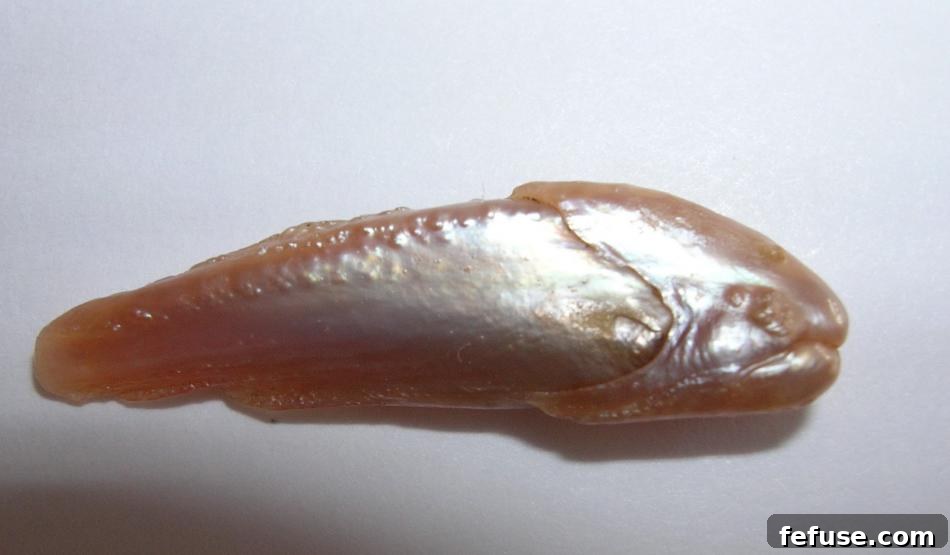
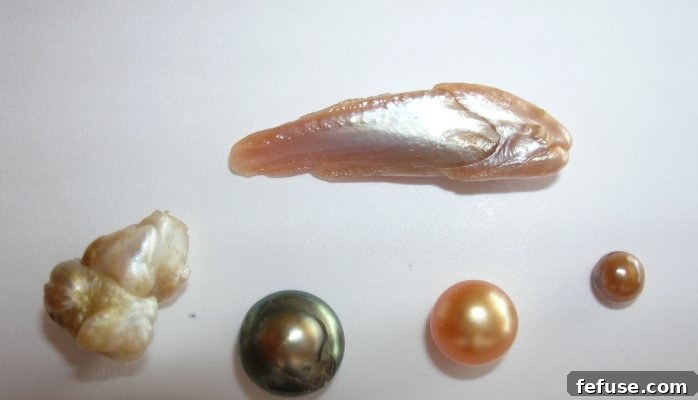
In the vast realm of natural wonders, certain discoveries stand out, captivating our imagination and challenging our understanding of the world. Among these rare phenomena, one particular gem recently made headlines after its arrival at the esteemed GIA lab: a natural pearl that possesses an astonishing, almost uncanny resemblance to a swimming fish. This isn’t merely a hint of a shape; it’s a remarkably detailed mimicry that left even seasoned gemologists in awe, immediately earning it the moniker “the fish pearl.”
Following our initial report, we were fortunate enough to connect directly with the proud owner, French trader Cyrille Hamoniaux. Cyrille, whose family has safeguarded this extraordinary treasure for decades, eagerly shared the fascinating, multi-layered story behind this unique, brownish-orange object. His narrative unveils a tale of serendipitous discovery, enduring fascination, and a mystery that spans continents and generations, underscoring the pearl’s profound significance far beyond its aesthetic appeal.
A Serendipitous Discovery: From Beirut to a Family Heirloom
According to Cyrille, the journey of this remarkable pearl began in 1970. It was during this year that his father, while conducting business in Beirut, Lebanon, made an unexpected find. Amidst a routine transaction involving a bulk purchase of freshwater pearls, a singular, oddly shaped gem caught his discerning eye. This wasn’t just another pearl; it was the 2.12 carat marvel we now know as the fish pearl.
The exact provenance of the fish pearl remains shrouded in a captivating enigma. While it was acquired in Lebanon, it is widely believed to have originated from the Mississippi River, a renowned source of freshwater pearls in the United States. How a pearl from the heart of America found its way into a bag of gems being traded in the bustling markets of Beirut over half a century ago is a mystery that adds another layer of intrigue to its already compelling narrative. This transatlantic journey, whether intentional or accidental, only enhances the pearl’s unique backstory, making it a truly global artifact of natural beauty.
Despite the unclear path it took to reach Beirut, Cyrille’s father was instantly captivated by the pearl’s extraordinary features. He was particularly entranced by the way it perfectly mimics a fish’s mouth, eyes, and even its delicate scales – details so precise that it’s hard to believe they are merely the product of a mollusk’s natural process. This profound resemblance made it an instant personal treasure. Rather than selling it or incorporating it into jewelry, he chose to keep it as a cherished souvenir, a testament to nature’s unparalleled artistry and his own discerning eye.
“It was so spectacular,” recalls Cyrille’s wife, Melinda Hamoniaux, reflecting on her father-in-law’s deep affection for the gem. “He kept it with him all this time. He always wanted it near him.” This sentiment speaks volumes about the pearl’s powerful allure and its ability to forge a deep, personal connection with its custodian, transforming a mere stone into a beloved companion and a source of constant wonder.
GIA Lab Analysis: Dispelling Myths, Confirming Natural Authenticity
For many years, the Hamoniaux family harbored a fascinating belief: that a tiny fish skeleton resided within the pearl, somehow influencing its remarkable form. This understandable assumption added to the pearl’s mystique, turning it into a living legend within the family. Earlier this year, driven by a desire for scientific clarity and perhaps to unveil its true nature, the family decided to send this unique treasure to the Gemological Institute of America (GIA) lab for a comprehensive analysis. The GIA, renowned globally for its impartial and authoritative gemological research, was the ideal institution to unravel the secrets held within this extraordinary pearl.
The scientists at the GIA lab, with their state-of-the-art equipment and unparalleled expertise, were indeed suitably impressed by the pearl. Their official report noted that the pearl “showed a remarkable resemblance to a fish swimming,” confirming the accuracy of the family’s observations and the visual impact of the gem. However, their meticulous examination yielded a definitive answer that also dispelled the long-held family belief: they found it to be entirely pearl, with no evidence of any fish skeleton or any other organic inclusion. This revelation confirmed the pearl’s identity as a pure, natural formation, making its fish-like appearance even more astounding.
Furthermore, the GIA’s analysis provided another crucial piece of information that significantly elevates the pearl’s rarity and value. The experts found “no indications of work, such as polishing, that is sometimes performed to improve a pearl’s appearance.” This finding is paramount. It confirms that the pearl’s incredible fish-like shape is entirely natural, untouched and unenhanced by human hands. In a world where many natural gems undergo treatments to enhance their beauty, the fish pearl stands as a testament to nature’s raw, unadulterated artistry, making it an exceptionally rare and authentic natural curiosity.
The Enduring Mystery: A Phenomenon Beyond Explanation
In the end, despite all the scientific scrutiny and advanced analysis, there remains no logical, scientific explanation for why this particular pearl looks so profoundly and perfectly like a fish. This lack of a rational explanation is precisely what makes the fish pearl so compelling and a true marvel of the natural world. It defies conventional gemological understanding and pushes the boundaries of what we believe possible in natural formation.
Melinda Hamoniaux candidly expresses her continued bafflement. “There is no reason,” she states, echoing the sentiment of wonder that surrounds the pearl. “All the experts say it’s not possible. It’s just the beauty of nature.” Her words capture the essence of the pearl’s inexplicable charm. In a world increasingly defined by scientific explanations and logical deductions, the fish pearl stands as a powerful reminder of nature’s capacity for the truly unexpected and the miraculously coincidental.
For many, such an anomaly transcends mere geology or biology, touching upon something more profound. “Perhaps it’s the finger of God,” Melinda ponders aloud, offering a spiritual perspective on this natural marvel. “Everything doesn’t have an explanation.” This sentiment resonates deeply, suggesting that some wonders are simply meant to be appreciated for their inherent beauty and mystery, rather than dissected into components. The fish pearl, in its inexplicable perfection, invites us to embrace the wonder of the unknown and to marvel at the boundless creativity of the natural world.
The Valuation Conundrum: Pricing the Unprecedented
With its authenticity confirmed and its unique status firmly established, the Hamoniaux family now hopes to find a new home for this extraordinary piece of nature’s art. However, this brings up yet another intriguing mystery and a significant challenge: How does one accurately value a pearl as utterly unique and unprecedented as the fish pearl?
Traditional pearl valuation relies on a combination of factors: size, shape, luster, color, surface quality, and nacre thickness. While the fish pearl boasts a respectable size (2.12 ct.), intriguing brownish-orange color, and natural origin, its shape defies standard categories. It’s not perfectly round, symmetrical, or even a typical baroque. Its value is not derived from conventional beauty standards but from its singular, instantly recognizable, and unparalleled resemblance to a living creature. This makes applying standard appraisal methodologies incredibly difficult, if not impossible.
Melinda acknowledges this unique hurdle. “I think someone will have to make a proposal,” she says, emphasizing the bespoke nature of such a transaction. “It’s difficult to value something unique like this.” Indeed, when an item is truly one-of-a-kind, its market value is less about comparative analysis and more about the desire of a specific collector or institution. This often means the value is determined by the highest offer from someone who truly understands and appreciates its rarity and artistic merit.
The fish pearl isn’t just a gem; it’s a natural sculpture, a scientific curiosity, and a captivating story rolled into one. Potential buyers could range from elite private collectors specializing in natural oddities and singular masterpieces, to renowned museums seeking to add an unparalleled exhibit to their natural history or gemological collections. Its historical journey, from the Mississippi River (presumably) to Beirut in 1970, further enhances its narrative value, attracting those who appreciate both natural beauty and a compelling backstory. The ultimate valuation will likely reflect not just the pearl’s material qualities, but its immense cultural, scientific, and artistic significance.
A Legacy of Wonder: The Future of the Fish Pearl
As the fish pearl embarks on the next chapter of its remarkable journey, it continues to stand as an enduring testament to the boundless creativity and unpredictable artistry of the natural world. It challenges our perceptions of what is possible, reminding us that even in the most familiar of natural processes, extraordinary and unexplainable wonders can emerge.
Whether it ultimately finds its home in a prestigious museum display, becoming a permanent source of public fascination, or joins a private collection where its uniqueness can be privately revered, one thing is certain: the fish pearl will continue to spark conversations and inspire awe for generations to come. Its story is a powerful reminder that sometimes, the most profound explanations lie not in scientific formulas, but in the sheer, unadulterated beauty and mystery of nature itself.
The fish pearl is more than just a rare gem; it is a symbol of nature’s inexplicable magic, a silent storyteller of a journey across time and continents, and a beacon of wonder that continues to baffle and delight all who encounter it.