
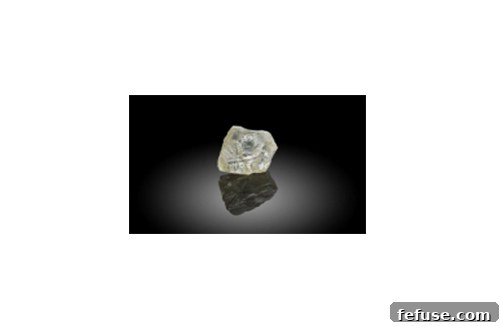
The Foxfire Diamond: North America’s Largest Uncut Gem Illuminates the Smithsonian
In a truly exceptional event for the world of geology and precious gems, the magnificent Foxfire Diamond, weighing over 187 carats, is captivating audiences at the Smithsonian’s National Museum of Natural History. Heralded as the largest known rough diamond ever recovered in North America, this extraordinary stone is now making history of a different kind. From November 17th through February 16th, visitors have a rare opportunity to witness its raw splendor, as it takes its place of honor in the prestigious Harry Winston Gallery, displayed side-by-side with the iconic Hope Diamond.
This unprecedented exhibition allows for a fascinating juxtaposition: one, the world-renowned, perfectly cut and polished Hope Diamond, a testament to human craftsmanship and a symbol of historical intrigue; the other, the Foxfire, a natural masterpiece, preserved in its untouched, raw form, showcasing the Earth’s breathtaking artistry. This dual display not only highlights the diverse beauty of diamonds but also underscores the profound significance of both their natural occurrence and their journey through history.
A Glimpse into Diamond Grandeur: The Foxfire Takes Center Stage
The display of the Foxfire Diamond alongside the legendary Hope Diamond is a monumental occasion for gem enthusiasts and the general public alike. Jeffrey Post, curator of the National Gem and Mineral Collection, eloquently captured the sentiment surrounding this event, stating, “The Foxfire is truly exceptional, one of the great treasures of the Earth.” He emphasized the unique nature of this opportunity: “We are delighted that our visitors will have this once-in-a-lifetime opportunity to view North America’s largest gem-quality diamond in its natural form.” This declaration highlights the diamond’s unparalleled status and the rarity of seeing such a colossal, high-quality rough stone up close.
The Foxfire Diamond stands as a testament to the immense geological forces that shape our planet. Its sheer size and remarkable clarity in its natural state challenge perceptions of what treasures lie hidden beneath the Earth’s surface. To view it is to connect with billions of years of geological history, witnessing a piece of the planet’s very core. The Smithsonian, as a beacon of natural history and scientific discovery, serves as the perfect venue for such an exhibit, offering context and education that enrich the visitor’s experience beyond mere admiration of beauty.
Unearthing a Marvel: The Incredible Discovery at Diavik
The story of the Foxfire Diamond’s discovery is as compelling as the gem itself, a tale of fortunate circumstance and pure serendipity. This magnificent stone was unearthed in August 2015 at the Diavik Diamond Mine, nestled in the remote and rugged Northwest Territories of Canada. The Diavik mine, a prominent player in the global diamond industry, is renowned for producing high-quality diamonds. However, when the Foxfire was found, the mining equipment in that particular area was specifically configured to sift out stones of six carats and below, based on the expected yield and economic efficiency.
Any material larger than this calibrated threshold was typically pulverized by the processing machinery, a standard procedure designed to break down non-diamond bearing rock and recover smaller gems efficiently. Yet, the Foxfire Diamond defied these odds. Its unique, flattened shape proved to be its salvation. Rather than being crushed into oblivion like other larger fragments, this extraordinary rough diamond was able to pass through a sieve designed for much smaller, six-carat diamonds. Had it not possessed this distinctive morphological characteristic—a peculiar idiosyncrasy of nature—this colossal stone would have been lost forever, pulverized without anyone ever realizing its existence, a silent testament to the countless treasures the Earth might hold, yet remain undiscovered.
The Diavik mine itself is an engineering marvel, operating in one of the most challenging environments on Earth. Located on an island in Lac de Gras, approximately 300 kilometers (190 miles) northeast of Yellowknife, it utilizes advanced technology to extract diamonds from kimberlite pipes. These pipes are ancient volcanic conduits that brought diamonds, formed deep within the Earth’s mantle over billions of years, to the surface. The discovery of the Foxfire at Diavik further solidifies Canada’s reputation as a significant source of large, high-quality diamonds, contributing immensely to the nation’s geological and economic prestige.
From Mine to Museum: Preserving a Natural Masterpiece
Following its miraculous recovery, the Foxfire Diamond embarked on its next chapter. In June 2016, this colossal rough gem was acquired in an international auction by Deepak Sheth of Amadena Investments LLC/Excellent Facets Inc. The acquisition of such a significant diamond by a private investor typically marks the beginning of its transformation journey, where master cutters meticulously plan and execute the faceting process to unleash the stone’s ultimate brilliance and value. However, Sheth made a deliberate and profound choice that set the Foxfire apart from most other significant diamond discoveries: he chose to preserve the diamond intact.
This decision, as noted by the Smithsonian, ensures that the diamond maintains “both the diamond’s dazzling physical characteristics and its unique story.” It represents a philosophical stance on the inherent beauty and scientific value of a diamond in its natural, rough state, rather than solely focusing on its potential as a cut gem. Preserving the Foxfire as an uncut specimen allows it to tell a more complete story, from its geological origins deep within the Earth to its unlikely journey to the surface and its ultimate recognition as a natural wonder. It highlights the raw, unadulterated beauty that captivates geologists, gemologists, and art lovers alike.
Sheth’s choice underscores a growing appreciation for the natural form of exceptional diamonds. While the art of diamond cutting is undeniably impressive, the preservation of a stone like the Foxfire offers an invaluable educational and aesthetic experience, allowing viewers to appreciate the diamond as it emerged from the Earth, a true testament to the planet’s incredible mineral wealth. This thoughtful decision ensures that the Foxfire Diamond will be celebrated not only for its potential brilliance but also for its profound significance as a geological artifact and a symbol of raw natural splendor.
The Smithsonian’s Jewel Box: A Home for Earth’s Treasures
The Smithsonian’s National Museum of Natural History stands as a revered institution, dedicated to preserving and showcasing the vast diversity of life and geological wonders found on Earth. Its decision to host the Foxfire Diamond within the famed Harry Winston Gallery speaks volumes about the gem’s importance. The gallery itself is home to one of the most impressive collections of gems and minerals in the world, including the unparalleled National Gem and Mineral Collection, which draws millions of visitors annually.
Exhibiting the Foxfire Diamond here provides an extraordinary educational opportunity. Visitors can learn about diamond formation, the geology of Canada’s Arctic, and the intricate processes involved in modern diamond mining. The museum’s curatorial expertise ensures that the Foxfire is presented in a context that illuminates its scientific, historical, and aesthetic value. This exhibition not only enriches the museum’s already stellar collection but also reinforces its mission to inspire curiosity and discovery about the natural world.
As Deepak Sheth commented, “Having North America’s largest known uncut, gem-quality diamond on display at the Smithsonian is a testament to the rarity of the Foxfire diamond. It also represents another significant chapter in the diamond’s remarkable story.” His words perfectly encapsulate the diamond’s dual significance: its extreme rarity as a geological phenomenon and its ongoing narrative, now interwoven with the prestigious history of one of the world’s leading museums.
Beyond Brilliance: The Enduring Legacy of the Foxfire Diamond
The presence of the Foxfire Diamond at the Smithsonian is more than just a temporary exhibition; it solidifies the gem’s enduring legacy in the annals of North American geology, mining, and gemology. This rough diamond represents a pivotal moment for Canada’s diamond industry, showcasing the potential for significant discoveries in the region. It serves as an inspiration for future exploration and a reminder of the Earth’s hidden wonders.
Beyond its geological and economic implications, the Foxfire Diamond holds immense cultural and scientific value. It allows scientists to study a large, high-quality diamond in its natural state, potentially revealing new insights into crystal growth and the conditions deep within the Earth’s mantle. For the public, it offers a tangible connection to the planet’s ancient past and the awe-inspiring power of nature. The “once-in-a-lifetime” opportunity to view such a specimen is a chance to witness history and appreciate the raw, unadulterated beauty that only nature can create.
The Foxfire Diamond, with its incredible story of discovery and its deliberate preservation, stands as a beacon of natural heritage. Its temporary residence at the Smithsonian, alongside the legendary Hope Diamond, cements its place as one of the most significant diamonds ever found. It is a powerful reminder that while human ingenuity can transform rough stones into dazzling jewels, there is an unparalleled magic in beholding nature’s original masterpiece.