
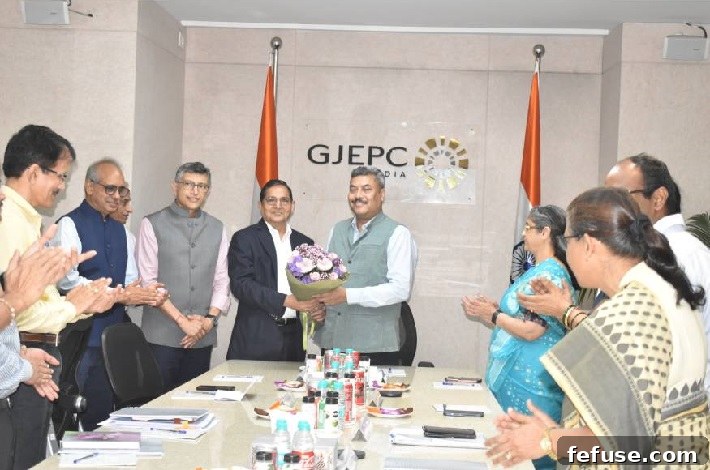
Advancing India’s Gem and Jewellery Sector: A Landmark Dialogue Between GJEPC and Customs
The vibrant landscape of India’s gem and jewellery industry, a significant contributor to the nation’s economy and a global leader, faces continuous evolution. Ensuring its sustained growth and competitive edge requires constant dialogue between industry stakeholders and regulatory bodies. A pivotal high-level meeting, convened on August 17th, 2024, perfectly exemplified this collaborative spirit, bringing together prominent representatives from the Gem and Jewellery Export Promotion Council (GJEPC) and key Customs officials. This crucial gathering aimed to address and resolve pressing operational and policy issues that directly impact the efficiency, profitability, and future trajectory of this dynamic sector.
The meeting, spearheaded by Shri Surjit Bhujabal, the esteemed Member Customs, served as a crucial platform for direct engagement. It facilitated an open exchange of ideas, concerns, and proposed solutions. The GJEPC, representing the collective voice of India’s vast gem and jewellery community, fielded a strong delegation comprising industry stalwarts. This included Shri Kirit Bhansali, Vice Chairman of GJEPC; Shri Ajesh Mehta and Shri Russell Mehta, both distinguished Members of the Diamond Panel; Shri Naresh Lathiya, Convener for MSME initiatives, alongside Shri Manish Jivani, a fellow Member of the MSME committee. The delegation also featured Shri Mehul Shah, Vice President of the Bharat Diamond Bourse (BDB), underscoring the broad representation of the industry. Supporting these leaders were Shri KK Duggal, Director Policy at GJEPC, and Shri Mithilesh Pandey, Director, Membership at GJEPC, ensuring comprehensive presentation of the industry’s perspectives and meticulously prepared proposals. This collective expertise highlighted the industry’s commitment to fostering a conducive regulatory environment that supports growth and simplifies operations for businesses across the spectrum, from large enterprises to crucial MSME players.
Key Industry Concerns and Policy Proposals for a Brighter Future
The discussions during the meeting delved into a range of critical issues, each carrying significant implications for the daily operations and long-term stability of the gem and jewellery trade. The GJEPC meticulously presented its concerns, backed by robust data and practical industry insights, to the Customs officials. These points touched upon various facets of import, export, re-import, and the broader regulatory framework, seeking clarity, simplification, and policy alignment to enhance India’s position as a global gem and jewellery hub.
Clarity on Import of Sawn Diamonds: Addressing Retrospective Notices
One of the most urgent matters brought to the fore involved the import of sawn diamonds. The industry voiced significant concerns regarding the recent issuance of show cause notices to diamantaires. These notices retrospectively sought customs duties on past imports of sawn diamonds, specifically for consignments imported prior to February 2, 2022. Sawn diamonds, essentially rough diamonds that have undergone an initial cutting process to remove imperfections and define potential polished shapes, are crucial raw materials for India’s world-renowned diamond processing industry. The sudden imposition of duties for past imports, often based on new interpretations of existing regulations, creates immense financial strain and uncertainty for businesses that operated in good faith under previous understandings. Such retrospective actions can severely impact cash flow, hinder future investment, and erode trust between the industry and regulatory bodies. The GJEPC urged Customs to review these notices, provide clarity on the classification and duty structure for sawn diamonds, and ensure that any changes are applied prospectively, allowing businesses adequate time to adapt and comply. This issue is fundamental to maintaining a stable and predictable trade environment, which is vital for an industry heavily reliant on global sourcing and long-term planning.
Streamlining Re-import: The Height Variance Parameter for Certification
Another significant proposal focused on refining the re-import process for cut and polished diamonds sent abroad for certification or grading. The GJEPC specifically requested the inclusion of a “height variance parameter” within Notification No. 16/2014-Customs, which governs duty-free re-import. Modern diamond grading, particularly for highly valuable stones, involves intricate measurements and analysis. Certification laboratories often use highly sophisticated equipment that can detect minute variations, including slight changes in height or proportion, even after initial cutting and polishing. When diamonds are sent for grading, these processes might lead to minor, technically detectable alterations that could trigger customs duties upon re-import if not explicitly accounted for in the notification. This administrative hurdle creates unnecessary delays and costs for exporters who are simply seeking to add value and credibility to their products through international certification. By incorporating a reasonable height variance parameter, Customs can acknowledge the practicalities of advanced grading processes, ensuring that legitimate re-imports for certification purposes are processed smoothly and remain duty-free, thereby supporting India’s ambition to be a hub for high-quality, certified diamonds.
Expanding RMS Facility for G&J Exports: Boosting Efficiency and Competitiveness
The industry further sought to broaden the scope of the Risk Management System (RMS) facility for Gem & Jewellery (G&J) products. Currently, the RMS system, designed to expedite clearance by identifying low-risk consignments for less intrusive examination, is immensely beneficial. The GJEPC proposed expanding this facility to include exports under USD 50,000 for countries beyond Hong Kong and Dubai. While Hong Kong and Dubai are crucial export destinations, Indian gem and jewellery products are shipped worldwide to a diverse range of markets. Extending the RMS benefits to other countries for lower-value consignments would significantly enhance operational efficiency, reduce clearance times, and lower logistical costs for exporters across the board. This expansion would particularly benefit Micro, Small, and Medium Enterprises (MSMEs), who often deal with smaller, frequent shipments to emerging markets. By streamlining export procedures, India’s gem and jewellery products can become more competitive globally, fostering increased trade volumes and market penetration beyond traditional hubs. It aligns perfectly with the national objective of ‘Ease of Doing Business’ and diversifying export markets.
Facilitating Hand Carriage of Gems & Jewellery: Security and Speed
A long-standing request from the GJEPC reiterated the need for permission for hand carriage of Gems & Jewellery from all operational ports. Hand carriage, where high-value items are personally transported by authorized individuals, offers unparalleled security, speed, and direct oversight, which are critical for fragile and extremely valuable goods like diamonds and fine jewellery. While currently permitted from certain ports, restricting this facility limits the flexibility and operational efficiency of businesses, especially those participating in international exhibitions, trade shows, or urgent sample deliveries. Expanding hand carriage permission to all major ports would provide exporters with greater logistical flexibility, allowing them to choose the most convenient and secure routes for their valuable consignments. This measure would not only enhance the security of high-value goods but also significantly reduce transit times and the risks associated with conventional cargo handling, thereby boosting confidence and efficiency in international trade for the sector. Implementing clear guidelines and robust security protocols for hand carriage would ensure both compliance and convenience.
Standardizing Re-import for Repair: A Clear SOP for Jewellery
The industry also highlighted the urgent need for a clear Standard Operating Procedure (SOP) for the re-import of jewellery specifically for repair and subsequent re-export. Jewellery, like any manufactured product, can sometimes require repairs or modifications after export, either due to manufacturing defects, customer preferences, or wear and tear. The current lack of a standardized and transparent SOP for such re-imports often leads to ambiguity, delays, and administrative hurdles at customs checkpoints. Businesses face challenges in proving the original export status of the jewellery, undergoing lengthy assessment processes, and navigating duty implications, which can negate the commercial viability of offering repair services. A well-defined SOP would establish clear guidelines for documentation, assessment, and duty treatment of jewellery re-imported for repair and re-export. This would streamline the process, reduce processing times, provide predictability for businesses, and enhance India’s reputation as a reliable global manufacturing and service hub for fine jewellery. Such a policy would support after-sales services, an increasingly important aspect of international trade, and help Indian manufacturers retain customer loyalty and expand their global footprint.
Duty Drawback and Platinum: Leveling the Playing Field
Finally, the GJEPC presented two crucial proposals concerning platinum. Firstly, they advocated for the introduction of duty drawback on platinum jewellery exports. Duty drawback is a refund of customs duties paid on imported inputs (like platinum) that are subsequently exported as part of a finished product. Currently, while gold and silver jewellery benefit from duty drawback, platinum jewellery often does not, or faces inconsistencies. As global demand for platinum jewellery continues to grow, introducing a consistent duty drawback mechanism would make Indian platinum jewellery exports more competitive in international markets by effectively reducing the cost of raw materials. Secondly, the GJEPC proposed aligning the import duty on platinum findings with that of gold and silver findings. Findings are components used in jewellery making, such as clasps, settings, and earring posts. Discrepancies in duties between different precious metal findings create an uneven playing field and discourage the use of platinum in design and manufacturing. Harmonizing these duties would encourage diversification in jewellery manufacturing, promote innovation with platinum, and simplify the tariff structure, thereby supporting the overall growth and modernization of the Indian jewellery sector. These changes are essential for fostering a fair and equitable trade environment across all precious metal segments within the industry.
A Path Forward: Fostering Collaboration for Industry Growth
Throughout the extensive discussions, the Customs officials demonstrated a commendable willingness to engage, listening attentively and meticulously to each concern raised by the GJEPC delegation. This level of engagement underscores the government’s recognition of the gem and jewellery sector’s critical importance to the Indian economy. The officials assured the GJEPC that all these significant matters would be thoroughly taken into consideration, indicating a commitment to working towards practical and effective solutions. This high-level interaction perfectly encapsulated the vital importance of ongoing, proactive dialogue between governmental bodies and industry representatives. Such collaborative platforms are indispensable for effectively addressing existing challenges, anticipating future hurdles, and collectively promoting sustainable growth within the dynamic diamond and jewellery sector. The mutual understanding and constructive exchange fostered during this meeting lay a solid foundation for future policy refinements and operational improvements, ultimately strengthening India’s global leadership in the gem and jewellery trade and ensuring a prosperous outlook for its countless artisans, manufacturers, and exporters.