
US Watch and Jewelry Sales: Unpacking the Latest Trends and Market Dynamics
The dynamic landscape of the US watch and jewelry market continues to evolve, presenting a fascinating picture of consumer behavior and economic resilience. Recent data reveals nuanced trends, with initial estimates indicating slight shifts while robust long-term growth persists. Our commitment to providing a holistic understanding of this vital sector has led to the introduction of new, expanded coverage. This enhanced analysis now offers a far more in-depth perspective, crucially integrating data and insights related to the specialty jewelry sector – a segment historically underrepresented in broader economic reports from institutions like the Department of Commerce. This comprehensive approach ensures that industry stakeholders, investors, and enthusiasts alike gain a complete and accurate view of the market’s true health and trajectory.
April Performance: A Snapshot of Stability Amidst Growth
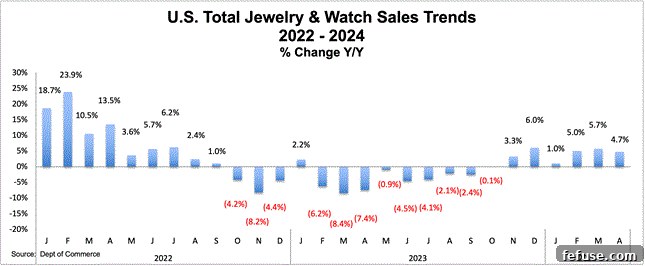
According to preliminary estimates released by the US Department of Commerce, overall watch and jewelry sales experienced a marginal dip during April. While any decline might initially raise questions, it’s essential to contextualize this figure within the broader market performance. What stands out prominently is the impressive year-on-year growth of 4.7 percent observed in April. This marks the sixth consecutive month of expansion, signaling a strong and sustained recovery trajectory for the sector. This consistent upward trend follows a challenging period from February to October of the previous year, during which sales figures saw monthly contractions. The current streak of growth underscores the market’s underlying strength and the enduring appeal of watches and jewelry to American consumers, even in the face of economic fluctuations.
This sustained growth period suggests a robust recovery in consumer confidence and discretionary spending within the luxury and personal accessories segments. Factors contributing to this positive momentum likely include stable employment figures, easing inflationary pressures, and a renewed desire for meaningful purchases. The slight month-over-month slip in April, therefore, could be interpreted as a minor adjustment within a generally strong uptrend rather than an indicator of a downturn. Analyzing these trends requires careful consideration of both immediate fluctuations and long-term patterns to derive accurate insights into market health.
The Significance of Data Revisions: A Refined Market View
Market analysis relies heavily on the accuracy of reported data, and it’s not uncommon for initial estimates to undergo revisions as more complete information becomes available. The Department’s Bureau of Economic Analysis (BEA) frequently refines its figures based on actual transaction data rather than initial projections. For instance, sales figures for March have been revised downward from an initial estimate of a 6.8 percent year-on-year increase to a still healthy 5.7 percent increase. Similarly, sales data for both January and February have also been adjusted to reflect more precise transactional information.
These revisions are a standard practice designed to ensure the highest level of accuracy in economic reporting. While they can sometimes alter the initial narrative, they ultimately provide a clearer and more reliable picture of market performance. For businesses and analysts, understanding the impact of these revisions is crucial for making informed decisions, as they can influence everything from inventory management to investment strategies. The BEA’s diligent work in refining these statistics provides a more robust foundation for understanding the intricate dynamics of consumer spending on watches and jewelry across the United States.
Decoding the Data: Multi-Line Retailers vs. Specialty Jewelers
A critical aspect of truly understanding the US watch and jewelry market lies in recognizing the different retail channels through which these goods are sold. The figures traditionally presented by the BEA primarily represent sales by multi-line retailers. This category encompasses major players such as Amazon, Costco, Walmart, and various other large department stores and online marketplaces that offer a wide array of products, including watches and jewelry. These multi-line giants collectively account for approximately two-thirds of all watch and jewelry sales in the US, making their performance a significant indicator of overall market health.
The Crucial Role of Specialty Jewelers
However, a substantial segment of the market, representing the remaining one-third, comprises specialty jewelers. These are merchants whose primary or sole business is the sale of fine jewelry, engagement rings, luxury watches, and custom pieces. Historically, data from this vital sector has often been excluded from broad governmental reports, leading to an incomplete understanding of the entire jewelry retail landscape. The distinction between multi-line and specialty retailers is not merely academic; it reflects fundamental differences in product offerings, customer demographics, pricing strategies, and overall market sensitivity.
Specialty jewelers typically cater to a more discerning clientele, often focusing on higher-value transactions, bespoke services, and a personalized shopping experience. Their sales trends can sometimes differ significantly from those of mass-market retailers, particularly in segments related to luxury goods and milestone purchases. Therefore, by not including the specialty jewelry sector, previous analyses might have inadvertently overlooked crucial trends in the high-end market, customer loyalty, and the impact of personalized retail experiences. Our expanded coverage aims to rectify this oversight, integrating data from specialty jewelers to provide a genuinely comprehensive and nuanced market assessment.
Factors Influencing the US Watch and Jewelry Market
Several macroeconomic and socio-economic factors continually shape the performance of the US watch and jewelry market. Understanding these influences is key to anticipating future trends:
- Consumer Confidence and Disposable Income: High consumer confidence typically translates into increased willingness to spend on discretionary items like jewelry and watches. Stable employment and rising disposable incomes further fuel this trend.
- Inflation and Interest Rates: While inflation can reduce purchasing power, the luxury segment often demonstrates resilience. However, persistently high inflation or rising interest rates can impact financing options for expensive purchases, especially for consumers in the mid-market segment.
- Economic Stability: A strong and stable economy provides a favorable environment for the growth of luxury and discretionary sectors. Conversely, economic slowdowns can lead to consumers delaying or foregoing significant jewelry purchases.
- E-commerce Growth: The shift towards online shopping continues to impact both multi-line and specialty retailers. Brands are investing heavily in digital platforms, virtual try-ons, and enhanced online customer experiences to capture a wider audience.
- Marketing and Trend Influence: Social media, celebrity endorsements, and evolving fashion trends play a significant role in driving consumer desire for particular styles, brands, and materials in watches and jewelry.
- Cultural and Seasonal Events: Key events such as Valentine’s Day, Mother’s Day, graduations, engagements, weddings, and the holiday season are powerful drivers of jewelry sales, creating predictable peaks in demand throughout the year.
The Importance of Expanded Coverage for Future Insights
The integration of specialty jewelry sector data into our analytical framework marks a significant advancement. This comprehensive view offers unparalleled insights, allowing for:
- More Accurate Market Sizing: A true understanding of the total market value and growth potential.
- Nuanced Trend Identification: The ability to differentiate between trends impacting mass-market retailers versus those affecting high-end, independent jewelers.
- Better Strategic Planning: Businesses can develop more targeted marketing strategies, inventory management, and expansion plans tailored to specific market segments.
- Informed Investment Decisions: Investors gain a clearer picture of market risks and opportunities across the entire spectrum of jewelry retail.
By incorporating this crucial segment, our analysis provides a far more robust and actionable understanding of the US watch and jewelry market’s performance and future outlook.
Outlook: Navigating a Resilient and Evolving Market
Looking ahead, the US watch and jewelry market is poised for continued dynamism. While minor fluctuations, such as the slight dip observed in April, are inherent to any retail sector, the underlying trend of consecutive year-on-year growth suggests a robust and resilient market. Challenges such as persistent inflation, geopolitical uncertainties, and evolving consumer preferences will undoubtedly continue to shape the industry. However, opportunities abound, driven by strong consumer demand for luxury goods, the enduring emotional value associated with jewelry, and continuous innovation in product design and retail experiences.
The strategic importance of wedding season, holiday shopping, and personal celebrations cannot be overstated, providing reliable boosts to sales throughout the year. As the market continues to adapt to digital transformation and shifting consumer demographics, those businesses that prioritize comprehensive data analysis, personalized customer experiences, and adaptable retail strategies will be best positioned for sustained success. Our expanded coverage will continue to monitor these developments closely, providing timely and accurate insights into one of the most vibrant sectors of the American retail economy.
Conclusion: A Robust Market Poised for Continued Growth
In summary, the US watch and jewelry market, despite experiencing minor monthly variations, demonstrates remarkable strength with its sixth consecutive month of year-on-year growth. Data revisions by the BEA highlight the importance of accurate reporting, while the crucial distinction between multi-line retailers and specialty jewelers underscores the necessity of comprehensive data for a complete market picture. Our new, expanded coverage addresses this need, offering deeper insights into the performance of the entire sector. As economic conditions stabilize and consumer confidence strengthens, the US watch and jewelry market remains a vibrant and resilient industry, driven by strong demand and evolving retail dynamics. This detailed analysis serves as a valuable resource for anyone seeking to understand the intricate workings of this captivating market.