
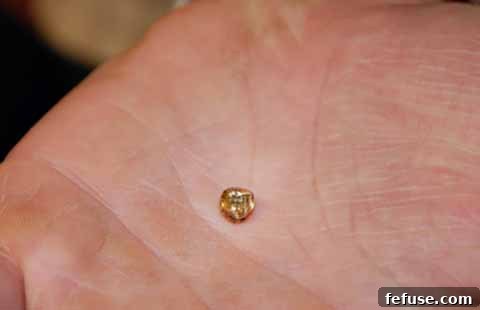
Remarkable 1.73 Carat Diamond Discovered at Crater of Diamonds State Park by Dedicated Duo
The allure of unearthing a hidden treasure has captivated humanity for centuries. For countless enthusiasts, this dream becomes a tangible possibility at one extraordinary location: Crater of Diamonds State Park in Murfreesboro, Arkansas. This renowned park, famous for being the world’s only publicly accessible diamond mine where visitors can keep their finds, recently witnessed another spectacular discovery. A magnificent 1.73 carat diamond, making it the third-largest found in the park this year, was unearthed by a seasoned and persistent duo, reminding us all of the park’s incredible potential to yield sparkling riches.
A Testament to Perseverance: The Story of Jack Pearadin and Doug Nelsen
Behind every remarkable find at Crater of Diamonds State Park is a story of dedication, patience, and often, sheer good fortune. This latest discovery is no exception, brought to light by the collaborative efforts of Jack Pearadin of Murfreesboro, Arkansas, and Doug Nelsen of Winneconne, Wisconsin. These two avid diamond prospectors have become a familiar sight at the park, forming a formidable team that has diligently searched the diamond-rich fields for nearly a year. Their shared passion for diamond hunting and combined experience have clearly paid off in a spectacular fashion.
Their commitment bore glittering fruit when they uncovered the impressive 1.73 carat gemstone while meticulously washing gravel. This method, a staple for many successful prospectors at the park, involves sifting through layers of earth and sediment to separate denser materials where diamonds tend to accumulate. The discovery marks a significant milestone for both men. For Jack Pearadin, who has been visiting the park consistently for over three years, this is his 36th diamond find – an astounding number that speaks volumes about his expertise and persistence. Doug Nelsen, his dedicated partner, celebrated his fifth discovery, further solidifying their reputation as successful diamond hunters. Their partnership exemplifies the spirit of camaraderie and shared triumph that often defines the experience at Crater of Diamonds State Park.
The 1.73 Carat Gemstone: A Significant Annual Find
The newly discovered 1.73 carat diamond immediately takes its place as one of the most important finds of the year at Crater of Diamonds State Park. Its size alone positions it as the third-largest diamond recovered within the park’s boundaries in 2016. While specific details about its color, clarity, and cut are typically held privately by the finders, diamonds found at the park often exhibit a range of hues, from pristine white to various shades of brown and yellow, and can possess excellent quality. Each diamond, regardless of its unique characteristics, holds intrinsic value, not just monetarily, but also as a rare geological specimen and a powerful symbol of the thrill of discovery.
This particular stone contributes significantly to the park’s already impressive statistics for the year. By the time of its registration, it was the 484th diamond officially cataloged in 2016, a testament to the park’s ongoing productivity. More remarkably, it joined an elite group of just 16 stones found that year weighing over one carat. These figures underscore the consistent yield of the diamond field and the ongoing potential for visitors to make their own significant, often life-changing, discoveries. The park requires all significant finds to be registered, a crucial process that helps track the incredible output of this geological marvel and provides official recognition for the lucky individuals who unearth these natural wonders.
Crater of Diamonds State Park: A Geological Marvel and Public Treasure Trove
What makes Crater of Diamonds State Park such a uniquely prolific site for diamond discovery? Its origins trace back millions of years to a rare geological event. The park sits atop a 95-million-year-old eroded lamproite volcanic pipe, which brought diamonds from deep within the Earth’s mantle to the surface during an ancient volcanic eruption. Over millennia, erosion has spread the diamond-bearing material across a 37.5-acre plowed field, making these precious gems accessible to amateur prospectors. This ancient geological history ensures a continuous supply of diamonds, constantly washed to the surface with each rain and turn of the soil, offering a fresh opportunity for discovery every day.
Since its official opening as a state park in 1972, the numbers are truly astonishing: over 32,000 diamonds have been discovered and registered by park visitors. This astounding figure cements its status as a premier global destination for diamond hunting. From tiny seed-sized stones to significant gems weighing several carats, the park continually yields treasures that spark joy and amazement. The thrill for visitors lies not just in the potential for financial gain, though that is certainly a powerful motivator, but in the sheer excitement of digging for real diamonds in their natural setting, a hands-on adventure unlike any other in the world.
Effective Methods for Diamond Hunting at the Park
Successful diamond hunting at Crater of Diamonds State Park often involves a combination of patience, keen observation, and specific prospecting techniques. As demonstrated by Pearadin and Nelsen’s triumph, washing gravel is a highly effective method. This involves collecting soil and gravel from promising areas within the search field, then using specialized screens and readily available water to separate lighter sediment from denser materials, where diamonds, being significantly heavier, tend to settle. Other popular and proven methods include:
- Surface Searching: Many diamonds are found simply by walking slowly and carefully scanning the ground, especially after a fresh rain or after the park has plowed the field, which can expose new stones or bring buried ones closer to the surface.
- Dry Sifting: Similar to washing, sifting dry soil through screens can also separate diamonds from the surrounding earth, particularly in drier conditions. This method requires a good eye and consistent sifting.
- Digging and Screening: Some visitors choose to dig into specific areas, particularly depressions, gullies, or old creek beds where heavier materials might accumulate. The excavated soil is then systematically processed through screens.
The park provides general guidance on these methods, and many seasoned hunters, like Jack Pearadin, develop their own refined strategies over time, learning to identify promising spots and optimal conditions based on weather, recent park activity, and geological features.
Planning Your Own Diamond Hunting Adventure in Murfreesboro
Inspired by tales of success like Pearadin and Nelsen’s? Crater of Diamonds State Park actively encourages visitors of all ages and experience levels to try their luck. The park offers convenient rental equipment, including screens, shovels, and buckets, and provides helpful instructions for beginners to get started. There’s a tangible sense of excitement in the air as individuals and families spread out across the field, each person hoping to make their own memorable discovery, perhaps even unearthing the next significant Arkansas diamond.
Key tips for aspiring diamond hunters planning a visit to this unique Arkansas attraction:
- Patience is Paramount: Diamond hunting is often a game of persistence. Many successful finds come after hours, days, or even years of searching. Enjoy the process as much as the potential reward.
- Choose Your Tools Wisely: A small trowel or hand shovel, a sturdy bucket, and a set of sifting screens (one coarse and one fine) are essential. You can rent these at the park or bring your own.
- Weather Matters: Overcast days or immediately after a rain shower can make it easier to spot diamonds, as their natural luster might stand out more against wet, darker soil.
- Focus on Specific Areas: Pay attention to depressions, gullies, or areas where water naturally drains, as diamonds and other heavier minerals tend to collect in these spots.
- Learn to Identify Diamonds: Familiarize yourself with the appearance of raw diamonds found at the park – they are often rounded or irregular in shape, possess a greasy-looking luster, and can come in various colors. Park rangers are always available at the Diamond Discovery Center to help identify potential finds.
- Stay Hydrated and Prepared: The field can be exposed, so bring plenty of water, wear sun protection (hat, sunscreen), and wear comfortable clothing and sturdy, close-toed shoes suitable for digging and walking.
Beyond the potential for a diamond, a visit to Crater of Diamonds State Park offers a unique outdoor experience steeped in geological wonder. It’s a chance to connect with nature, engage in a thrilling treasure hunt, and explore a truly one-of-a-kind geological site. JCK editor in chief Victoria Gomelsky’s account of her own diamond search, mentioned in the original report, perfectly encapsulates the hopeful and engaging spirit of visiting this iconic Arkansas park.
The Enduring Appeal of Arkansas Diamonds and Future Discoveries
The story of the 1.73 carat diamond, like thousands before it, reaffirms Crater of Diamonds State Park’s unparalleled reputation as a genuine geological anomaly and a dream destination for prospectors worldwide. It’s a place where ordinary people can quite literally stumble upon extraordinary wealth or, at the very least, an unforgettable memory and a unique gemstone to cherish. Each diamond found, whether it’s the significant Pearadin-Nelsen gem or a smaller, equally treasured specimen, adds another sparkling chapter to the park’s rich legacy of discovery.
This latest significant find serves as a shining beacon of possibility, encouraging more adventurers to visit Murfreesboro, Arkansas, and experience the unparalleled thrill of diamond hunting firsthand. The earth holds many secrets, and at Crater of Diamonds State Park, some of them glitter. Who knows what sparkling treasures the earth will yield next, and to which lucky individual?
(Photo courtesy of Crater of Diamonds State Park)