
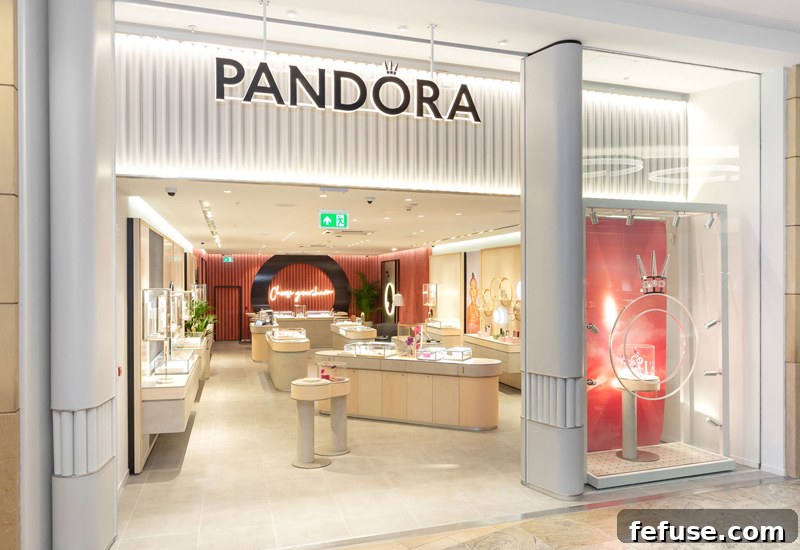
The Diamond Debate: Pandora’s Shift to Lab-Grown Sparks Industry Uproar
The global jewellery landscape is currently witnessing a significant seismic shift, one that has ignited a fierce debate among industry titans. Pandora, a titan in the affordable luxury jewellery sector, recently made headlines with its announcement regarding a pivot towards exclusively utilising lab-grown diamonds in its collections. This strategic reorientation, heralded by the launch of its new Brilliance collection featuring its inaugural lab-grown stones, was widely interpreted as a permanent departure from traditional mined diamonds. While Pandora positions this move as a step towards greater sustainability and ethical sourcing, it has unequivocally triggered a robust backlash from leading organisations within the natural diamond industry, who are vehemently demanding a retraction of comments they deem misleading and potentially damaging.
Pandora’s Bold New Direction and the Brilliance Collection
Late last week, Pandora unveiled its highly anticipated Brilliance collection, marking a pivotal moment not just for the brand, but for the wider jewellery market. This collection, distinguishing itself by exclusively featuring lab-grown diamonds, represented Pandora’s first foray into this rapidly evolving segment. The company’s statements to various news outlets suggested a definitive and permanent transition away from mined diamonds, positioning the shift as an alignment with modern consumer values and a commitment to more sustainable practices. For a brand of Pandora’s stature, which holds immense sway over a vast consumer base, such an announcement carries substantial weight, influencing perceptions and potentially redirecting market trends. The underlying implication of their narrative was that lab-grown diamonds offer a superior, more responsible alternative to their natural counterparts, a stance that has profoundly ruffled feathers across the natural diamond supply chain.
The Industry Responds: A United Call for Retraction
In the wake of Pandora’s pronouncements, a powerful triumvirate of key industry bodies – comprising the Responsible Jewellery Council (RJC), the Natural Diamond Council (NDC), and the International Diamond Manufacturers Association (IDMA) – swiftly united to challenge the narrative being propagated. These organisations, each playing a crucial role in upholding the standards and reputation of the diamond industry, have issued a collective call for Pandora to retract specific statements. Their concern centres on what they perceive as misleading assertions regarding the sustainability and ethical credentials of natural diamonds, particularly when contrasted with the newly adopted lab-grown alternatives. This coordinated response underscores the gravity with which the established industry views Pandora’s campaign, recognising its potential to sow seeds of doubt among consumers and undermine the carefully built trust in natural diamonds.
A joint statement released by these three influential bodies unequivocally articulated their position: “The misleading narrative created by the Pandora announcement implying the natural diamond industry is both less ethical and the impetus behind Pandora’s move to lab-grown diamonds, particularly given the inconsequential amount of diamonds Pandora features in its collections, can have unintended but substantial consequences on communities in developing nations.” This powerful condemnation highlights not only the perceived inaccuracies in Pandora’s messaging but also the critical human element at stake. The statement meticulously points out that despite the relatively minor role diamonds played in Pandora’s previous collections, the brand’s prominent global platform means its rhetoric could disproportionately impact the livelihoods of millions worldwide, particularly in regions heavily reliant on the natural diamond trade. The organisations stressed that while they acknowledge and even welcome Pandora’s decision to incorporate laboratory-grown diamonds as a positive expansion within the jewellery industry, they cautioned that such potentially false and misleading assertions could significantly diminish consumer confidence across all categories, fostering widespread confusion that would ultimately prove detrimental to the industry as a whole.
Unpacking the Sustainability Claims: A Complex Reality
At the heart of this dispute lies the intricate and often misunderstood debate surrounding the sustainability and ethics of both natural and lab-grown diamonds. Pandora’s narrative, implicitly or explicitly, positioned lab-grown diamonds as the more sustainable choice. However, industry leaders argue that this oversimplifies a complex reality. The Natural Diamond Council, a global authority dedicated to promoting the integrity of natural diamonds, has been particularly vocal in refuting these claims. David Kellie, CEO of the Natural Diamond Council, emphasised the critical need for complete transparency and consumer education, stating: “It is extremely important that the consumer fully understands the proposition, the value and the ethics that surround diamonds and laboratory-grown diamonds. To say that they are the more sustainable option is very misleading.”
Natural diamonds, formed deep within the Earth over billions of years, are finite natural resources. Their extraction process, while impactful, is often accompanied by significant efforts in environmental stewardship and community development. Modern diamond mining companies adhere to stringent environmental regulations, invest heavily in land rehabilitation, wildlife conservation, and biodiversity protection. Furthermore, the carbon footprint of natural diamond mining has been meticulously studied, with leading research indicating that the industry’s emissions are significantly lower than commonly perceived, especially when compared to the energy-intensive production of many lab-grown diamonds. While lab-grown diamonds offer a controlled origin and often a lower price point, their sustainability credentials are not without scrutiny. The production of lab-grown diamonds requires immense amounts of energy, often derived from fossil fuels, leading to a substantial carbon footprint that varies widely depending on the energy sources employed by individual manufacturers. A holistic view of sustainability demands an assessment of the entire lifecycle, from energy consumption and water usage to chemical byproducts and waste management for both types of diamonds.
The Profound Socioeconomic Impact of Natural Diamonds
Beyond environmental considerations, the natural diamond industry is a colossal engine of socioeconomic development, particularly for vulnerable communities in developing nations. This aspect is central to the industry’s counter-argument against Pandora’s narrative. David Kellie highlighted this crucial dimension, underscoring that “The natural diamond industry supports the livelihoods of over 10 million jobs globally and supports the communities from which they came, providing $16 billion (£11.4 billion) in socioeconomic and environmental benefits to the countries of origin each year.” These benefits extend far beyond direct employment in mines; they encompass the provision of vital infrastructure such as schools, hospitals, roads, and access to clean water and sanitation. Diamond revenues often contribute significantly to national treasuries, funding public services and development projects that transform entire regions.
In countries across Africa, South America, and Canada, diamond mining represents a cornerstone of economic stability and growth. Millions of individuals, from miners and cutters to polishers and countless support staff, depend directly and indirectly on this industry for their sustenance. The closure or significant decline of diamond mines due to shifting consumer perceptions, fuelled by potentially misleading campaigns, could trigger profound humanitarian crises. These communities, many of which are already grappling with socioeconomic challenges, including those exacerbated by the global pandemic, face an even greater threat if their primary source of income is unjustly undermined. The call from the RJC, NDC, and IDMA for Pandora to “support communities by correcting the record” is not merely about protecting market share; it is a heartfelt plea to safeguard the well-being and future of millions whose livelihoods are intrinsically linked to the natural diamond supply chain.
Protecting Consumer Confidence and the Path Forward
Ultimately, the escalating dispute between Pandora and the natural diamond industry underscores the critical importance of maintaining robust consumer confidence and fostering a market built on transparency and informed choice. The jewellery industry thrives on trust, and any assertions that create confusion or cast unwarranted shadows over an entire category of products can have far-reaching negative consequences. Consumers today are more discerning than ever, demanding not only beautiful products but also assurance that their purchases align with their values regarding ethics and sustainability. It is therefore incumbent upon all players within the diamond sector, whether dealing in natural or lab-grown stones, to communicate clearly, factually, and responsibly.
The industry organisations are not opposing the advent of lab-grown diamonds; rather, they advocate for a marketplace where both natural and lab-grown diamonds can coexist, each valued for its unique properties, origin story, and market proposition. Natural diamonds offer rarity, billions of years of geological history, and a tangible connection to the Earth’s most profound processes. Lab-grown diamonds offer a new, technologically advanced option, often at a different price point, with a controlled origin. The challenge, and indeed the opportunity, lies in ensuring that consumers can make informed decisions based on accurate information, free from misleading narratives. As the jewellery industry continues to evolve, collaboration, education, and unwavering commitment to truth will be paramount in navigating these complex waters and ensuring a sustainable, ethical, and vibrant future for all segments of the diamond market.