
The global jewelry industry stands at a fascinating crossroads, navigating evolving consumer preferences, geopolitical shifts, and a dynamic economic landscape. While certain sectors have experienced a plateau, the outlook for the upcoming holiday season signals a potentially vibrant period for retailers, buoyed by rising consumer confidence and robust economic indicators. This comprehensive analysis delves into the intricate trends shaping the market, from optimistic retail predictions to the complexities of gemstone sourcing and the performance of major diamond producers.
Optimism Blooms for the Holiday Retail Season Amidst Economic Growth
Despite a largely flat performance in U.S. jewelry sales over the preceding months, the broader retail sector is bracing for a substantial uplift during the critical holiday shopping period. The National Retail Federation (NRF), a leading authority on retail insights, has projected a significant 3.6% increase for overall retail, a forecast that signals strong underlying economic health. This positive outlook is primarily driven by a confluence of favorable macroeconomic factors: surging consumer confidence, a robust job market characterized by increased employment opportunities, and steadily climbing household incomes. These combined forces are expected to propel holiday spending beyond the 10-year average growth rate of 2.5%, painting a picture of cautious but undeniable optimism for retailers nationwide.
Adding further weight to this encouraging sentiment, economists from prominent financial institutions and consulting firms have expressed even more bullish predictions. The Centurion newsletter, a respected voice in the luxury sector, highlighted the particularly strong anticipations from accounting and advisory giants Deloitte and PriceWaterhouseCoopers (PwC). PwC, for instance, has forecasted an impressive 10% increase in holiday retail sales. This optimistic projection is underpinned by extensive consumer surveys that also reveal an interesting trend: a growing preference among shoppers for independent stores and local brands. This shift underscores a broader desire for unique products, personalized experiences, and a connection to community-driven businesses, offering a glimmer of hope and a strategic avenue for smaller, specialized jewelry retailers to differentiate themselves in a competitive market.
Navigating Challenges: U.S. and Global Luxury Jewelry Market Performance
While the general retail forecast appears promising, the U.S. jewelry sector has faced its unique set of challenges throughout the first half of the year. Several prominent players reported declines in sales, reflecting the ongoing shifts in consumer behavior and market dynamics. Tiffany & Co., an iconic name in luxury jewelry, saw its same-store sales dip by 9%. Blue Nile, a pioneer in online diamond retail, reported flat sales, indicating potential saturation or increased competition in the e-commerce space. Similarly, the Signet Group, which encompasses major chains like Kay Jewelers, Zales, and Jared Galleria of Jewelry, experienced a 2.5% decrease in sales. These figures suggest that traditional jewelry retailers are contending with evolving consumer preferences, including a greater emphasis on experiential luxury, increasing price sensitivity, and the rising appeal of alternative or lab-grown diamonds, which were not as prevalent in previous market cycles.
The struggles extended beyond U.S. borders, with the global luxury market encountering significant headwinds. The Swiss watch industry, a bellwether for high-end luxury, has been particularly affected, recording monthly declines in demand for over a year. This downturn is most pronounced at the higher end of the market, where ultra-luxury timepieces have seen reduced purchasing. Factors contributing to this global slowdown include economic uncertainties in key markets like China, changing consumer tastes that sometimes favor smart technology over traditional horology, and a general cooling in luxury spending after years of rapid expansion. Richemont, a Swiss luxury conglomerate that owns prestigious brands such as Cartier, Van Cleef & Arpels, and several luxury watchmakers including Baume & Mercier and Vacheron Constantin, reported a substantial 16% decline through the first half of the year, underscoring the severity of the challenges facing established luxury houses.
However, not all luxury giants faced the same fate. LVMH Moët Hennessy Louis Vuitton, a diverse luxury group that includes De Beers retail and Bulgari, emerged as a bright spot amidst the challenging landscape. The conglomerate posted a respectable 4% gain, primarily attributed to the successful introduction of several new watch lines. This success story highlights the critical importance of innovation, strategic product diversification, and effective brand management in navigating a volatile luxury market. Brands that can adapt quickly to changing trends and captivate consumers with fresh, compelling offerings are better positioned to thrive even when the overall market is contracting.
Colored Stones: The Re-Emergence of Myanmar Rubies and Jade
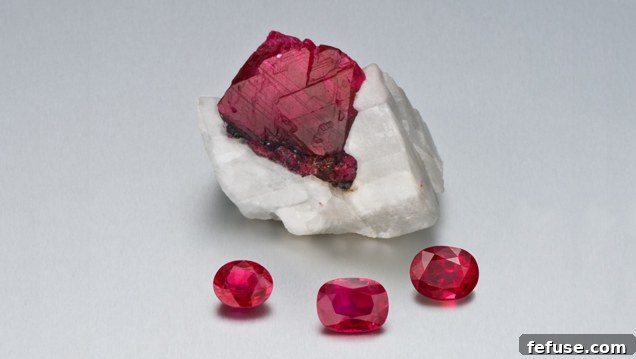
A significant development in the colored stone market unfolded on October 7th, when U.S. President Obama lifted the long-standing ban on imports of ruby and jade from Myanmar (formerly Burma). This historic decision was made during a visit by State Counsellor of the Republic of the Union of Myanmar, Aung San Suu Kyi, symbolizing a major step in diplomatic relations and economic normalization. The ban, originally enacted in 2008 due to human rights concerns and to curb funding for the military junta, had severely impacted Myanmar’s legitimate gemstone trade. The removal of these sanctions is widely anticipated to contribute to a potential revival of ruby mining operations in the historically rich regions of Mogok and Mong Hsu, areas whose production capabilities had reportedly dwindled significantly under the weight of international restrictions.
The potential impact of this policy change on the global ruby market, however, remains a subject of considerable debate and divided opinion among gemstone dealers and experts. One school of thought suggests that the Burmese ruby deposits, particularly in Mogok, may have been gradually winding down over the years, leading to diminished availability of high-quality stones regardless of sanctions. Furthermore, some believe that the ban, at least for the highly coveted Mogok stones, was widely circumvented or ignored through unofficial channels in the years leading up to its repeal. If this is true, the lifting of the ban might primarily serve to legitimize existing trade routes rather than introduce a dramatic surge in new supply.
Conversely, another segment of the industry maintains that the ban, in conjunction with natural production cuts, played a significant role in sharply curtailing the legitimate supply of Burmese rubies to the U.S. market. This scarcity, they argue, prompted some prominent retailers, most notably Tiffany & Co., to completely cease the sale of Burmese rubies due to difficulties in ethical sourcing and supply chain transparency. For these retailers, the repeal of the ban could potentially open doors for re-entry into the Burmese ruby market, provided robust ethical sourcing frameworks can be established to ensure responsible practices throughout the supply chain. The coming months will undoubtedly offer clearer insights into how these divergent perspectives will manifest in market prices and availability.
Despite the economic opportunities presented by the lifting of sanctions, the decision was met with significant protest from various non-governmental organizations (NGOs). These groups voiced serious concerns, emphasizing that human rights in Myanmar remain under threat, largely due to the continued influence and economic grip of the military clique that still controls vast sectors of the country’s economy. Furthermore, NGOs highlighted the ongoing violence and discrimination against ethnic minorities, particularly the Shan people, who are concentrated in the Mong Hsu region – a vital area for ruby mining. These protests underscore the complex ethical dilemma inherent in sourcing gemstones from regions with human rights issues, compelling consumers and retailers alike to consider the broader social and political implications of their purchasing decisions and to advocate for greater transparency and accountability in the gemstone supply chain.
Diamonds: Robust Sales and Market Adjustments by Industry Leaders
The rough diamond market has shown signs of resilience and strategic adjustments from its leading players. De Beers, the world’s largest diamond producer by value, reported robust sales of $485 million worth of rough diamonds during its September 26-29 cycle (previously referred to as a “sight”). This figure was slightly larger than initial expectations, particularly given the persistent credit challenges within the diamond industry – an ongoing concern for cutters and polishers who rely on financing for their operations. Additionally, the impending Diwali holiday in India, which typically sees manufacturing operations close for two weeks or more, usually leads to a temporary slowdown in demand. De Beers’ ability to achieve strong sales despite these factors suggests underlying stability in demand.
Further reflecting a nuanced market approach, De Beers implemented strategic price adjustments during this cycle. Prices for rough goods that would yield polished diamonds of one carat or larger saw a modest increase of 1% to 2%, indicating strong demand for larger, investment-grade stones. Conversely, prices for melee-sized stones (very small diamonds) were slightly lowered, possibly reflecting an oversupply in that specific segment or a strategy to stimulate demand. These targeted adjustments demonstrate De Beers’ responsiveness to market conditions and its commitment to balancing supply and demand across different diamond categories.
Russia’s Alrosa, another titan in the global diamond mining industry, also demonstrated impressive performance. In September, Alrosa recorded sales of $454 million worth of rough diamonds and an additional $18.9 million in polished diamonds. These figures represent a significant surge, nearly doubling the August totals for rough diamonds, which stood at $243 million. August polished sales were $12 million, further highlighting the strong rebound in September. This sharp increase points to renewed buyer confidence and potentially a restocking cycle after previous periods of cautious purchasing.
Analyzing Alrosa’s performance over a longer horizon reveals even more compelling insights. The company’s second-half sales soared 58% above comparable 2015 levels. This stark contrast is particularly noteworthy given that 2015 was characterized by significant oversupplies in the market and widespread buyer revolts over what were perceived as excessively high rough diamond prices. The subsequent adjustments by major producers to manage supply and pricing appear to have stabilized the market, leading to a healthier purchasing environment. For the first half of the current year, Alrosa’s sales were 23% higher by value and 21% higher by carat volume, signaling a broad-based recovery and sustained demand for both the quantity and quality of diamonds offered by the Russian mining giant. These strong performances from both De Beers and Alrosa collectively indicate a more stable and potentially growth-oriented rough diamond market, though vigilance regarding global economic shifts and credit availability remains paramount.
News Source: gia.edu