
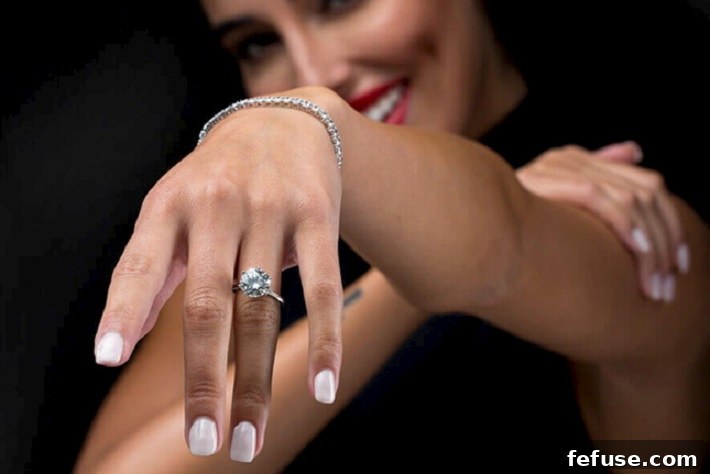
A significant paradigm shift is underway in the global luxury jewelry market, challenging long-held perceptions and consumer behaviors. Even the most affluent clients, those for whom the cost of a natural diamond is no barrier, are increasingly opting for lab-grown diamonds. This fascinating trend is highlighted by Fergus James, the visionary founder of a prominent luxury jewelry brand based in Dubai, a city synonymous with opulence and discerning taste.
Fergus James, whose brand was formerly known as Dubai Rocks, reveals a compelling narrative of evolving preferences among the elite. He personally attests to selling exquisite, high-end lab-grown diamond bracelets to a clientele that includes wealthy socialites, influential personalities, and even top-tier Premier League footballers. These individuals, accustomed to the finest things in life, are consciously choosing cultured diamonds over their mined counterparts, signaling a profound change in the luxury landscape.
One particularly striking anecdote shared by James involves an ultra-high net worth individual from India, a client who dedicates a remarkable sum exceeding $500,000 annually to his brand. What makes this expenditure truly noteworthy is that every single purchase is for lab-grown diamonds, never for mined ones. This illustrates a clear and decisive preference from a demographic often assumed to exclusively favor traditional, mined gems, underscoring the universal appeal that lab-grown diamonds have begun to command.
According to Fergus James, the catalyst for this dramatic surge in interest in lab-grown diamonds can be pinpointed to the aftermath of the 2022 Netflix documentary, “Nothing Lasts Forever.” This investigative piece critically examined various aspects of the diamond industry, including issues surrounding natural diamond authenticity, transparency, and ethical sourcing. Its broadcast evidently resonated deeply with consumers, sparking a rapid re-evaluation of their diamond purchasing decisions.
The impact of the documentary on his business was immediate and transformative. James observed that within a mere month of its initial broadcast, the demand for lab-grown diamonds experienced an unprecedented flip. Prior to the documentary, lab-grown gems constituted a modest 5-10 percent of his sales. Post-documentary, this figure skyrocketed to an overwhelming 80-90 percent, a testament to the powerful influence of increased awareness and information on consumer choices.
This shift not only defied traditional market expectations but also challenged the industry’s preconceived notions about the typical demographic for lab-grown diamonds. “What came through very quickly was that it wasn’t what the diamond industry was anticipating in terms of the general demographic or customer profile they anticipated would buy it,” James told Arabian Business. The industry had largely assumed that lab-grown diamonds would appeal primarily to younger, more budget-conscious consumers or those primarily driven by environmental concerns. However, the reality proved to be far more expansive and inclusive.
“It has actually transpired that the customer profile is just completely non-discriminatory. It’s everyone! Even people who’ve got money, they can afford to buy whatever they wanted,” James elaborated. This observation shatters the stereotype that lab-grown diamonds are merely an alternative for those who cannot afford natural ones. Instead, they are being chosen by individuals for whom affordability is not a primary concern, indicating a deeper, values-driven or preference-based decision.
The Evolution of Luxury: Understanding the Lab-Grown Appeal
The rise of lab-grown diamonds, particularly among the wealthy, signifies a profound evolution in the definition of luxury itself. These diamonds are not imitations or substitutes; they are chemically, physically, and optically identical to mined diamonds, sharing the exact same sparkle, brilliance, and durability. The only difference lies in their origin: one is extracted from the earth, and the other is cultivated in a controlled laboratory environment using advanced technology that replicates the natural diamond-forming process. This fundamental identity in quality, combined with distinct advantages, is attracting a new breed of discerning consumer.
Ethical and Environmental Consciousness
For many high-net-worth individuals, the decision to choose lab-grown diamonds is increasingly rooted in ethical and environmental considerations. The narrative surrounding mined diamonds has, at times, been marred by concerns over conflict diamonds, exploitative labor practices, and significant environmental impact, including large-scale land disruption and energy consumption. While the mined diamond industry has made strides to address these issues, the transparency and traceability offered by lab-grown diamonds present an undeniable appeal. Consumers can be confident that their lab-grown diamond is free from association with human rights abuses or environmentally destructive mining practices, aligning with a growing global demand for conscious consumption.
Lab-grown diamonds generally boast a smaller carbon footprint, consuming less energy and causing minimal ecological disturbance compared to traditional mining. This commitment to sustainability resonates strongly with a generation of affluent buyers who are keenly aware of their impact on the planet and society. They seek luxury that not only dazzles but also aligns with their values, positioning lab-grown diamonds as a symbol of modern, responsible opulence.
Value and Innovation
Beyond ethics and environment, the value proposition of lab-grown diamonds also plays a role, even for those with unlimited budgets. While not necessarily cheaper in an absolute sense for high-quality, large stones, lab-grown diamonds typically offer a more substantial size or superior quality for the same price point compared to their mined counterparts. This means a wealthy client can acquire a larger, more brilliant diamond without compromising on any other aspect, often allowing for more creative and impactful jewelry designs. This aspect of getting “more for less” in terms of physical attributes, while maintaining identical quality, can be quite attractive.
Furthermore, there’s an appreciation for the technological innovation behind lab-grown diamonds. For individuals who are often early adopters of technology and innovation in other areas of their lives, the scientific marvel of creating a genuine diamond in a lab can be intrinsically appealing. It represents progress, cutting-edge science, and a forward-thinking approach to luxury, rather than relying solely on tradition.
Dubai: A Hub for Modern Luxury and Innovation
Dubai, where Fergus James’s brand is based, serves as an ideal microcosm for observing these evolving luxury trends. Known for its rapid development, futuristic vision, and status as a global hub for luxury shopping and innovation, the city’s affluent population is often at the forefront of adopting new concepts. The discerning clients in Dubai, from international expatriates to local Emirati families, are open to embracing products that offer superior value, ethical sourcing, and technological advancement, all while maintaining the highest standards of luxury and design.
Fergus James, with his keen understanding of this sophisticated market, positioned his brand to cater to these shifting demands. His ability to connect with diverse high-profile clients—from the world of entertainment and sports to high finance—demonstrates that the appeal of lab-grown diamonds transcends cultural and professional boundaries. His anecdote about the Indian ultra-high net worth individual is particularly telling, showcasing a deliberate, informed choice rather than a compromise.
The Future Landscape of the Diamond Industry
The insights from Fergus James suggest that the diamond industry is at an inflection point. The traditional narrative, which has long emphasized rarity and natural origin as paramount, is now being challenged by a consumer base that increasingly values transparency, sustainability, and technological prowess. This doesn’t necessarily mean the end of mined diamonds, but rather a redefinition of the market where both types of diamonds will likely coexist, catering to different preferences and value systems.
The widespread acceptance of lab-grown diamonds among the wealthy also signals a potential shift in how diamonds are perceived beyond just a status symbol or an investment. While natural diamonds have historically been viewed as heirlooms and stores of value, lab-grown diamonds are emerging as equally legitimate forms of personal adornment and expressions of individual style, offering flexibility and accessibility without compromising on intrinsic quality. This changing perception is likely to fuel further growth and innovation in the lab-grown segment, pushing design boundaries and making high-quality diamond jewelry more attainable for a broader audience.
As technology advances, the production of lab-grown diamonds is expected to become even more efficient and sustainable, further strengthening their appeal. This continuous innovation will keep them relevant and desirable in the luxury market, ensuring they are not just a passing trend but a permanent fixture. Brands like Fergus James, which have embraced this change early, are perfectly positioned to lead this new era of conscious luxury, catering to a global clientele that demands both exquisite beauty and impeccable integrity.
In conclusion, the observations from Fergus James in Dubai provide compelling evidence that lab-grown diamonds have firmly cemented their place in the luxury market, transcending initial expectations and attracting a non-discriminatory clientele, including the world’s wealthiest. Fuelled by increased awareness, ethical considerations, environmental consciousness, and a recognition of their inherent value and quality, these diamonds represent more than just an alternative; they signify a fundamental shift in what luxury means to the modern consumer. The future of the diamond industry will undoubtedly be shaped by this dynamic evolution, with lab-grown diamonds playing an increasingly central role in defining global jewelry trends and consumer preferences.