
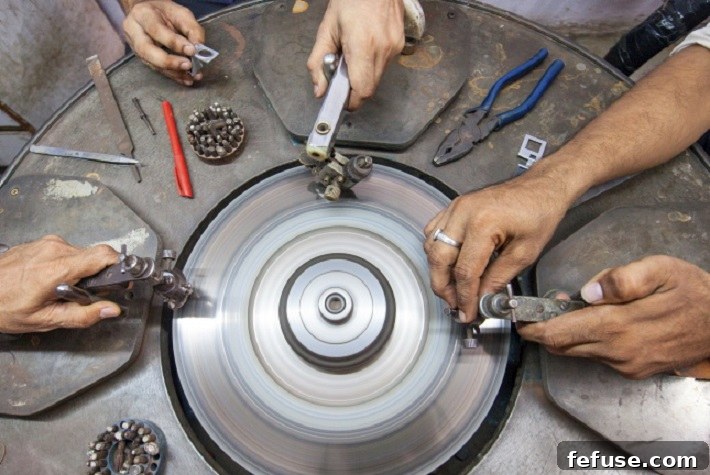
The global diamond industry is currently navigating a period of unprecedented change, largely driven by geopolitical shifts and the subsequent imposition of international sanctions. At the heart of this transformation is India, the world’s leading hub for diamond cutting and polishing, which finds itself at a critical juncture. Indian diamond companies have received a stern warning: they must uphold “meticulous” record-keeping practices to ensure full compliance with the stringent G7 sanctions targeting Russian-origin diamonds. This directive is not merely a bureaucratic formality; it is an essential measure designed to preserve the integrity of the supply chain, maintain global market access, and protect the industry’s reputation.
These new regulations, spearheaded by the G7 nations, are designed to restrict the flow of Russian diamonds into major consumer markets. For the Indian diamond sector, which processes approximately 90% of the world’s rough diamonds, understanding and rigorously adhering to these rules is paramount. Failure to comply could lead to severe consequences, including restricted market access, reputational damage, and financial penalties, jeopardizing the livelihoods of millions involved in India’s robust diamond trade.
Navigating New Sanctions: India’s Diamond Industry Adapts to G7 Regulations for Ethical Sourcing
The Imperative of Meticulous Record-Keeping in a Changing Landscape
In a clear and unequivocal message, the Gem and Jewellery Export Promotion Council (GJEPC), India’s authoritative body for the trade, has issued a comprehensive directive to its extensive network of 7,500 members. The core of this message emphasizes the absolute necessity of maintaining robust and verifiable documentary evidence confirming that any diamonds handled or exported are unequivocally not of Russian origin. This measure is a direct response to the evolving international trade landscape, where the provenance of goods has become as crucial as their quality and value.
The term “meticulous” here is key, signifying a requirement for thoroughness that leaves no room for ambiguity or oversight. Companies are expected to establish rigorous internal protocols for sourcing, inventory management, and export documentation. This includes not just declarations, but verifiable proof, tracing a diamond’s journey from mine to market. Such detailed record-keeping is designed to withstand scrutiny from international customs agencies and regulatory bodies in G7 countries, ensuring that Indian exports meet the highest standards of ethical sourcing and compliance.
GJEPC’s Proactive Stance and Guidelines for its Extensive Membership
The GJEPC has taken a proactive leadership role in guiding its vast membership through these complex regulatory waters. Recognizing the potential challenges and the critical importance of uninterrupted trade with G7 nations – which represent significant markets for Indian polished diamonds – the council has disseminated detailed guidelines. These guidelines serve as a vital roadmap for companies to navigate the intricacies of the new sanction regime effectively.
As articulated by a GJEPC executive director in The Economic Times, the council has “strongly urge[d] all members to review the guidelines meticulously and exercise utmost caution when dispatching shipments to G7 countries.” This call to action underscores the gravity of the situation and the council’s commitment to protecting the interests of the Indian diamond industry while upholding international trade ethics. Key areas of focus within these guidelines likely include:
- Enhanced Due Diligence: Companies must go beyond traditional checks, actively investigating the origin of all rough diamonds they procure, regardless of the intermediary.
- Robust Documentation: Every step of the diamond’s journey – from import of rough, through cutting and polishing, to export of finished goods – must be accompanied by comprehensive and auditable documentation. This includes certificates of origin, invoices, shipping records, and payment confirmations that explicitly exclude Russian entities.
- Internal Compliance Systems: Implementing and regularly updating internal systems and training programs to ensure all personnel are aware of and adhere to the sanction requirements.
- Transparent Communication: Fostering open communication with international buyers and regulatory bodies, providing necessary assurances about the non-Russian origin of their products.
These measures are crucial for maintaining the trust of international partners and safeguarding India’s reputation as a reliable and compliant global diamond trade hub.
Unpacking the G7 Sanctions: What Companies Need to Know About the Phased Implementation
The new restrictions introduced by the G7 nations represent a significant tightening of controls on the global diamond supply chain. These sanctions are not a static set of rules but are being implemented in phases, requiring the Indian industry to remain vigilant and adaptable. Understanding the specifics of these phases is vital for complete compliance and to avoid any inadvertent breaches.
Phase One: Restrictions on Larger Diamonds from March 1st, 2024
Effective March 1st, 2024, the initial phase of the G7 sanctions explicitly outlawed the import of all Russian-origin diamonds weighing 1.0 carat or above. This prohibition applies universally, regardless of where these diamonds undergo cutting, polishing, or any other form of processing. The critical factor is the original source: if the rough diamond originated from Russia, it is banned from G7 markets once it has been processed to a size of 1.0 carat or larger. This “cut-and-polished anywhere” clause is particularly significant for India, as it directly impacts the vast majority of its value-added operations, emphasizing that downstream processing does not alter the fundamental origin for sanction purposes.
Phase Two: Expanding the Net with a Lower Threshold from September 1st, 2024
A further and more comprehensive tightening of controls is slated for September 1st, 2024. From this date, the threshold for prohibited Russian-origin diamonds will significantly drop to 0.50 carats and above. This expansion means that an even wider range of diamonds, including smaller, more commonly traded sizes, will fall under the purview of the sanctions. This phased approach demonstrates the G7’s commitment to progressively curtailing Russia’s revenue from diamond exports, pushing for full traceability across the entire value chain. Indian companies must prepare now for this broader scope, adjusting their sourcing, processing, and documentation practices well in advance of the September deadline.
The Paradox: Limited Direct Russian Imports vs. Stringent Compliance Requirements
A unique challenge for the Indian diamond industry lies in a perceived paradox: while the G7 sanctions are explicitly aimed at Russian-origin diamonds, many within the Indian sector suggest that direct imports of rough diamonds from Russia are already minimal. This perspective is articulated by industry leaders such as Colin Shah, managing director of Kama Jewelry, who stated, “To the best of our knowledge, barely any Russian diamonds are coming to India – at least, not directly as the banks would not clear the payments.” This sentiment reflects the existing difficulties in conducting direct financial transactions with Russian entities due to broader international banking restrictions.
However, this apparent lack of direct imports does not diminish the imperative for stringent compliance. As Colin Shah further emphasizes, “Despite that, one has to carefully maintain detailed records to meet the compliance standards under the new regime.” The reason for this strict requirement is multi-faceted. Firstly, while direct imports may be limited, diamonds could still enter the supply chain through indirect routes or third countries, making robust origin verification absolutely critical. Secondly, G7 nations demand irrefutable proof of non-Russian origin, placing the burden of proof squarely on the exporting companies. It’s not enough to *believe* diamonds aren’t Russian; companies must be able to *demonstrate* it through a clear, auditable trail. This necessitates investing in advanced tracking systems and due diligence processes that can stand up to international scrutiny, effectively proving the absence of Russian material in their supply chain.
Global Implications and the Future of Diamond Sourcing
These G7 sanctions extend far beyond the immediate economic impact on trade flows; they are catalysts for fundamental shifts across the entire global diamond supply chain. The renewed focus on origin and ethical sourcing is reshaping industry practices, investment decisions, and consumer expectations.
Enhancing Supply Chain Transparency
The G7’s actions are undeniably pushing the entire diamond industry towards unprecedented levels of supply chain transparency. For decades, the complex, multi-stage journey of a diamond from mine to finger has presented significant challenges in establishing clear provenance. However, the current regulatory environment is making opacity unsustainable. There is a growing imperative for all stakeholders – miners, traders, cutters, polishers, and retailers – to collaborate on creating a more transparent ecosystem. This push is accelerating the adoption of innovative technologies, such as blockchain, which offer immutable and verifiable records of a diamond’s journey. Such technologies can provide the robust, real-time tracking capabilities necessary to meet stringent G7 requirements and assure end-consumers of a diamond’s ethical journey.
The Evolution of Origin Certification
Traditional methods of origin verification, often reliant on paper certificates or less sophisticated tracking, are now under intense scrutiny. The demand for robust, internationally recognized, and auditable certification schemes will intensify. This may lead to the development of new industry standards or the enhancement of existing ones, ensuring that certifications are not merely declarations but are backed by verifiable data. For India, this means actively participating in and adopting these advanced certification frameworks, positioning itself as a leader in transparent and compliant diamond processing.
Economic Impact on India’s Diamond Sector
While the Indian diamond industry is renowned for its resilience and adaptability, these compliance requirements undoubtedly introduce new challenges. Compliance costs, including investments in technology, training, and auditing, will increase. Furthermore, any disruption in the availability of certain rough diamond categories could impact production schedules and profitability. However, India’s unique position as a processing powerhouse also presents an opportunity. By leading the charge in ethical sourcing and transparency, India can solidify its competitive advantage, attracting buyers who prioritize responsible practices and further strengthening its indispensable role in the global diamond trade.
Best Practices for Indian Diamond Companies: A Proactive Path Forward
To navigate this complex regulatory landscape successfully and mitigate potential risks, Indian diamond companies must adopt a series of proactive and strategic measures. These best practices will not only ensure compliance but also enhance their reputation and operational efficiency in the long run.
- Strengthen Due Diligence Processes: Go beyond surface-level checks. Companies must implement comprehensive due diligence frameworks that rigorously vet all suppliers, regardless of their geographical location. This includes requesting detailed information on the source of rough diamonds, verifying supply chain partners, and conducting regular risk assessments.
- Invest in Advanced Tracking Technology: Explore and integrate digital solutions such as blockchain-based platforms for end-to-end traceability. These technologies can provide immutable records of a diamond’s origin, movement, and transformation, offering unparalleled transparency and auditability.
- Comprehensive Staff Training and Awareness: Ensure all personnel involved in sourcing, processing, sales, and documentation are thoroughly trained on the G7 sanction guidelines and the company’s internal compliance protocols. A well-informed workforce is critical for preventing inadvertent non-compliance.
- Actively Collaborate with Industry Bodies: Leverage the expertise and resources provided by organizations like the GJEPC. Participate in industry dialogues, workshops, and initiatives aimed at establishing common standards and sharing best practices for compliance.
- Regular Internal and External Audits: Conduct frequent internal audits of compliance systems and documentation. Additionally, consider engaging independent third-party auditors to verify adherence to G7 regulations and provide an objective assessment of the company’s compliance framework.
- Maintain Transparent Communication with Buyers: Proactively inform international buyers about the steps taken to ensure compliance. Provide clear and comprehensive documentation regarding the non-Russian origin of diamonds, building trust and strengthening business relationships.
- Diversify Sourcing Channels: While not always straightforward, exploring diverse sourcing channels for rough diamonds can help mitigate risks associated with over-reliance on any single region or potential future geopolitical shifts.
Preserving Trust and Reputation in the Global Market
Ultimately, adherence to these G7 sanctions transcends mere legal compliance; it is fundamentally about maintaining and enhancing trust and reputation within the highly competitive global diamond market. For consumers, particularly in affluent G7 markets, ethical sourcing, transparency, and the assurance that their purchases are not funding conflict or illicit activities are increasingly paramount considerations. The provenance of a diamond now carries as much weight as its cut, clarity, color, and carat weight.
India’s ability to demonstrate full compliance with these stringent new regulations is crucial for sustaining its market share and its standing as a responsible player. By diligently implementing robust tracking, verification, and documentation processes, Indian diamond companies can provide unequivocal assurances to buyers and end-consumers. This commitment to ethical practices will not only meet regulatory mandates but will also differentiate Indian products in the global marketplace, fostering stronger brand loyalty and ensuring continued access to vital international markets. The industry’s proactive response to these challenges will ultimately underscore its dedication to a sustainable and integrity-driven future.
Conclusion: A New Era for India’s Resilient Diamond Industry
The G7 sanctions on Russian diamonds undeniably present a complex array of challenges for India’s vibrant and historically resilient diamond industry. However, they also usher in a new era defined by an accelerated push towards greater transparency, meticulous accountability, and ethical sourcing throughout the entire value chain. The mandate for comprehensive record-keeping and verifiable proof of non-Russian origin is a testament to the evolving demands of the global market and the imperative of maintaining international trust.
By embracing stringent compliance, investing proactively in advanced traceability technologies, and adapting swiftly to these new global norms, India can not only mitigate potential risks but also solidify its position as the undisputed leader in the world’s diamond industry. This period of adaptation, while demanding, offers a unique opportunity for Indian diamond companies to set new benchmarks for responsible trade, ensuring a sustainable, ethical, and prosperous future for millions of workers and businesses across the subcontinent. The industry’s ability to navigate these currents with foresight and integrity will undoubtedly be a defining characteristic of its continued global success.