
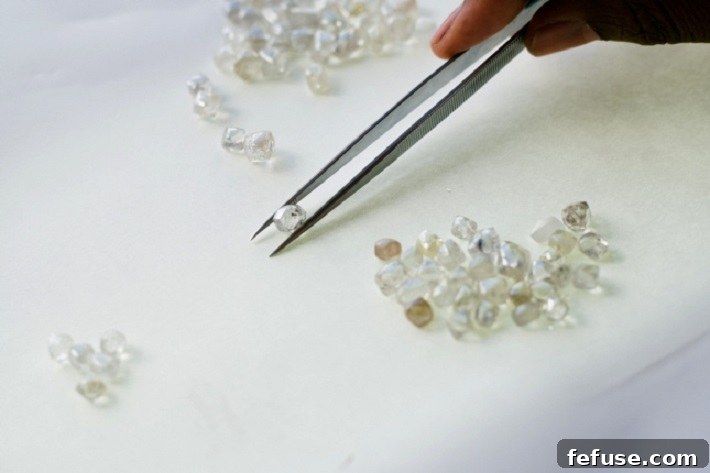
De Beers Cancels Diamond Sight Amid Deepening Global Market Slump: An Industry in Flux
The global diamond industry is currently navigating turbulent waters, as evidenced by De Beers’ recent decision to cancel Sight 7, originally scheduled for later this month. This significant move by one of the world’s leading diamond producers underscores the persistent slump in worldwide diamond demand, signaling a challenging period for the entire value chain, from mining to retail.
This cancellation marks a notable moment, being the first time the UK-based miner has taken such a drastic step since the depths of the COVID-19 crisis in 2020, when Sights 3, 4, and 5 were similarly called off. The parallel between these two periods highlights the severity of the current market downturn and its profound impact on an industry traditionally viewed as resilient to economic fluctuations.
Understanding the Diamond Sight System and Its Significance
For those unfamiliar with the terminology, “Sights” are exclusive events where De Beers, through its Diamond Trading Company (DTC), sells rough diamonds to a select group of authorized buyers known as “Sightholders.” These Sightholders are critical players in the diamond pipeline, responsible for cutting, polishing, and distributing diamonds to manufacturers and retailers globally. The cancellation of a Sight is not merely an administrative decision; it’s a powerful indicator of market health, directly impacting the supply of rough diamonds and, subsequently, the entire processing and sales infrastructure.
Historically, De Beers’ Sights have operated on a fixed schedule, with sales figures often providing a transparent snapshot of the rough diamond market’s vitality. However, the recent shift by De Beers from publishing detailed Sight-by-Sight reports to providing quarterly updates reflects a broader adjustment to evolving market dynamics and a strategic move towards a less granular reporting structure.
Sales Figures and Market Speculation: A Troubling Trend
The financial performance leading up to this cancellation paints a clear picture of declining demand. De Beers’ last publicly reported sales for Sight 5 of this year amounted to just $315 million. While figures for Sight 6, held in July, have not been officially disclosed under the company’s new reporting policy, industry speculation had anticipated a further significant drop, with some estimates suggesting sales could dip below $200 million. Such figures, if accurate, would represent a dramatic decrease and a stark warning of the challenges faced by the rough diamond sector.
The persistent weakness in demand is attributed to a confluence of global economic factors. High inflation, rising interest rates, and a general tightening of consumer spending power in key markets like the United States and China have dampened enthusiasm for luxury goods, including diamonds. Furthermore, geopolitical uncertainties and a cautious economic outlook contribute to reduced consumer confidence, making discretionary purchases like diamond jewelry less appealing.
De Beers’ Strategic Adjustments and Industry-Wide Responses
Beyond the cancellation of Sight 7, De Beers has also proactively rescheduled its remaining Sights for the rest of the year, demonstrating a strategic effort to adapt to the prevailing market conditions and support its Sightholders. The revised schedule is as follows:
-
Sight 8: Now scheduled for 23-27 September (originally 7 October – 11 October)
-
Sight 9: Now scheduled for 4-8 November (originally 11 November – 15 November)
-
Sight 10: Now scheduled for 2-6 December (originally 9 December – 13 December)
In an official statement, De Beers articulated the rationale behind these changes: “We are rescheduling Sight dates for the remainder of the year to support Sightholder businesses in navigating industry trading conditions, as well as to avoid timing issues with a UN Conference set to take place in Botswana in mid-December.” The company further emphasized, “Following engagement with Sightholders, we believe this revised scheduling will better support their evolving business needs as we head towards the end of year season.” This statement highlights De Beers’ commitment to its partners and its recognition of the complex environment in which they operate.
De Beers’ actions are not isolated. Other major players in the diamond mining sector are also taking steps to manage supply in response to the weakened demand. For instance, another prominent diamond miner, Petra Diamonds, recently announced the cancellation of its August/September tender. This decision, as stated by Petra, was made “to support steps taken by major producers to restrict supply in this weaker demand period,” acknowledging that sales have been sliding at recent tenders. Such coordinated or parallel actions across the industry underscore a collective effort to stabilize prices and prevent an oversupply of rough diamonds from further depressing the market.
The Ripple Effect: Impact on Sightholders and the Diamond Value Chain
The challenges faced by De Beers and other miners inevitably reverberate throughout the entire diamond value chain. Sightholders, who commit to purchasing specific volumes of rough diamonds from De Beers, find themselves in a difficult position when demand for polished diamonds dwindles. They face reduced margins, inventory build-up, and increased pressure on their cash flow. The rescheduling of Sights offers some flexibility, allowing them to better manage their purchases and align with current market realities, thus potentially mitigating some of these pressures.
Further downstream, cutters and polishers in manufacturing hubs like India, who rely on a steady flow of rough diamonds, are experiencing reduced activity. This slowdown can lead to production cuts, layoffs, and significant economic strain in these specialized regions. Ultimately, the reduced flow of rough diamonds and the subdued demand for polished stones affect jewelers and retailers, who may see slower sales of diamond jewelry and potentially be forced to adjust their pricing strategies or inventory levels.
Historical Context and Lessons from Past Crises
The current downturn draws parallels with previous periods of significant disruption, most notably the 2020 COVID-19 pandemic, but also the 2008 global financial crisis. During these times, the diamond industry demonstrated its vulnerability to macro-economic shocks, yet also its capacity for resilience and recovery. Lessons learned from these periods often involve a combination of strict supply management, innovative marketing efforts, and adapting to evolving consumer behaviors.
The industry has historically relied on strong marketing campaigns, such as “A Diamond Is Forever,” to sustain demand. In the current climate, renewed efforts to connect with consumers, perhaps focusing on ethical sourcing, sustainability, and the emotional value of diamonds, could be crucial. Furthermore, the industry might need to increasingly cater to new demographics and evolving luxury trends to reignite interest and drive sales.
Looking Ahead: The Path to Recovery for the Diamond Market
The immediate future for the global diamond market remains uncertain, with a recovery heavily dependent on a stabilization of global economic conditions and a resurgence in consumer confidence. However, the proactive measures taken by major producers like De Beers and Petra, particularly in managing rough diamond supply, are critical steps towards rebalancing the market and supporting price stability.
As the industry heads towards the crucial year-end holiday season, a period traditionally associated with heightened diamond sales, the hope is that these strategic adjustments will create a more favorable environment. A potential rebound in key markets, coupled with effective promotional activities, could help to alleviate the current slump. The resilience of the diamond market, built on centuries of tradition and consumer desire for enduring beauty, suggests that while challenging times persist, the industry is capable of adapting and ultimately shining again.
Monitoring De Beers’ upcoming quarterly reports and the performance of the rescheduled Sights will provide further insights into the efficacy of these measures and the broader trajectory of the global diamond industry in the months to come.