
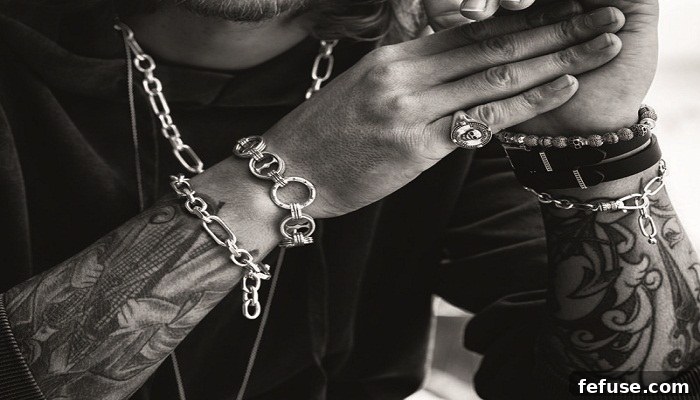
The global market for men’s jewelry, while historically smaller than its female counterpart, is currently experiencing an unprecedented surge, presenting a vast and often untapped opportunity for jewelers worldwide. Despite this clear growth trajectory, many retailers appear to be struggling to effectively capitalize on this burgeoning sector, inadvertently leaving significant revenue potential unrealized.
Understanding the Current Gap: Why Men’s Jewelry Sales Lag for Many Retailers
A common observation across the jewelry retail landscape is the constrained approach many jewelers take towards their men’s offerings. It’s not unusual to find a limited selection of men’s jewelry pieces, often relegated to an inconspicuous corner, nestled uncomfortably between displays predominantly featuring women’s products and imagery. Predictably, these same retailers then express bewilderment at the sluggish sales performance of their men’s jewelry lines. However, the reasons for this struggle are often quite transparent once examined through the lens of male consumer behavior.
Unlike women, who often engage in extensive research and contemplative decision-making when purchasing jewelry, men tend to exhibit more spontaneous buying patterns. They are frequently driven by immediate visual appeal and the ease of the purchasing process. This crucial difference in consumer psychology highlights the critical importance of presentation and accessibility within a retail environment. As the founder of Unique & Co insightfuly shares, “Men don’t research too much about jewelry like the woman. They buy things more spontaneous and buy it when they see and like it. So for men, it’s important to see a nice selection of jewelry which they easily can try and decide quickly. So the display and POS of the product is important, but retailers also need to have a nice selection in the shop and not only a few items.” This underscores the need for comprehensive visual merchandising that actively invites exploration and facilitates swift decision-making for male shoppers.
The Psychology of Male Jewelry Purchasing: Display, Selection, and Convenience
For men, the act of buying jewelry is often less about tracking trends or comparing intricate details, and more about immediate connection and suitability. They appreciate seeing a well-curated collection that speaks to their individual style, displayed in a manner that encourages interaction. A limited array of options not only fails to inspire but also communicates a lack of commitment from the retailer, reinforcing the perception that men’s jewelry is merely an afterthought. The lack of a substantial and inviting display directly contradicts the spontaneous, ‘see-it, like-it, buy-it’ mentality that largely characterizes male purchasing habits, ultimately deterring potential sales of modern men’s accessories.
The Imperative for Dedicated Retail Space: A Paradigm Shift for Men’s Jewelry
The conversation around elevating men’s jewelry sales inevitably leads to the critical need for dedicated retail space. In an environment where every square foot of retail space is considered premium, men’s jewelry is often disadvantaged by not being afforded the same dedicated showcase opportunities as women’s jewelry. Industry experts argue that until this fundamental disparity is addressed, the men’s jewelry market will struggle to achieve its full potential. Curran eloquently articulates this point, stating, “All retail space is at a premium until men’s jewelry gets the same opportunity to showcase their product as women, then it will begin to make a serious impact, just look at what men’s watches can achieve.” The success of the men’s watch market, which commands significant dedicated space and specialized retail environments, serves as a powerful testament to this theory, highlighting the potential impact of strategic merchandising for other high-value male accessories.
Indeed, a growing number of forward-thinking department stores are already pioneering this approach, proactively allocating specific, distinct spaces for men’s jewelry. These dedicated zones are designed to allow men’s pieces to “breathe,” creating an environment that feels welcoming and relevant to its target audience. This strategy not only enhances visibility but also fundamentally shifts the perception of men’s jewelry from an ancillary offering to a legitimate and significant product category, attracting a broader demographic interested in men’s fashion and style.
Thomas Sabo’s Rebel Room: A Blueprint for Immersive Male Shopping
Leading brands are also embracing this philosophy with innovative retail concepts. A prime example is Thomas Sabo, which has successfully experimented with this idea at its London flagship store. The brand unveiled a dedicated men’s jewelry suite, aptly named the ‘Rebel Room’, designed to create an immersive and focused shopping experience for male customers. This bold move reflects a strategic recognition of the unique requirements of the male consumer and the immense potential within the men’s accessory market.
Tony Bjork, the new managing director for Thomas Sabo, expresses strong conviction in this strategy, elaborating on the brand’s vision: “We think men’s jewelry is a huge opportunity that no one has taken and we want to take that opportunity. Communication wise, we are talking about it more than ever before, in our store in South Morton Street we have made an environment where we believe men can specifically focus and feel comfortable coming into it.” This statement highlights not only the commercial ambition but also the deliberate effort to craft a welcoming and masculine environment, a stark contrast to the often feminized general jewelry displays. By creating a space where men can explore at their leisure without feeling out of place, Thomas Sabo is setting a new benchmark for engaging the male consumer with luxury men’s accessories.
Boosting Sales: Assortment, Separation, and Targeted Marketing Strategies
When queried about actionable steps retailers can take to significantly boost their men’s jewelry sales, industry experts offer clear and practical advice. The underlying consensus points to a combination of enhanced product assortment, strategic in-store separation, and clever marketing. Tony Bjork of Thomas Sabo provides crucial insight: “I think they can do a lot because the male shoppers are out there and we also see a lot of women actually buying for men. So, first of all, you need a good assortment and you also need a place in your store so it doesn’t feel like you go to women’s underwear department looking for something for you – so you need to separate it.” This analogy powerfully illustrates the discomfort and alienation men can feel when forced to navigate traditionally female-centric shopping environments in search of products tailored for them.
A “good assortment” for men’s jewelry extends beyond merely offering a few rings or bracelets. It implies a diverse collection that caters to various styles, preferences, and occasions, from minimalist designs and classic pieces to more edgy, statement-making items. Incorporating a range of materials – such as stainless steel, leather, silver, and gold, alongside subtle gemstone accents – can also significantly broaden appeal. This variety ensures that men, whether buying for themselves or receiving as gifts, have ample choice to find pieces that resonate with their personal brand and lifestyle, encompassing everything from casual wear to formal accessories.
Furthermore, the acknowledgment that a substantial portion of men’s jewelry is purchased by women as gifts opens another avenue for strategic marketing. Retailers can craft campaigns that specifically target female gift-givers, providing them with inspiration and guiding them towards appropriate and stylish options for the men in their lives. This dual approach – attracting male self-purchasers and female gift-buyers – is essential for maximizing market penetration and driving robust sales for men’s accessories.
Investing in the Future: Product Innovation and Proactive Marketing for Men’s Jewelry Growth
Sustainable growth in the men’s jewelry market demands continuous investment in both product innovation and dynamic marketing strategies. Brands that are serious about capturing a larger share of this market must be prepared to evolve their offerings and actively engage their target audience. Ozel emphasizes this commitment, stating, “As a brand, we will further invest heavily in new products and marketing. We have to develop and offer more innovation in product, but also in marketing. The marketing is important to make men aware to wear more jewelry.” This highlights a crucial challenge: overcoming existing societal norms or perceptions that might deter some men from wearing jewelry.
Product innovation for men’s jewelry can manifest in various forms, including novel designs, durable and hypoallergenic materials, enhanced functionality (e.g., smart features, modular designs), and pieces that seamlessly blend into contemporary men’s fashion trends. By consistently introducing fresh and exciting collections, brands can keep the market vibrant and generate renewed interest. Concurrently, marketing efforts must be sophisticated and pervasive, utilizing channels and messages that resonate with male consumers. This might involve lifestyle photography, collaborations with male influencers, targeted digital advertising, and in-store events that speak directly to men’s interests and aspirations.
From a retailer’s perspective, Ozel further advises: “I think they need to give it more attention and space in the shops because there is still quite a lot of potential and growth possible in this segment. If they can attract more men to their shops, they will profit and sell also more ladies jewelry.” This final point is particularly compelling, as it illustrates a significant positive externality: a well-executed men’s jewelry strategy can act as a powerful magnet, drawing in a new demographic of male customers. Once these men are in the store, the potential for cross-selling and increasing overall store footfall, which benefits ladies’ jewelry sales and other product categories, becomes immense. This strategic synergy underscores the holistic benefits of truly committing to the men’s jewelry segment.
Integrated Online and Offline Strategies for Men’s Jewelry Success
In today’s interconnected retail landscape, a comprehensive strategy for men’s jewelry must also seamlessly integrate online and offline channels. An engaging e-commerce platform dedicated to men’s jewelry, featuring high-quality product photography, detailed descriptions, and styling guides, can serve as a vital discovery tool. This online presence can then drive traffic to physical stores, where the immersive experience of dedicated spaces like the ‘Rebel Room’ can convert interest into sales. Conversely, in-store promotions and events can direct customers to the online store for extended browsing and purchasing, creating a cohesive and convenient customer journey for discerning male shoppers and those seeking sophisticated men’s fashion accessories.
Conclusion: Seizing the Moment in the Men’s Jewelry Market
The burgeoning market for men’s jewelry represents a substantial and largely untapped revenue stream for jewelers. The path to unlocking this potential is clear: a fundamental shift in retail strategy that prioritizes dedicated space, extensive and curated product assortments, targeted marketing, and continuous product innovation. By understanding the unique purchasing psychology of men – their preference for spontaneity, visual appeal, and ease of decision-making – retailers can craft environments and experiences that truly resonate. Leading brands and department stores are already demonstrating the immense impact of such focused efforts, proving that with the right approach, the men’s jewelry segment can achieve significant growth and contribute meaningfully to overall business success. It’s time for the broader jewelry industry to acknowledge this powerful trend and invest strategically in cultivating the male consumer, transforming the landscape of men’s fashion accessories for years to come.
News Source: professionaljeweller.com