
Dubai Hosts Pivotal WFDB Presidents Meeting Amidst Evolving Global Diamond Landscape
Dubai, UAE – 24 September, 2019: The prestigious World Federation of Diamond Bourses (WFDB) Presidents Meeting commenced its critical deliberations in Dubai today, bringing together leaders from across the global diamond industry. The agenda for this influential gathering was packed with crucial topics shaping the future of the sector, with special sessions dedicated to the burgeoning market of lab-grown diamonds and the increasingly vital issue of provenance and traceability within the diamond supply chain.
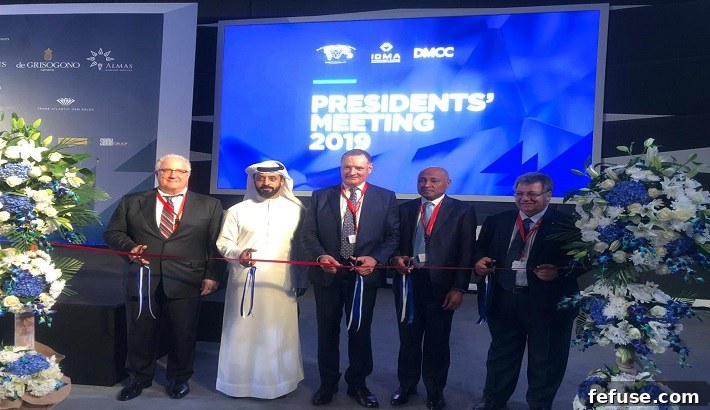
The opening ceremony was marked by a significant moment reflecting the industry’s evolving geography and potential. A high-level delegation from Sodiam, Angola’s national diamond company, graced the event. Led by its esteemed Chairman, Dr. Eugenio Bravo da Rosa, the delegation participated prominently in the ribbon-cutting ceremony, officially inaugurating the Presidents Meeting. This presence underscored Angola’s growing importance and its ambition to play a more central role in the international diamond trade.
Angola’s Untapped Diamond Riches: A Global Game Changer?
Angola stands on the cusp of a diamond renaissance, possessing the geological potential to emerge as one of the world’s foremost, and potentially largest, diamond mining nations. The country is endowed with extensive diamond reserves, conservatively estimated at a staggering 180 million carats. These rich deposits are predominantly concentrated in the central and northeastern regions of the country, specifically within the provinces of Lunda Norte and Lunda Sul, areas that have historically been, and continue to be, synonymous with significant diamond discoveries.
The scale of Angola’s current production, while substantial, hints at the vast untapped potential. In 2018, the nation’s total rough diamond production reached 8.4 million carats, generating a significant value of $1.2 billion, according to data from the Kimberley Process. This output places Angola among the top diamond-producing countries globally, yet industry experts widely believe that with further investment, exploration, and streamlined operational practices, these figures could escalate dramatically, solidifying Angola’s position as a powerhouse in the global diamond supply.
The Strategic Vision: A Luanda Diamond Bourse
Beyond merely extracting rough diamonds, Angola harbors ambitious strategic plans to enhance its footprint in the value chain. Central to these aspirations is the intention to establish a dedicated Diamond Bourse in its capital city, Luanda. This proposed bourse represents a pivotal step towards transforming Angola from primarily a raw material exporter into a more integrated player in the global diamond trade. A Luanda Diamond Bourse would provide a centralized, transparent, and regulated platform for buying, selling, and trading diamonds, attracting international dealers and fostering local expertise. Such an establishment is critical for a producing nation to realize the full economic benefits of its natural resources, allowing for direct sales, improved price discovery, and increased foreign investment in downstream activities like cutting and polishing.
The potential benefits of a Luanda Diamond Bourse extend far beyond mere trade facilitation. It would serve as an economic catalyst, generating direct and indirect employment opportunities across various sectors, from logistics and security to gemology and financial services. Furthermore, a local bourse would empower Angolan diamantaires, fostering the growth of an indigenous diamond industry, enabling value addition within the country, and reducing reliance on international trading centers for the sale of its rough diamonds. This strategic move aligns perfectly with Angola’s broader economic diversification agenda, aiming to reduce dependency on oil revenues and build sustainable industries that leverage the nation’s rich mineral endowments.
WFDB Welcomes Angola’s Aspirations for Growth and Transparency
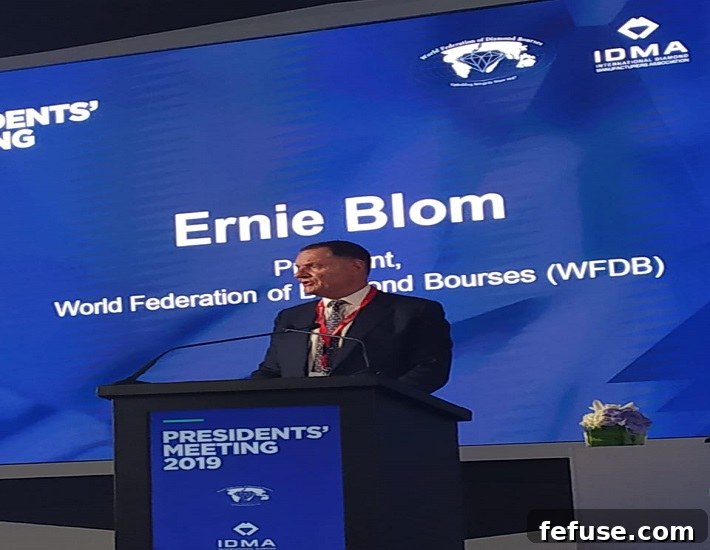
Ernie Blom, then President of the World Federation of Diamond Bourses, warmly welcomed the Angolan delegation and their strategic intentions. Speaking at the meeting, Blom stated: “We are happy to welcome this important delegation from Angola, a key player for future diamond mining potential, and we welcome the important changes which have been taking place in the country. Obviously, WFDB stands ready to welcome a new diamond bourse, and we are happy that this is being studied.”
Blom’s remarks underscored the WFDB’s recognition of Angola’s significant potential and its proactive approach to integrating into the global diamond community. The “important changes” referenced by Blom point to the Angolan government’s recent reforms aimed at enhancing transparency, combating corruption, and creating a more attractive and secure investment climate within its diamond sector. These reforms are crucial for building international confidence and attracting the necessary foreign capital and expertise to fully unlock Angola’s vast diamond wealth responsibly.
Navigating the Evolving Diamond Landscape: Lab-Grown Diamonds and Traceability
The WFDB Presidents Meeting in Dubai served as an essential forum for addressing the complex challenges and opportunities facing the contemporary diamond industry. The discussions on lab-grown diamonds (LGDs) highlight a significant paradigm shift. LGDs, produced in controlled environments, offer an alternative to natural diamonds, presenting both a competitive challenge and a unique market segment. The WFDB’s focus on this topic underscores the industry’s commitment to fostering a clear and distinct market for both natural and lab-grown products, emphasizing the paramount importance of transparent disclosure to consumers regarding a diamond’s origin.
Equally critical were the sessions on provenance and traceability. In an era where ethical sourcing and consumer confidence are paramount, the ability to trace a diamond’s journey from mine to market has become non-negotiable. Discussions likely delved into advanced technologies such as blockchain, laser inscription, and other digital solutions designed to ensure the integrity of the supply chain. These measures are vital not only to prevent the trade of conflict diamonds, in line with the Kimberley Process Certification Scheme, but also to meet the growing consumer demand for ethically sourced and environmentally responsible products. The WFDB, through its members and initiatives, plays a crucial role in championing these best practices, promoting transparency, and upholding the integrity of the entire diamond pipeline.
The commitment from nations like Angola to establish transparent trading platforms like a diamond bourse further strengthens the global diamond industry’s collective efforts towards ethical and responsible business. As the industry continues to evolve, the collaborative spirit and strategic discussions fostered at WFDB Presidents Meetings remain instrumental in shaping a future that is sustainable, transparent, and prosperous for all stakeholders, from mining communities to the end consumer.
The Dubai meeting reinforced the WFDB’s role as a unifying force, providing a platform for bourses worldwide to address shared challenges and capitalize on new opportunities. With emerging players like Angola stepping onto the global stage with ambitious plans, the future of the diamond industry promises continued dynamism and growth, anchored by the foundational principles of transparency, integrity, and collaboration.