
GJEPC & NACIN Partner for Critical PMLA Compliance Training: Safeguarding India’s Precious Metals and Stones Sector
In a significant stride towards bolstering financial integrity and ensuring robust compliance within the vital gem and jewellery industry, the Gem & Jewellery Export Promotion Council (GJEPC) successfully collaborated with the National Academy of Customs, Indirect Taxes & Narcotics (NACIN), Zonal Campus Jaipur. This powerful partnership culminated in a highly impactful training program focused on the Prevention of Money Laundering Act (PMLA) for Dealers in Precious Metals and Precious Stones (DPMS), held on September 4th, 2024. The initiative underscores a proactive approach to equip industry stakeholders with the indispensable knowledge and tools required to navigate the complexities of anti-money laundering (AML) regulations, thereby reinforcing India’s commitment to global financial standards.
Understanding the Imperative: PMLA’s Role in the Precious Metals and Stones Sector
The Prevention of Money Laundering Act (PMLA) of 2002 stands as a cornerstone of India’s legislative framework against financial crime. Its primary objective is to prevent money laundering, a sophisticated process through which illicitly obtained funds are disguised to appear legitimate. The gem and jewellery sector, due to its high-value transactions, global reach, and the inherent portability of its products, is particularly susceptible to being exploited for money laundering and terrorist financing activities. Consequently, Dealers in Precious Metals and Precious Stones (DPMS) are designated as reporting entities under the PMLA, mandating them to adhere to stringent compliance requirements. Non-compliance can lead to severe penalties, including hefty fines, imprisonment, and significant reputational damage, not just for individual businesses but for the entire sector.
The global fight against financial crime demands continuous vigilance and a deep understanding of evolving threats. This training program was meticulously designed to address these challenges head-on, providing DPMS with a comprehensive understanding of their obligations and the practical implications of the PMLA. It serves as a crucial step in safeguarding the integrity of India’s gem and jewellery trade, ensuring it remains transparent, ethical, and globally competitive.
A Comprehensive Training Agenda: Expert Insights for Enhanced Compliance
The program, meticulously organized at the state-of-the-art NACIN Conference Hall, brought together leading experts and industry participants for an immersive learning experience. The sessions were led by distinguished personalities, each bringing a wealth of knowledge and practical experience to the fore:
- Shri Sanjay Gupta, Additional Director General: Provided overarching insights into the regulatory landscape, the government’s perspective on AML enforcement, and the strategic importance of PMLA compliance for national economic security. His address emphasized the collaborative effort required from both regulators and industry players to create an impenetrable shield against financial malpractices.
- Shri Hemant Hingonia, Deputy Director: Delved into the operational aspects of PMLA, offering granular details on reporting mechanisms, identification of suspicious transactions, and the nuances of various compliance mandates. His session focused on equipping DPMS with actionable strategies to implement robust internal controls and due diligence processes effectively.
- Shri Ravi Verma, Retired Assistant Commissioner: Shared invaluable practical experiences and case studies, shedding light on the common pitfalls and best practices in PMLA compliance. His insights, drawn from extensive field experience, provided participants with a realistic understanding of the challenges and effective solutions in adhering to the Act’s requirements.
The expert speakers illuminated critical aspects of the PMLA Act, focusing on its intricate implications and the detailed requirements for DPMS. Key topics covered during the training included:
- Customer Due Diligence (CDD) and Know Your Customer (KYC) Norms: Emphasizing the importance of identifying and verifying the identity of customers and beneficial owners.
- Record Keeping Requirements: Detailing the obligations for maintaining transaction records, identification data, and other relevant documents for specified periods.
- Reporting Obligations: Comprehensive guidance on filing Suspicious Transaction Reports (STRs) and Cash Transaction Reports (CTRs) to the Financial Intelligence Unit – India (FIU-IND).
- Internal Controls and Risk Management: Strategies for developing and implementing effective internal policies, procedures, and controls to mitigate money laundering risks.
- Penalties and Enforcement: An overview of the consequences of non-compliance, including fines, confiscation of property, and imprisonment, fostering a serious appreciation for adherence.
- Emerging Threats and Technologies: Discussion on new methods of money laundering and how technology can be leveraged for better AML compliance.
The interactive nature of the program allowed participants to engage directly with the experts, clarify doubts, and share their experiences, making the learning process highly effective and practical. Such hands-on engagement is crucial for translating theoretical knowledge into practical application within the diverse operational contexts of DPMS.
Celebrating Leadership: Dr. Nawal Agarwal’s Recognition
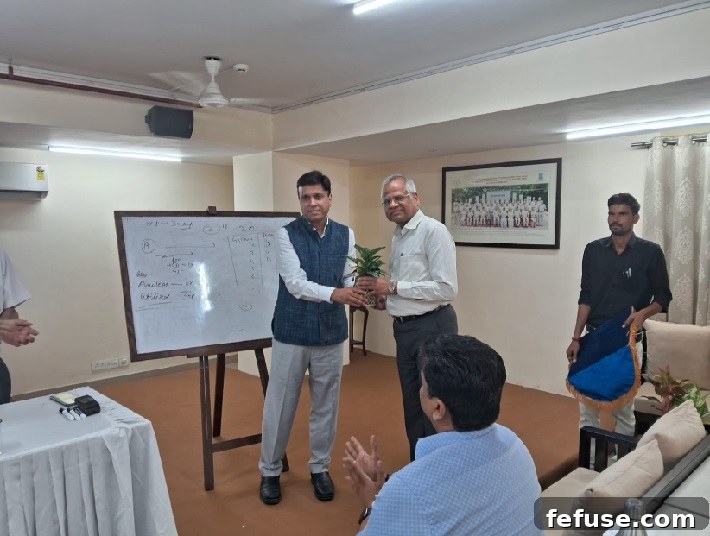
A highlight of the program was the felicitation of Dr. Nawal Agarwal, Convener of the Gold Jewellery & Other Precious Metal Jewellery Panel, GJEPC, by NACIN during the session. This recognition acknowledged Dr. Agarwal’s significant contributions to the industry and his instrumental role in promoting ethical practices and compliance within the gold and precious metal jewellery sector. Such acknowledgments reinforce the importance of leadership in driving the agenda of transparency and integrity across the industry.
GJEPC & NACIN: A Partnership for Sectoral Excellence and National Security
The GJEPC, as the apex body of the Indian gem and jewellery industry, consistently strives to promote ethical business practices, export growth, and skill development. Its partnership with NACIN, a premier training institute for customs and indirect taxes, reflects a shared vision for upholding financial discipline and preventing illicit financial flows. NACIN’s expertise in legislative interpretation, enforcement mechanisms, and training methodologies makes it an ideal partner for such crucial compliance programs.
This collaboration exemplifies how industry associations and government bodies can synergize their efforts to address complex regulatory challenges. By providing targeted training, they empower businesses to operate within legal frameworks, thereby contributing to national security and enhancing the global reputation of India’s gem and jewellery industry. Such initiatives are vital for sustaining growth, attracting foreign investment, and ensuring that India remains a trusted global hub for precious metals and stones.
The Path Forward: Sustained Vigilance and Continuous Education
The successful conclusion of this PMLA training program marks a significant milestone, but the journey towards complete AML compliance is continuous. The landscape of financial crime is ever-evolving, with new methods and technologies constantly emerging. Therefore, continuous education, periodic refresher courses, and proactive engagement with regulatory updates are essential for DPMS to stay ahead of potential risks. The GJEPC and NACIN are committed to fostering an environment of sustained vigilance and ethical business conduct.
Future initiatives will likely explore advanced topics in AML, delve into sector-specific challenges, and incorporate emerging technologies like artificial intelligence and blockchain in compliance efforts. Encouraging a culture where compliance is not merely a regulatory burden but a fundamental aspect of responsible business operations is paramount. By embracing stringent PMLA guidelines, India’s DPMS can solidify their reputation for integrity, protect their businesses from exploitation, and contribute significantly to the broader national and global efforts against financial crime.
Conclusion: Upholding Integrity, Ensuring Prosperity
The PMLA training program, meticulously conducted by GJEPC in partnership with NACIN, Zonal Campus Jaipur, on September 4th, 2024, stands as a testament to the industry’s unwavering commitment to regulatory adherence and ethical excellence. By providing comprehensive insights into the Prevention of Money Laundering Act, its implications, and the precise requirements for Dealers in Precious Metals and Precious Stones, the program has significantly enhanced the industry’s collective capability to combat financial crime.
This vital initiative not only equips DPMS with critical knowledge but also reinforces the Indian gem and jewellery sector’s position as a responsible and trustworthy participant in the global economy. As the industry continues to grow and diversify, such proactive measures are indispensable in safeguarding its integrity, ensuring long-term prosperity, and contributing effectively to India’s robust financial ecosystem. The success of this collaboration paves the way for future endeavors aimed at strengthening compliance frameworks and fostering a culture of transparency across all facets of the precious metals and stones trade.