
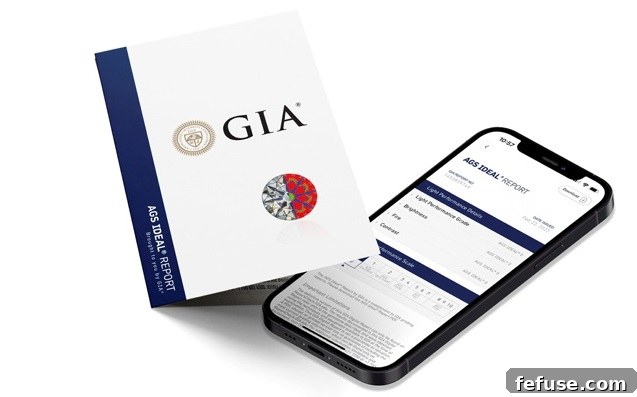
The Gemological Institute of America (GIA), a globally renowned leader in gemological research and education, has announced a significant shift in its reporting strategy: the reintroduction of printed versions for its highly respected AGS Ideal Reports. This move comes as a direct response to persistent customer demand within the diamond industry, marking a notable deviation from a broader trend towards digital-only documentation. Despite the general industry momentum advocating for paperless solutions due to environmental considerations and technological advancements, GIA has demonstrated its commitment to meeting the diverse needs of its extensive clientele, particularly diamond dealers and retail consumers who continue to value the tangible presence of a physical certificate.
This decision to offer printed AGS Ideal Reports underscores GIA’s agile approach to market dynamics and its willingness to adapt its services based on valuable stakeholder feedback. The AGS Ideal Report, developed in partnership with the American Gem Society (AGS), is a sophisticated grading document specifically focused on a diamond’s light performance. Unlike traditional reports that primarily detail the 4Cs (Carat, Color, Clarity, Cut), the AGS Ideal Report delves deeper into how a diamond interacts with light. It provides a comprehensive analysis of crucial light performance attributes, including brightness, which refers to the total white light returned to the eye; fire, the dispersion of light into spectral colors; and contrast from center to edge, which relates to the diamond’s scintillation or sparkle. These intricate measurements offer an unparalleled assessment of a diamond’s visual appeal, giving both dealers and end-consumers a profound understanding of its true beauty and brilliance.
To facilitate the adoption of these revived physical reports, GIA is extending limited-period discounts on the printed versions of the AGS Ideal Reports. This promotional offer serves to encourage industry members to integrate these reports into their sales processes, further highlighting the perceived value and utility of having a tangible certificate alongside a premium diamond. The strategic timing of this offer suggests GIA’s intent to smoothly reintroduce the physical format and ensure its widespread availability and acceptance, particularly among those who have long expressed a preference for paper documentation.
The context for GIA’s current decision becomes clearer when recalling the significant criticism it encountered following the introduction of digital-only Diamond Dossiers reports last January. At that time, GIA’s initiative was part of a forward-thinking push towards greater sustainability and technological integration within the gemological sector. The institute had articulated a vision of phasing out all printed reports within a three-year timeframe, aiming to save substantial quantities of paper and plastic, thereby reducing its environmental footprint. This ambitious undertaking was widely seen as a progressive step towards modernizing the industry’s documentation practices, aligning with global efforts to minimize waste and promote digital efficiency.
However, the transition to entirely digital Diamond Dossiers did not proceed without considerable resistance from key segments of the market. Diamond dealers, who form a critical link between grading labs and retail consumers, voiced strong concerns. Their primary argument revolved around the enduring expectation of retail customers for a physical paper certificate. For many consumers, especially those making a significant investment in a diamond, a tangible certificate represents authenticity, trust, and a permanent record of their purchase. It serves as a physical testament to the diamond’s quality and grading, often viewed as an indispensable component of the entire buying experience. Dealers found that the absence of a physical certificate complicated their sales process, as customers often expressed a preference for, or even demanded, a paper document to accompany their precious gem.
This feedback from the retail sector underscored a crucial disconnect between industry-driven digital transformation efforts and long-standing consumer preferences. The psychological aspect of owning a physical document, a tangible piece of paper that validates the intrinsic value of a diamond, appears to outweigh the environmental and logistical benefits of digital alternatives for a significant portion of the market. A physical certificate can be easily stored, displayed, and passed down as an heirloom, integrating seamlessly into the narrative of a significant life event like an engagement or anniversary. It adds a layer of reassurance and formality that digital files, however secure and accessible, sometimes struggle to replicate in the minds of traditional buyers.
GIA’s decision to reintroduce printed AGS Ideal Reports can thus be interpreted as a pragmatic and customer-centric move. It demonstrates the institute’s responsiveness to the real-world demands and operational challenges faced by its partners and clients. By offering both digital and physical options, GIA is effectively creating a hybrid model that caters to a wider spectrum of preferences, bridging the gap between innovation and tradition. This flexibility is crucial for maintaining GIA’s leadership position and ensuring its services remain highly relevant and valued across the diverse global diamond market. It acknowledges that while digital solutions offer numerous advantages, the human element and established consumer behaviors cannot be overlooked.
The AGS Ideal Reports themselves are a testament to the advancements in diamond grading science. They go beyond the subjective aspects of a diamond’s appearance by providing objective, measurable data on its interaction with light. This scientific approach helps consumers make more informed decisions, moving beyond mere visual appeal to a deeper understanding of quality based on precise metrics of brightness, fire, and contrast. The reintroduction of these reports in a printed format means that this invaluable data can now be presented in a way that resonates with a broader customer base, enhancing transparency and confidence in the diamond purchase process. This tangible validation of a diamond’s superior light performance can be a powerful tool for dealers in communicating value to their clients.
This strategic adjustment by GIA highlights a broader trend within various industries where the pendulum sometimes swings back towards traditional formats, even amidst a strong push for digitalization. While the commitment to sustainability remains a core value for many organizations, including GIA, market realities and customer expectations often necessitate a nuanced approach. It’s possible that GIA will continue to explore sustainable practices in its operations, perhaps by using recycled paper for its certificates or encouraging digital options where preferred, while simultaneously providing the physical reports that a segment of the market undeniably demands. This balanced strategy allows GIA to pursue its environmental goals without alienating a significant portion of its customer base.
In conclusion, GIA’s reintroduction of printed versions for its AGS Ideal Reports is a calculated and responsive decision that prioritizes customer satisfaction and market dynamics. It reflects an acute understanding of the complex interplay between technological advancement, sustainability initiatives, and deeply ingrained consumer preferences in the high-value diamond market. By offering these detailed, light-performance-focused reports in a tangible format, GIA not only addresses direct feedback from diamond dealers and retail customers but also reinforces its dedication to unparalleled quality, transparency, and adaptability in the evolving world of gemology. This move is poised to strengthen confidence in the diamond buying experience, ensuring that consumers receive both exceptional diamonds and the form of certification they trust and expect.