
The Enduring Spark: De Beers Foresees Robust Long-Term Diamond Demand in China
Despite recent economic headwinds and evolving societal trends, China is poised to become an even more significant market for diamonds in the coming years. A new report from De Beers, a global leader in the diamond industry, projects a substantial long-term increase in demand for these precious gems across the Chinese consumer landscape. This optimistic outlook comes even as the nation navigates a slow recovery from the impacts of COVID-19 lockdowns and a decade-long decline in marriage rates, demonstrating the inherent resilience and potential De Beers sees within this dynamic market.
Understanding China’s Diamond Market: Current Landscape and Future Growth Drivers
China currently stands as a pivotal player in the global diamond market, with its consumers accounting for a significant 10% of worldwide diamond purchases. This substantial share underscores the country’s importance to the industry, a market where demand growth is intrinsically linked to its impressive economic trajectory. As the Chinese economy continues its expansion, the purchasing power and aspirations of its vast population grow in tandem, creating fertile ground for luxury goods like diamond jewelry.
De Beers’ recently published The Diamond Insight Report 2023 delves deep into these market dynamics, offering comprehensive insights into consumer behavior and future potential. The report acknowledges a prevailing “gap between intent to acquire and actual acquisition rates,” indicating that while many Chinese consumers express a desire for diamonds, converting this interest into a purchase can sometimes be a challenge. This gap highlights the need for targeted marketing, accessible pricing strategies, and compelling narratives that resonate with diverse consumer segments.
The Rise of China’s Middle Class: A Catalyst for Diamond Demand
Looking ahead, the potential for an exponential surge in diamond demand is undeniable, driven primarily by demographic shifts and economic prosperity. De Beers forecasts that an astounding 200 million Chinese consumers are set to join the middle class by 2030. This monumental expansion of the affluent consumer base represents an unprecedented opportunity for the luxury market. Accompanying this rise, household disposable income is expected to increase by more than a third, providing individuals and families with greater financial freedom to invest in meaningful and aspirational purchases, including diamond jewelry.
The burgeoning middle class in China is not merely about increased numbers; it represents a fundamental transformation in lifestyle aspirations and consumption patterns. As individuals move up the economic ladder, their desire for self-expression, status symbols, and lasting legacies grows. Diamonds, with their inherent value, beauty, and symbolism, perfectly align with these evolving desires, positioning them as prime candidates for increased consumer spending in the years to come.
Generational Insights: Tailoring to Millennials and Gen Z
Understanding the nuances of consumer preferences across different age groups is critical for brands aiming to succeed in the Chinese market. De Beers’ report meticulously breaks down the purchasing habits and priorities of two influential generations: Millennials and Gen Z.
Millennials: Prioritizing Quality, Purity, and Enduring Value
Millennials, who now represent a significant portion of the global workforce and consumer base, exhibit a distinct spending pattern when it comes to diamond jewelry. The report highlights that this generation spends disproportionately more than other age groups on diamonds. Their purchasing decisions are primarily guided by a strong emphasis on quality and purity, which they consistently rank as their top priorities. Following these intrinsic attributes, size and cost also play important roles in their selection process. For Millennials, a diamond purchase is often an investment, a symbol of commitment, or a celebration of significant life milestones, making the intrinsic value and ethical sourcing of the gem paramount.
Brands targeting Chinese Millennials must therefore emphasize transparent sourcing, superior craftsmanship, and the enduring nature of diamonds. Storytelling that connects the diamond to personal milestones, love, and legacy will resonate deeply with this cohort, who seek authenticity and meaning in their purchases. Offering a diverse range of designs that blend traditional elegance with modern aesthetics can also capture their attention, as they appreciate both timeless beauty and contemporary relevance.
Generation Z: Seeking Accessible Luxury, Sustainability, and Meaningful Gifts
In contrast, Generation Z, the youngest cohort of adult consumers, approaches diamond purchases with a different set of expectations. This generation tends to seek lower-priced goods, often preferring flexible payment options that align with their digital-native, on-demand lifestyles. Beyond price, Gen Z places a high value on sustainability and ethical practices, demonstrating a strong preference for brands that align with their social and environmental consciousness. For them, diamonds are often considered as meaningful gifts for special birthdays and other personal celebrations, rather than solely for engagement or marriage.
To effectively engage Chinese Gen Z consumers, the diamond industry must adapt its strategies. This includes offering a wider array of accessible price points, exploring innovative financing solutions, and prominently showcasing commitments to sustainability and responsible sourcing. Marketing campaigns should highlight the personal significance and emotional value of diamonds as gifts, emphasizing their role in celebrating individuality and friendship. Digital engagement, social media presence, and collaborations with influencers are also crucial for reaching this tech-savvy generation, who rely heavily on online platforms for discovery and decision-making.
De Beers’ Strategic Vision for China: Navigating Volatility and Seizing Opportunity
Al Cook, CEO of De Beers Group, eloquently captures the essence of China’s rapid ascent on the global stage. “There is no country where history has moved as fast as China,” Cook remarked, underscoring the nation’s extraordinary transformation. From being a relatively minor player in the world diamond market at the turn of the last century, China has quickly evolved to become the largest market for diamond jewelry outside the United States.
This remarkable journey necessitates a forward-looking and adaptable strategy from industry leaders. Cook articulated De Beers’ commitment: “We aim to look at its development, to cut through short-term volatility, to understand evolving customer desire for jewellery and to identify opportunities for the future.” This statement encapsulates a dedication to long-term vision, acknowledging that market fluctuations are natural but the underlying growth trajectory of China remains strong. By closely monitoring changing consumer preferences and investing in deep market research, De Beers plans to remain at the forefront of this evolving landscape.
De Beers’ strategy involves not only understanding consumer trends but also actively shaping them through innovation, responsible business practices, and compelling brand narratives. This includes exploring new product categories, enhancing the retail experience, and ensuring that the provenance and ethical journey of every diamond are transparent. The future success in China will depend on the ability to connect with consumers on an emotional level, offering products and experiences that align with their values and aspirations.
Broader Market Dynamics: Sustainability, Digitalization, and Economic Influence
The future of the Chinese diamond market will also be shaped by broader trends such as increasing awareness of sustainability and the accelerating pace of digitalization. Chinese consumers, particularly younger demographics, are increasingly conscious of the environmental and social impact of their purchases. Brands that can demonstrate a strong commitment to ethical sourcing, sustainable practices, and community development will gain a significant competitive advantage.
Furthermore, the digital ecosystem in China is unparalleled in its sophistication and reach. E-commerce platforms, social media, and live-streaming are not just channels but integral parts of the consumer journey. Diamond retailers must leverage these digital tools for brand building, product discovery, and sales, offering seamless online-to-offline experiences. Personalized marketing, engaging content, and efficient logistics will be crucial for capturing the attention and loyalty of tech-savvy Chinese buyers.
Economically, China’s sustained growth, coupled with government policies aimed at boosting domestic consumption, will continue to fuel the luxury sector. While global economic uncertainties can create temporary challenges, the fundamental drivers of wealth creation and consumer spending within China remain robust. The strategic importance of China to the global diamond industry cannot be overstated, making it a key focus for investment and innovation.
The Future is Bright: A Diamond Legacy in the Making
In conclusion, De Beers’ optimistic outlook on China’s diamond market is firmly rooted in compelling demographic shifts, economic forecasts, and evolving consumer behaviors. Despite short-term hurdles, the long-term trajectory points towards significant growth, driven by an expanding middle class and the distinct purchasing priorities of Millennials and Gen Z. By understanding these dynamics and strategically adapting its approach, the diamond industry can harness China’s immense potential, ensuring that the sparkle of diamonds continues to captivate and inspire generations of Chinese consumers for decades to come.
See the full report here.
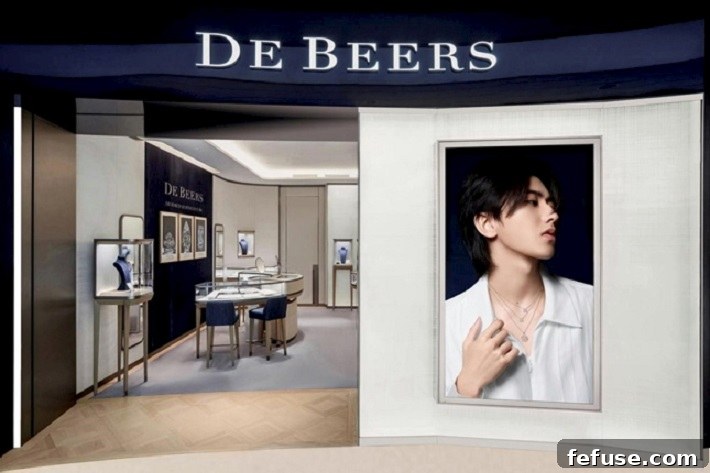
De Beers Jewellers at Sanya International Duty Free Shopping Complex, in Hainan, southern China. Courtesy De Beers