
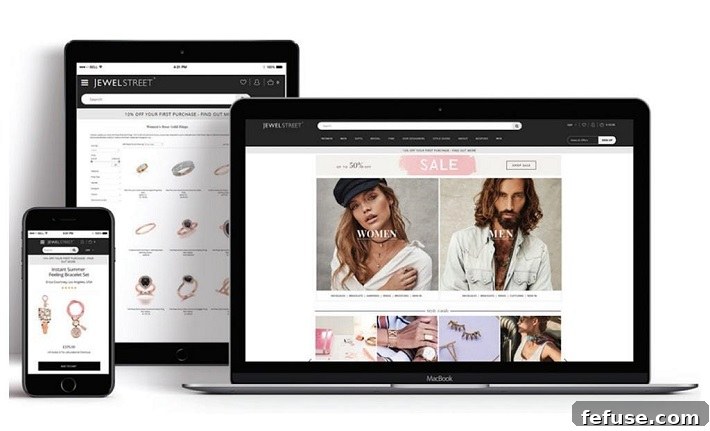
The landscape of retail is undergoing a profound transformation, with consumer shopping habits shifting dramatically. Gone are the days when venturing to a physical shopping center was the primary method for purchasing goods. Today, an ever-increasing number of consumers are gravitating towards the unparalleled convenience and accessibility offered by online platforms. The internet, a perpetually open marketplace, allows individuals to browse and buy products at any hour, from virtually any location across the globe. This digital revolution has democratized access to goods and services, enabling the average shopper to benefit from unprecedented choice and ease.
Empirical research underscores this shift, revealing a significant surge in online shopping activity, particularly during off-peak hours, with a notable 30% rise observed between midnight and 6 AM. The accessibility and continuous availability of online channels are the primary drivers behind their exponential growth, consistently expanding year after year. This technological wave has fundamentally reshaped the entire retail realm, compelling even traditional sectors like the jewellery industry to adapt. Jewellery designers, distributors, and retailers alike have had to critically re-evaluate and remodel their business strategies to maintain competitiveness and relevance in this rapidly evolving market. But how exactly has this venerable industry been reshaped by technology, and what further innovations can we anticipate over the next decade?

Technological Advancements Reshaping the Jewellery Industry
The virtual shopping experience has truly blossomed, largely by embracing the dynamic energy and positive connectivity that social media platforms bring to the retail arena. With people dedicating, on average, around two and a half hours daily to social media and messaging applications, this represents a substantial portion of their waking hours—and that figure doesn’t even account for other online activities outside these channels. This pervasive digital presence offers an unparalleled opportunity for jewellery brands to connect with potential customers, fostering brand awareness and direct engagement.
It’s fair to say that technology has endowed us with the extraordinary ability to exist in multiple digital spaces concurrently. We seamlessly navigate between platforms like Facebook, Instagram, Twitter, YouTube, and Pinterest, often discovering new trends and products along the way. This omnipresence allows consumers to “attend” important life events, engage with brands, and even make significant purchases without the traditional stresses of physical travel, navigating traffic, finding parking, or the uncertainty of an item being in stock at a brick-and-mortar location. The ability to browse an extensive collection from the comfort of one’s home has fundamentally altered the purchasing journey for fine jewellery.
Innovations Driving Digital Transformation in Fine Jewellery
The jewellery industry, renowned for its tradition and artistry, is demonstrating remarkable agility in adapting and evolving with these technological currents. Advanced tools and methodologies are no longer fringe concepts but are rapidly becoming industry standards. Consider the integration of behavioral analytics, which meticulously tracks customer interactions to understand preferences and predict future buying patterns. This data-driven approach allows retailers to refine their offerings and marketing strategies with unprecedented precision. Furthermore, 3D printing is revolutionizing design and production, enabling rapid prototyping, creating intricate custom pieces with greater efficiency, and even offering sustainable manufacturing solutions by reducing material waste. This technology empowers designers to bring complex visions to life that would be challenging or impossible with traditional methods.
Visual engagement is paramount in the jewellery sector, where intricate details and sparkling brilliance are key selling points. This is why technologies like 360-degree image capturing have become indispensable. Shoppers can now virtually examine a piece from every angle, fostering a sense of trust and detailed understanding that closely mimics an in-person viewing. Alongside this, geotargeting allows brands to deliver highly relevant, location-specific promotions and product recommendations, enhancing local discoverability and customer engagement. The precision of computer-aided design (CAD) software continues to elevate the artistry and accuracy of jewellery creation, from initial concept to final production, ensuring impeccable quality and intricate detailing.
Perhaps one of the most transformative integrations is the investment in Artificial Intelligence (AI) and intelligent bots. AI is at the forefront of crafting hyper-personalized online shopping experiences. Modern jewellers are leveraging AI to power online platforms that cater to individual preferences based on browsing history, age, demographics, and stated likes or dislikes. This sophisticated personalization engine makes the online shopping journey not just easy and efficient, but also deeply personal and meaningful. Imagine a virtual assistant suggesting a diamond necklace perfectly aligned with your recent searches for “emerald cut rings” or a pair of earrings that complement a previously purchased bracelet. This level of tailored recommendation significantly enhances customer satisfaction and streamlines the decision-making process.
The sheer capacity of online stores also presents an undeniable advantage. Unlike physical boutiques constrained by square footage, digital storefronts can host hundreds, if not thousands, more products. This vast inventory provides consumers with an unparalleled range of choices, from rare gemstones to bespoke designs, far exceeding what any single brick-and-mortar establishment could offer. Why dedicate time and effort to travel to a limited selection when an almost infinite array of options is just a click away? This extensive digital catalogue not only caters to diverse tastes but also allows emerging designers to showcase their unique creations to a global audience without significant overheads.

The Future of Jewellery Retail: Embracing Innovation
Predicting the precise trajectory of technological growth and its innovative impact on the jewellery industry over the next decade is inherently challenging. However, certain trends are unmistakably emerging, suggesting a future where immersive and intuitive technologies will redefine the customer experience. Among these, augmented reality (AR) is poised to rise to the absolute forefront of online jewellery shopping, transforming how consumers interact with products before making a purchase.
We’ve witnessed the seamless assimilation of AR into everyday culture, from playful social media filters that overlay digital elements onto our real-world view to sophisticated virtual reality (VR) headsets that transport gamers into entirely new digital worlds. Many of us have also downloaded applications that allow us to virtually experiment with new hair colours or try on fashion items using our smartphone cameras. It would be shortsighted, therefore, to ignore the escalating importance and the undeniable necessity of virtual and augmented reality in the realm of online retail. For jewellery, AR offers a revolutionary “try-before-you-buy” option, enabling shoppers to virtually try on rings, necklaces, or earrings using their device’s camera. This capability not only enhances confidence in a purchase but is also expected to significantly reduce return rates for retailers, addressing a common challenge in online apparel and accessory sales by bridging the gap between virtual and tangible.
Voice Activation and Beyond: Seamless Shopping Experiences
Beyond visual immersion, speech activation technology is also rapidly gaining traction as a preferred method for online searches and interactions. If you’ve found yourself conversing with smart assistants like Alexa or Google Assistant more frequently than some of your actual friends, you’ll inherently understand the immense ease and enjoyment derived from voice activation. This hands-free, intuitive interface removes barriers to entry and streamlines the search process. We anticipate that voice activation will become increasingly integrated into online shopping platforms over the next 10 years, allowing consumers to simply speak their desires – “Show me gold hoop earrings” or “Find a sapphire pendant under $500” – and receive instant, curated results, further personalizing and simplifying the shopping journey.
The ongoing digital transformation also opens doors for enhanced transparency and ethical practices within the jewellery supply chain. Consumers are increasingly conscious of the provenance of their purchases, demanding ethically sourced materials and sustainable production methods. Technology, including blockchain, can play a pivotal role in providing immutable records of a gemstone’s journey from mine to market, or a metal’s recycled origins, building greater trust and authenticity for brands. This commitment to ethical sourcing, communicated effectively through digital channels, resonates deeply with modern consumers and reinforces brand integrity.
Moreover, the rise of direct-to-consumer (DTC) jewellery brands has been significantly empowered by e-commerce. These brands can bypass traditional intermediaries, offering high-quality pieces at more competitive prices and fostering direct relationships with their customers. This model allows for greater innovation in design and marketing, catering to niche markets and emerging trends with unprecedented speed. This agility is a direct result of leveraging online platforms and digital communication strategies, offering consumers a wider array of unique and artisan-crafted pieces than ever before.
However, the shift to online also presents unique challenges. For luxury items like jewellery, the inability to physically touch, feel, and assess the true sparkle of a piece can be a barrier. Retailers are actively addressing this through high-definition imagery, virtual consultations, and clear, detailed product descriptions. The human element, particularly the craftsmanship and the story behind each piece, remains crucial. Technology serves not to replace this but to amplify it, allowing artisans to share their narratives and intricate processes with a global audience.

Navigating the Evolving Digital Jewellery Landscape
For individuals who grew up in an era where a “Tweet” referred exclusively to the sound a bird made, the current “technoscape” might indeed feel like a bewildering maze. However, the continuous advancements in technology are fundamentally designed to create an easier, more intuitive pathway toward shopping for everyone. The beauty of these innovations is that one doesn’t necessarily need to be a tech-savvy expert to reap their benefits. From simplified user interfaces to voice-activated commands and visually engaging augmented reality experiences, these tools are crafted to be accessible and user-friendly, bridging the digital divide and inviting everyone to partake in the convenience of modern retail.
In conclusion, the jewellery industry is not merely adapting to the digital age; it is actively embracing it, leveraging cutting-edge technologies to redefine customer engagement and expand market reach. The transition from traditional retail to a robust online presence has been driven by consumer demand for convenience, personalization, and an expansive selection. From sophisticated AI algorithms that tailor recommendations to immersive AR experiences that allow virtual try-ons, technology is enhancing every facet of the jewellery purchasing journey. The future promises even more seamless, interactive, and personalized ways to discover and acquire exquisite pieces of jewellery, ensuring that this timeless industry remains vibrant, captivating, and increasingly accessible for generations to come, truly shining in the digital era.
(Images courtesy of Pexels)
Follow JewelStreetUK on Instagram: @jewelstreetuk
Content Courtesy & Original Source: JewelStreet