
Signet Jewelers Earns Prestigious Spot on FTSE4Good Indices for Leading ESG & Sustainability Efforts
In a significant recognition of its unwavering dedication to corporate social responsibility and sustainability, Signet Jewelers, the world’s largest retailer of diamond jewelry, has been officially named on the esteemed 2017 FTSE4Good US and Global Indices. This inclusion places Signet Jewelers among a select group of publicly traded companies globally, distinguished for their robust and transparent environmental, social, and governance (ESG) practices. This achievement underscores Signet’s role not just as a leader in the jewelry industry, but also as a trailblazer in ethical business operations and sustainable value creation.
The announcement highlights Signet’s deep-rooted commitment to integrating responsible practices across every facet of its extensive business operations. Such an endorsement from a globally recognized index like FTSE4Good serves as a powerful testament to the tangible impact of Signet’s strategic initiatives aimed at fostering a more sustainable and equitable future. For investors and consumers alike, this recognition signals a brand that aligns its success with positive societal and environmental contributions, cementing its reputation as a trusted and forward-thinking entity in the luxury retail sector.
Signet’s Unwavering Commitment to Responsible Practices
Commenting on this pivotal recognition, Lynn Dennison, Chief Legal, Risk and Corporate Affairs Officer at Signet Jewelers, expressed immense pride in the company’s achievements. “Signet is proud of our commitment to reducing our energy consumption and raising our efficiency levels across our business,” Dennison stated. This reflects a holistic approach to environmental stewardship, where operational efficiency directly translates into a reduced ecological footprint. The company’s proactive measures in optimizing energy use not only contribute to global sustainability goals but also demonstrate a keen understanding of long-term operational resilience and cost-effectiveness.
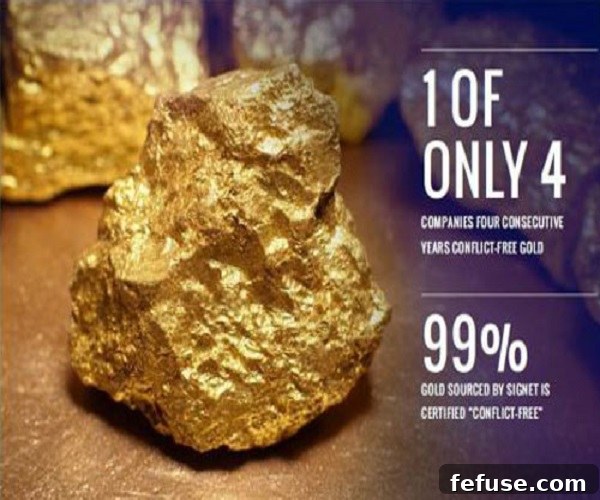
Beyond environmental metrics, Signet Jewelers has also set a gold standard in ethical supply chain management. Dennison further emphasized, “Our responsible sourcing efforts have led the industry as 1 of 4 US companies to have reported a conflict-free gold supply chain for 4 consecutive years.” This remarkable accomplishment is particularly noteworthy within the complex global jewelry supply chain. Ensuring a conflict-free gold supply chain involves rigorous due diligence, transparent reporting, and collaboration with various stakeholders to prevent the financing of armed conflict through mineral extraction. Signet’s consistent success in this area highlights its leadership in human rights and ethical sourcing, providing peace of mind to consumers about the origin and integrity of their precious purchases.
Understanding the Power of the FTSE4Good Index
The FTSE Russell’s ESG Index, FTSE4Good, celebrated its 15th anniversary in 2017, marking a decade and a half of driving corporate accountability and shaping investment strategies. This influential index is meticulously designed to measure the performance of companies that consistently demonstrate strong Environmental, Social, and Governance (ESG) practices. Its robust methodology and stringent criteria make it an indispensable tool for evaluating a company’s commitment to sustainability beyond traditional financial metrics.
FTSE Russell, a leading global provider of benchmarking, analytics, and data solutions, outlines that “Transparent management and clearly-defined ESG criteria make FTSE4Good indexes suitable tools to be used by a wide variety of market participants when creating or assessing sustainable investment products.” This transparency and clarity are crucial for investors seeking to align their portfolios with their values, or to mitigate risks associated with poor ESG performance. The index’s longevity and widespread adoption attest to its reliability and significance in the evolving landscape of global finance.
The Pillars of ESG: What It Means for Companies and Investors
- Environmental (E): This criterion evaluates a company’s impact on the natural environment. For Signet, this includes efforts to reduce energy consumption, minimize waste, manage water resources responsibly, and mitigate its carbon footprint. Sustainable sourcing of raw materials, particularly precious metals like gold, falls heavily under this pillar, ensuring practices that do not harm ecosystems or local communities.
- Social (S): The social aspect examines a company’s relationships with its employees, customers, suppliers, and the communities in which it operates. Signet’s commitment to a conflict-free gold supply chain is a prime example of its social responsibility, ensuring human rights are respected throughout its value chain. Other social factors include labor practices, diversity and inclusion, product safety, and community engagement initiatives.
- Governance (G): Governance refers to the leadership of a company, its executive pay, audits, internal controls, and shareholder rights. Strong governance ensures that a company is run ethically and transparently, with effective oversight and accountability. Signet’s adherence to best practices in corporate governance underpins its ability to consistently uphold its CSR commitments.
The FTSE4Good Index provides a crucial benchmark, allowing investors worldwide to integrate these vital non-financial factors into their decision-making process. This has led to investors around the world increasingly using the indices as indicators to determine if investment funds and other financial products are indeed socially responsible and engage in ethical activities, driving capital towards companies that are building a more sustainable future.
The Rise of Sustainable Investing: A Paradigm Shift
The journey of sustainable investing from a niche concept to a mainstream financial imperative is eloquently captured by Mark Makepeace, Chief Executive of FTSE Russell. He reflected, “When we launched the FTSE4Good Index Series 15 years ago there was scepticism that this was a serious area for professional investors.” This initial hesitancy was rooted in a traditional view that financial returns were paramount, often overlooking the broader impact of business operations.
However, as Makepeace keenly observed, “Since then, the world and the investment landscape has changed beyond recognition.” This transformation has been fueled by a growing awareness of global challenges such as climate change, social inequality, and corporate governance failures. Investors, regulators, and consumers alike now understand that a company’s ESG performance is not merely a philanthropic endeavor, but a critical indicator of its long-term viability, resilience, and potential for sustainable growth. The interconnectedness of environmental health, social stability, and robust governance with economic prosperity has become undeniable.
Today, sustainable investing, climate risk mitigation, the transition to a low carbon economy, and comprehensive ESG integration are no longer peripheral concerns. They are now “a core focus for our clients across asset owners, asset managers, consultants and banks,” Makepeace affirmed. This shift signifies a fundamental recalibration of investment priorities, where financial performance is increasingly viewed through an ESG lens. Companies like Signet Jewelers, by proactively embedding ESG principles into their core strategy, are better positioned to attract this growing pool of responsible capital, reduce operational risks, and build stronger, more resilient businesses in the face of evolving global challenges.
The increasing institutionalization of ESG factors means that companies that demonstrate leadership in sustainability are not just doing the right thing; they are also making a compelling business case. From enhanced brand reputation and customer loyalty to attracting top talent and securing more favorable financing, the benefits of strong ESG performance are multifaceted and contribute directly to long-term shareholder value. This paradigm shift underscores why being listed on indices like FTSE4Good is not just an award, but a strategic asset in today’s competitive global market.
Signet Jewelers: CSR as a Core Value and Business Strength
For Signet Jewelers, the commitment to corporate social responsibility (CSR) is not a new initiative but a deeply embedded tradition. The company has consistently affirmed that its approach to CSR has always been about “doing the right thing for all its stakeholders” – encompassing employees, customers, suppliers, investors, and the communities it serves. This philosophy is not external to its business model; rather, it is intrinsically woven into its Core Values, guiding every decision and operational strategy.
Signet’s leadership firmly believes that integrating CSR into its operational fabric offers tangible benefits, extending far beyond mere compliance. “We firmly believe that CSR makes our business stronger and more sustainable over the long-term,” the Company stated. This conviction is supported by mounting evidence demonstrating that companies with robust CSR programs tend to outperform their peers in areas such as risk management, innovation, and brand resilience. By prioritizing ethical sourcing, environmental stewardship, and community engagement, Signet is not only building a responsible brand but also securing its future market position.
The benefits of this long-term view are clear:
- Enhanced Brand Reputation and Trust: Consumers increasingly seek brands that align with their values. Signet’s commitment to conflict-free gold and overall sustainability builds significant trust and loyalty.
- Attracting and Retaining Talent: Employees, especially younger generations, are drawn to companies with strong ethical foundations and a sense of purpose beyond profit.
- Improved Operational Efficiency: Efforts to reduce energy consumption and waste often lead to cost savings and more efficient business processes.
- Reduced Risk: Proactive management of environmental and social risks can prevent costly legal battles, supply chain disruptions, and reputational damage.
- Access to Capital: With the rise of sustainable investing, companies with strong ESG profiles are more attractive to a growing pool of investors and can access capital more readily.
Ultimately, Signet Jewelers’ inclusion in the FTSE4Good Indices is more than just an accolade; it is a validation of its enduring philosophy. It demonstrates that doing good is good for business, driving both ethical leadership and sustainable financial performance. As the global landscape continues to evolve, Signet Jewelers stands as a beacon for how businesses, particularly in luxury sectors, can achieve success while making a meaningful, positive impact on the world.