
The Epic Journey of the Lesedi La Rona: From Uncut Giant to Polished Perfection
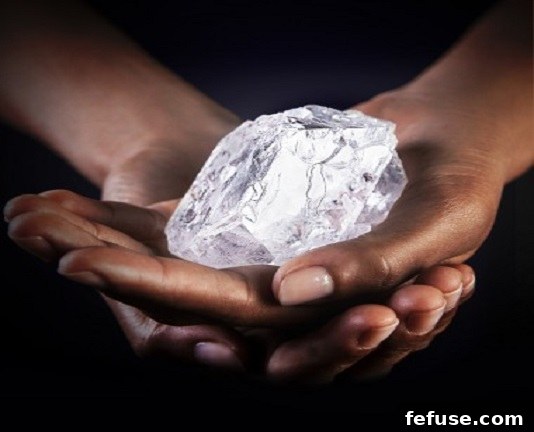
The world of high-value diamonds recently witnessed a monumental transaction, concluding a captivating saga that spanned years of anticipation and meticulous negotiation. The 1,109-carat Lesedi La Rona, a name that resonates with historical significance and unparalleled natural beauty, has finally found its permanent home. This extraordinary rough diamond, considered one of the largest ever discovered and certainly the most significant still in its uncut form, represents a marvel of geological creation and a testament to the Earth’s hidden treasures. Its journey from the depths of Botswana to the hands of renowned diamond experts is a narrative filled with both challenges and triumphs, culminating in a sale that promises to usher in a new era for this magnificent stone.
After a somewhat tumultuous sales process that included a high-profile yet ultimately unsuccessful auction at Sotheby’s, the legendary Lesedi La Rona has been acquired by none other than Graff Diamonds. This acquisition, finalized after more than a year of intense discussions and careful consideration, saw Graff Diamonds purchasing the colossal stone for a staggering $53 million. This translates to an impressive $47,777 per carat, a price that underscores the diamond’s immense value and rarity in the global market. The sheer size and pristine quality of the Lesedi La Rona position it as an object of immense fascination and an invaluable asset for its new custodians. Its unique characteristics promise to challenge the very limits of diamond artistry and craftsmanship.
A Glimpse into Grandeur: Unveiling the Lesedi La Rona
Discovered in November 2015 at the Lucara Diamond-owned Karowe mine in Botswana, the Lesedi La Rona quickly captivated the world’s attention. Its name, which gracefully translates to “Our Light” in Botswana’s Tswana language, perfectly encapsulates the radiant hope and pride it brought to the nation of its origin. This magnificent rough diamond holds a prestigious place in history, believed to be either the second or third largest ever unearthed, depending on the specific criteria and historical records referenced. Its discovery was not merely a mining event but a cultural moment, celebrating Botswana’s rich natural heritage and its significant role in the global diamond industry. The stone’s purity and exceptional size immediately sparked discussions about its potential fate, from remaining an untouched natural wonder to being transformed into multiple polished gems.
To put the Lesedi La Rona’s size into perspective, it is rivaled only by a handful of other legendary diamonds. The undisputed champion remains the Cullinan Diamond, discovered in South Africa in 1905, which weighed an astounding 3,106.75 carats in its rough state. The Cullinan was famously cut into nine major stones, including the Great Star of Africa and the Lesser Star of Africa, both now part of the British Crown Jewels. While the Lesedi La Rona does not quite reach the Cullinan’s colossal dimensions, its 1,109 carats still make it a marvel of nature, far surpassing most other known rough diamonds in both size and potential value. Its discovery reignited global interest in large, exceptional stones and underscored the ongoing allure of these geological miracles, offering a rare glimpse into the Earth’s most precious formations.
The Bumpy Road to Sale: An Unprecedented Auction
Lucara Diamond, the company responsible for its discovery, took a bold and unconventional approach to selling the Lesedi La Rona. In June 2016, they decided to offer the rough stone at a standalone auction hosted by the prestigious Sotheby’s auction house in London. This move was considered a significant risk, as it is highly unusual for a rough diamond of such immense value and historical importance to be presented at public auction. Typically, such stones are sold through private tenders or direct negotiations with a select group of experienced buyers who possess the specialized knowledge and resources required for their acquisition and subsequent transformation. Lucara’s intention was to tap into an alternative collectors’ market, hoping to attract a buyer who might wish to preserve the diamond in its original, uncut form, viewing it as a natural sculpture rather than a source of polished gems, thereby challenging conventional market practices.
However, despite the immense publicity and global interest, the Sotheby’s auction did not achieve its desired outcome. The Lesedi La Rona failed to meet its ambitious reserve price of $70 million, with the highest and only bid received standing at $51 million. This outcome highlighted the unique challenges associated with selling such an extraordinary item. As Lucara CEO William Lamb later reflected, “Unfortunately, the rarity of a rough diamond of this size is not well understood.” The general population, and even some within the broader luxury market, often lack a comprehensive understanding of the intricate mining processes, the inherent risks, and the highly specialized expertise required to evaluate, plan, and ultimately cut a diamond of this magnitude. This lack of market education, particularly concerning rough diamonds versus polished stones, proved to be a significant hurdle in the initial sales strategy, preventing the stone from realizing its full potential value at auction and underscoring the necessity for a more tailored approach.
Graff Diamonds Steps In: A New Chapter Begins
Following the unsuccessful auction, Lucara Diamond pivoted its strategy, entering into a period of private negotiations. It was during this time that Graff Diamonds, a name synonymous with some of the world’s most exquisite and valuable diamonds, stepped forward. After more than a year of intensive discussions, Graff successfully acquired the Lesedi La Rona for $53 million. This price, while still lower than the initial reserve set for the auction, represented a notable improvement on the highest bid received at Sotheby’s, signaling a more realistic market valuation achieved through private channels. The transaction was a strategic victory for Lucara, securing a fair price for a truly unique asset, and a monumental acquisition for Graff, adding a peerless gem to its illustrious collection and further solidifying its reputation as a leader in exceptional diamonds.
For decades, there had been speculation within the diamond industry that a future owner might choose to preserve the Lesedi La Rona in its raw, natural state, akin to a geological artifact. However, a definitive statement from Graff Diamonds quickly clarified their intentions: the stone would indeed be cut. This decision, while perhaps anticipated by industry insiders, marks the beginning of an extraordinary journey of transformation. Laurence Graff, the venerable founder of Graff Diamonds, articulated this vision with profound respect for the diamond’s inherent qualities. “The stone will tell us its story, it will dictate how it wants to be cut, and we will take the utmost care to respect its exceptional properties,” he stated. This philosophy underscores Graff’s commitment not just to maximizing value, but to uncovering and celebrating the unique beauty hidden within the rough stone, allowing its natural structure to guide the master craftsmen’s hands in a collaborative artistic process.
The Cutting Edge: From Rough Beauty to Polished Masterpiece
The process of transforming the Lesedi La Rona from a rough, unyielding mass into a collection of dazzling polished diamonds is an undertaking of epic proportions, demanding an unparalleled blend of artistic vision, scientific precision, and decades of accumulated expertise. Unlike smaller diamonds, a stone of this magnitude presents extraordinary challenges and opportunities. Graff’s team will embark on a meticulous analysis phase, expected to last for several months. This initial stage involves using advanced imaging technology, including 3D scanning and computer modeling, to peer deep within the diamond, identifying any internal inclusions, stress points, and cleavage planes. This detailed mapping is crucial for determining the optimal cuts that will maximize both the carat weight and the brilliance of the resulting polished stones, while minimizing any potential risks of damage during the cutting process. It’s a testament to human ingenuity applied to natural wonder.
The decision to cut the Lesedi La Rona is rooted in the pursuit of unlocking its ultimate potential. While its rough form holds a certain raw allure, it is in its polished state that a diamond truly reveals its fire, brilliance, and scintillation. The master cutters at Graff Diamonds, renowned for their skill and experience with some of the world’s most significant stones, will approach this task with a profound sense of responsibility and innovation. The goal is not just to create a single magnificent stone, but potentially a collection of exceptional diamonds that collectively surpass the value and aesthetic impact of the original rough. This painstaking process, which can take years to complete, involves laser cutting, cleaving, sawing, bruting, and finally, polishing, each step requiring immense patience and an unwavering commitment to perfection. The resulting gems will undoubtedly join the pantheon of the world’s most famous and coveted diamonds, forever bearing the legacy of the Lesedi La Rona and Graff’s unparalleled craftsmanship.
Lucara’s Perspective: A CEO’s Evolving View
William Lamb, the CEO of Lucara Diamond, closely followed the stone’s journey, offering insights into the company’s initial hopes and his evolving perspective. He initially expressed a desire for the Lesedi La Rona to remain “a collector’s piece” in its rough form, appreciating its natural, untamed beauty. This sentiment was driven by the rarity of finding such a large, pristine rough diamond and the desire to perhaps establish a new market segment for natural, unadulterated geological wonders. However, upon Graff’s acquisition and their stated intention to cut the diamond, Lamb’s opinion began to shift. He conveyed his confidence in Graff’s capabilities, stating, “I do believe that Graff will create something truly amazing from the diamond which once produced will sway my opinion of it staying in the rough.” This speaks volumes about the reputation and transformative power of Graff Diamonds in the industry.
Lamb also continued to emphasize the crucial need for greater education within the broader market regarding rough diamonds. He pointed out that the public, and even some potential high-net-worth collectors, often do not fully grasp the profound rarity of stones like the Lesedi La Rona, nor the extraordinary mining processes required to recover even the smallest diamonds, let alone those of over a thousand carats. “Education about the market in general is required,” he asserted. This ongoing challenge of communicating the intrinsic value and unique characteristics of rough diamonds remains a key focus for mining companies like Lucara. Bridging this knowledge gap is essential for ensuring that future discoveries of similar magnitude receive the market recognition and valuation they inherently deserve, whether sold as rough specimens or as dazzling polished masterpieces, fostering a deeper appreciation for their journey from mine to market.
A Diamond’s Entourage: The Connected Stone
Adding another intriguing layer to the Lesedi La Rona narrative is Graff’s prior strategic acquisition of a 373.72-carat stone in May of the same year. This significant diamond was once physically connected to the Lesedi La Rona, effectively being a major fragment that broke off during the mining process or was part of the same original crystal. The purchase of this “sister stone” by Graff underscores their comprehensive approach to acquiring exceptional raw material and their unmatched expertise in understanding the geological formation and potential of such diamonds. This earlier acquisition positioned Graff perfectly to understand the structure and inherent qualities of the Lesedi La Rona itself, giving them a distinct advantage in both the negotiation process and the subsequent planning for its cutting. It highlights Graff’s long-term vision and commitment to dominating the market for the world’s most extraordinary diamonds, demonstrating their strategic foresight.
The acquisition of both stones by the same master diamond house creates a unique opportunity. While separate, their shared origin means that the lessons learned from analyzing and potentially cutting the 373.72-carat fragment could provide invaluable insights into the structure and potential yield of the much larger Lesedi La Rona. This integrated approach allows for a more holistic understanding of the original crystal, maximizing the chances of achieving optimal results when the main stone is finally transformed. The synergy between these two acquisitions reinforces Graff’s unparalleled position as a leader in handling ultra-rare and historically significant diamonds, further solidifying their legacy in the annals of gemology and ensuring that every facet of these magnificent stones is treated with the utmost care and expertise.
The sale of the Lesedi La Rona to Graff Diamonds marks far more than a simple transaction; it represents a pivotal moment in the diamond industry. It is the culmination of a diamond’s epic journey from deep within the Earth to the global stage, a testament to geological wonders and human ingenuity. The anticipation now shifts to the meticulous process of transformation that Graff Diamonds will undertake. As Laurence Graff’s team begins their profound work, the world awaits the unveiling of the polished masterpieces that will emerge from this unparalleled rough diamond, cementing the Lesedi La Rona’s legacy as “Our Light” for generations to come. This story, originally sourced by jckonline, continues to evolve, promising new chapters of brilliance and wonder.