
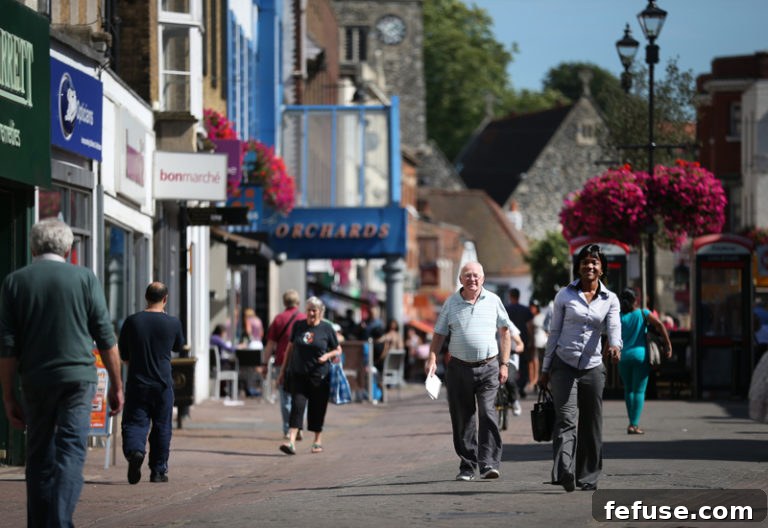
Unprecedented Resurgence: UK Retail Sector Achieves Record-Breaking Q2 2021 Performance
The second quarter of 2021 marked an extraordinary period for the British retail sector, with the British Retail Consortium (BRC) proudly declaring it the best on record. This remarkable performance underscores the resilience and adaptability of UK retailers, emerging from stringent lockdown measures into a landscape of eager consumers and evolving shopping habits. The period, spanning April, May, and June, witnessed a powerful synergy between the reopening of physical stores and the sustained momentum of e-commerce, collectively driving significant growth across the industry. This quarter’s success offers a compelling narrative of economic recovery and shifting consumer engagement in the post-pandemic era, highlighting key trends that are set to redefine the future of British retail.
This exceptional quarter culminated in a substantial total sales increase of 13.1% in June 2021 when compared to the same month in 2019, a pre-pandemic benchmark that notably saw a 1.3% decline. Such a dramatic turnaround highlights not only a robust recovery but a significant acceleration in consumer spending, demonstrating the underlying strength of the UK market once restrictions began to ease. Furthermore, June’s impressive figure of 13.1% growth surpassed the three-month average growth of 10.4%, signalling a robust and accelerating trend throughout the quarter, indicating a positive trajectory from April through to the end of June. On a like-for-like basis, which accounts for changes in store size and number to provide a clearer comparison of underlying performance, UK retail sales surged by an even more striking 17.0% in June 2021 compared to June 2019, contrasting sharply with the 1.6% decrease recorded in the preceding year, further emphasizing the scale of this unprecedented rebound.
The Driving Forces Behind Record Growth in UK Retail
Helen Dickinson, Chief Executive of the BRC, provided insightful commentary on the key factors contributing to this stellar performance. “The second quarter of 2021 saw exceptional growth as the gradual unlocking of the UK economy encouraged a release of pent-up demand built up over previous lockdowns,” she commented. This pent-up demand was a critical catalyst, as consumers, having been restricted to essential purchases and online shopping for months, eagerly returned to physical stores with accumulated savings and a renewed desire for a broader range of goods and experiences. The psychological relief of emerging from lockdown, coupled with disposable income saved during periods of reduced spending opportunities, created an ideal environment for a surge in retail activity.
Reopening of Non-Essential Retail and Consumer Enthusiasm
The reopening of non-essential retail at the beginning of Q2 was undoubtedly the primary driver behind this resurgence. Shops that had been shuttered for extended periods once again welcomed customers, unleashing a wave of excitement and immediate spending. Shoppers demonstrated a profound keenness to return to brick-and-mortar establishments, not merely for the practical convenience of seeing and touching products, but for the cherished social and experiential aspects of shopping that had been sorely missed. This return to physical retail was not at the expense of online channels; rather, the e-commerce boom that characterized the pandemic era continued unabated, creating a powerful dual-channel performance. This hybrid shopping behaviour signifies a potentially permanent shift in consumer habits, where the convenience of online browsing and purchasing complements the tactile and social aspects of in-store experiences, enabling retailers to cater to diverse customer preferences.
The Impact of Staycations and Enhanced Disposable Income
A significant contributing factor to increased retail spending during this period was the widespread trend of ‘staycations.’ With international travel still facing uncertainties, restrictions, and varying levels of risk, many Britons opted for holidays within the UK. This shift meant that funds typically allocated for overseas trips, including flights, accommodation abroad, and international dining, were instead redirected towards domestic leisure and retail. Consumers found themselves with a little extra to spend at local shops and attractions, driving strong in-store growth, particularly in sectors that cater to leisure, home improvement, gardening, and personal indulgence. This reallocation of disposable income provided a substantial boost to the local economy and retail sector, as families invested in enhancing their homes, wardrobes, and recreational activities for their UK-based breaks, further stimulating demand for goods and services across various categories.
Shifting Sales Dynamics: Food vs. Non-Food Categories
Delving deeper into the monthly trends within the quarter, Dickinson noted a discernible shift in consumer spending patterns. “In June, while growth in food sales began to slow, non-food sales were bolstered by growing consumer confidence and the continued unleashing of consumer demand.” This observation reflects a normalization after months of elevated grocery shopping during lockdowns, when households consumed more meals at home. As social venues like restaurants, pubs, and cafes reopened, and people started eating out more frequently, the dramatic surge in supermarket sales began to moderate. Simultaneously, increasing consumer confidence in the economic outlook and personal finances empowered individuals to spend more on discretionary, non-essential items. The fashion and accessories sector, for instance, experienced particularly robust sales during the first half of June, benefiting not only from favourable weather conditions that encouraged purchases of seasonal apparel and outdoor accessories but also from a general desire among the populace to refresh their wardrobes post-lockdown in anticipation of social gatherings and a return to more public life.
Persistent Headwinds and Lingering Challenges for UK Retailers
Despite the celebratory figures and the overall positive sentiment, the BRC’s commentary also served as a crucial reminder that the path to full recovery for UK retail is far from smooth and uniform. “Nonetheless, UK retail is still facing strong headwinds with many retailers still making up for ground lost during the previous lockdowns,” Dickinson cautioned. The cumulative impact of repeated closures, reduced footfall, supply chain disruptions, and increased operating costs during the pandemic has left many businesses with significant financial burdens, including accumulated debt, depleted cash reserves, and deferred investments. While Q2 2021 was a record quarter in terms of sales growth, for many retailers, it represented a critical period of replenishment and cash flow recovery rather than pure profit generation, aiming to offset months of severe losses and shore up their balance sheets for future stability.
The Disproportionate Struggles of City Centre Retail
A stark disparity persists within the broader retail landscape, with city centre retailers continuing to bear the brunt of reduced activity. “City centre retailers continue to suffer low footfall and spending as commuters and international tourist numbers remained well below pre-pandemic levels,” Dickinson explained. The pervasive shift towards hybrid working models, where employees spend fewer days in the office, has dramatically impacted lunch breaks, after-work shopping, and impulse purchases that once fueled city centre economies. Furthermore, the prolonged absence of international tourists, who historically contributed significantly to spending in major urban hubs, particularly for luxury goods, high-end fashion, and hospitality experiences, has left a substantial and difficult-to-fill void. This creates a challenging environment for businesses reliant on dense daytime populations and global visitors, contrasting sharply with the often healthier performance of out-of-town retail parks and local high streets, which have seen a resurgence as people spend more time closer to home.
Navigating the Next Stage: Consumer Comfort and Policy Changes
The ongoing success and stability of the retail sector hinges significantly on consumer comfort with the next stages of the government’s roadmap for easing all remaining restrictions. The shift in guidance, particularly regarding face coverings from mandatory to discretionary, presents a complex psychological and operational challenge. “Many customers are looking forward to a return to a more normal shopping experience, while others may be discouraged by the change in face covering rules,” Dickinson noted. This divergence in public sentiment requires careful management by both the government and retailers. While some consumers eagerly anticipate the removal of mandates as a symbolic step towards full normalcy, others may feel apprehension about increased infection risks in crowded spaces, potentially leading them to reduce their frequency or duration of in-store visits. Maintaining a delicate balance between public health considerations and economic recovery remains paramount, with clear communication being key.
The Government’s Role and Public Responsibility in Recovery
In this evolving scenario, the role of government communication and public behaviour is absolutely critical. “The Government will need to reassure the public on safety, while pushing forward with its hugely successful vaccination programme,” Dickinson stated. Clear, consistent messaging on safety protocols, ventilation, and the continued success of the vaccination rollout are essential to build and maintain consumer confidence, encouraging a broader return to public spaces. Beyond government action, a collective responsibility rests with the public to foster a supportive and understanding environment. “The public will also need to be understanding of one another during the easing of restrictions,” she urged. This plea takes on particular urgency given a disturbing trend observed throughout the pandemic: “there has been a big rise in violence and abuse against retail workers during the pandemic and colleagues cannot be put in the firing line because of this change in policy.”
Protecting Our Frontline Retail Workers from Abuse
The issue of violence and abuse against retail workers is a deeply concerning and unacceptable aspect highlighted by the BRC. Throughout the pandemic, these frontline heroes have faced immense pressure, often tasked with enforcing health and safety regulations, managing queues, and dealing with stressed or frustrated customers, sometimes at personal risk. The easing of restrictions, particularly the shift from mandatory to discretionary face coverings, risks creating new flashpoints for conflict and increasing the likelihood of confrontation. Retail workers should not be placed in positions where they are forced to arbitrate public health decisions or endure aggression from customers with differing views on health measures. Protecting these essential workers requires not only robust employer support, comprehensive training, and clear guidelines but also a societal commitment to respect and empathy for those serving the public. Any policy changes must be accompanied by strong measures to safeguard those who serve the public, ensuring that their workplaces remain safe, respectful, and free from hostility.
Conclusion: A Resilient Sector with Lingering Challenges and a Call for Support
The British retail sector’s record-breaking Q2 2021 performance is a powerful testament to its inherent dynamism, the strong consumer demand that emerged post-lockdown, and the adaptability of its businesses. It showcases a powerful blend of renewed physical shopping enthusiasm and the sustained, indeed growing, strength of digital channels, illustrating a truly omnichannel future. However, beneath these impressive headline figures lie persistent challenges, particularly for specific segments like city centre retailers battling structural changes, and the ongoing critical need to manage consumer sentiment amidst evolving public health guidance. Furthermore, the imperative to ensure the safety and wellbeing of frontline retail workers remains paramount. As the UK navigates the complexities of post-pandemic recovery and adapts to new consumer habits and working patterns, the retail sector will continue to evolve, demanding ongoing innovation, unwavering resilience, and a supportive environment from both policymakers and the public to sustain its vital contribution to the national economy and community wellbeing.
NewsSource: professionaljeweller