
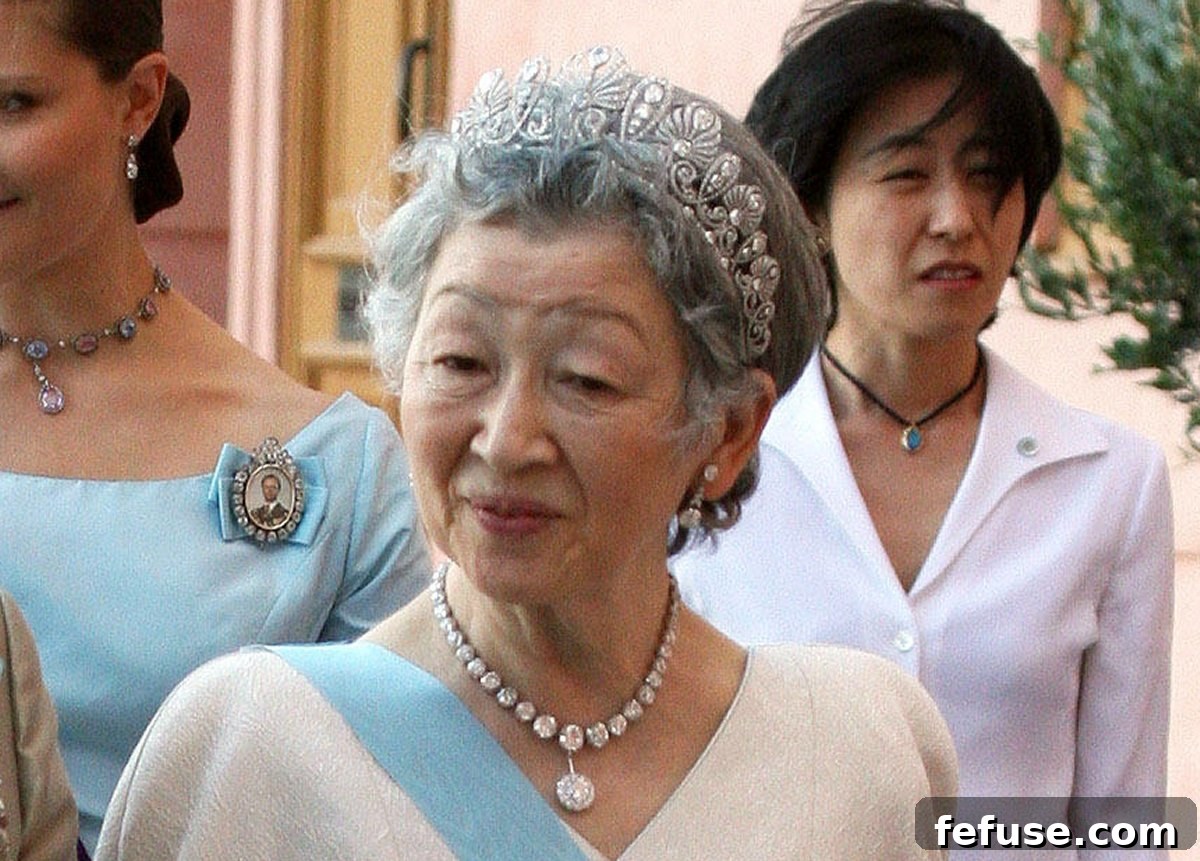
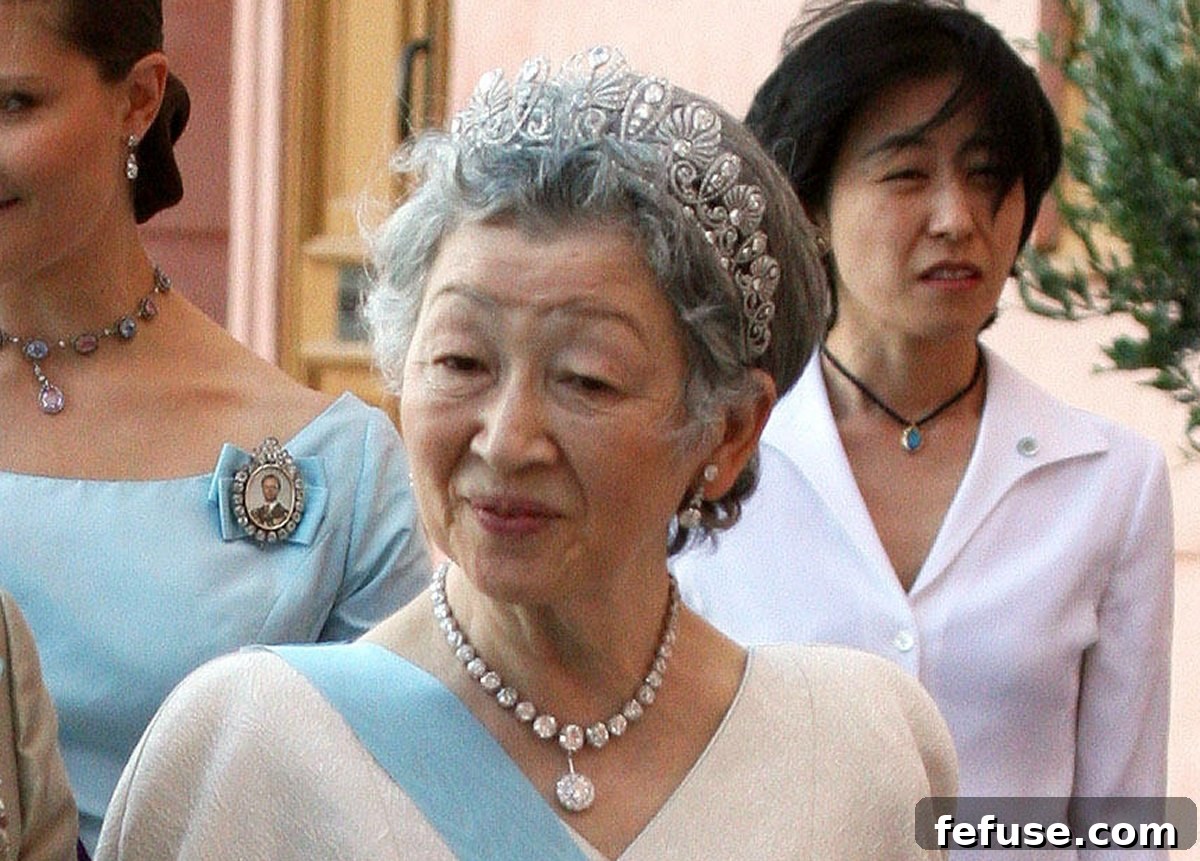
As New Year’s week illuminates the Imperial Palace in Tokyo, the annual reception once again brings forth a dazzling display of imperial tiaras. While the jewels of this year’s event will be detailed upon a return to the desk, our current focus turns to a particular treasure from the imperial vaults: a magnificent diamond honeysuckle tiara. This exquisite piece of royal jewelry boasts a rich history, once gracing the head of one of Japan’s most captivating imperial figures, Princess Chichibu, and later becoming a cherished choice for Empress Michiko. Its story is one of romance, duty, and enduring elegance, offering a fascinating glimpse into the lives of Japan’s imperial women and the enduring allure of their treasured adornments.
The honeysuckle motif, often symbolizing devotion and affection, is beautifully rendered in diamonds, reflecting the enduring nature of the Imperial Family’s heritage. This tiara, with its delicate yet commanding presence, has witnessed pivotal moments in Japanese history and royal life. Its journey, from its creation for a spirited princess to its graceful adoption by a modern empress, underscores the profound personal and dynastic significance embedded within these glittering masterpieces. Join us as we uncover the captivating narrative behind this remarkable diamond honeysuckle tiara, exploring the lives of the extraordinary women who wore it and the significant events it illuminated.
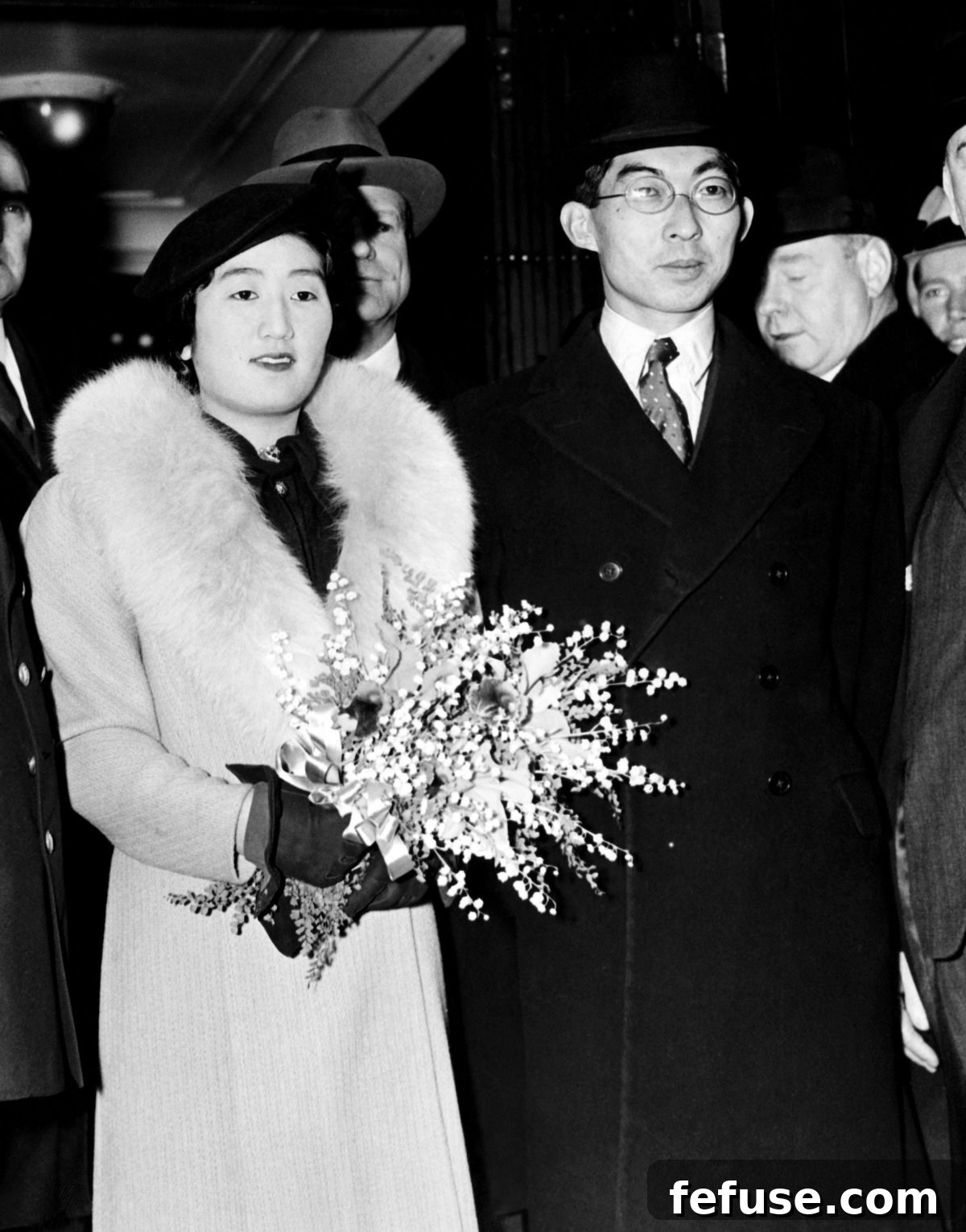
The tale of the honeysuckle tiara truly begins with Prince Chichibu, born Prince Yasuhito, the second son of Emperor Taishō (Yoshihito). In December 1926, the 24-year-old prince was immersed in his studies at Magdalen College, Oxford, a world away from the solemn halls of the Imperial Palace. His academic pursuits were abruptly interrupted by somber news: his father, Emperor Taishō, was gravely ill. Leaving his books behind, the studious prince embarked on an urgent journey, first to London, then across the Atlantic to America. His brief, yet significant, stop in Washington D.C. included laying a wreath at Arlington, meeting President Calvin Coolidge, and visiting the Japanese Embassy. This whirlwind diplomatic engagement, undertaken amidst personal distress, proved to be a pivotal moment that would forever alter the course of his life.
It was within the elegant confines of the Japanese Embassy in Washington that Prince Yasuhito had a fateful encounter with 17-year-old Setsuko Matsudaira. Setsuko was the daughter of the esteemed Japanese ambassador to the United States, Tsuneo Matsudaira. While they had known each other casually during childhood – Setsuko’s mother, Nobuko Matsudaira, being a close confidante and courtier to Yasuhito’s mother, Empress Teimei (Sadako) – this meeting marked their first reunion in many years. Setsuko had spent her formative adolescent years studying in the United States, a consequence of her father’s diplomatic posting, which had provided her with a unique international perspective and fluency in English. Their conversation at the embassy, brief as it was, rekindled a connection that would soon blossom into something far grander.
Prince Yasuhito’s urgent return continued as he departed for San Francisco, though tragically, his father had already passed away during his homeward journey from England. Upon reaching Tokyo, he reunited with his grieving mother and brothers for the Emperor’s funeral. The succession of his elder brother, Hirohito, to the Chrysanthemum Throne meant that, with Emperor Hirohito having only a daughter at the time, Yasuhito became the heir apparent. This new status dramatically curtailed the independence he had cherished in England. Emperor Hirohito, prioritizing imperial stability, denied his brother’s request to complete his studies at Oxford, tasking Yasuhito with immediate duties supporting the throne. With the imperial succession not yet secured, speculation about the prince’s future bride quickly filled the newspapers, highlighting the immense pressure on him to marry and produce an heir.
Empress Teimei, a woman of considerable influence and keen judgment, soon identified the ideal consort for her son: Setsuko Matsudaira, the charming and intelligent daughter of her dear friend. Recalling their recent encounter and sensing a burgeoning connection, Prince Yasuhito readily agreed. The formal proposal was then dispatched to Setsuko’s father, Tsuneo Matsudaira, in Washington. The marriage negotiations, conducted in the summer of 1927, encountered an unexpected initial resistance. Ambassador Matsudaira, overwhelmed by the profound honor, initially declined the offer for his daughter to become an imperial princess, humbly stating that the honor was simply too great for his family to accept. It took the personal intervention of an imperial representative, traveling specifically to Washington to reiterate the offer and convey the Imperial Family’s earnest desire, to satisfactorily resolve the matter.
To ensure a dignified union, a crucial step was taken to address Setsuko’s status as a commoner. Ahead of her wedding, she was formally adopted by her uncle, Viscount Morio Matsudaira, thereby elevating her societal standing and creating an appropriate parity with her royal fiancé. This thoughtful arrangement paved the way for a grand imperial wedding. The ceremony took place in Tokyo on September 28, 1928, just months after Setsuko’s father, Ambassador Matsudaira, assumed his new prestigious role as ambassador to the United Kingdom, further cementing the family’s international standing. The wedding was a magnificent affair, blending ancient traditions with modern imperial splendor.
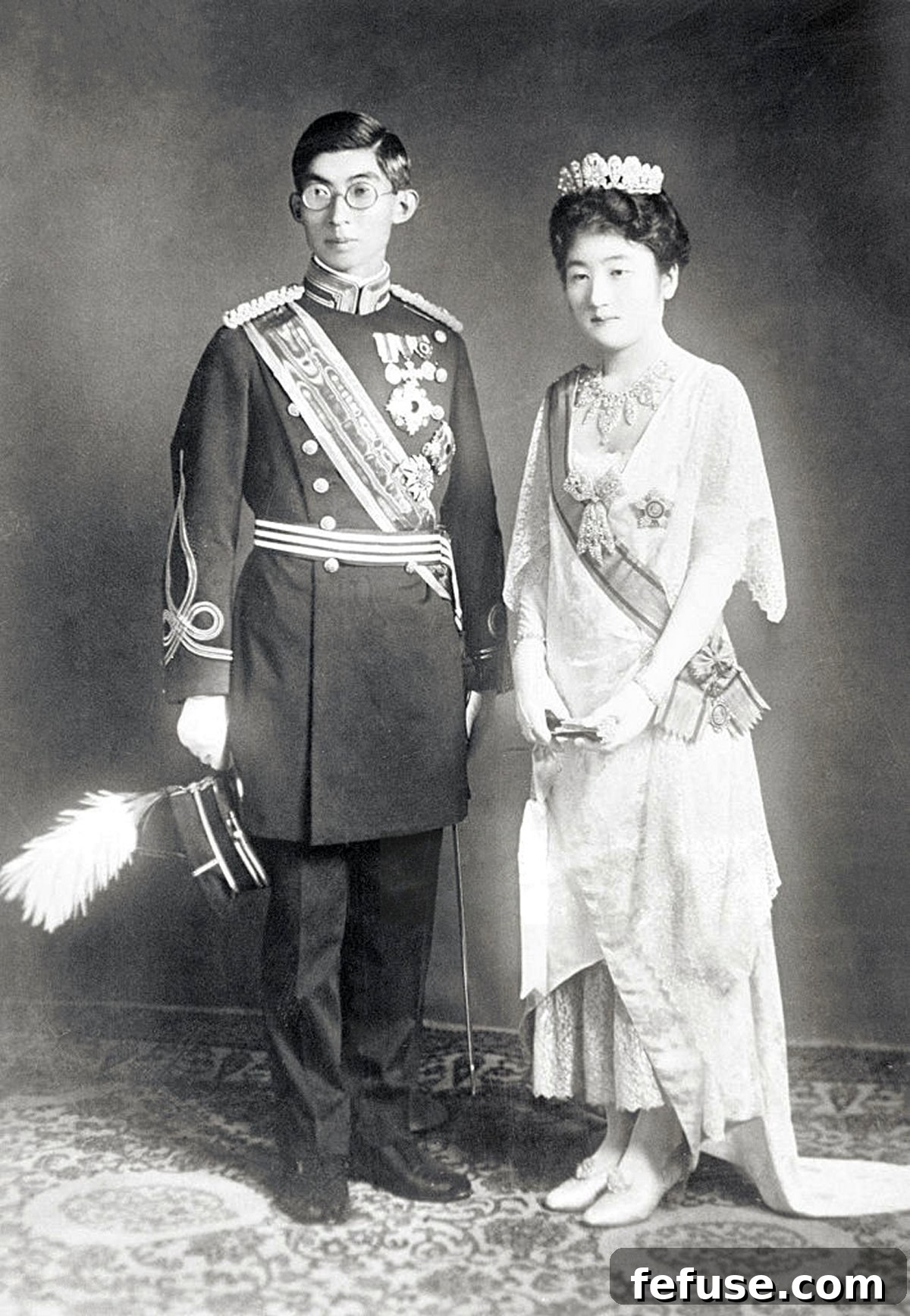
For the sacred wedding ceremony itself, the couple was resplendent in traditional Japanese attire, honoring centuries of imperial custom. Later in the day, they transitioned into Western-style dress for a lavish banquet hosted at Akasaka Palace. It was during this opulent reception that Setsuko, now officially known as Princess Chichibu, made her public debut as an imperial princess, adorned in a spectacular suite of diamond jewelry. Complementing her elegant lace wedding dress was a breathtaking diamond honeysuckle tiara, featuring intricate designs that gracefully encircled her head, paired with a coordinating diamond necklace. The ensemble was further enhanced by an enormous and exquisitely crafted diamond bow brooch, a truly glamorous statement piece that perfectly captured the grandeur of the occasion. This diamond honeysuckle tiara, making its first significant appearance, instantly became a symbol of her new royal identity and a cherished jewel within the Japanese Imperial Family’s collection.
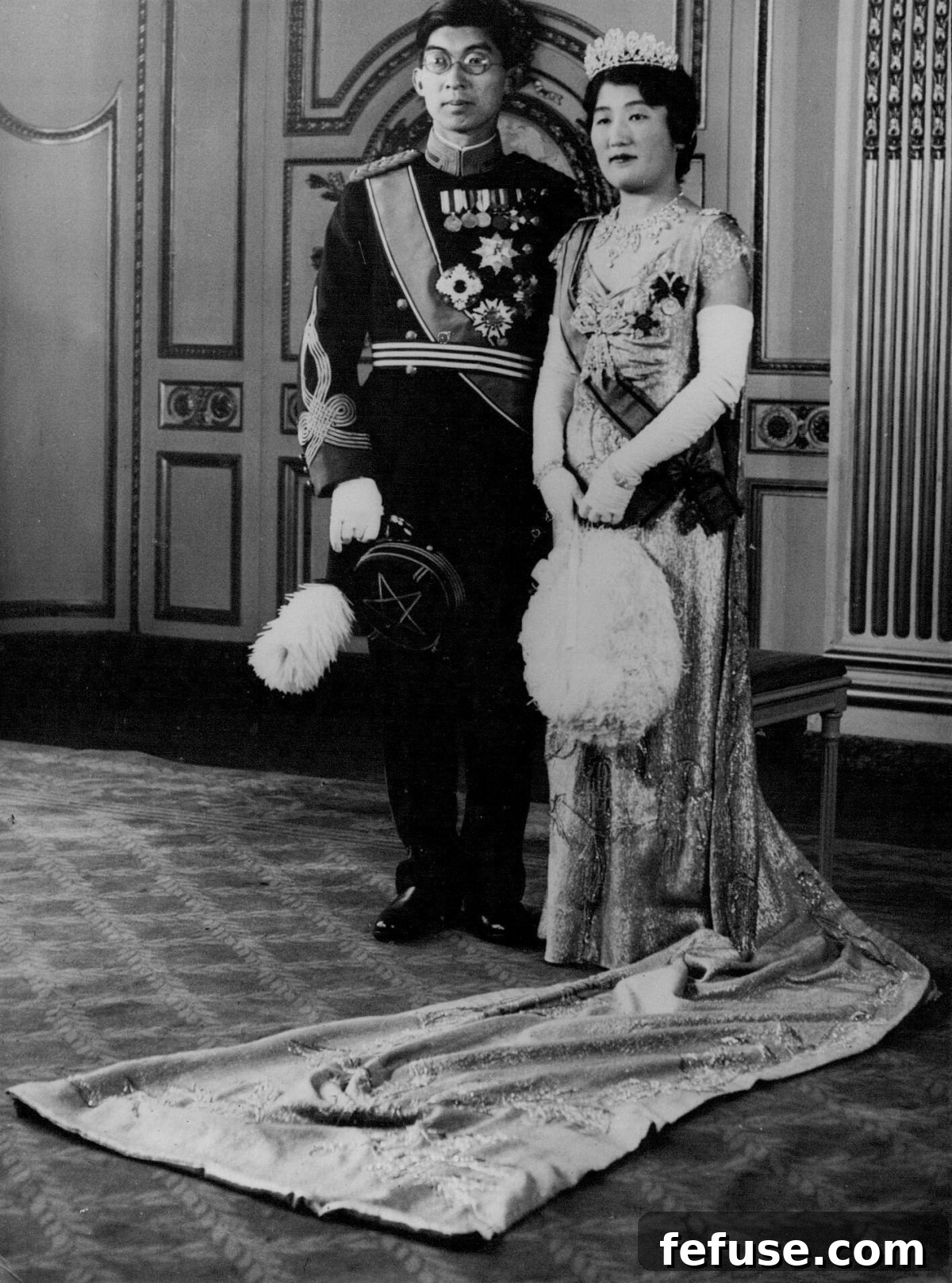
Despite their marriage being an arrangement orchestrated by the imperial family, Prince and Princess Chichibu forged a profoundly happy and harmonious union, characterized by mutual respect and affection. Their lives, however, were not without challenges. Sadly, they were unable to have children of their own, a matter of significant concern for the imperial succession. This issue was eventually resolved with the birth of Crown Prince Akihito in 1933, which meant Prince Yasuhito ceased to be the direct heir to the imperial throne. Nevertheless, the prince and princess remained central, highly respected members of the Imperial Family, often undertaking crucial diplomatic duties and representing Japan at important international events.
Their deep connection to Britain, cultivated during Prince Yasuhito’s time at Oxford and Princess Setsuko’s English upbringing (given her father’s diplomatic post in London), made them ideal representatives. In 1937, this anglophile prince and the British-born princess were chosen to represent Emperor Hirohito at the historic coronation of King George VI and Queen Elizabeth of the United Kingdom. Returning to England was a source of immense joy for both of them, a homecoming of sorts. They were not merely attendees but celebrated guests, invited to a glittering array of balls, grand receptions, and enchanting concerts held across London during the festive coronation celebrations. This period allowed them to rekindle friendships and further strengthen Anglo-Japanese relations, all while showcasing the elegance and dignity of the Japanese Imperial Family.
For the Coronation ceremony itself, a truly magnificent occasion at Westminster Abbey, Princess Chichibu made a striking choice by deciding to wear her exquisite diamond wedding jewels. This decision highlighted the personal significance of these pieces to her, tying her present imperial duties to the joy of her marriage. Just two days prior to the grand event, Prince Yasuhito and Princess Setsuko graciously posed for press photographers at their London hotel. They were impeccably dressed in the full regalia they would wear for the ceremony: Prince Yasuhito in his ceremonial uniform and decorations, and Princess Setsuko in her regal gown and glittering jewels. Newspaper accounts of the time detailed Princess Setsuko’s stunning attire, describing it as “a gown of gold lamé, hand-embroidered with diamante and pearls in a design of Japanese chrysanthemums,” adding, “She will wear it with a long train of the same material and a tiara and necklace of diamonds.” Indeed, she wore her cherished diamond honeysuckle tiara, the coordinating necklace, and the same glamorous diamond bow brooch that had adorned her at her wedding banquet nearly a decade earlier. Completing her breathtaking ensemble were several elegant diamond bracelets, ensuring her imperial splendor was undeniable on the world stage.
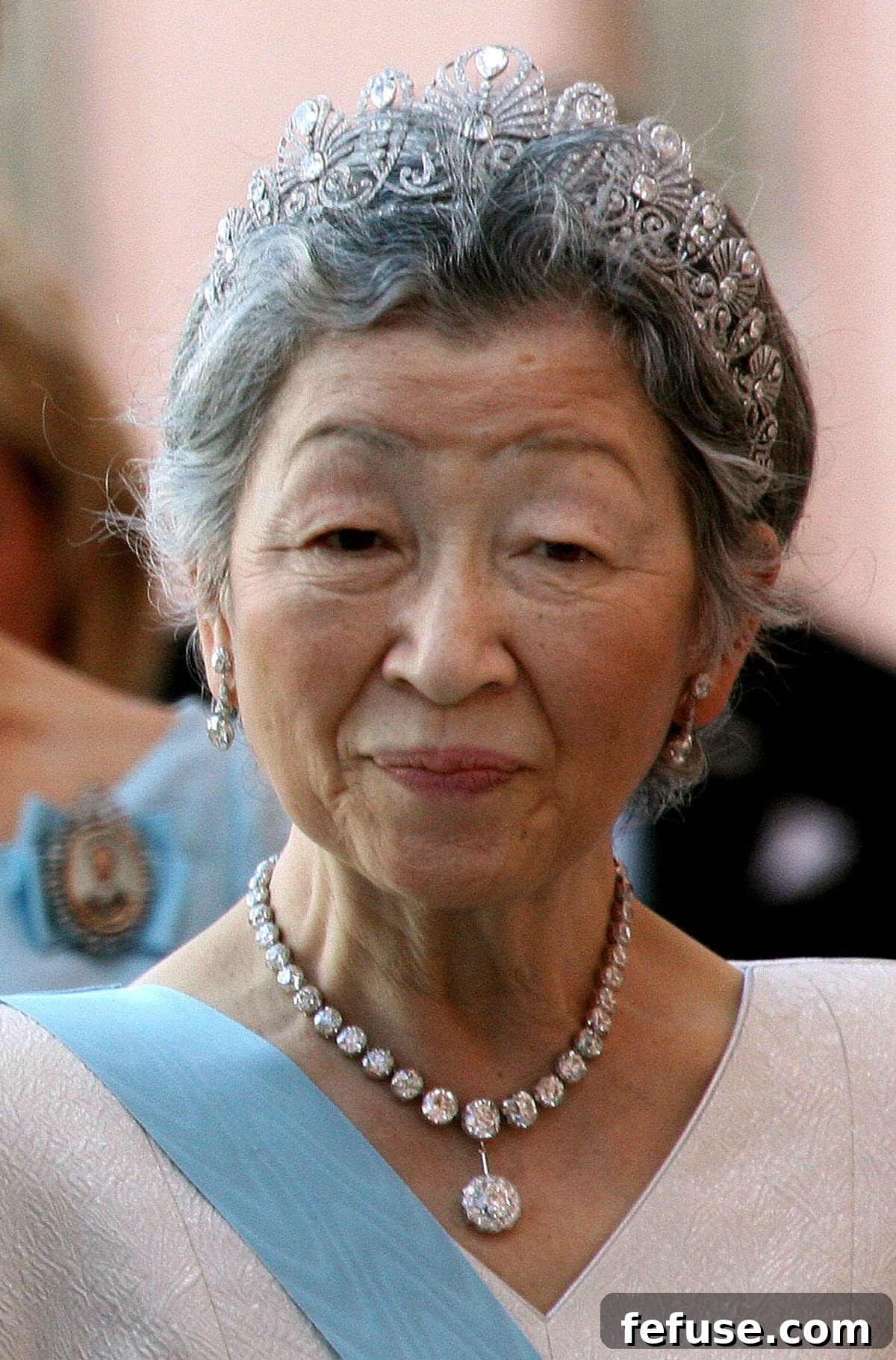
Tragedy struck the Princess in 1953 when Prince Chichibu passed away after a long battle with tuberculosis. In the wake of her husband’s death, Princess Chichibu dedicated the rest of her life to a noble cause: the prevention and eradication of tuberculosis, a disease that had claimed her beloved husband. Her commitment to public health was unwavering, and she became a tireless advocate. Beyond this, she remained a highly active and respected member of the imperial family, continuing her public duties and lending her support to various charitable organizations, most notably the Japanese Red Cross, where her contributions were invaluable. Her innate fascination with global travel and cultural exchange also endured throughout her life.
In the post-war era, Princess Chichibu frequently made visits to her beloved Britain, as well as Switzerland, France, and Sweden, fostering international understanding and maintaining personal connections. Beyond her formal duties, she possessed a lively spirit and diverse interests. She was an ardent fan of rugby, a passionate gardener, and a keen tennis enthusiast, demonstrating a vibrant personality beyond her regal facade. Perhaps the most poignant testament to her captivating character came in 1970, when the then Prince of Wales, now King Charles III, had tea with her during his visit to Japan. He paid her an exceptionally high compliment, remarking, “She reminds me of my grandmother.” This comparison to Queen Elizabeth The Queen Mother underscored Princess Chichibu’s warmth, grace, and enduring regal presence.
When Princess Chichibu passed away peacefully in 1995, her cherished diamond jewels, including the magnificent honeysuckle tiara, returned to the secretive imperial vaults. For a decade, these treasures awaited their next wearer. Then, in the early 2000s, they found their way to another distinguished member of the imperial family: Empress Michiko, the revered wife of Setsuko’s nephew, Emperor Akihito. Empress Michiko had access to some of the grandest and most historically significant jewels within the imperial collection, including the venerable Meiji Tiara and the majestic Imperial Chrysanthemum Tiara. However, as she gracefully aged, increasing health problems and discomfort made wearing the larger, heavier tiaras challenging. The solution, demonstrating both practicality and a deep respect for imperial heritage, was the lighter and more comfortable Chichibu Honeysuckle Tiara.
Likely crafted in platinum, given its probable 1920s creation date, the honeysuckle tiara offered an elegant alternative. Its delicate design and manageable weight allowed Empress Michiko to continue her regal duties without discomfort. This choice also brought a beloved piece of Princess Chichibu’s legacy back into public view, subtly honoring her memory and contributions to the Imperial Family. The reappearance of the honeysuckle tiara during Empress Michiko’s tenure highlighted its versatility and timeless appeal, securing its place as a significant jewel within the Japanese imperial collection.
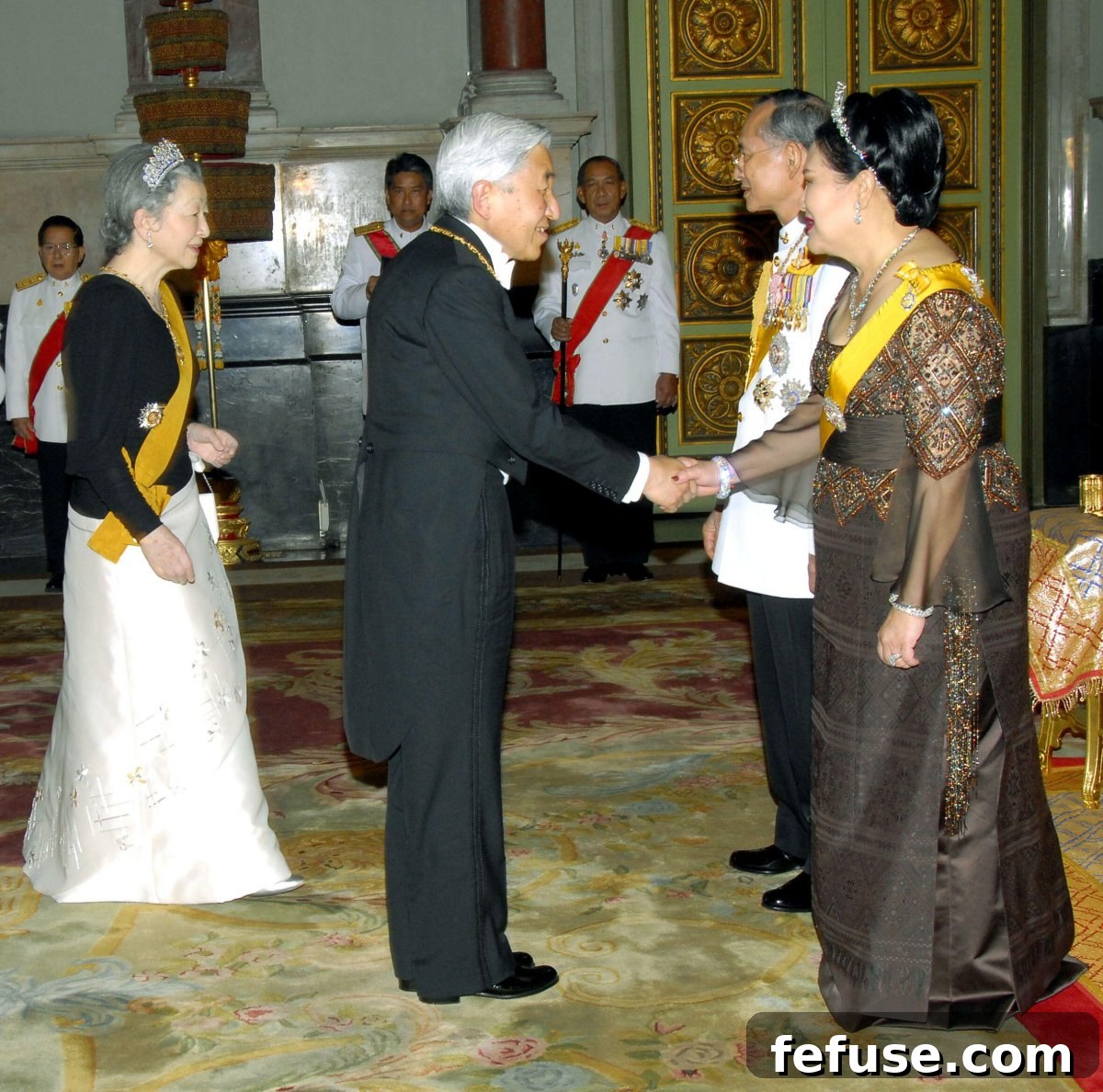
Empress Michiko frequently opted for the lighter honeysuckle diadem, choosing it over her heavier tiaras for a variety of significant occasions, particularly during her numerous international engagements. Its elegant design and ease of wear made it a perfect choice for demanding royal tours and state banquets abroad. One notable instance of its prominent display was in June 2006, when Empress Michiko wore the tiara during the lavish Diamond Jubilee celebrations for King Bhumibol Adulyadej of Thailand in Bangkok. Adorned with the sparkling honeysuckle, she exuded grace and imperial dignity, representing Japan with understated elegance amidst the grandeur of the Thai monarchy’s festivities. This choice not only underscored her personal style but also reflected the strategic deployment of imperial jewels for diplomatic purposes.
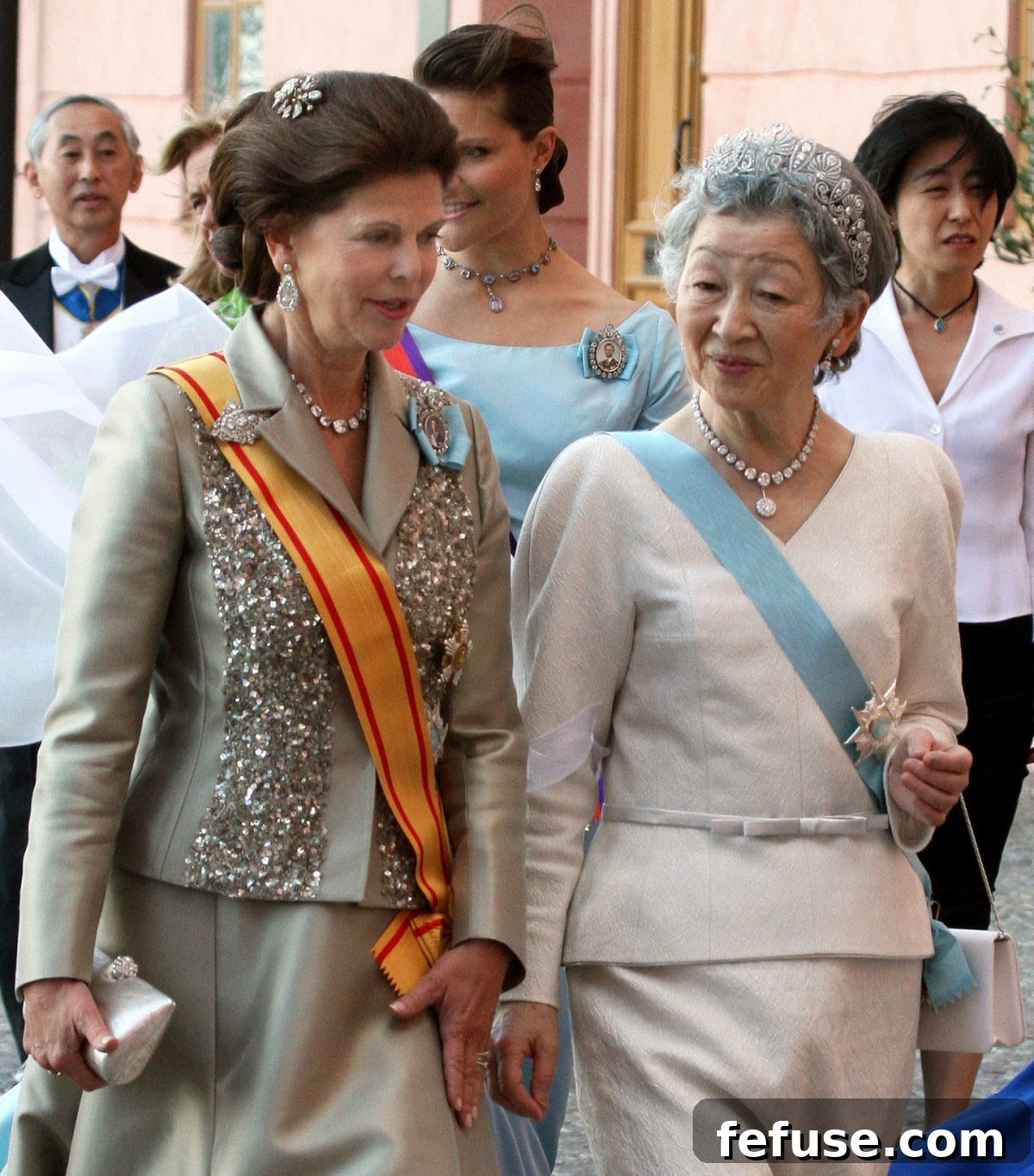
The tiara again shone brightly during another important international outing in May 2007. On this occasion, Emperor Akihito and Empress Michiko traveled to Sweden to participate in the celebrations marking the 300th anniversary of the renowned Swedish botanist Carolus Linnaeus. The imperial couple attended a banquet held at the historic Uppsala Castle, a setting steeped in European history. Given that the late Princess Chichibu had served with distinction as the honorary president of the Sweden-Japan Society, the selection of her personal tiara for this event was particularly poignant and fitting. It was a beautiful tribute to her legacy and her enduring connections with Sweden, adding a layer of historical resonance to Empress Michiko’s appearance. The delicate diamond honeysuckle motif seemed perfectly aligned with an event celebrating a botanist, subtly referencing nature’s beauty and the intergenerational continuity of the imperial family’s diplomatic efforts.
In the later years of her reign, Empress Michiko, prioritizing comfort and well-being, eventually ceased wearing tiaras altogether due to persistent health concerns. Following her husband’s historic abdication in 2019 and their son’s accession to the Chrysanthemum Throne as Emperor Naruhito, the honeysuckle tiara, along with other imperial jewels, presumably returned to the tightly guarded imperial vaults. The precise protocols governing the assignment and use of jewels within the famously private Imperial Household Agency remain largely a mystery to the public, shrouded in tradition and discretion. However, it is certainly within the realm of possibility that Princess Chichibu’s exquisite diamond honeysuckle tiara, a symbol of grace, history, and family legacy, may one day re-emerge to adorn another distinguished lady from the Japanese Imperial Family. We might anticipate the possibility of Empress Masako, known for her elegant and thoughtful choices, wearing this historically significant piece, or perhaps even the youthful Princess Aiko, as she takes on more public duties in the years to come. The future of this dazzling tiara remains an intriguing prospect, continuing its silent yet brilliant journey through the annals of Japanese imperial history, awaiting its next moment to sparkle.