The Enduring Legacy of Queen Mary’s Honeysuckle Tiara: A Royal Masterpiece of Adaptability
Royal jewels tell fascinating stories, weaving together history, artistry, and personal legacies. Among the most revered pieces in the British Royal Family’s extensive collection is Queen Mary’s Honeysuckle Tiara, a dazzling masterpiece renowned not only for its exquisite beauty but also for its remarkable adaptability. Commissioned by Queen Mary, a towering figure in the realm of royal jewelry acquisition and design, this tiara stands as a testament to her impeccable taste and foresight. It has graced the heads of multiple royal generations, most notably the Duchesses of Gloucester, and continues to captivate observers with its sparkling presence at state banquets and diplomatic engagements. Delving into its intriguing past reveals a journey of careful craftsmanship, strategic modifications, and a legacy that continues to shine brightly through the ages.
Queen Mary’s Vision: Commissioning a Royal Icon
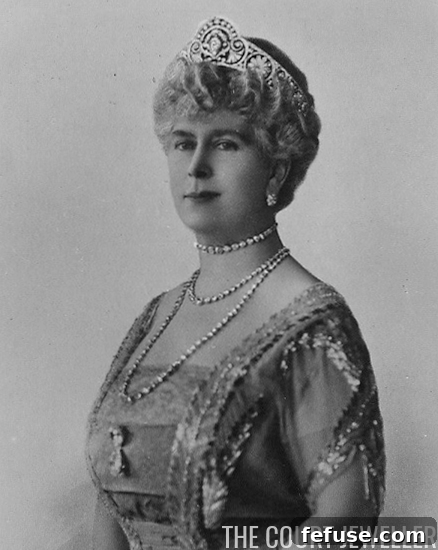
Queen Mary, consort of King George V, possessed an unrivaled passion for precious stones and a keen understanding of their historical significance. She meticulously curated, commissioned, and sometimes repurposed royal jewels, ensuring the British Crown possessed a collection befitting its global standing. The Honeysuckle Tiara, a striking example of her initiatives, was commissioned shortly after her ascension as Queen, a period marked by a desire to modernize and expand the royal regalia. For many years, the tiara’s origins were shrouded in a degree of mystery, leading some experts to speculate it might have once belonged to Tsarina Marie Feodorovna of Russia, Empress of Russia and sister to Queen Alexandra. This belief stemmed from the tiara’s resemblance to the elegant kokoshnik-style pieces favored by the Romanovs. However, extensive historical research eventually clarified its true provenance: a direct and deliberate commission by Queen Mary herself, a testament to her personal influence on the royal jewelry collection and a piece entirely of British creation.
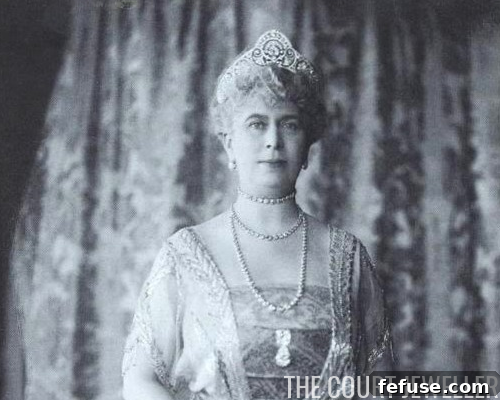
The execution of this magnificent piece was entrusted to E. Wolff and Co., acting on a commission from the venerable royal jeweller Garrard. Both firms boast a distinguished history of crafting iconic jewels for the British Royal Family. E. Wolff and Co. were also responsible for producing other legendary pieces, including the beloved Cambridge Lover’s Knot Tiara, the resplendent Girls of Great Britain and Ireland Tiara, and the majestic Connaught Diamond Tiara, now a cherished part of the Swedish Bernadotte collection. The original design of the Honeysuckle Tiara, completed in early 1914, featured a more pronounced, taller central element. However, Queen Mary, with her characteristic attention to detail and evolving aesthetic preferences, later had it modified to its current, slightly lower and more balanced iteration, enhancing its wearability and timeless appeal. In a move characteristic of royal jewel management, the tiara incorporated diamonds cleverly recycled from the dismantled County of Surrey Tiara, whose stones also found new life in the extensive remodeling of the Girls of Great Britain and Ireland Tiara, demonstrating an elegant circularity within the royal jewel treasury.
A Kaleidoscope of Gems: The Tiara’s Adaptable Core
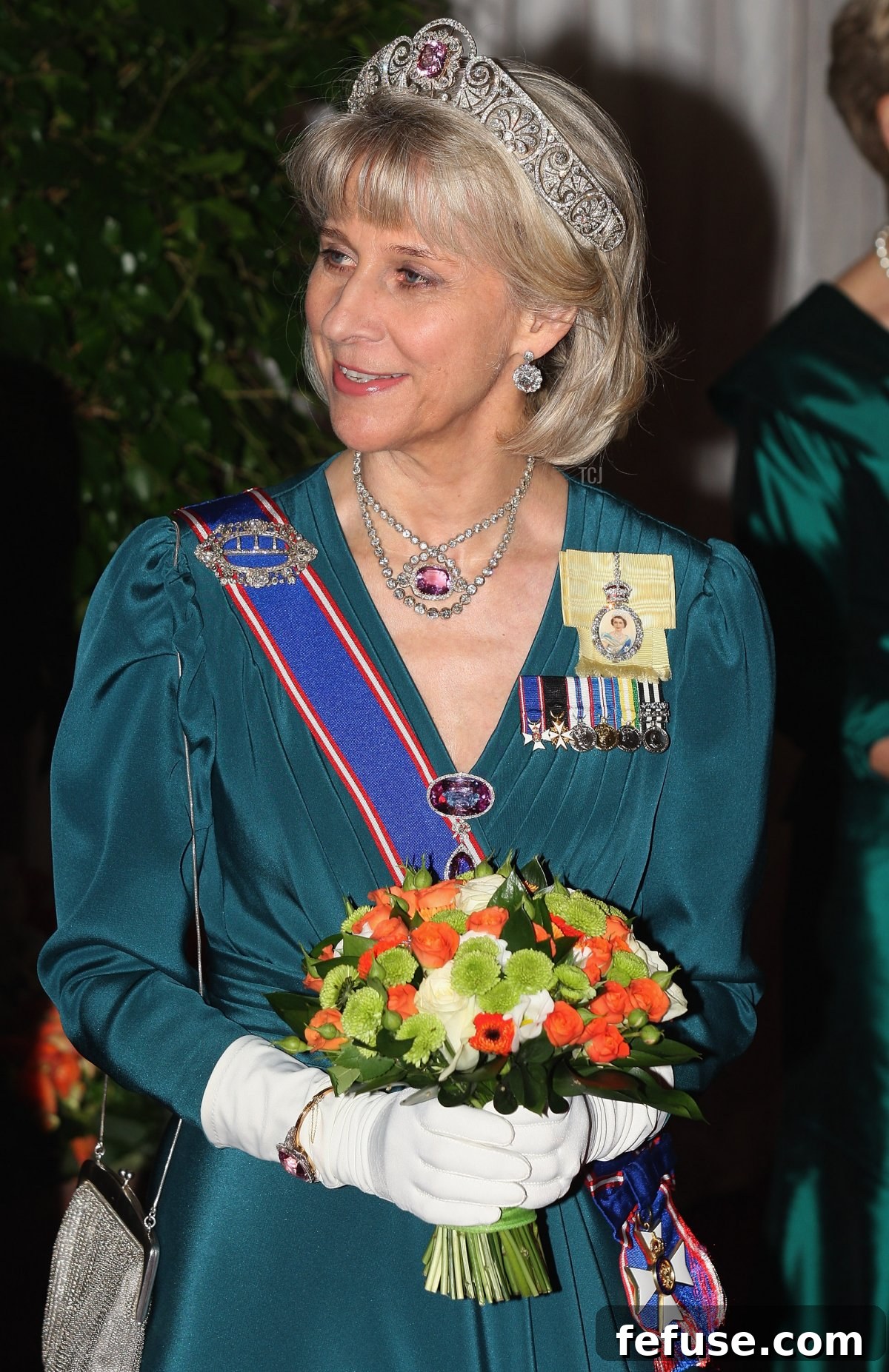
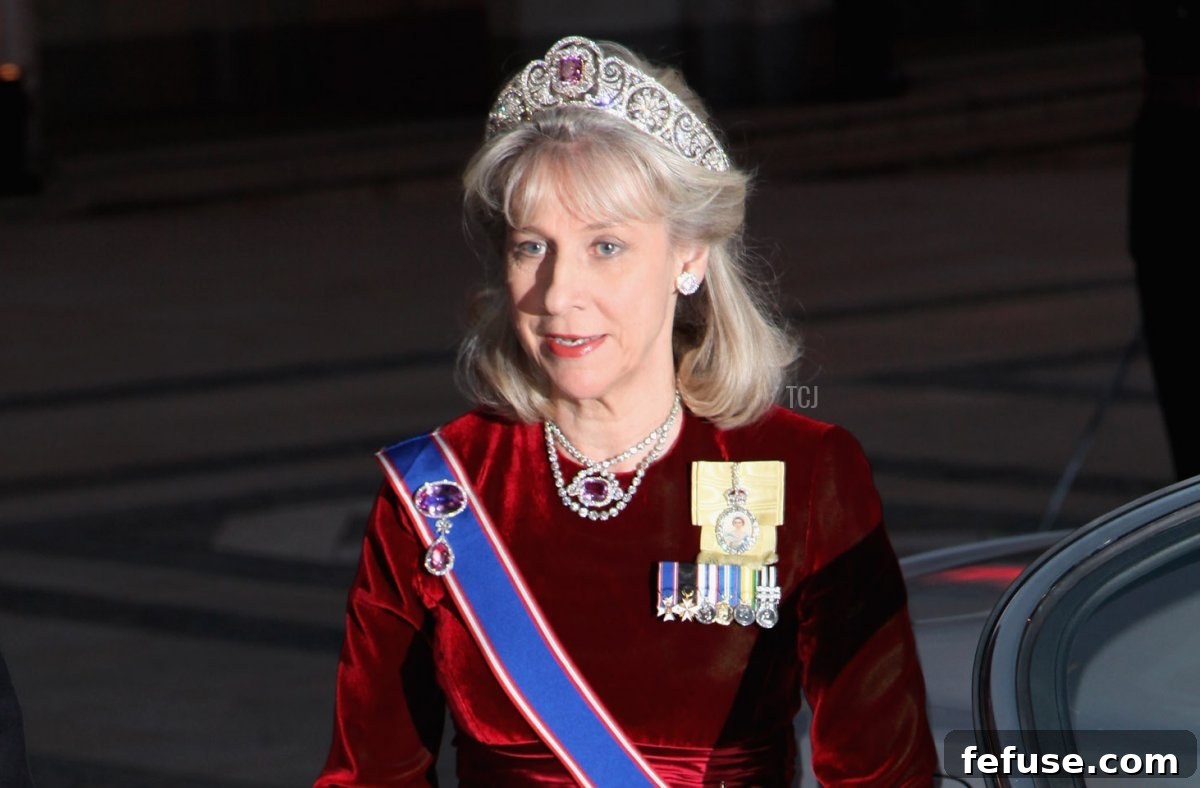
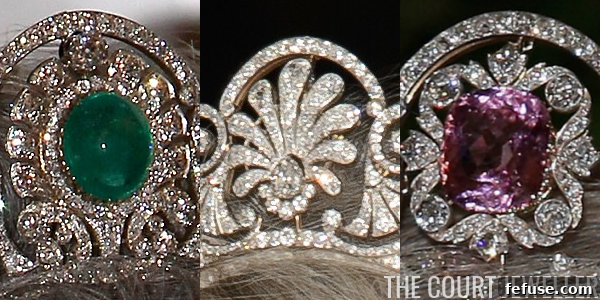
What truly sets Queen Mary’s Honeysuckle Tiara apart, beyond its historical significance and sparkling beauty, is its ingenious adaptability. From its very inception, the tiara was designed to be a remarkably versatile piece, featuring a central element capable of accommodating an array of magnificent interchangeable stones. This foresight allowed the tiara to transform its aesthetic dramatically to suit different occasions or personal preferences. Initially, it was conceived to hold three distinct and dazzling options. The first was the awe-inspiring Cullinan V diamond, a heart-shaped brilliant cut stone weighing 18.8 carats, part of the legendary Cullinan diamond, the largest gem-quality rough diamond ever found. Its presence in the tiara underscored the immense value and prestige of the piece. The second option was an elegant sapphire and diamond ornament, providing a contrasting splash of regal blue. The third, a unique and captivating diamond element, featured a distinct pink gemstone. This particular stone was frequently, though inaccurately, referred to as a pink topaz for many years. However, expert analysis later confirmed it to be a kunzite, a relatively newly discovered gemstone at the time, having only been identified a mere decade before the tiara’s creation, adding a touch of modern allure to its historic design.
A Generational Gift: From Queen Mary to Princess Alice
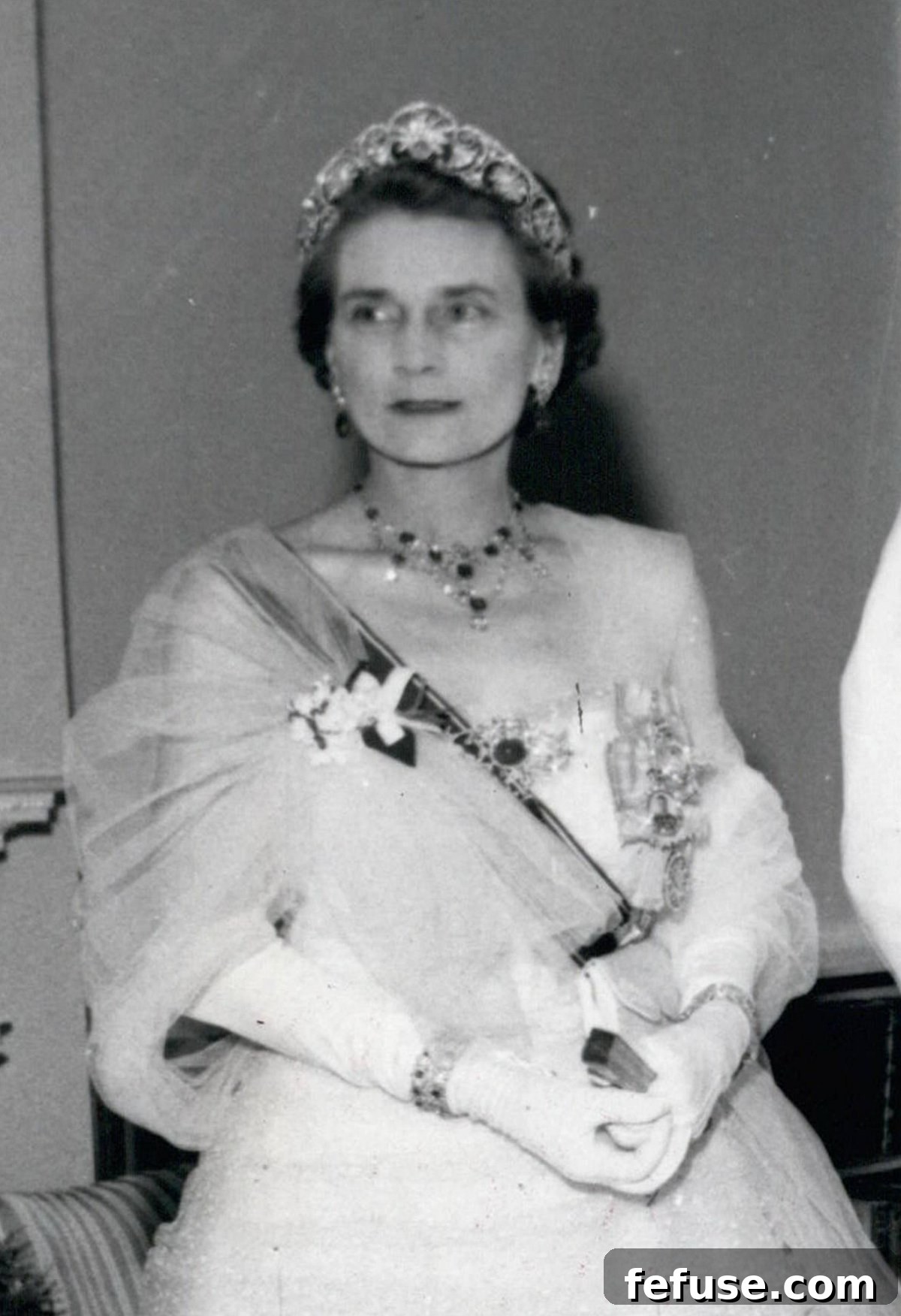
Despite its groundbreaking versatility and historical importance, Queen Mary did not retain ownership of the Honeysuckle Tiara for an extended period. In a grand gesture befitting a royal matriarch, she presented the tiara as a wedding gift in 1935 to her new daughter-in-law, Lady Alice Montagu Douglas Scott, upon her marriage to Prince Henry, Duke of Gloucester. This act cemented the tiara’s new role within the Gloucester branch of the royal family. However, with her characteristic strategic approach to her jewels, Queen Mary made a significant alteration before the transfer. While gifting the tiara, she commissioned a completely new diamond honeysuckle piece specifically designed to fit the tiara’s central space. This ensured that the primary honeysuckle motif remained with the tiara as it passed into new hands, while she retained some of the original, highly valuable interchangeable elements for her personal collection.
Evolution and Legacy: The Tiara Today
The fascinating journey of the tiara’s interchangeable elements continued after its initial transfer. The magnificent Cullinan V diamond, along with the original sapphire ornament and the distinctive kunzite, remained with Queen Mary. Conversely, Lady Alice received the newly created diamond honeysuckle central piece along with the tiara itself, marking the beginning of its new chapter. Following Queen Mary’s death in 1953, the kunzite element was bequeathed to Princess Alice, reuniting it with the tiara. This re-established one of its original, vibrant central options. The introduction of the third current option, a stunning emerald and diamond cluster, adds another layer of intrigue. The precise provenance of this emerald piece remains somewhat unclear in public records, but it is believed to have joined the collection at some point after Mary’s death, perhaps as a subsequent acquisition or a transformation of another Gloucester jewel. Today, these three distinct elements – the intricate diamond honeysuckle, the captivating pink kunzite, and the lush emerald and diamond cluster – constitute the tiara’s adaptable core, each offering a unique aesthetic that has been elegantly showcased over the decades. The collage above beautifully illustrates these versatile options.
Birgitte, Duchess of Gloucester: The Tiara’s Modern Custodian
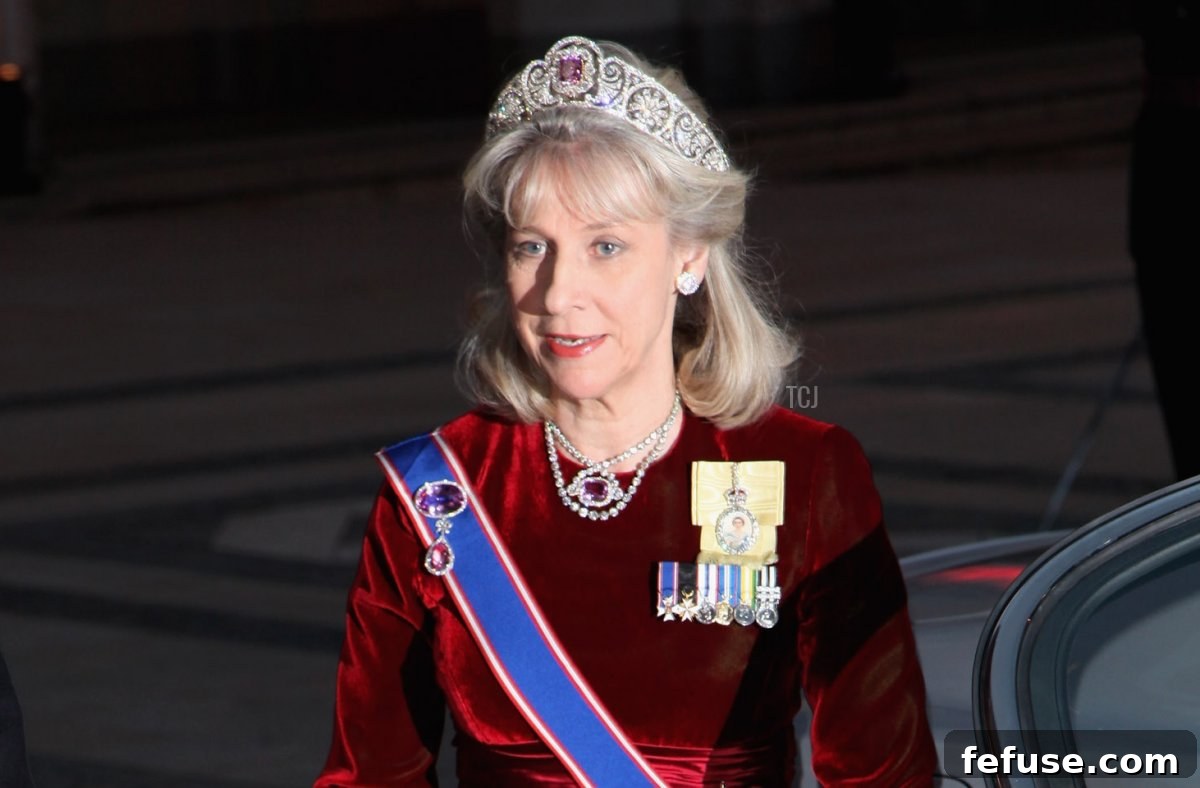
The regal journey of Queen Mary’s Honeysuckle Tiara continued into the next generation when Princess Alice, following in her mother-in-law’s footsteps, passed the beloved sparkler to her own daughter-in-law, Birgitte, who became the Duchess of Gloucester upon her marriage to Prince Richard in 1972. The current Duchess has enthusiastically embraced the tiara, frequently wearing it at various royal events, often showcasing all its magnificent interchangeable forms. The ability to swap out the central element is not merely a design quirk but a highly practical advantage for a modern royal. This unique feature allows the Duchess to perfectly coordinate her tiara with the specific colours and styles of her gala dresses, ensuring a harmonious and polished appearance. For instance, if a vibrant red gown is chosen for an evening, the option to exchange a potentially clashing pink kunzite for a dazzling diamond or a complementary emerald cluster becomes invaluable.
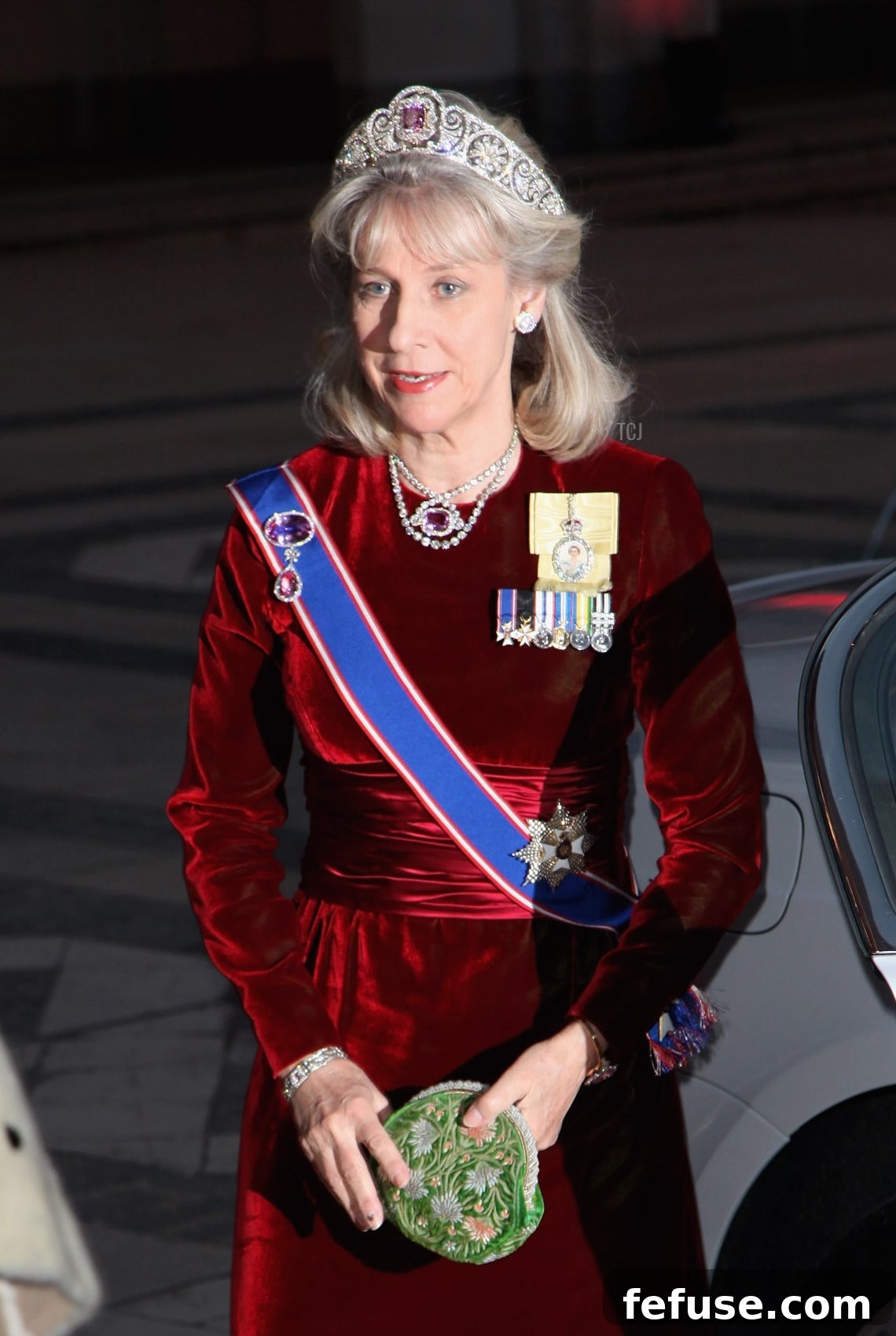
Indeed, the longevity and frequent appearances of the Honeysuckle Tiara are a testament to its enduring appeal and practical design. Despite having a remarkable collection of six tiaras at her disposal, the Duchess of Gloucester, Birgitte, clearly holds a special fondness for this particular piece, as evidenced by its status as her most frequently photographed tiara. It remains a sparkling emblem of royal tradition, innovation, and timeless elegance, continuing to adorn the British monarchy with its unique blend of history and versatility.