
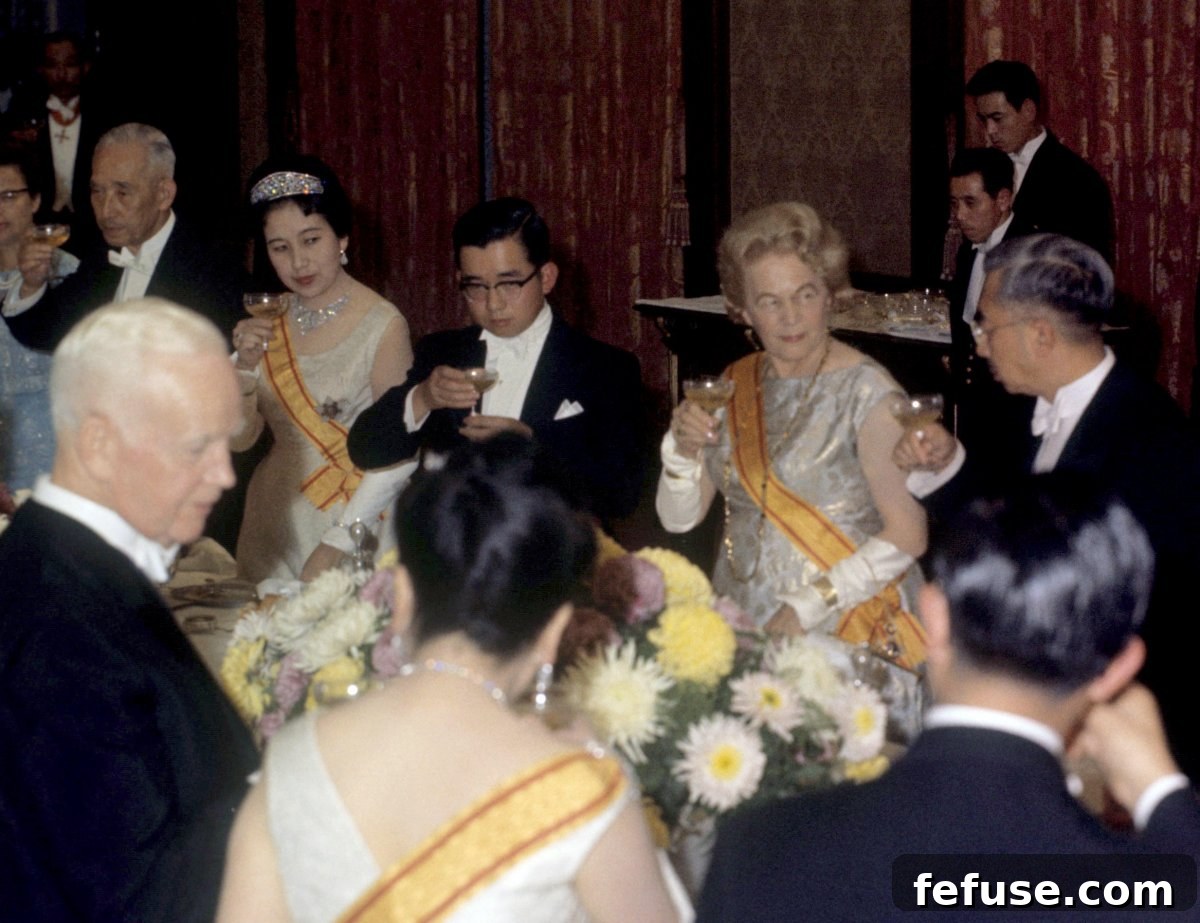
The Enduring Radiance of Japan’s Imperial Jewels: A Journey Through History and Tiaras
Explore the captivating legacy of the Japanese Imperial Family, from historic weddings and majestic enthronements to significant state visits, all adorned with spectacular royal tiaras and parures. This comprehensive guide delves into the lives of Japan’s revered royals and the glittering jewels that mark their most pivotal moments.
The Long, Fascinating Century of a Japanese Princess
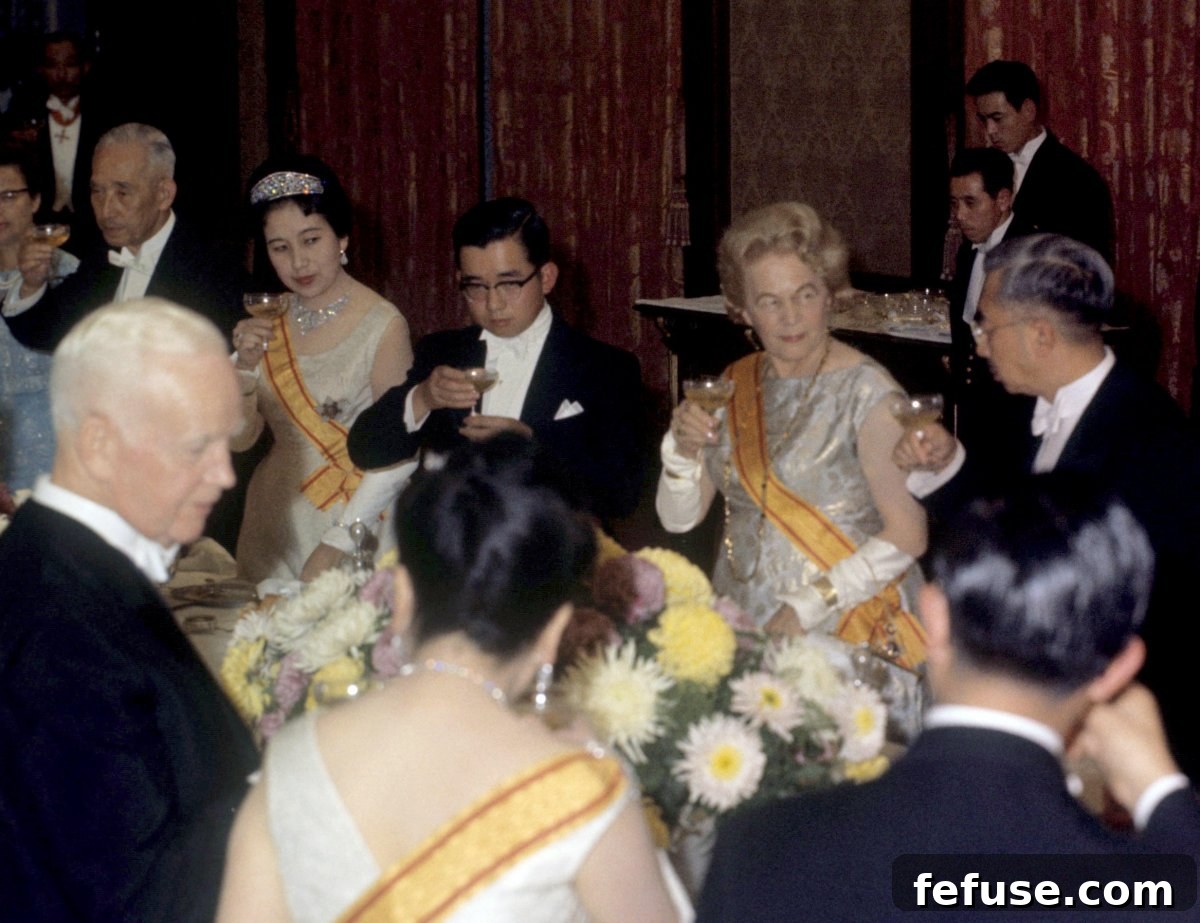
The life of Princess Mikasa, a truly remarkable figure within the Japanese Imperial Family, spanned over a century, offering a unique perspective on a transformative era. Her passing at the extraordinary age of 101 marked the end of an irreplaceable link to a significant, often challenging, period of Japan’s imperial history. Born Yuriko Takagi into an aristocratic family, her marriage to Prince Mikasa, the youngest brother of Emperor Showa (Hirohito), in 1941, thrust her into the heart of the imperial household just as the world plunged into conflict. As a witness to the profound societal shifts and constitutional changes that followed World War II, Princess Mikasa embodied resilience and grace. Her presence offered a tangible connection to the past, reminding all of the enduring legacy and adaptability of the Imperial House of Japan. Her iconic Mikimoto tiara and parure, seen here during a state banquet, symbolized not just imperial elegance but also the nation’s cultural heritage in the post-war era.
The Enduring Legacy of Princess Mikasa
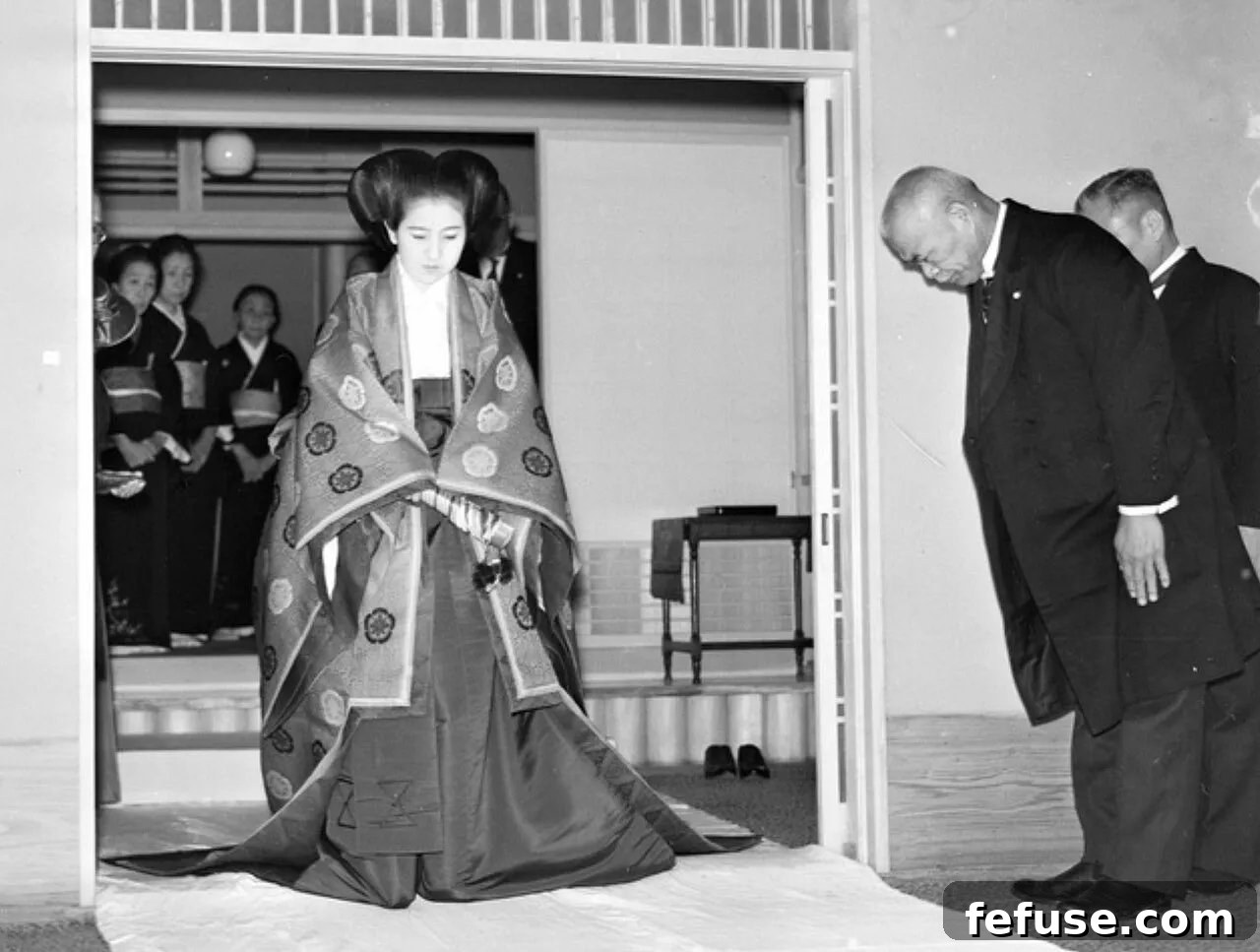
As Yuriko Takagi prepared to marry Prince Mikasa, younger brother to Emperor Showa, on October 22, 1941, she was embarking on a path that would see her become a cherished member of the Imperial Family and a living testament to a century of immense change. Her journey from her family home to the Imperial Palace was more than a personal milestone; it was a moment intertwined with Japan’s history, preceding some of the most challenging periods the nation would face. Princess Mikasa’s life mirrored the evolution of modern Japan, from the pre-war imperial system to the post-war constitutional monarchy. Throughout her long and dignified life, she carried out her duties with unwavering dedication, often seen adorned in elegant imperial jewels, particularly the Mikimoto Tiara, which became synonymous with her public appearances. Her remarkable longevity allowed her to witness decades of imperial succession and societal development, leaving an indelible mark on the Japanese monarchy.
Royal Wedding Jewels: Emperor Akihito and Empress Michiko – A Love Story Etched in History
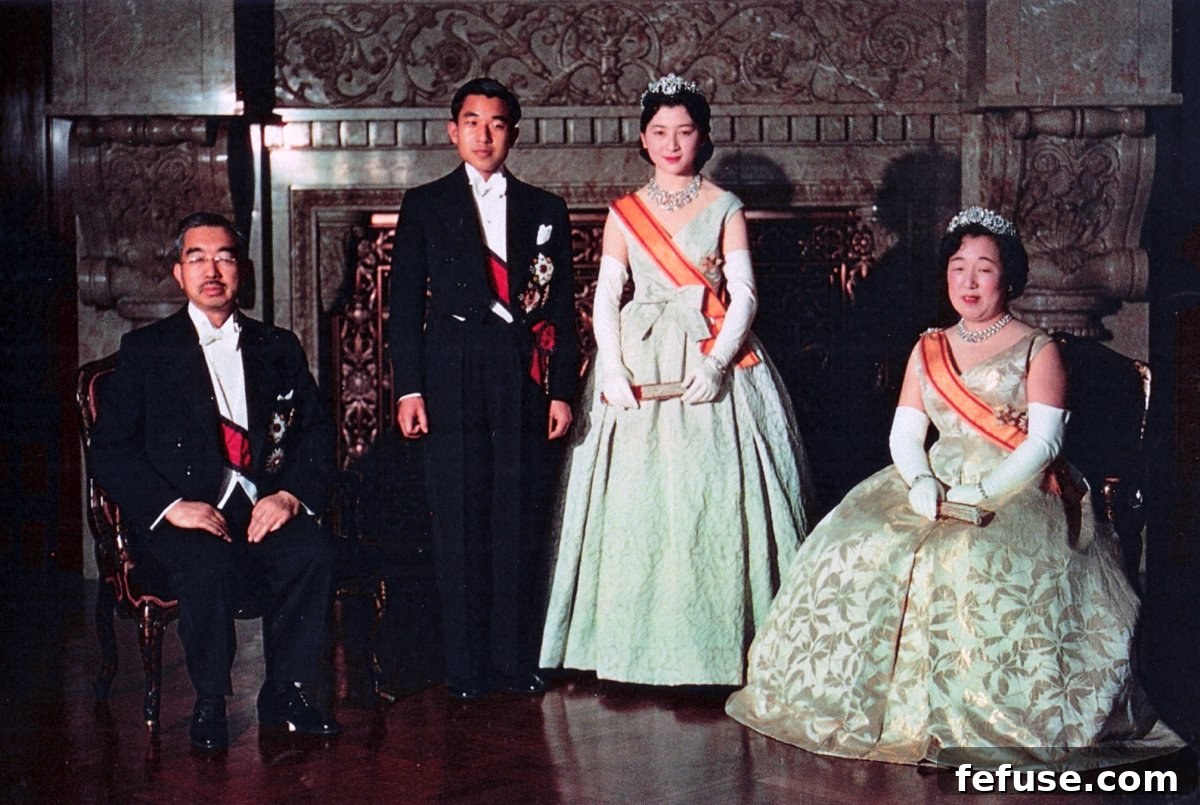
The wedding of Crown Prince Akihito and Michiko Shoda on April 10, 1959, was a watershed moment for the Japanese Imperial Family, captivating a nation and signaling a modern era for the ancient monarchy. Their love story began, charmingly, on a tennis court in Karuizawa in the summer of 1957, an unprecedented and romantic origin for an imperial union. Michiko Shoda, the daughter of Hidesaburo Shoda, a prominent flour milling magnate, was the first commoner in recorded history to marry an heir to the Chrysanthemum Throne. This groundbreaking match was met with immense public enthusiasm and represented a significant step towards democratizing the imperial institution. For her wedding, Crown Princess Michiko wore a stunning imperial tiara, a symbol of her new status, accompanied by an elegant diamond necklace and earrings. These magnificent jewels not only adorned a royal bride but also represented the hopes and aspirations of a new generation for Japan’s monarchy, blending tradition with a refreshing modern outlook.
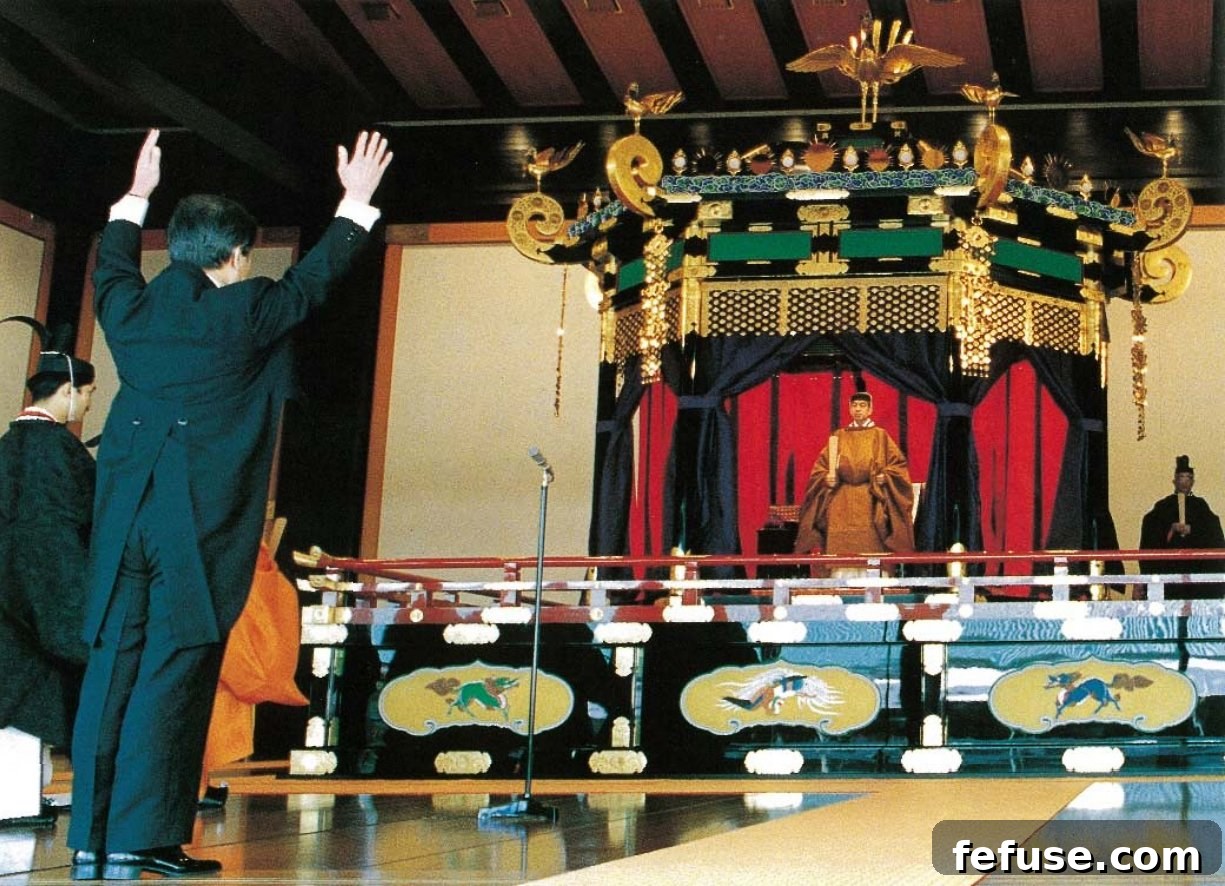
Looking Back at Emperor Akihito’s Enthronement: A Solemn and Splendid Occasion
Following the passing of his revered father, Emperor Hirohito, in January 1989, Crown Prince Akihito ascended the Chrysanthemum Throne, embarking on a new imperial era. More than a year of mourning and preparation culminated in his formal enthronement ceremony, “Sokui no Rei,” on November 12, 1990, at the Imperial Palace in Tokyo. This elaborate and ancient ritual, steeped in centuries of tradition, formally proclaimed Akihito as the 125th Emperor of Japan. The solemn proceedings included sacred Shinto rites, where the new Emperor received the Imperial Regalia—the sacred sword, mirror, and jewel—symbols of his divine authority. While less visible to the public during these core rituals, the enthronement also involved majestic state banquets and receptions where Empress Michiko and other imperial ladies donned magnificent imperial tiaras and jewels, symbolizing the continuity and grandeur of the Japanese monarchy for domestic and international dignitaries. The ceremony reaffirmed the enduring nature of the imperial line and its profound cultural significance.
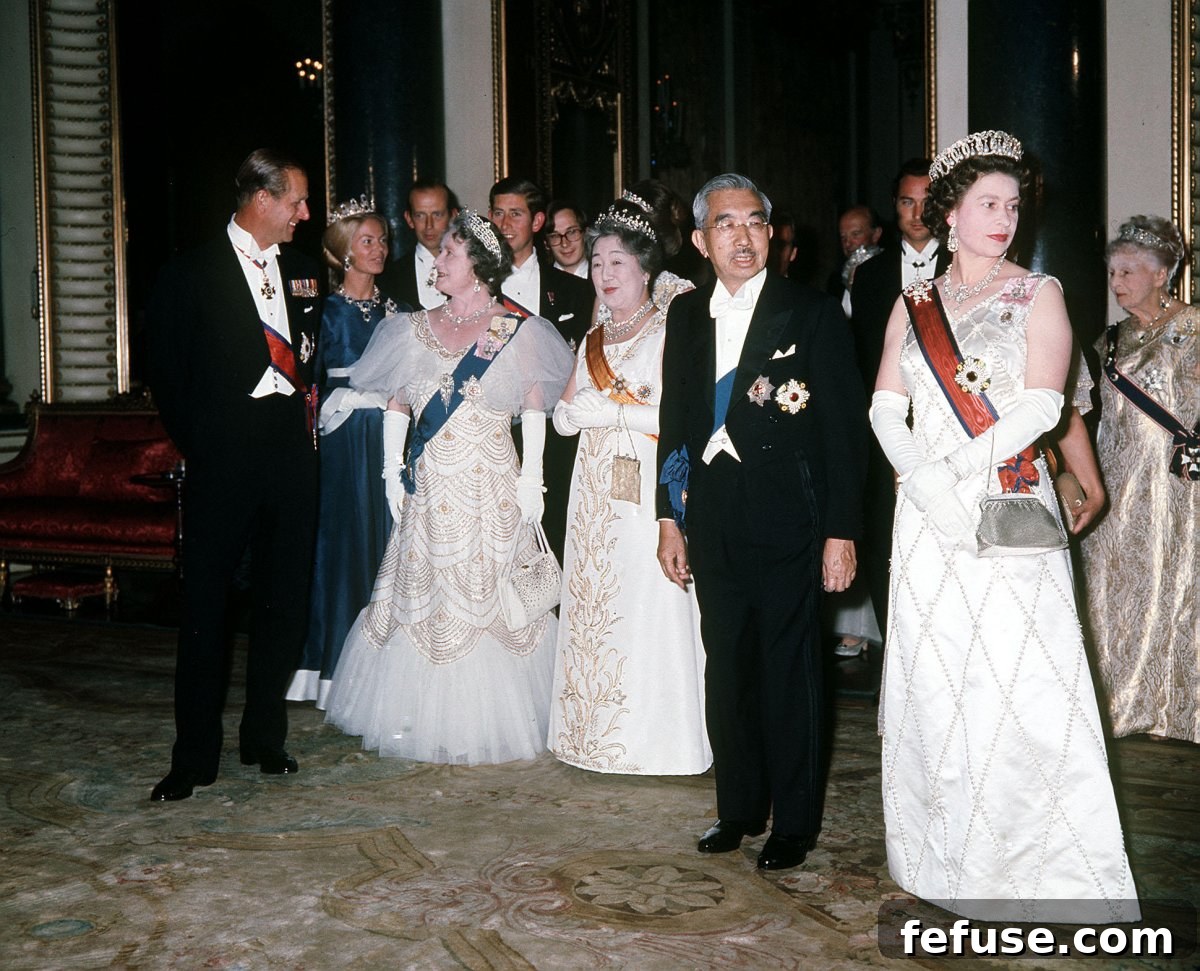
Japanese Imperial Tiaras for British State Visits: Diplomacy and Dazzle
State visits serve as crucial diplomatic instruments, and none were more historically significant than the visit of Emperor Hirohito and Empress Nagako to Britain in October 1971. Hosted by Queen Elizabeth II at Buckingham Palace, this visit was pivotal in the post-World War II healing process between Japan and the United Kingdom, two nations that had been adversaries decades prior. The grandeur of the occasion called for a spectacular display of royal jewels, with Empress Nagako gracing the state banquet in one of the exquisite Japanese imperial tiaras, complemented by a magnificent parure of diamonds and pearls. These glittering adornments were more than mere decoration; they symbolized the enduring strength of the Japanese monarchy and its commitment to international relations. Subsequent state visits have continued this tradition, with Japanese imperial ladies consistently showcasing a stunning array of royal tiaras, each piece a testament to Japan’s rich cultural heritage and its ongoing ties with the global community.
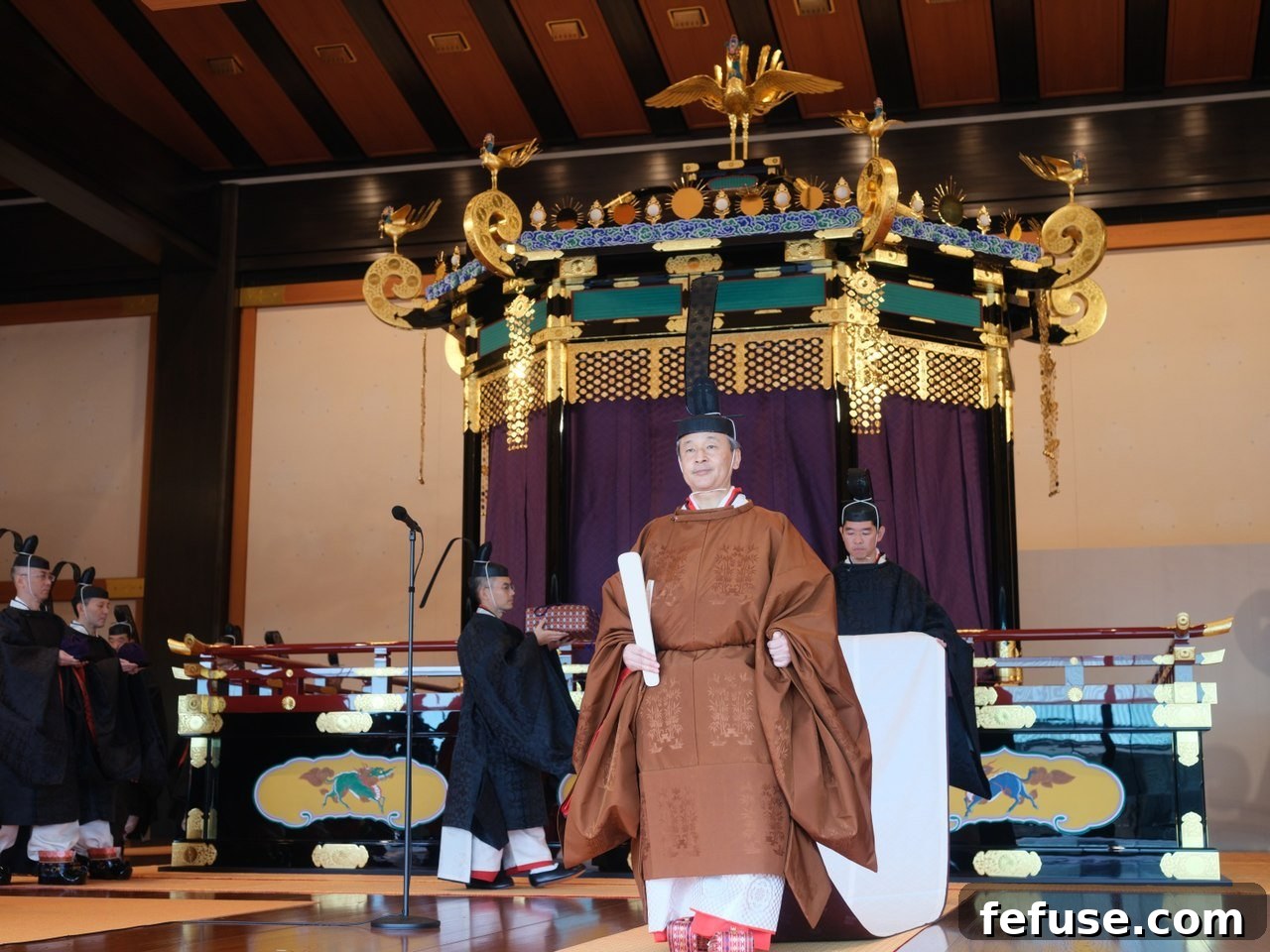
Jewels of Emperor Naruhito’s Enthronement: A New Era Begins
The ascension of Emperor Naruhito to the Chrysanthemum Throne marked a new chapter for the Japanese Imperial Family, following the historic abdication of his father, Emperor Akihito, in May 2019. The formal enthronement rituals, culminating on October 22, 2019, were a magnificent blend of ancient Shinto rites and modern imperial duty. Emperor Naruhito began his official duties with a solemn visit to the Kashikodokoro sanctuary within the Imperial Palace grounds, a sacred act to inform his imperial ancestors and the revered sun goddess Amaterasu-Omikami of his enthronement. These profound ceremonies, while largely private, underscore the spiritual depth of the Japanese monarchy. For the subsequent public-facing events, including parades and court functions, Empress Masako and other imperial princesses presented a resplendent display of imperial jewels, including the grandest tiaras from the imperial collection. These sparkling treasures, passed down through generations, beautifully accentuated the solemnity and splendor of Emperor Naruhito’s formal inauguration, signifying continuity and tradition for the new Reiwa era.
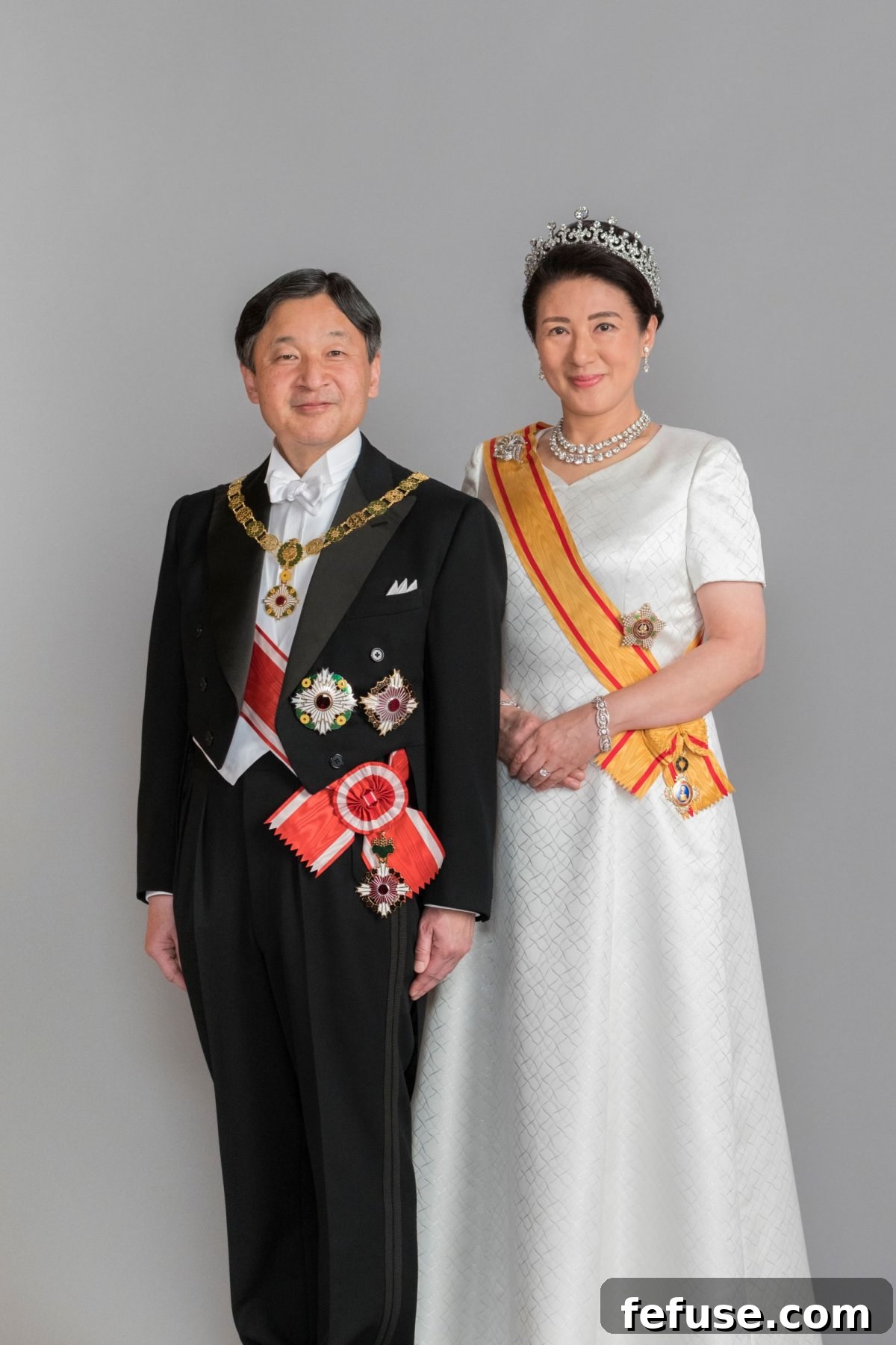
Enthronement Banquet Tiaras at the Imperial Palace in Tokyo: A Royal Spectacle
The enthronement of Emperor Naruhito in October 2019 was not merely a series of ancient rituals but also a grand celebration that brought together royalty and dignitaries from across the globe. Among the most anticipated events were the lavish court banquets, known as Kyoen-no-gi, hosted at the Imperial Palace in Tokyo. These opulent dinners provided a dazzling platform for the Japanese Imperial Family to showcase their magnificent collection of tiaras and other imperial jewels. Empress Masako, making a spectacular appearance, wore a grand diamond tiara, often the Imperial Diamond Tiara, pairing it with a coordinating necklace and earrings. The sight of Japanese imperial ladies alongside their foreign royal counterparts, all adorned in their finest regalia, created an unforgettable tableau of sparkling magnificence. These banquets underscored the global significance of the Japanese monarchy and provided a rare glimpse into the dazzling splendor of one of the world’s most ancient and revered royal houses.
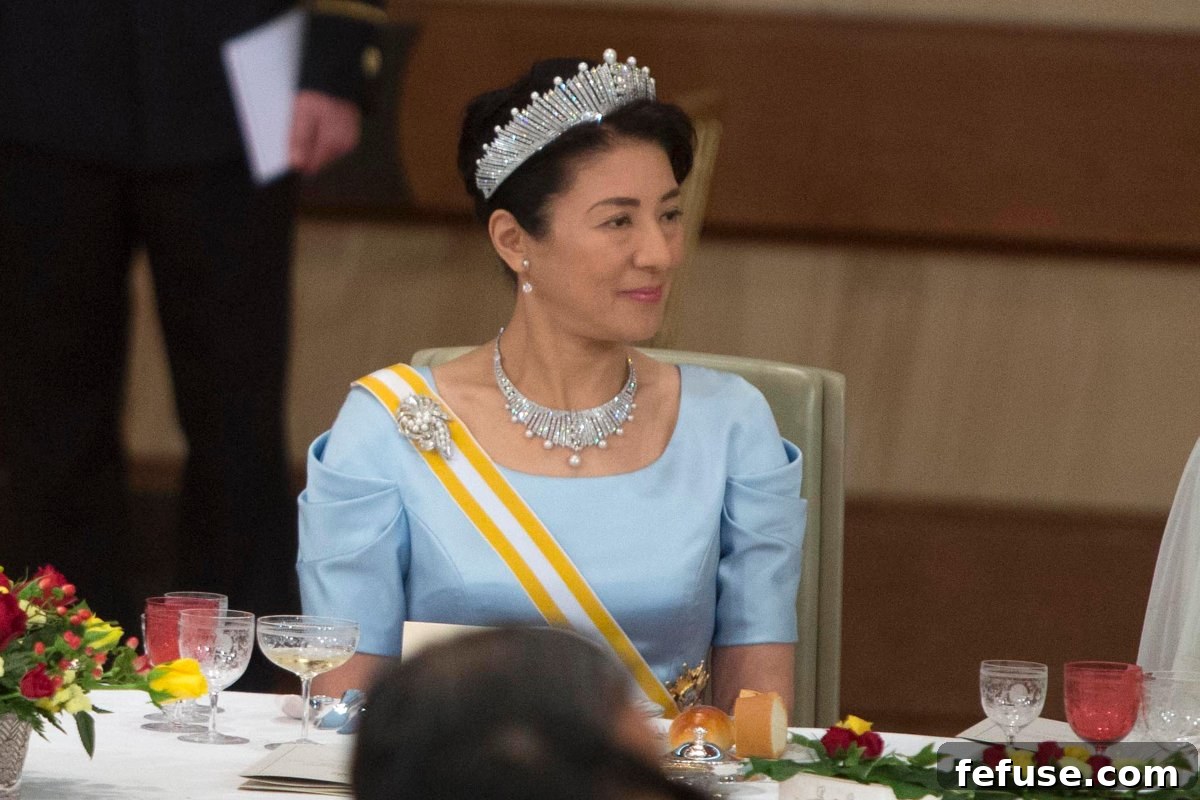
A Glittering Guide to Japan’s Incredible Imperial Tiaras: Jewels of Tradition and Elegance
The Japanese Imperial Family possesses one of the most exquisite and historically significant collections of royal tiaras in the world. These breathtaking jewels are reserved for the most formal and festive gala events, including state banquets, New Year receptions, and official portraits. Each tiara tells a story of craftsmanship, imperial history, and enduring elegance. From the majestic Imperial Diamond Tiara, often worn by the Empress, to the various unique designs belonging to the imperial princesses, these pieces are frequently seen dazzling at important occasions. This glittering guide highlights the distinct styles, materials, and historical significance of these treasured imperial jewels. Whether it’s the elaborate honeysuckle tiara or other convertible diamond pieces, these tiaras represent the majesty and continuity of the Chrysanthemum Throne, showcasing the unparalleled beauty and heritage of Japanese imperial adornment. For enthusiasts of royal jewelry, the sight of these incredible tiaras is always a highlight of the imperial calendar.
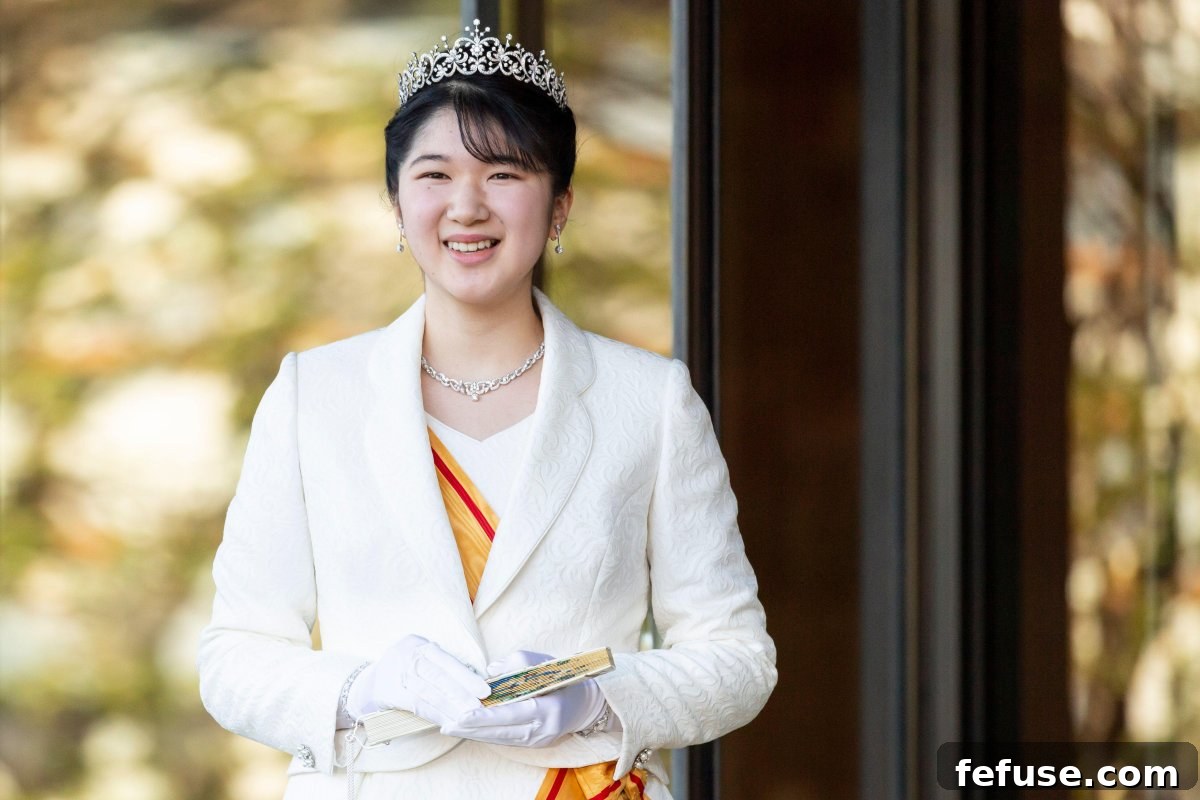
Princess Aiko’s Dazzling Tiara Debut in Tokyo: A Coming-of-Age Milestone
December 5, 2021, marked a significant day for Princess Aiko, the only daughter of Emperor Naruhito and Empress Masako, as she made her highly anticipated official appearance in full formal attire and tiara to celebrate her coming-of-age. Turning 20, Princess Aiko officially began her duties as a fully fledged adult member of the Imperial Family, a moment met with great public interest. For her dazzling debut, Princess Aiko wore a magnificent diamond tiara, a piece not newly created for her, but one traditionally worn by imperial princesses upon reaching adulthood. This particular tiara, part of the imperial collection, features a delicate and elegant design, perfectly complementing the young princess. Her appearance, complete with the sparkling jewels, symbolized her readiness to embrace her royal responsibilities and highlighted the continuity of tradition within the Imperial House of Japan. It was a heartwarming moment, capturing the grace and charm of the next generation of Japanese royalty.
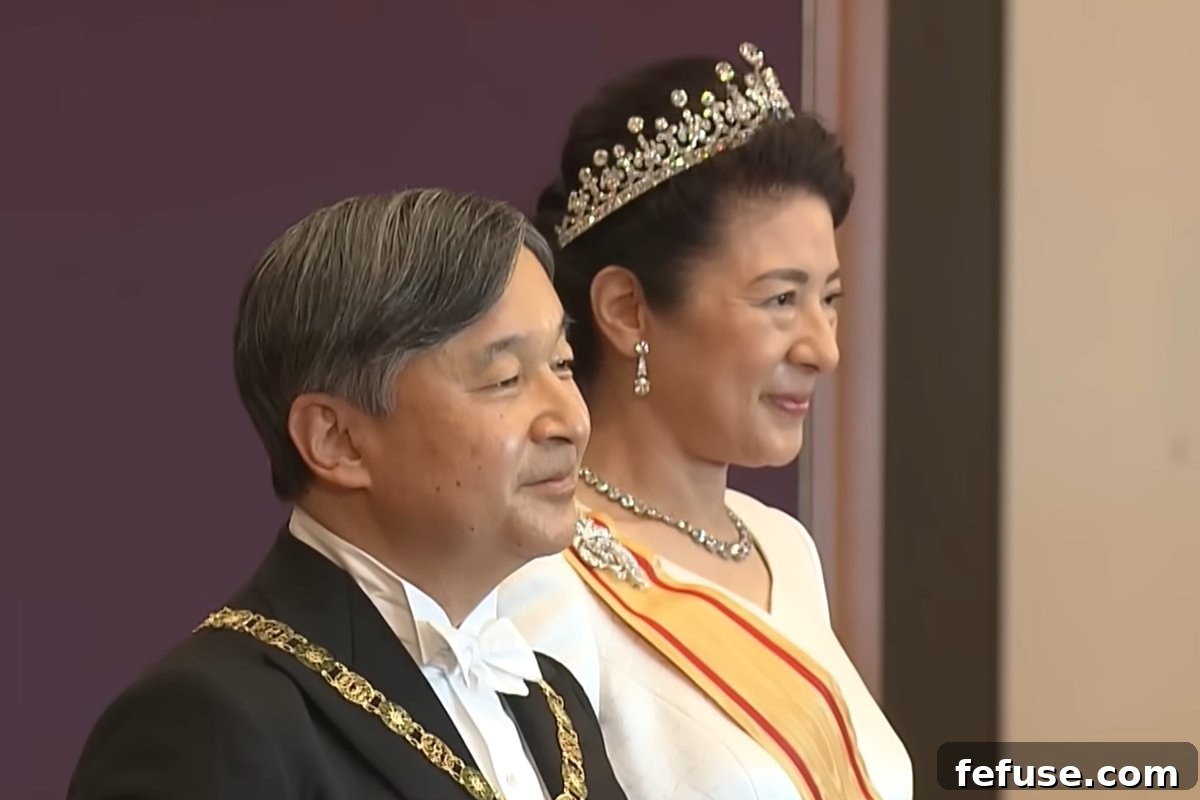
Sparkling Imperial New Year Tiaras Return to Tokyo: A Resplendent Tradition Revived
The annual New Year’s Reception at the Imperial Palace in Tokyo is a cherished tradition, offering a rare glimpse of the Japanese Imperial Family in their most formal attire, adorned with exquisite jewels. For several years, public appearances and the display of grand tiaras during this event were scaled back due to various circumstances, including the global pandemic. However, the return of sparkling imperial New Year tiaras in 2024 was met with widespread joy and enthusiasm, signaling a return to beloved imperial customs. On January 1, 2024, Empress Masako and the imperial princesses once again graced the New Year reception with magnificent diamond tiaras, showcasing the splendor of the imperial collection. Empress Masako, in particular, often wears one of the grandest pieces, drawing admiration for its intricate design and historical significance. These glittering displays are a highlight of the imperial calendar, symbolizing continuity, hope, and the timeless elegance of Japan’s royal heritage as they greet domestic and international guests.
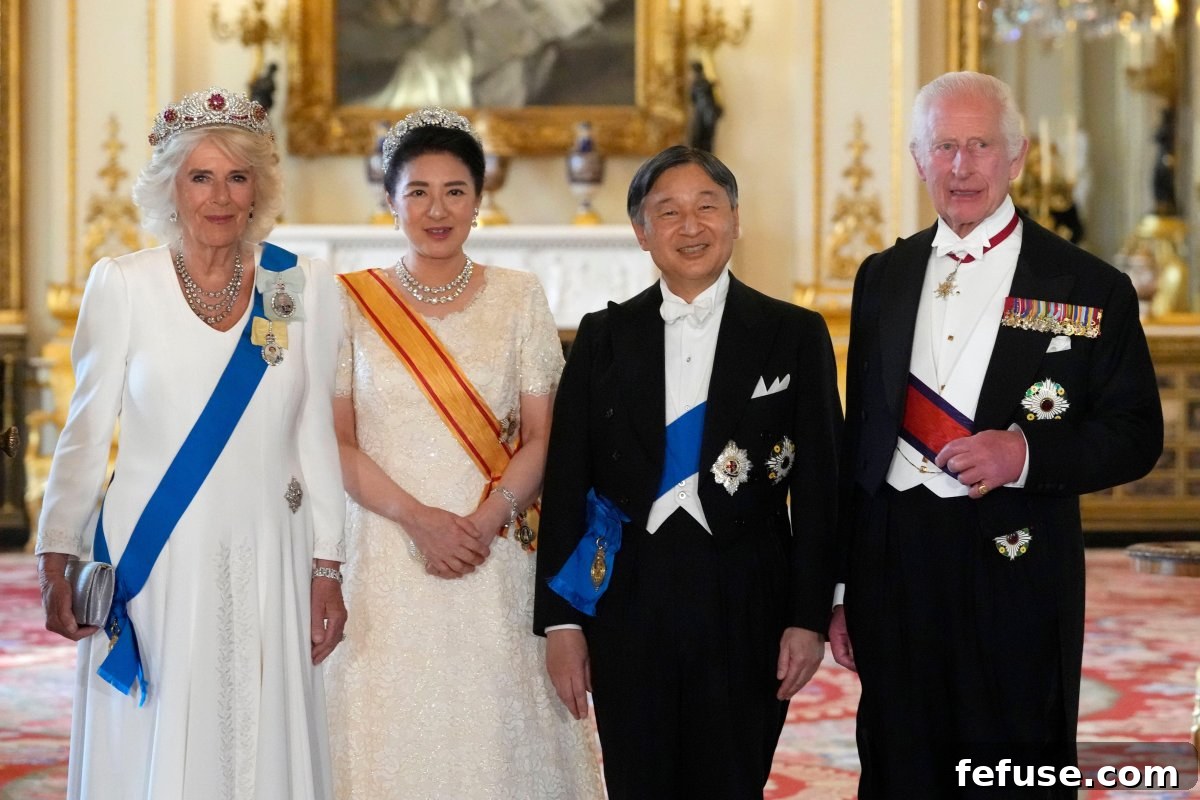
Two Dazzling Tiara Debuts at Buckingham Palace During the Japanese State Banquet: A Historic Sparkle
Royal jewel enthusiasts worldwide rejoiced at the spectacular display of jewels during the Japanese state banquet hosted by King Charles III and Queen Camilla at Buckingham Palace on June 25, 2024. This significant state visit by Emperor Naruhito and Empress Masako to the United Kingdom was a momentous occasion for diplomatic relations and a feast for the eyes of royal observers. The highlight of the evening for many was not one, but two dazzling tiara debuts. Empress Masako, making her first state visit to the UK as Empress, wore a magnificent tiara from the Japanese imperial collection, drawing immense admiration. Additionally, a specific British royal lady also made a highly anticipated tiara debut, adding to the evening’s grandeur. These events underscore the ceremonial importance of state visits and the role of royal jewels in symbolizing national pride, history, and international camaraderie. The exchange of courtesies, adorned with these precious symbols, created an unforgettable evening of historical significance and breathtaking beauty.