
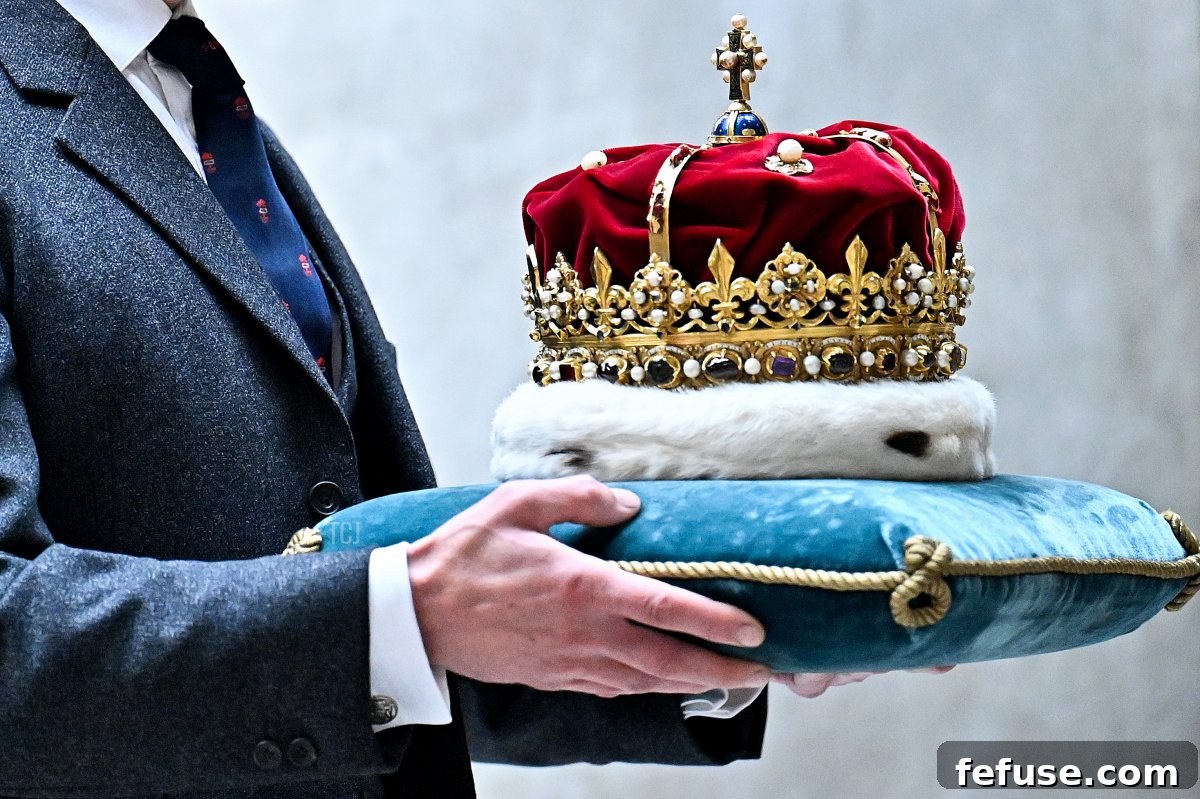
In a momentous celebration steeped in centuries of tradition, King Charles III and Queen Camilla recently participated in a heartfelt service of thanksgiving at the historic St Giles’ Cathedral in Edinburgh. This significant event marked the official presentation of the revered Honours of Scotland to the newly crowned monarch. Among these priceless national treasures is the magnificent Crown of Scotland, a symbol of sovereignty and resilience that stands as one of Europe’s oldest surviving royal crowns. The ceremony, a vibrant fusion of ancient custom and modern respect, underscored Scotland’s unique heritage within the United Kingdom and its enduring connection to the monarchy, captivating audiences both locally and globally.
The Honours of Scotland, comprising the Crown, the Scepter, and the Sword of State, represent the pinnacle of Scottish royal regalia. Each piece carries profound historical weight and has played a central role in the nation’s ceremonial life for hundreds of years. The Crown of Scotland, in particular, is an object of unparalleled beauty and historical significance, reflecting the triumphs and challenges faced by the Scottish monarchy throughout its storied past. Its presence at such a pivotal event serves not only as a visual spectacle but also as a powerful link to a lineage of kings and queens who wore it as a tangible representation of their divine right and their people’s loyalty. This presentation to King Charles III reaffirms the deep respect for Scottish traditions and the continued relevance of these ancient symbols in the modern era.
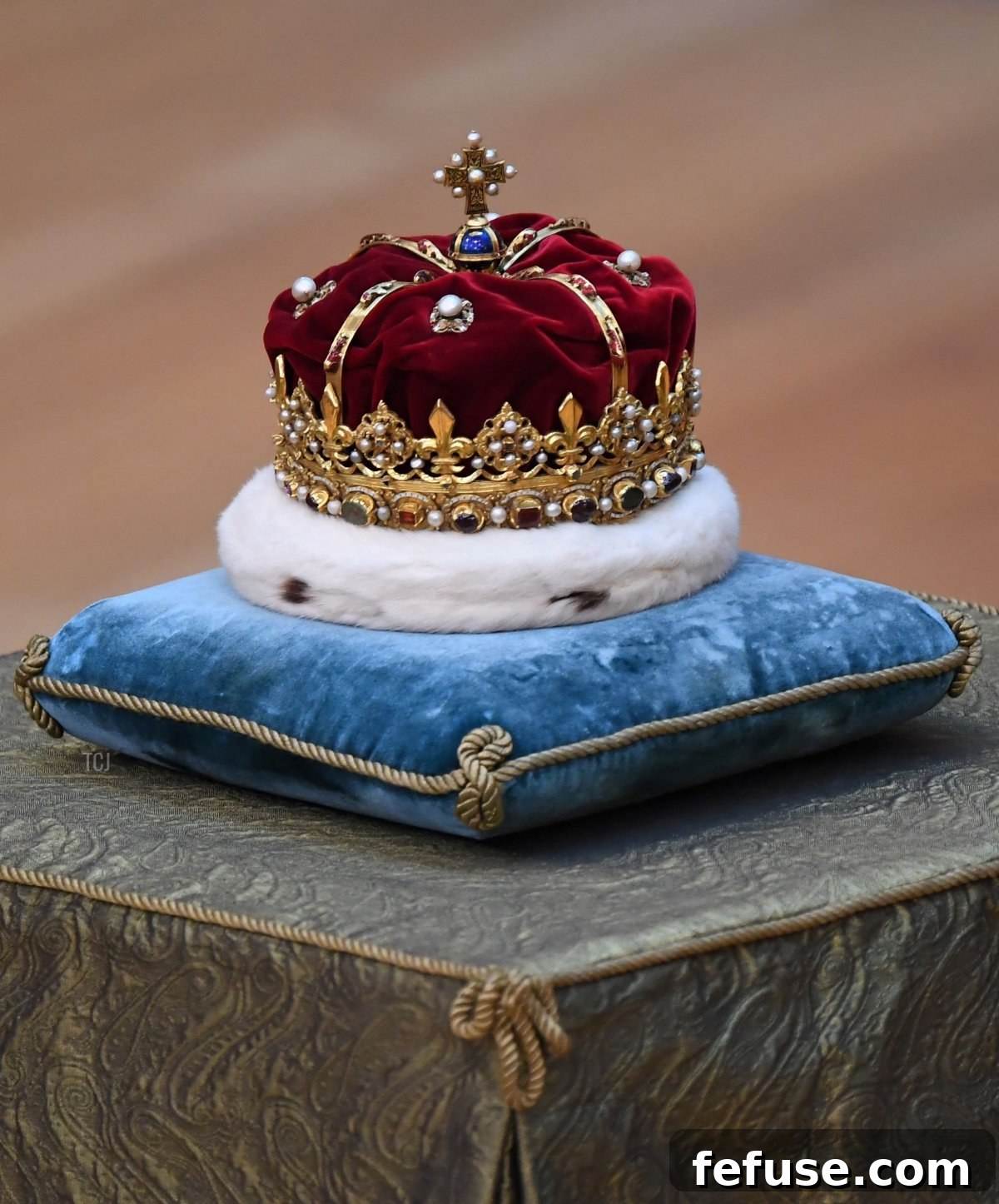
The magnificent Crown of Scotland truly stands as a testament to unparalleled craftsmanship and enduring royal heritage, proudly holding the distinction of being the oldest surviving crown in Britain. While its current form was masterfully crafted in 1540 by John Mosman, the esteemed royal goldsmith of Scotland, its materials boast an even more ancient lineage. Mosman meticulously recycled the gold and precious stones from an earlier, older state crown, infusing the new design with echoes of previous monarchs. This practice of repurposing materials was not uncommon, symbolizing a continuity of power and prestige across generations of Scottish rulers.
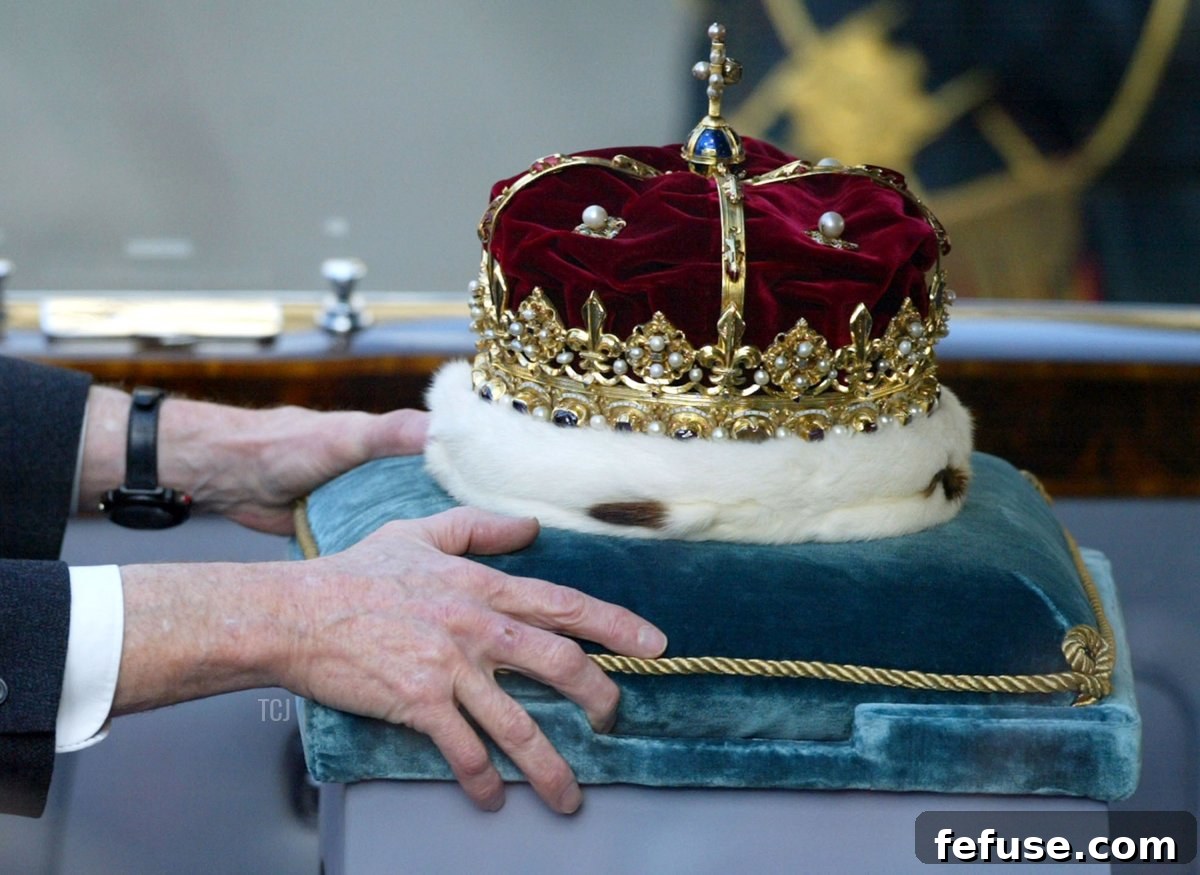
The intricate design of the Crown of Scotland is a study in rich symbolism and opulent detail. The robust base of the crown is fashioned from solid gold, elegantly adorned with alternating elements of fleur-de-lis, representing royalty, and delicate strawberry leaves, often associated with sovereignty. These intricate motifs are further embellished with lustrous pearls, adding a touch of classic elegance. Rising from this majestic base are four graceful gold arches, which converge at a central orb, known as a “monde.” This “monde,” painted a deep blue and intricately decorated with stars, symbolizes the monarch’s dominion over the world, a universal representation of their authority and reach.
Crowning the monde is a meticulously crafted gold and enamel cross, further adorned with exquisite pearls. The entire structure of the crown is studded with an array of additional gemstones, including deep red garnets and shimmering amethysts, each adding to its overall grandeur. A particularly fitting detail is the inclusion of Scottish freshwater pearls, a nod to the nation’s natural beauty and resources, making the crown a truly indigenous masterpiece. These pearls are sourced from the rivers of Scotland, linking the crown directly to the land it represents.
Like many historic royal crowns, the Crown of Scotland features an inner cap, traditionally known as a “bonnet,” designed for both comfort and symbolic significance. This bonnet is fashioned from luxurious velvet and soft ermine fur, materials historically associated with royalty and nobility. Interestingly, the velvet portion of the bonnet was initially purple, a color often linked to imperial power. However, a significant alteration was made when James VII (also known as James II of England) ordered the color to be changed to a striking red. This rich crimson hue has remained a feature of the crown ever since, a vibrant contrast to the gold and gemstones, and a testament to the evolving aesthetics and decrees of Scottish monarchs.
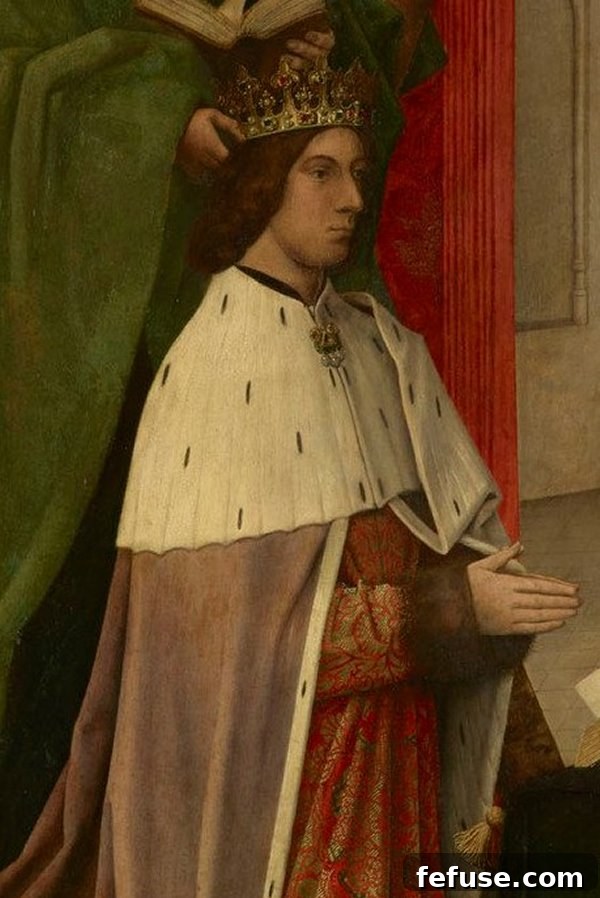
The tradition of Scottish monarchs wearing crowns dates back to the late eleventh century, with depictions evident from the reign of King Edgar. Over the centuries, the tumultuous relationship and frequent conflicts with England often resulted in various Scottish crowns and pieces of regalia being captured or lost. This dynamic history underscores the deep symbolic importance of the surviving Honours. The present Crown of Scotland likely has its origins in an even earlier crown, possibly created for the legendary Robert the Bruce or his son, King David II, figures central to Scotland’s fight for independence. This ancestral crown underwent significant remodeling at least once before King James V, keen to possess a crown befitting his royal status, commissioned John Mosman in 1540. Mosman was instructed to dismantle the older crown, melting down its gold and silver to forge the magnificent new crown we see today, ensuring a continuity of precious materials and historical essence.
Since its creation in 1540, the Crown of Scotland has been central to Scottish coronations, witnessing pivotal moments in the nation’s history. King James V proudly wore his newly crafted crown for the first time during the coronation of his second wife, Marie de Guise, in the same year it was completed. This marked the beginning of a long and illustrious tradition. The crown has either been worn by or prominently displayed during the coronations of numerous other Scottish monarchs, including the iconic Mary, Queen of Scots, in 1543, whose reign was marked by both splendor and tragedy. It also graced the coronations of James VI (who later became James I of England upon the Union of the Crowns in 1603) in 1567, Charles I in 1633, and Charles II in 1651, each event further cementing its status as an irreplaceable national treasure and a powerful emblem of Scottish sovereignty.
One of the most dramatic periods in the Crown of Scotland’s history occurred during the tumultuous interregnum in Britain, a time when Oliver Cromwell led the Commonwealth and sought to dismantle symbols of monarchy. Cromwell, having already ordered the destruction of the English crown jewels, reportedly intended the same fate for Scotland’s revered collection. However, a courageous plan was enacted to safeguard these irreplaceable treasures. The Scottish crown, along with the equally vital sword and scepter, were daringly hidden away, successfully buried out of sight before Cromwell’s forces could locate and destroy them. This act of preservation by loyal Scots ensured the survival of these paramount symbols of national identity during a precarious time.
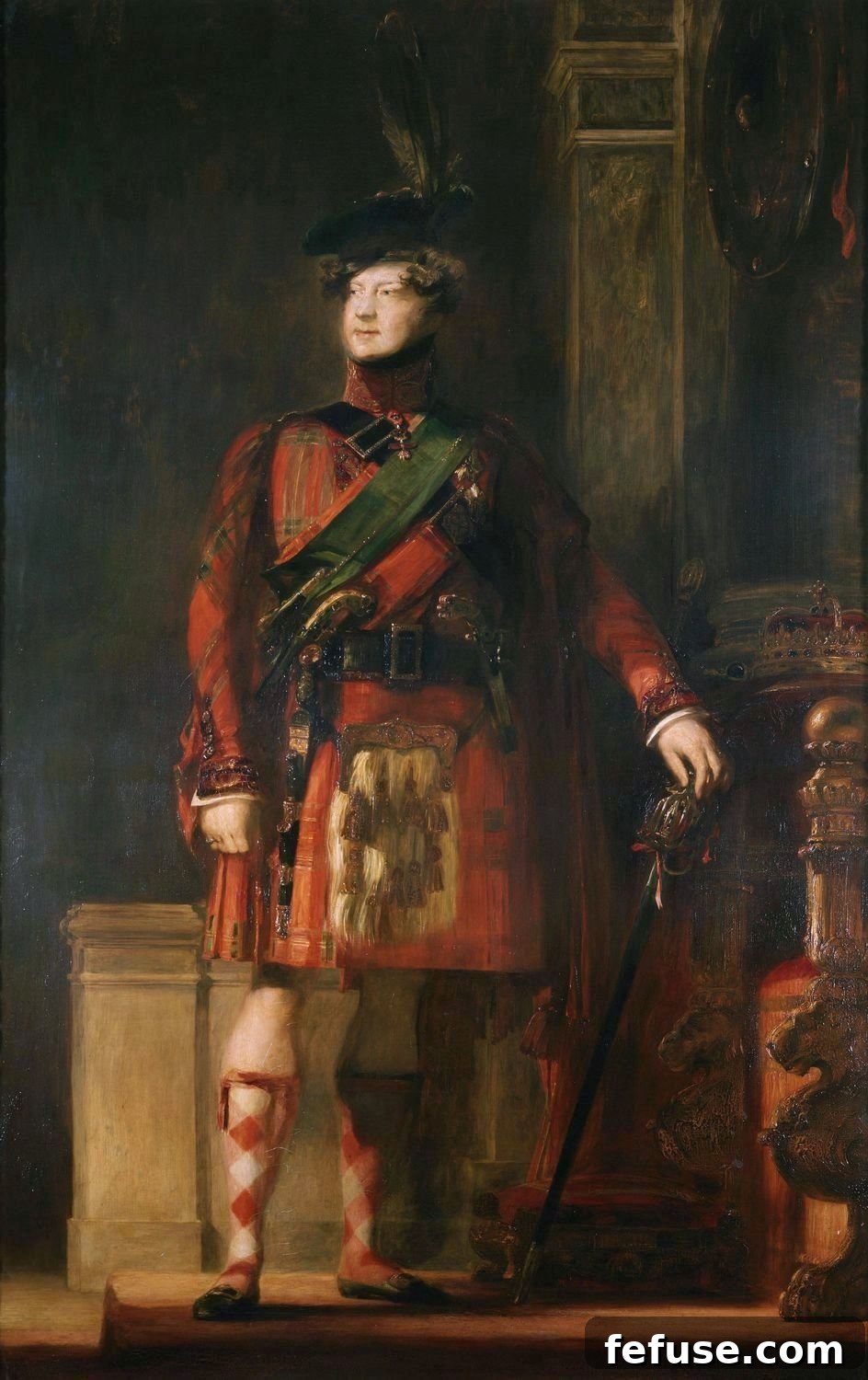
Following the restoration of the monarchy and Scotland’s official union with England to form Great Britain, the Honours were once again secured, though this time for a different reason. They were locked away within the impregnable walls of Edinburgh Castle, placed in a chest and largely forgotten by the public for more than a century. It wasn’t until 1818 that the legendary Scottish novelist and antiquarian, Sir Walter Scott, spearheaded a passionate campaign to locate the whereabouts of the long-lost Scottish crown jewels. His efforts ignited public imagination and national pride, leading to a thorough search within the castle. Four years later, in a moment of great national excitement, the rediscovered Honours of Scotland were presented to King George IV at the Palace of Holyroodhouse during his landmark visit to Scotland in 1822. This visit, orchestrated largely by Scott himself, marked a significant moment of renewed Scottish national identity and reconciliation with the Crown, vividly commemorated in the fantasy portrait above, painted by Sir David Wilkie in 1829, which depicts a kilted George IV alongside the rediscovered crown.
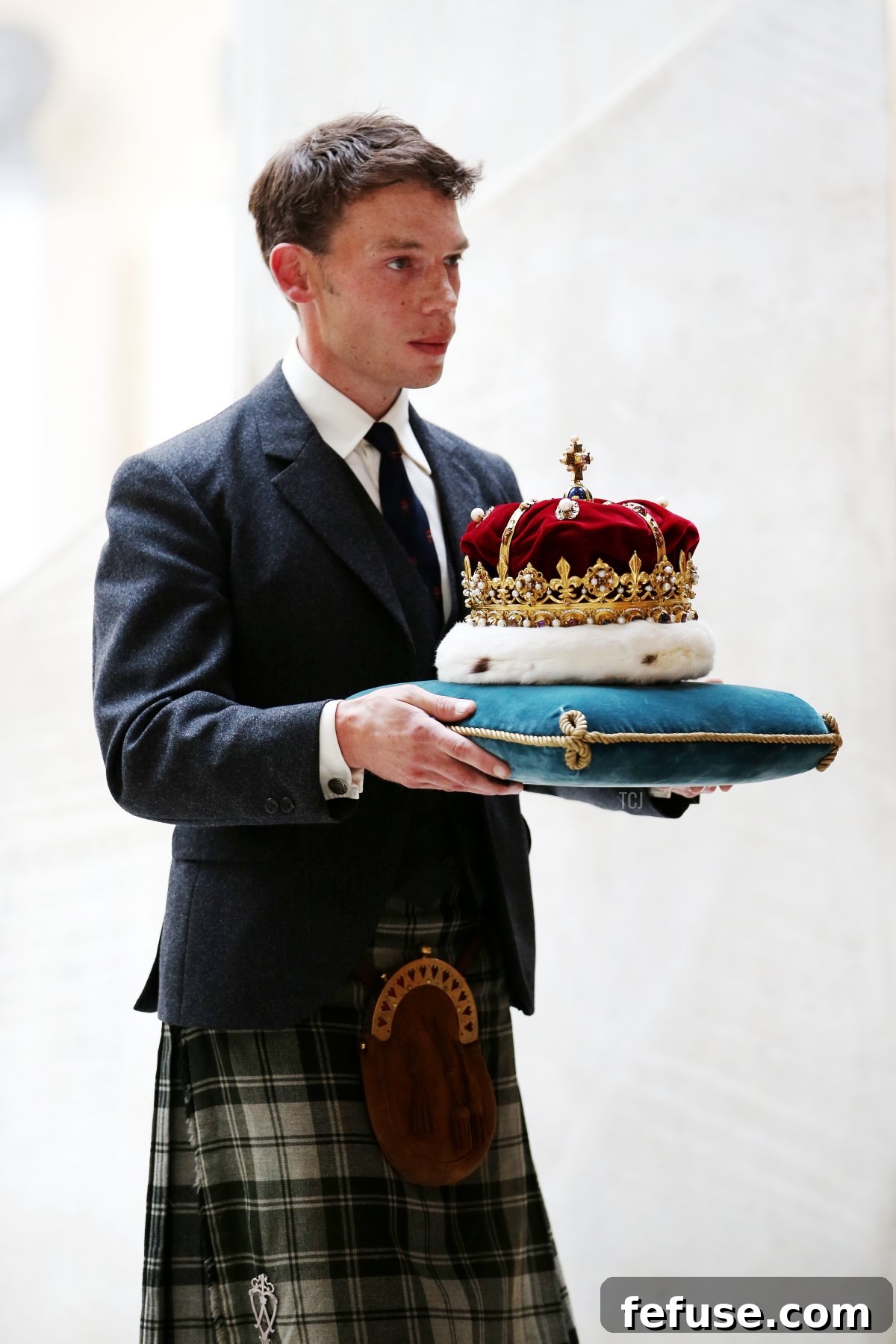
Today, the venerable Crown of Scotland finds its permanent home within the imposing confines of Edinburgh Castle, where it is typically held on public display in the dedicated Crown Room. This allows countless visitors to witness its grandeur and connect with Scotland’s royal past. However, on select special occasions, this revered piece of regalia is brought forth from the castle’s protective walls. Most of these significant public appearances are linked to ceremonies involving the Scottish Parliament, most notably during the annual opening of parliamentary sessions. These events are not only important for their political significance but also for the powerful visual representation of Scotland’s distinct governance and heritage.
A crucial and historically rich aspect of these ceremonial movements is the role of the “Hereditary Crown Bearer.” This esteemed position is traditionally held by the Duke of Hamilton, a noble title with deep roots in Scottish history. The current occupant of this distinguished office is Alexander Douglas-Hamilton, the 16th Duke of Hamilton and 13th Duke of Brandon. His role is not merely ceremonial; it is a living link to a centuries-old tradition, symbolizing the enduring relationship between the Scottish nobility and the nation’s most precious symbols of sovereignty. The sight of the Duke of Hamilton carefully carrying the Crown of Scotland through the historic streets of Edinburgh or within the Parliament building is a powerful reminder of Scotland’s rich and unbroken historical narrative.
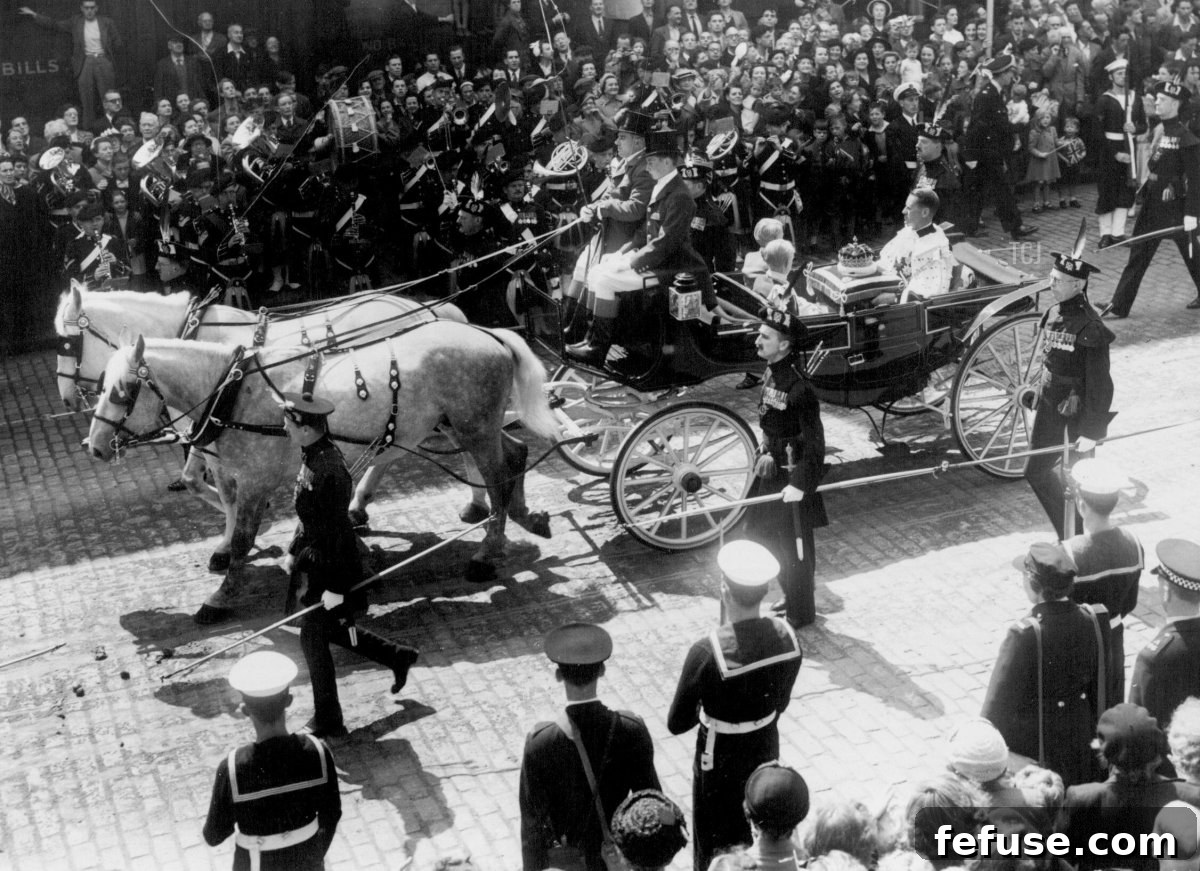
Alexander Douglas-Hamilton assumed the prestigious role of Hereditary Crown Bearer in 2010, following the passing of his father, Angus Douglas-Hamilton, the 15th Duke of Hamilton and 12th Duke of Brandon. This succession highlights the deeply ingrained hereditary nature of this significant ceremonial duty. Before Angus, it was his father, Douglas Douglas-Hamilton, the 14th Duke of Hamilton and 11th Duke of Brandon, who had the distinct honor of carrying the Crown of Scotland during the last national service of thanksgiving for a coronation at St Giles’ Cathedral. This momentous occasion took place on June 24, 1953, celebrating the coronation of Queen Elizabeth II. The image above vividly captures the 14th Duke, with the revered crown in his charge, participating in a grand procession along Edinburgh’s historic Royal Mile, a route steeped in centuries of royal pageantry. This intergenerational continuity of the Duke of Hamilton’s role underscores the enduring traditions that bind Scotland’s history to its present.
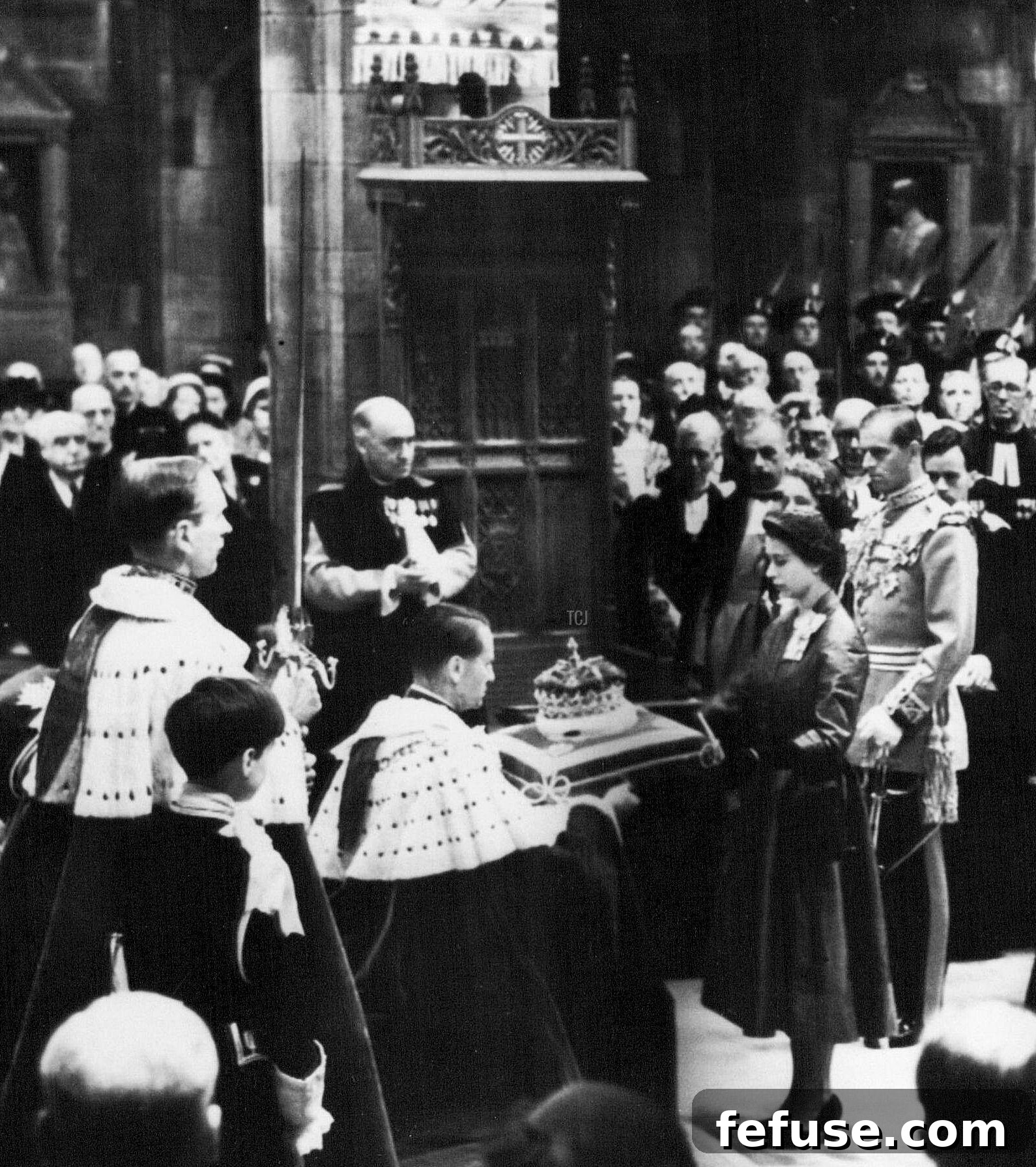
During the solemn yet celebratory service of thanksgiving in 1953, the 14th Duke of Hamilton formally presented the Crown of Scotland to Queen Elizabeth II, as she officially received the Honours of Scotland. This ceremony was a powerful acknowledgment of Scotland’s distinct constitutional relationship with the Crown. Contemporary reports from the time vividly described the atmosphere. The Guardian’s special correspondent noted that the service unfolded “in brilliant sunshine,” adding to the celebratory mood of the day. The Daily Record, capturing the essence of Scottish sentiment, described the proceedings inside the cathedral as “simple, straightforward, as Scotland likes these things,” emphasizing a preference for authenticity over excessive pomp. The Associated Press provided a detailed account, reporting, “A radiant Queen Elizabeth II received the ancient crown of Scotland at a solemn ceremony Wednesday, but she didn’t wear it. At St Giles’ Cathedral, where she was the central figure in a national service of thanksgiving and dedication, she held the crown for a moment, then handed it back to the robed Duke of Hamilton.” This gesture of holding rather than wearing the crown symbolically recognized her role as monarch of Scotland while also respecting the distinct identity of the Scottish Honours, which have their own unique historical protocols.
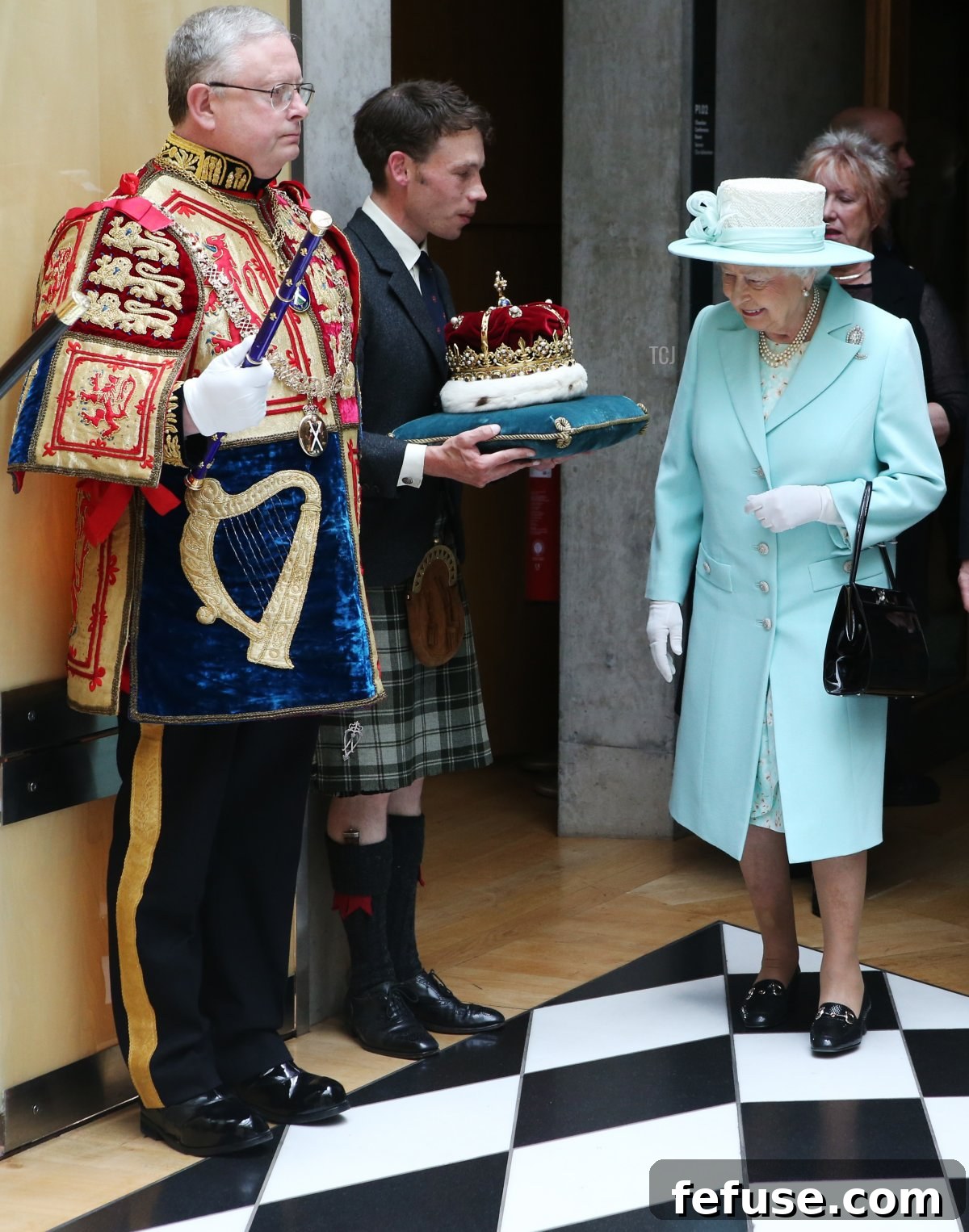
Throughout her remarkable 70-year reign, Queen Elizabeth II had numerous occasions to encounter the historic Crown of Scotland, underscoring its constant presence as a symbol of Scottish identity within the broader United Kingdom. These encounters were not mere formalities; they represented the deep respect she held for Scotland’s distinct heritage and traditions. Above, a poignant image from July 2016 captures Her Majesty glancing thoughtfully at the crown. On this particular occasion, during the opening of Scotland’s parliamentary session, the crown was held by the current Duke of Hamilton, Alexander Douglas-Hamilton, who is the grandson of the very man who presented the Honours to her during her coronation year service in 1953. This interaction between the Queen and the hereditary bearer, with the ancient crown as their focal point, beautifully illustrates the ongoing narrative of monarchy, tradition, and the enduring spirit of Scotland.
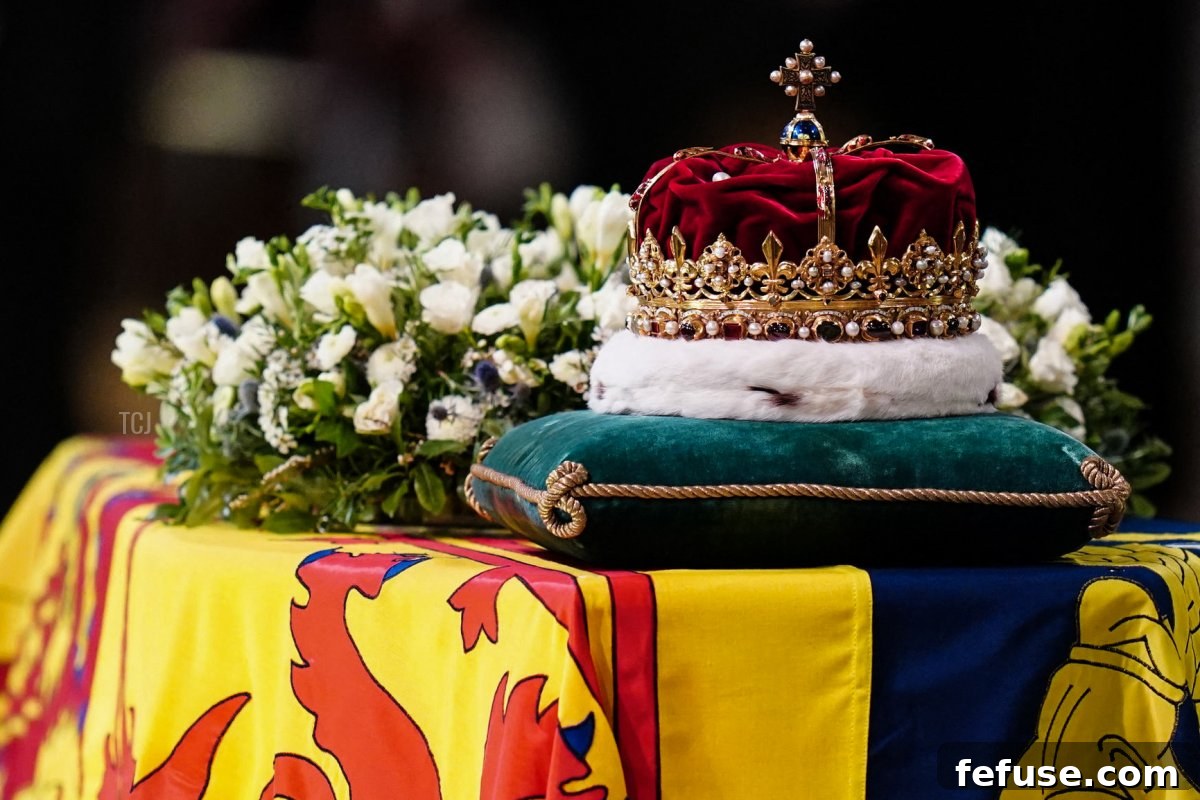
Most recently, the world witnessed the profound and moving sight of the Crown of Scotland majestically resting atop the coffin of Queen Elizabeth II. This solemn moment occurred as she lay in state inside the venerable St Giles’ Cathedral in Edinburgh on September 12, 2022. Her passing at Balmoral Castle in the Scottish Highlands provided a unique and deeply personal opportunity for the people of Scotland to bid a magnificent and heartfelt farewell to their beloved monarch on their own soil. The presence of the ancient crown on her coffin in Edinburgh was not merely ceremonial; it was a powerful symbol of the profound connection between the Queen, the Scottish nation, and its enduring history. It underscored her deep affection for Scotland and allowed for a period of national mourning and remembrance that resonated deeply with the Scottish people before her final journey south to England.
Now, the spirited people of Scotland once again extend a warm and grand welcome to their newly crowned monarch, King Charles III. This reception is marked by a magnificent procession that traces its path along the historic Royal Mile, leading to a deeply significant service of thanksgiving held within Edinburgh’s iconic St Giles’ Cathedral. Joining King Charles and Queen Camilla for this pivotal service are the Duke and Duchess of Rothesay, titles by which the Prince and Princess of Wales are known when in Scotland, further emphasizing the Royal Family’s respect for Scottish traditions. During this memorable ceremony, the complete Honours of Scotland, prominently featuring the spectacular Crown of Scotland, are once more formally presented to the monarch. This event not only celebrates King Charles III’s ascension but also reinforces the rich tapestry of Scottish royal history and its unwavering place in the heart of the nation. It serves as a powerful testament to the enduring bond between the Scottish people, their ancient symbols of sovereignty, and the continuity of the monarchy.