The Dazzling Legacy: A Comprehensive Guide to Belgian Royal Tiaras
As Belgium celebrates its National Day, there’s no better occasion to delve into the captivating world of the nation’s royal jewelry. The Belgian Royal Family boasts an exquisite collection of tiaras, each a masterpiece of design, history, and profound significance. These sparkling heirlooms not only adorn queens and princesses but also tell tales of generations, momentous occasions, and the intricate artistry of renowned jewelers. Join us on a magnificent journey through the most cherished tiaras in the Belgian royal vaults, exploring their origins, unique features, and the remarkable women who have worn them.
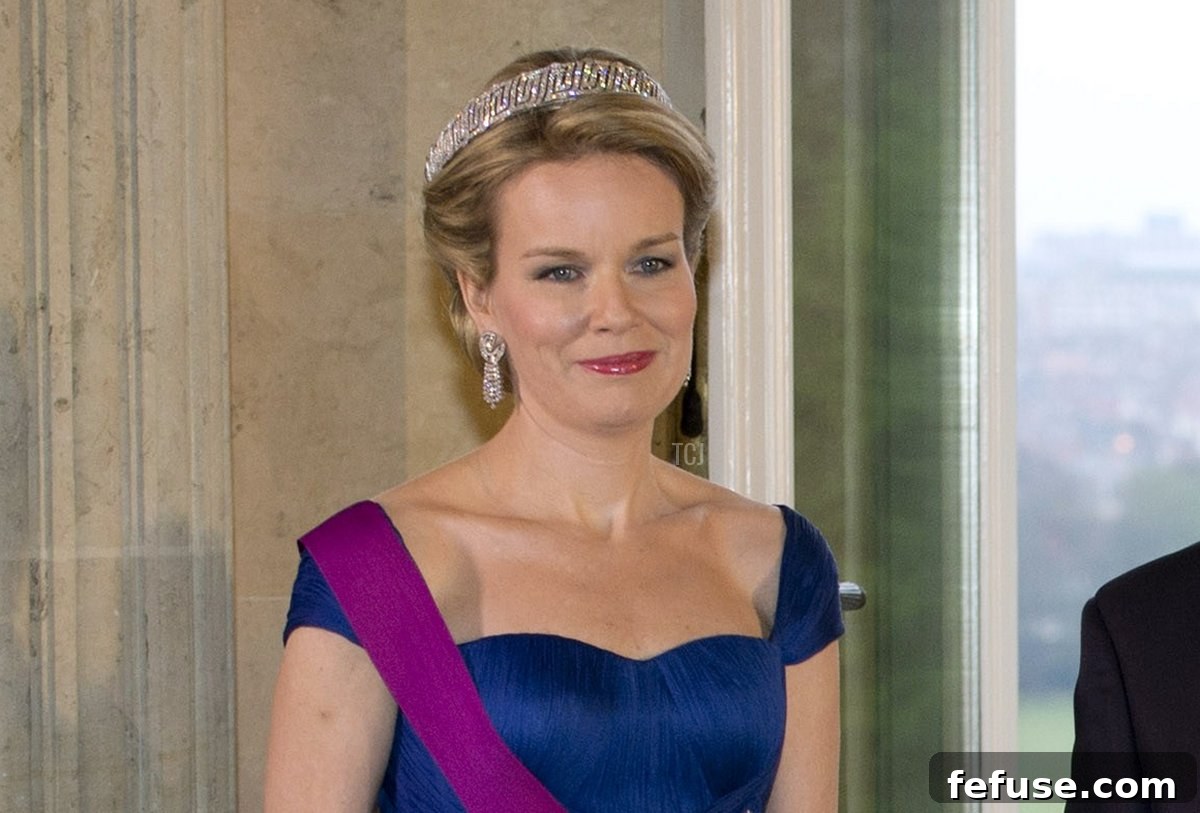
The collection showcases both grandeur and personal sentiment, ranging from state gifts symbolizing national unity to treasured family heirlooms passed down through the generations. Each piece holds a unique place in the monarchy’s story, reflecting evolving styles and personal tastes while continuing to dazzle at significant royal events. From Queen Mathilde’s most frequently worn pieces to the intriguing mysteries of lost jewels, these tiaras offer a glittering glimpse into Belgium’s royal heritage.
Queen Mathilde’s Royal Adornments: A Crown for Every Occasion
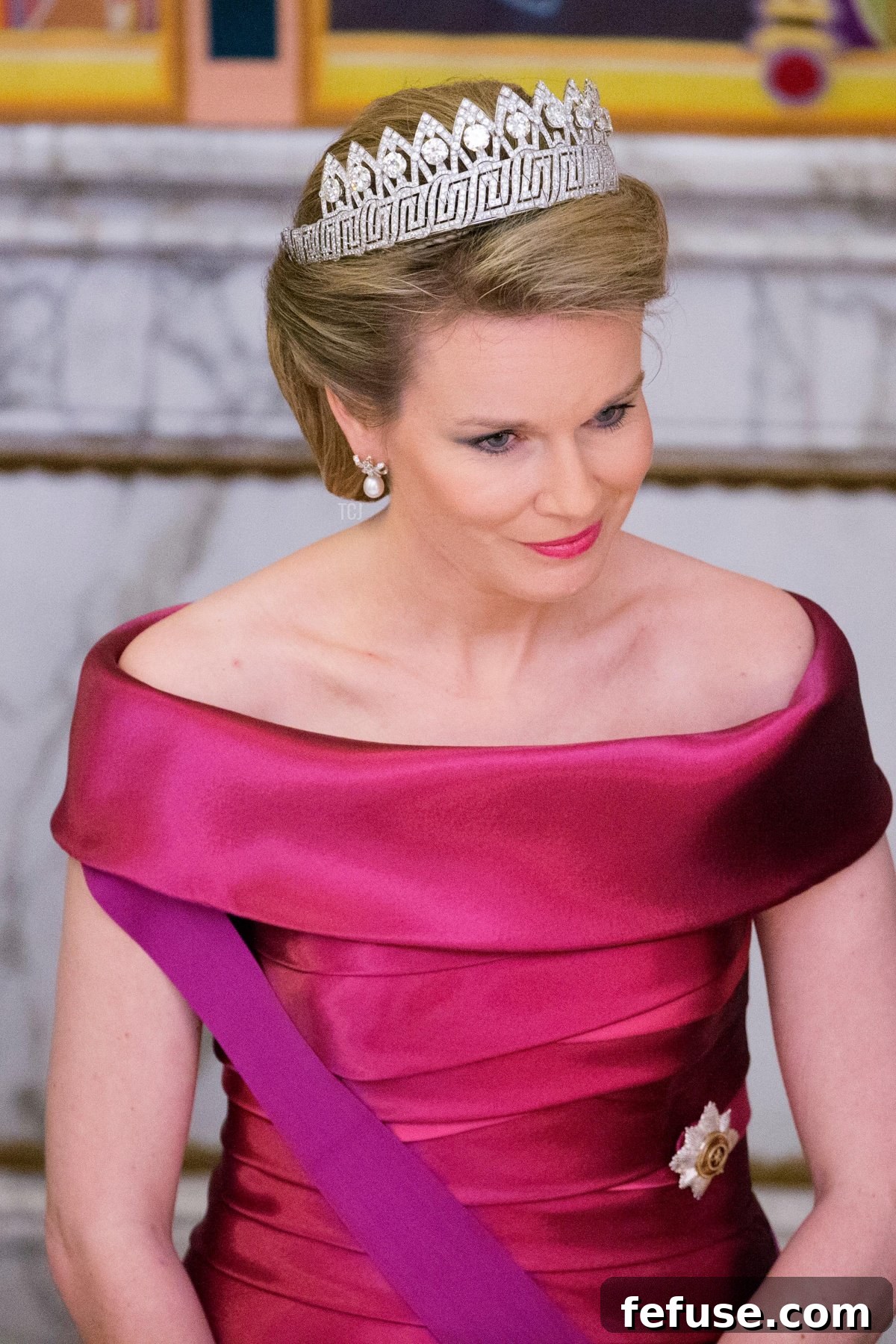
The Nine Provinces Tiara: A Symbol of National Unity
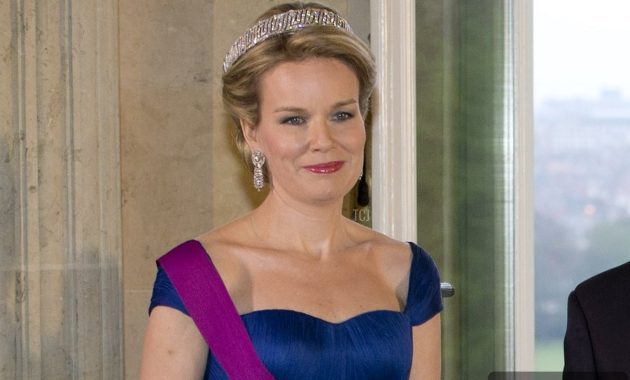
Undoubtedly the most magnificent and historically significant diadem within the Belgian royal collection is the Nine Provinces Tiara. Crafted in 1926 by the esteemed jeweler Van Bever, this breathtaking piece was bestowed upon Queen Astrid as a wedding gift by the very people of Belgium, symbolizing the unity of the nation’s then-nine provinces. Its design is a testament to extraordinary craftsmanship, featuring a flexible base adorned with large, brilliant-cut diamonds, surmounted by individual diamond elements representing each province. The tiara is renowned for its remarkable versatility; it can be worn in a variety of impressive configurations, from its full majestic form to a smaller bandeau, and even transforms elegantly into a resplendent necklace. Queen Mathilde, the current wearer, frequently chooses this tiara for major state occasions and royal galas, signifying its prominence and the weight of its history. She is pictured here wearing the full jewel in all its glory at the lavish 75th birthday celebrations for Queen Margrethe II of Denmark in April 2015, where its brilliance truly shone amongst European royalty.
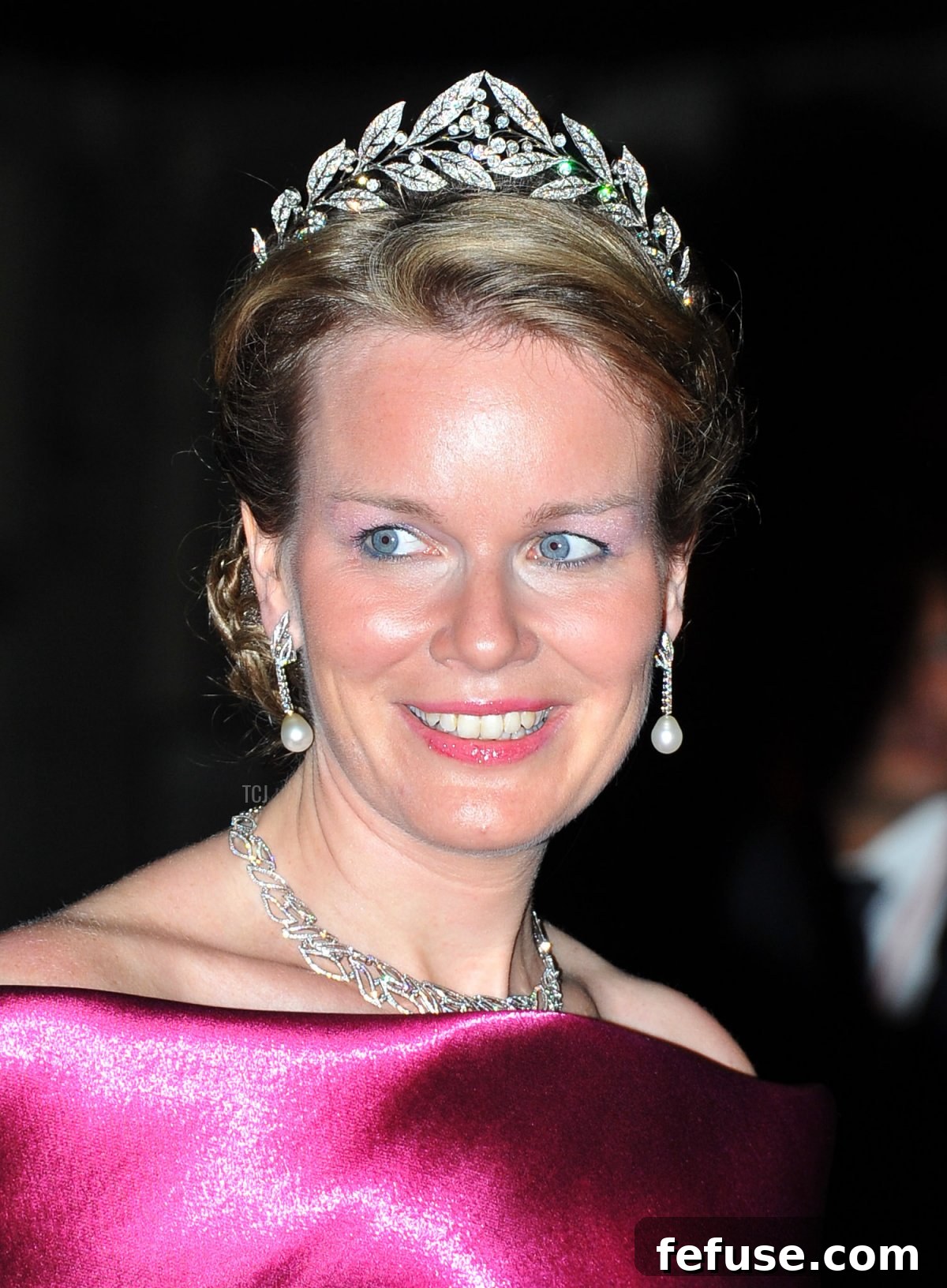
The Brabant Laurel Wreath Tiara: A Personal Emblem
Queen Mathilde’s second primary tiara, the Brabant Laurel Wreath Tiara, holds a more personal significance, as it belongs to her personally. This exquisite jewel was presented to her as a wedding gift in 1999 by a distinguished group of Belgian aristocrats, celebrating her entry into the royal family. While gifted in recent times, the tiara itself boasts a much older lineage, being an antique diamond piece crafted in 1912 by the renowned British firm Hennel and Sons. Its design features delicate diamond laurel wreaths, elegantly intertwined, symbolizing victory and honor. Like many versatile royal jewels, this tiara is also convertible and can be worn as a striking necklace, offering Mathilde flexibility in her royal ensembles. She is famously seen wearing this tiara at the princely wedding reception in Monaco in July 2011, an event that gathered royalty from across Europe, where its understated elegance perfectly complemented the festive atmosphere.
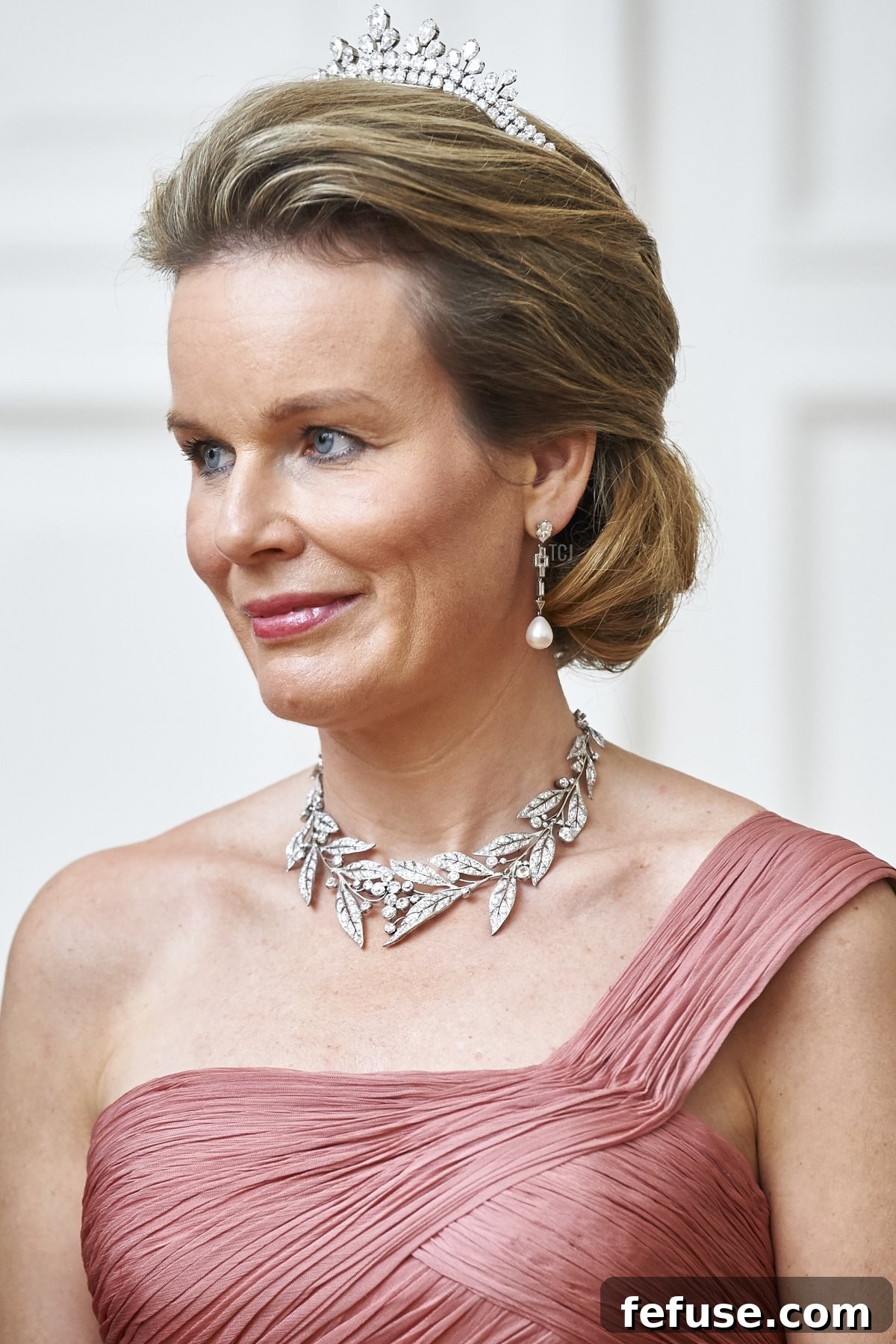
The Wolfers Tiara: A Diamond Industry Gift
Adding to her dazzling collection, Queen Mathilde is also the current wearer of a fantastic and intricately sparkling jewel known as the Wolfers Tiara. This piece originated from the revered collection of the late Queen Fabiola. Fabiola received this convertible necklace/tiara as a splendid wedding gift in 1960, presented by the diamond industry of Antwerp, a testament to Belgium’s rich diamond heritage. Despite its seemingly petite stature, the tiara is packed with an astounding brilliance, featuring more than 200 exquisite diamonds meticulously set to maximize their sparkle. Its delicate, almost lacelike design makes it a versatile favorite. Mathilde has gracefully worn it in both its tiara and necklace configurations, demonstrating its adaptability for various formal occasions. A memorable instance of its wearing was during an official royal visit to Poland in October 2015, where its subtle yet undeniable shimmer added a touch of refined glamour to her diplomatic attire, showcasing its enduring elegance.
Historic Tiaras & Family Heirlooms: A Glimpse into Royal Lineage
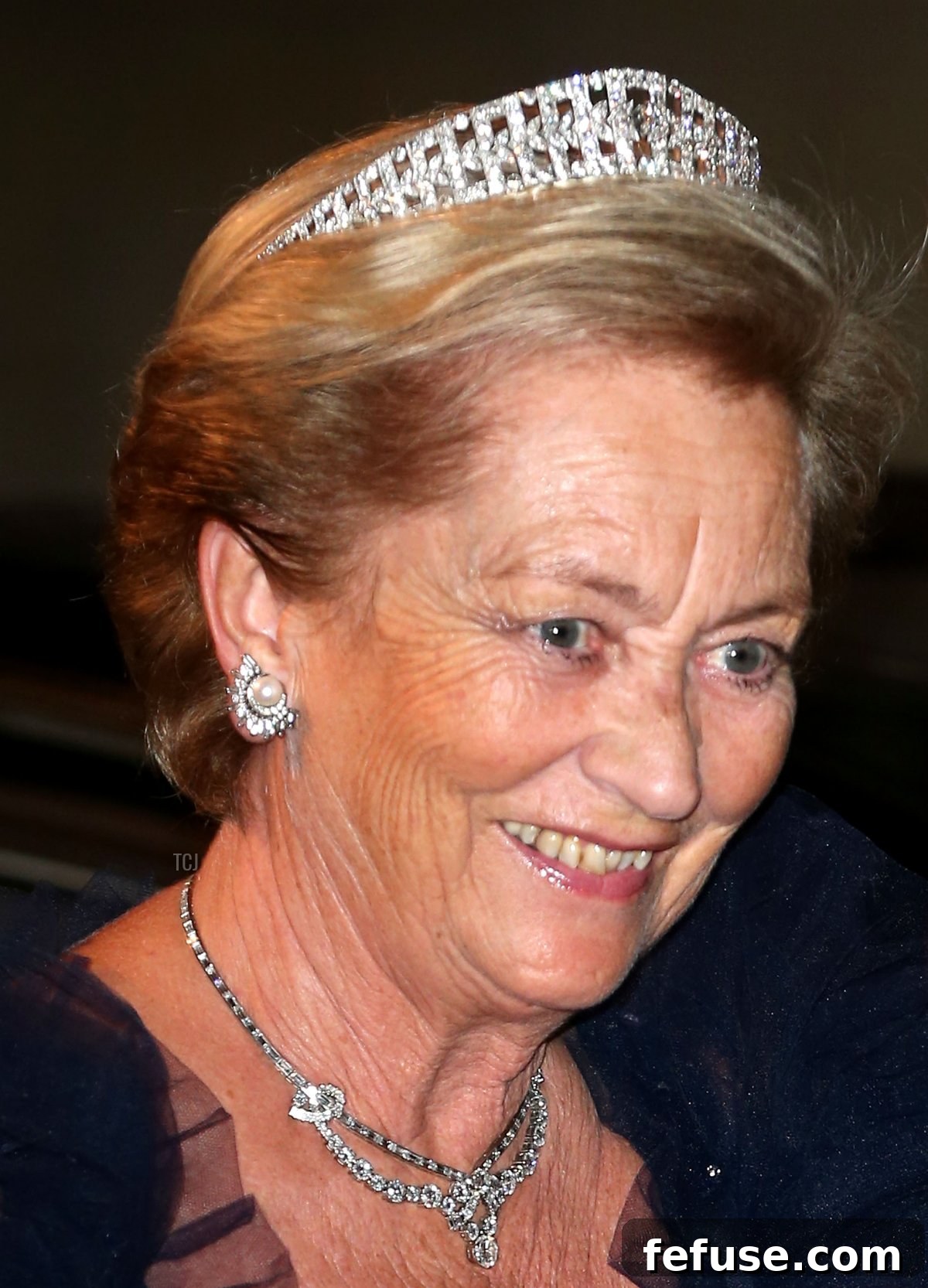
Queen Elisabeth’s Art Deco Bandeau: A Geometric Masterpiece
Queen Paola of Belgium holds ownership of another magnificent Belgian royal heirloom, Queen Elisabeth’s Art Deco Bandeau. This striking geometric sparkler, characterized by its clean lines and sophisticated design, was likely crafted in the early decades of the 20th century, a period celebrated for the emergence of the Art Deco style. It originally graced the head of Queen Elisabeth of Belgium, a figure known for her avant-garde taste. Queen Paola received this precious tiara from her father-in-law, King Leopold III, and for over six decades, it has remained her favored choice for numerous grand events, a true testament to its timeless appeal. The photograph captures her wearing it with regal poise during the celebrations of the royal wedding in Luxembourg in October 2012. In recent years, demonstrating its enduring status as a versatile family jewel, Queen Paola has graciously loaned it to other members of the royal family, including Queen Mathilde, Princess Astrid, and most notably, the young Princess Elisabetta, allowing new generations to appreciate its historical beauty.
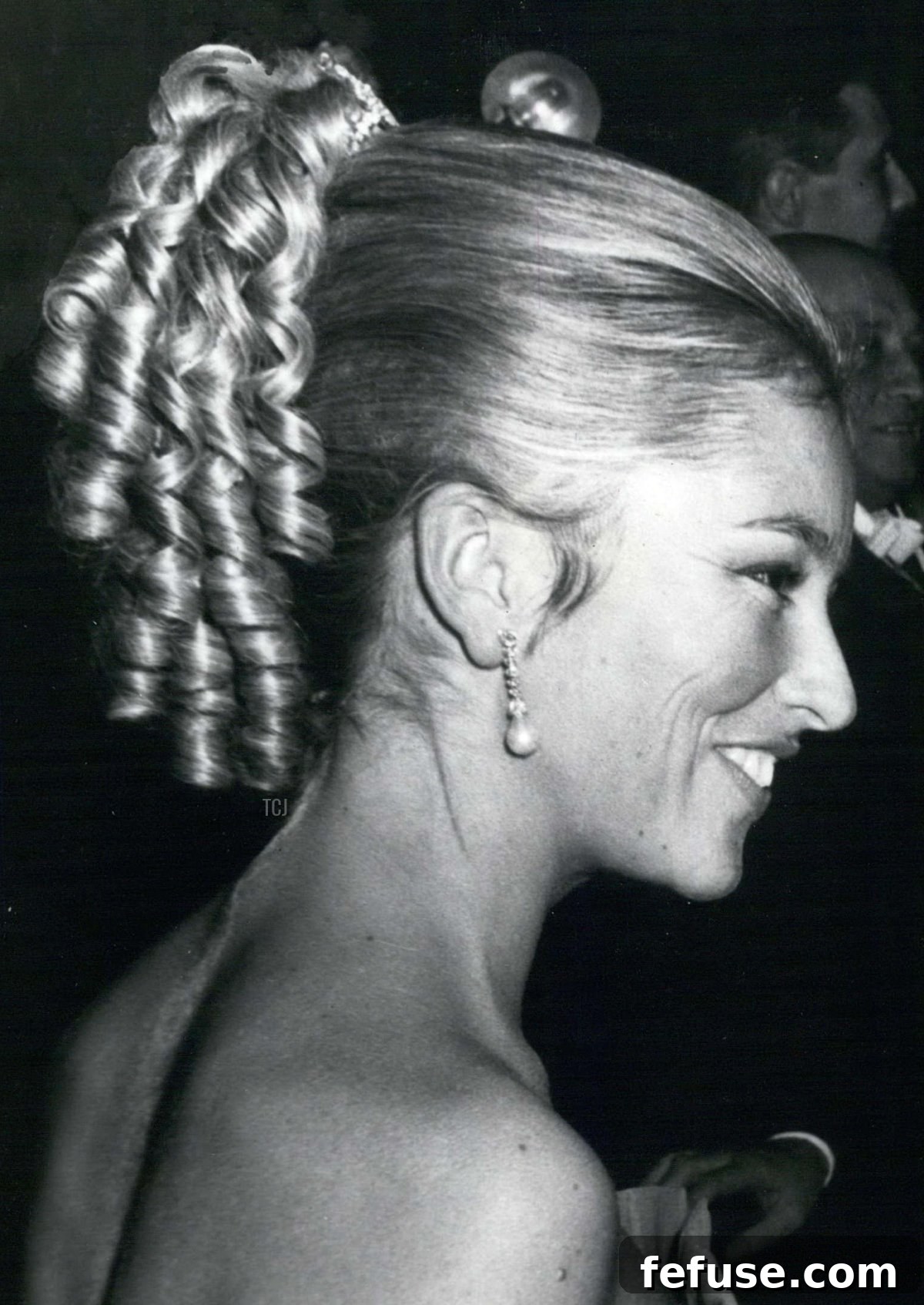
Queen Paola’s Diamond Necklace Tiara: Subtle Elegance
Beyond her more prominent pieces, Queen Paola also occasionally embraced a more understated elegance by wearing one of her versatile diamond necklaces as a delicate tiara. While it might be subtle in some photographs, this practice was particularly noticeable during the 1960s, a period when smaller, more adaptable jewels gained popularity. The piece in question is a slender, Y-shaped diamond necklace, designed with an intricate flow that forms a graceful, pointed peak when cleverly arranged and worn in its tiara configuration. This unique design allowed for an adaptable jewel that could transition effortlessly between different royal occasions, reflecting a blend of classic design and practical elegance. Queen Paola is depicted wearing this charming tiara setting here at a distinguished royal reception in October 1967, showcasing how a well-designed necklace could serve a dual purpose as a captivating headpiece, adding a gentle sparkle without overwhelming her ensemble.
The Next Generation: Princess Elisabeth’s Sparkling Debut
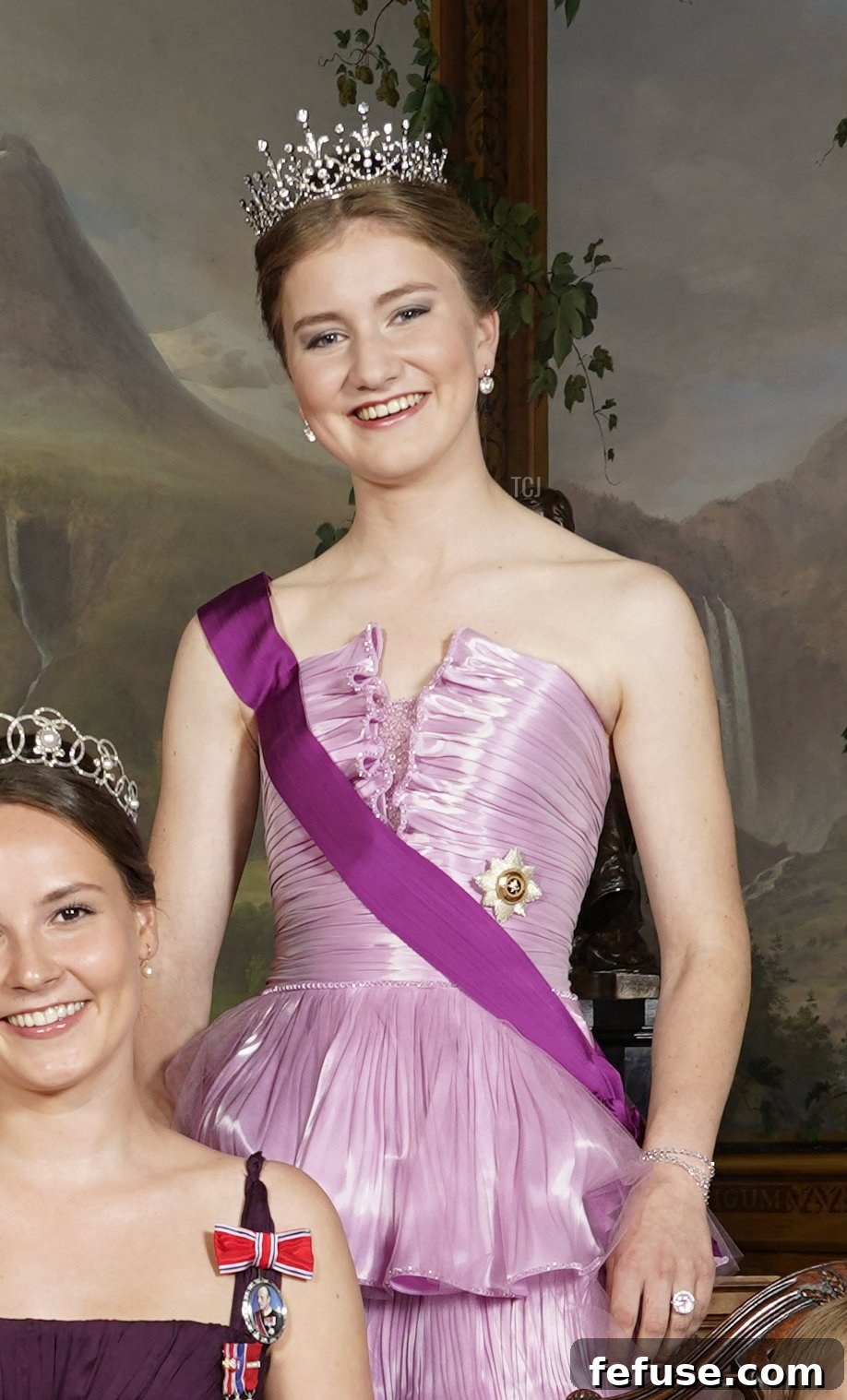
Princess Elisabeth’s Diamond Tiara: A Royal Coming-of-Age
A significant and eagerly anticipated addition to the Belgian royal jewelry collection was unveiled with the debut of the future Queen of the Belgians, Princess Elisabeth, the Duchess of Brabant. She first wore her brand-new tiara at a spectacular gala hosted in Norway in June. This exquisite piece, Princess Elisabeth’s Diamond Tiara, is an antique jewel, thoughtfully purchased for her by her parents, King Philippe and Queen Mathilde, as a special 18th birthday present. This gesture marks her formal introduction to the world of royal tiaras, symbolizing her growing role and future responsibilities within the monarchy. The tiara itself is a stunning display of diamonds, featuring intricate scrollwork and delicate floral motifs that exude timeless elegance. There has been considerable speculation among royal jewelry enthusiasts, with some suggesting that this magnificent diamond tiara may have originally belonged to a prominent British aristocratic family, or perhaps is an identical piece from the same celebrated jewelry firm. Regardless of its exact provenance, its debut was a highlight, signifying the beginning of a new chapter for the Belgian monarchy and its future queen.
Tiaras of the Extended Royal Family: Grace and Heritage
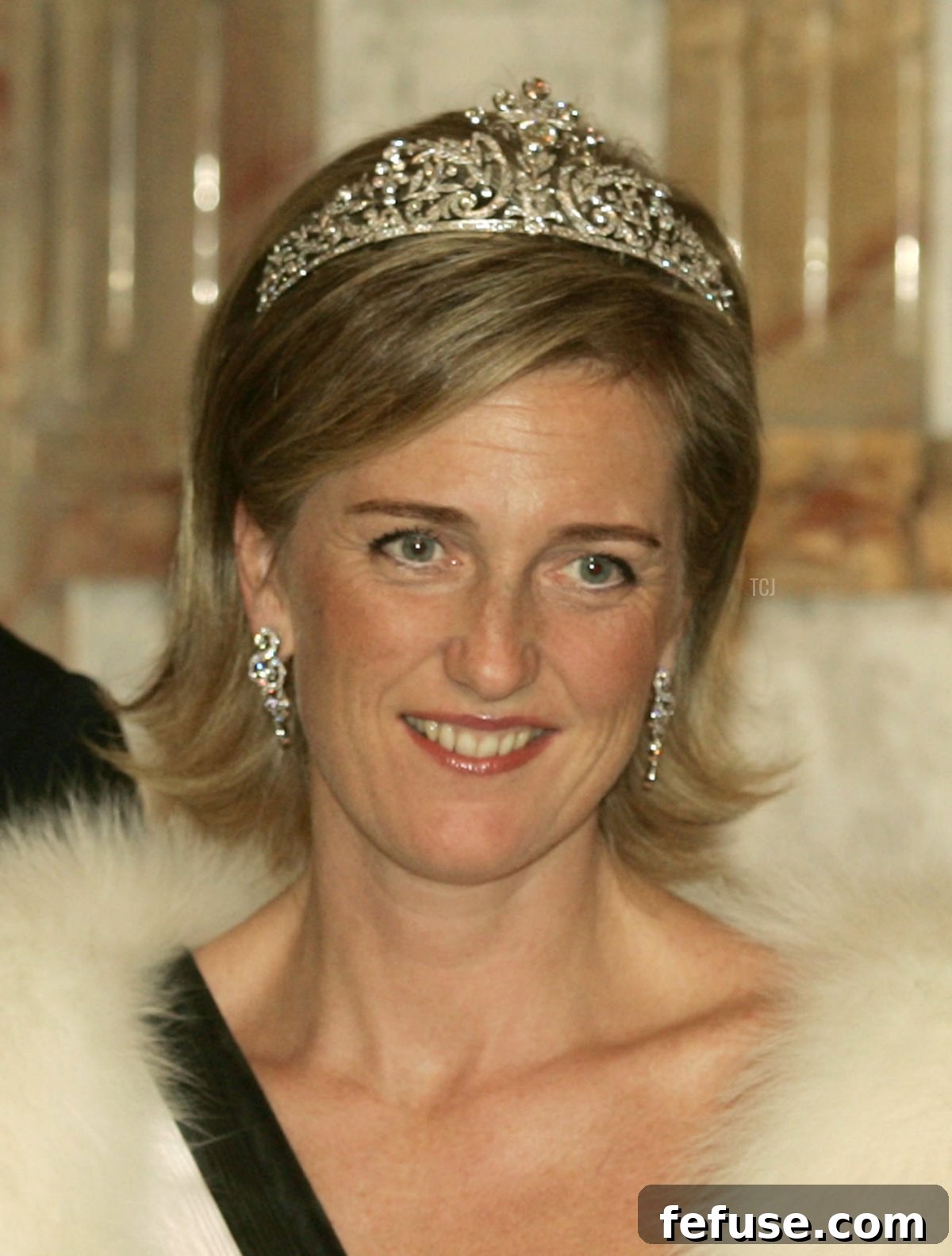
The Savoy-Aosta Tiara: An Austro-Este Family Treasure
King Philippe’s sister, Princess Astrid, is frequently seen wearing a truly magnificent tiara that her husband, Prince Lorenz, inherited from his distinguished family. This piece, known as the Savoy-Aosta Tiara, is a breathtaking diamond floral sparkler. Its intricate design features delicate diamond-encrusted blossoms and foliage, giving it an ethereal and naturalistic beauty. It is widely believed to have been originally commissioned for Princess Anne, Duchess of Aosta, adding a layer of historical grandeur to its provenance. Prince Lorenz inherited this splendid tiara through his mother, Archduchess Margherita of Austria-Este, connecting it to a rich lineage of European royalty beyond Belgium. Princess Astrid gracefully wears this tiara at various formal events, perfectly illustrating the blending of her husband’s family heritage with her role in the Belgian royal family. A notable appearance was captured in Brussels in October 2005, where its radiant sparkle complemented her regal presence at a gala event.
Princess Claire’s Wedding Tiara: A Bridal Gift
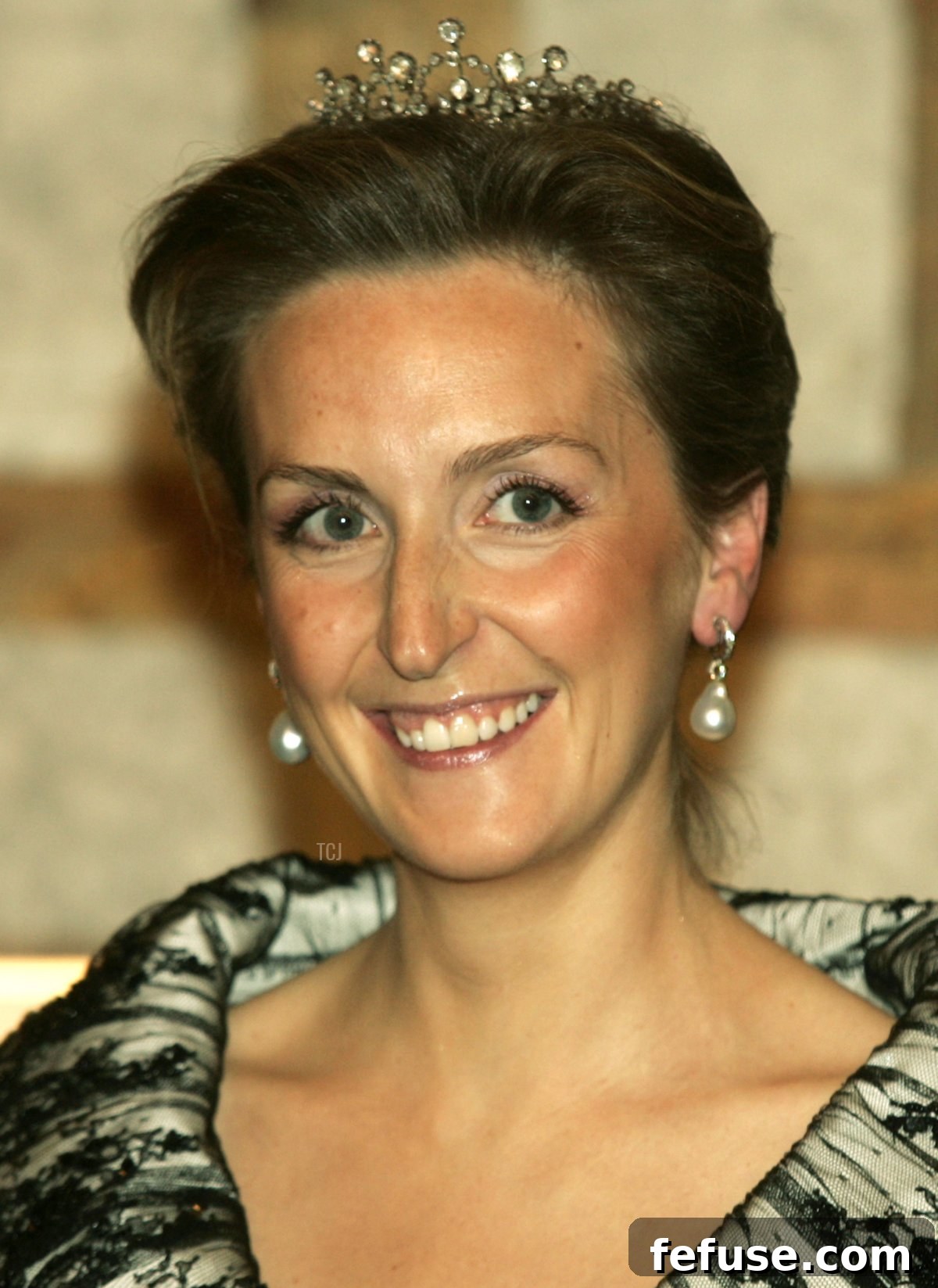
Princess Claire, King Philippe’s sister-in-law and the wife of Prince Laurent, possesses her own elegant collection of tiaras. Among them is a small yet incredibly radiant diamond piece, her wedding tiara. This exquisite jewel served as her personal wedding gift in 2003, graciously presented by her new parents-in-law, King Albert II and Queen Paola, to commemorate her entry into the royal family. The tiara features a delicate design, primarily composed of brilliant-cut diamonds arranged in a subtle and sophisticated pattern that perfectly frames her face without overwhelming it. It embodies a classic bridal elegance, making it an ideal choice for significant formal occasions. She is seen wearing this beautiful tiara during a grand banquet held in honor of the President of Portugal in October 2005, where its understated shimmer added a touch of timeless grace to her appearance, reflecting its sentimental value and intrinsic beauty.
Princess Claire’s Pearl and Diamond Tiara: Art Deco Influence
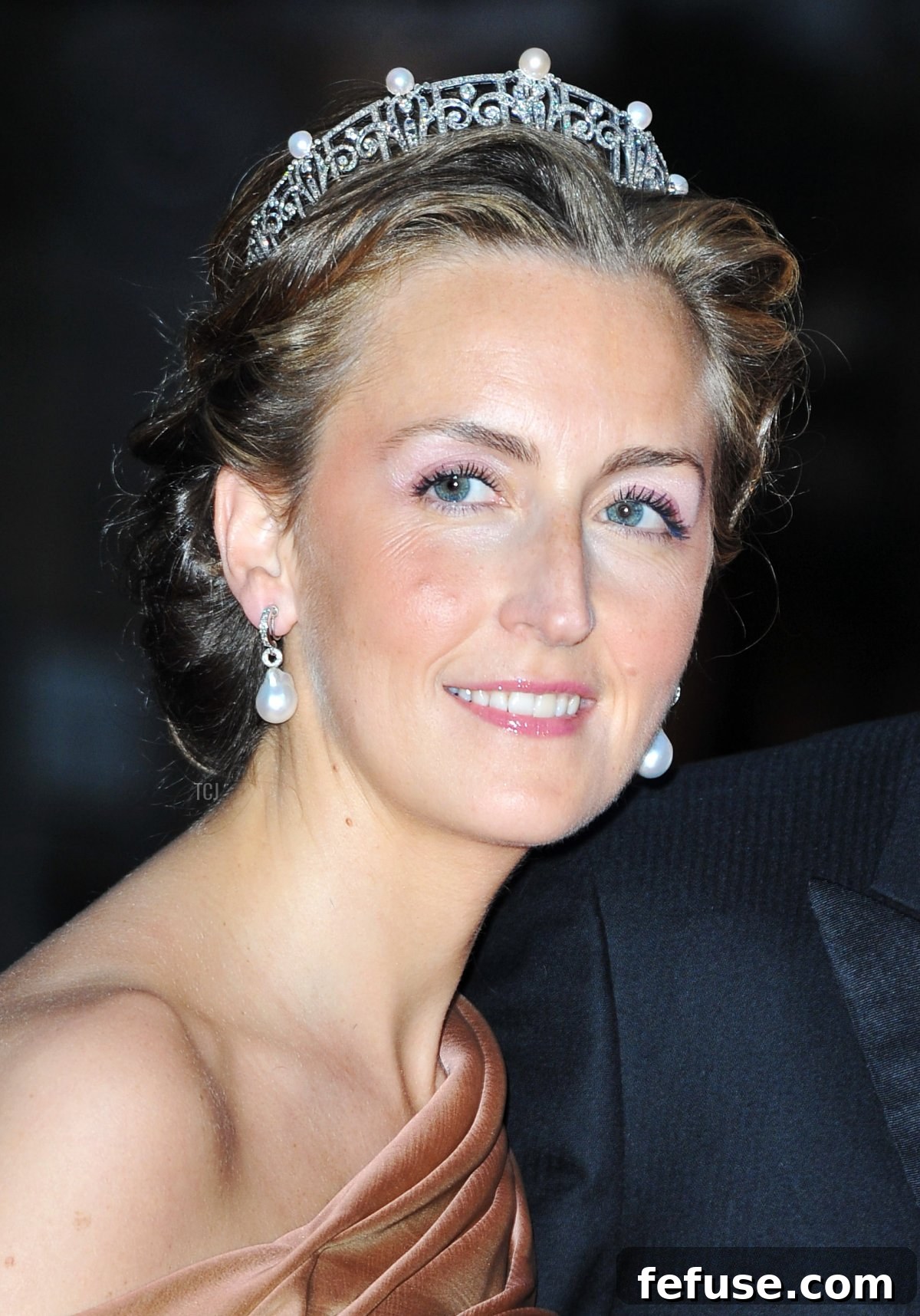
In addition to her wedding tiara, Princess Claire often graces formal events with a distinct diamond and pearl tiara, which showcases a captivating touch of Art Deco style in its intricate design. This particular piece stands out with its elegant blend of sparkling diamonds and lustrous pearls, creating a sophisticated contrast. Observers will also notice delicate fleur-de-lis elements subtly incorporated into the design, adding a royal motif that pays homage to traditional heraldry while maintaining its modern appeal. The tiara’s structure and detailing suggest a period of craftsmanship that valued both geometric precision and natural beauty, characteristic of the early 20th century. Princess Claire wore this stunning jewel at the princely wedding reception in Monaco in July 2011, where its unique combination of pearls and diamonds, coupled with its distinctive Art Deco flair, made a memorable statement, perfectly complementing the glamour of the occasion and highlighting her discerning taste in jewelry.
The Royal Vaults: Enduring Mysteries and Lost Treasures
The Spanish Wedding Gift Tiara: A Vanished Treasure
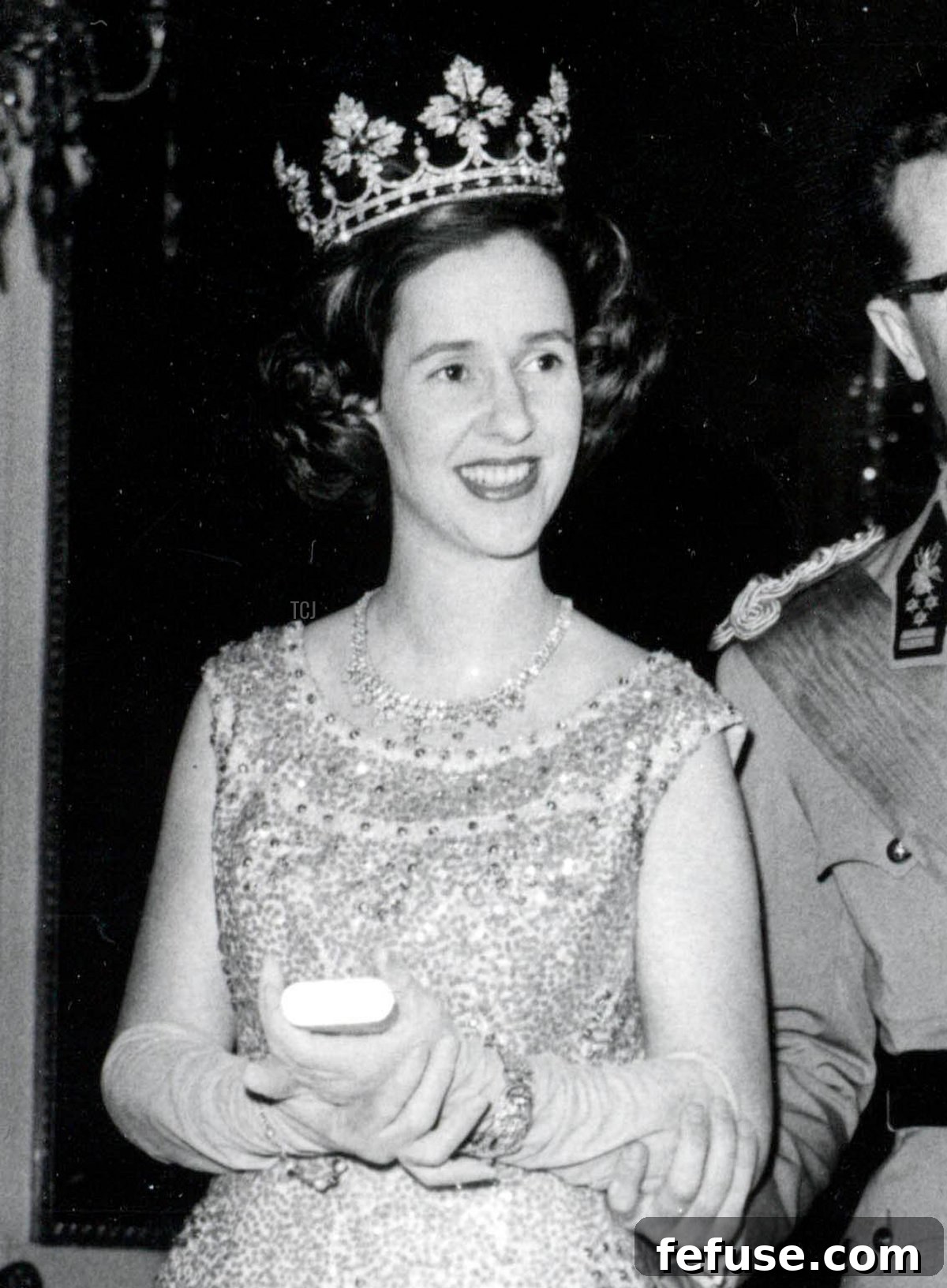
Beyond the currently worn jewels, the Belgian royal collection holds a few intriguing tiara mysteries, sparking hopes among enthusiasts for their reappearance. One such enigmatic piece is the Spanish Wedding Gift Tiara. This striking tiara was presented to Queen Fabiola in 1960 as a lavish wedding present from Francisco and Carmen Franco, marking a significant moment in her royal journey. Renowned for its remarkable convertibility, the jewel can be artfully worn in coronet, wreath, and necklace settings, offering unparalleled versatility. A unique feature allows for various colorful gemstones to be placed at the center of each delicate leaf element, enabling customization for different outfits and occasions. Queen Fabiola is captured wearing the tiara here in its regal coronet form in 1963, radiating grace and sophistication. However, despite its beauty and historical importance, this tiara has not been publicly seen since Queen Fabiola’s passing in 2014, leading many to wonder if it still resides within the royal vaults or if its whereabouts remain a closely guarded secret.
The Stockholm Tiara: A Royal Enigma
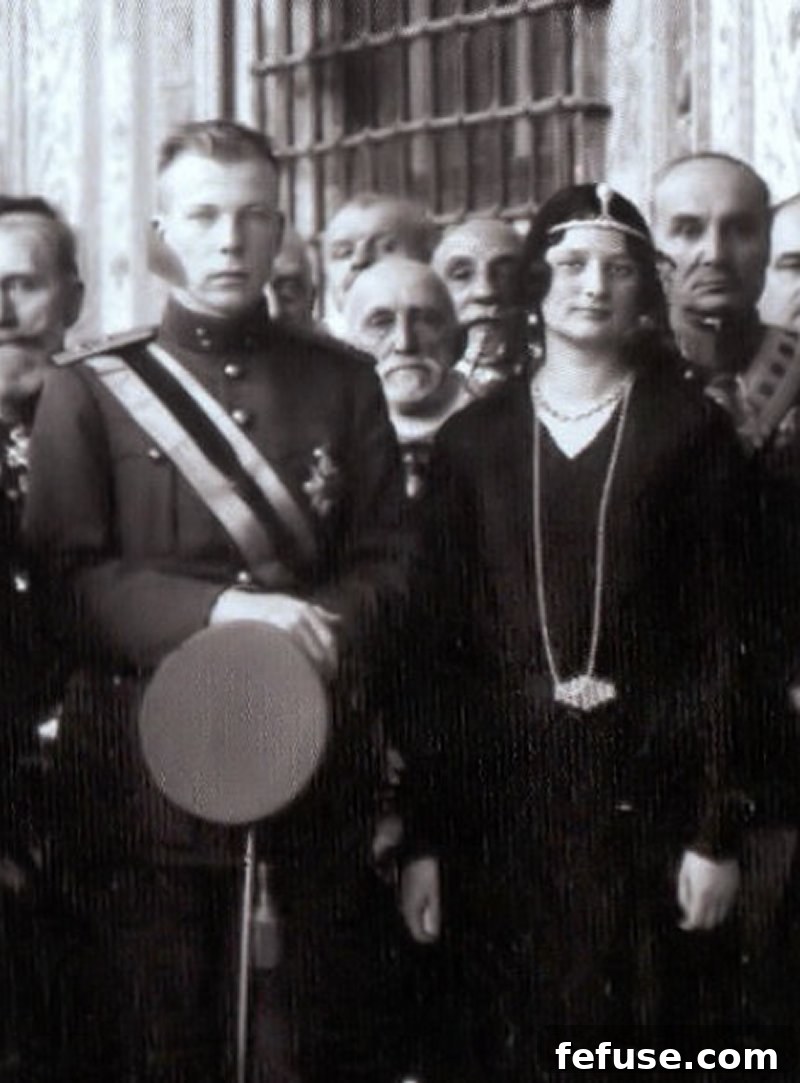
Another fascinating mystery within the annals of Belgian royal jewelry is that of the Stockholm Tiara. This elegant and distinctly modern diamond and pearl jewel was a cherished wedding present to Queen Astrid from the people of Stockholm in 1926, celebrating her Swedish roots and her marriage into the Belgian monarchy. Its design is characterized by a harmonious arrangement of brilliant diamonds intertwined with lustrous pearls, embodying the refined aesthetic of the era. The accompanying photograph shows Queen Astrid wearing this exquisite tiara during a private audience with Pope Pius XI at the Vatican in January 1930, where its subtle radiance perfectly complemented the solemnity of the occasion. Despite its documented history and public display during Queen Astrid’s lifetime, the tiara’s current whereabouts remain unknown, making it a poignant lost treasure of the Belgian royal collection. Its disappearance adds an air of mystique to the rich tapestry of royal jewels, leaving many to hope that it might one day resurface from the depths of historical obscurity.