
A Golden Thread Through Generations: The Enduring Royal Bracelet Tradition
While the European royal families are renowned for their magnificent tiaras, glittering diamonds, and spectacular heirloom jewels, sometimes the most meaningful treasures are the simplest. Among the extensive collection of jewels passed down from Princess Margaret of Connaught to her descendants in the Swedish, Danish, and Greek royal families, one particular item stands out not for its sparkle, but for its profound sentimental value and enduring tradition: a slim, open gold bangle bracelet. This unassuming piece of jewelry has become a powerful symbol, linking generations of royal women through a shared legacy of love and remembrance, primarily within the Danish royal house.
This article delves into the fascinating history of this unique gold bracelet, tracing its origins with Princess Margaret of Connaught and following its journey through queens and princesses, right up to the current generation of young royals. It’s a story not just about an object, but about family bonds, personal history, and the quiet continuity that often underpins royal life.
The Origin: Princess Margaret of Connaught and Her Beloved Bangle
The story of this cherished royal heirloom begins with Princess Margaret of Connaught, a granddaughter of Queen Victoria. Known affectionately as “Daisy,” Margaret was a beloved figure, full of artistic talent and a radiant spirit. She married Prince Gustaf Adolf of Sweden (later King Gustaf VI Adolf) in 1905, becoming Crown Princess of Sweden. Throughout her life, and that of her sister, Princess Patricia, a distinctive slender gold bracelet was a constant presence on their left wrists.
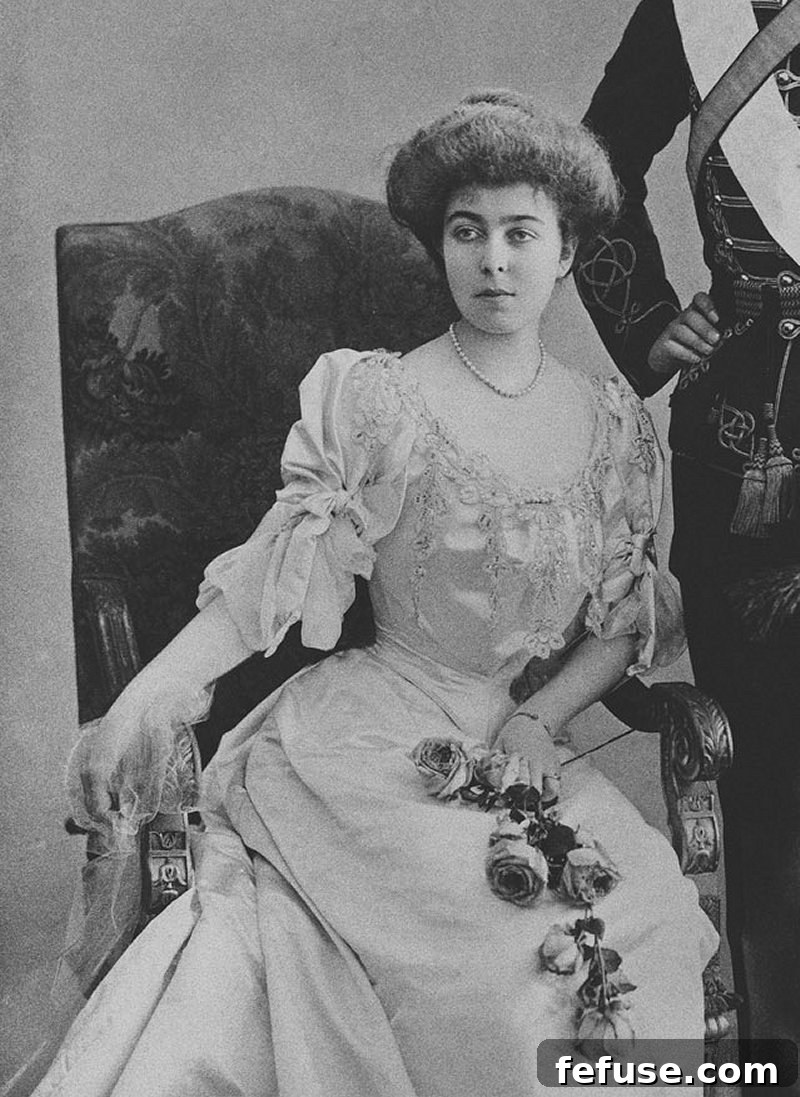
These weren’t elaborate, diamond-encrusted pieces, but rather simple, open bangles, with a small, visible gap between their gold ends. They were personal tokens, worn daily, and prominently featured in portraits from their youth well into their later years. The image above, a photographic portrait taken around the time of her wedding to Prince Gustaf Adolf in 1905, clearly shows Princess Margaret wearing her bracelet, a subtle yet ever-present accessory that would become a cornerstone of a cherished family tradition.
The exact origin of these specific bracelets remains shrouded in a bit of mystery. While it has never been formally documented, royal historians and enthusiasts widely believe these bracelets were gifts from their parents, Prince Arthur, Duke of Connaught and Strathearn, and Princess Louise Margaret of Prussia. Such a gift would imbue the bangles with even deeper familial significance, making them a tangible link to parental love and early life.
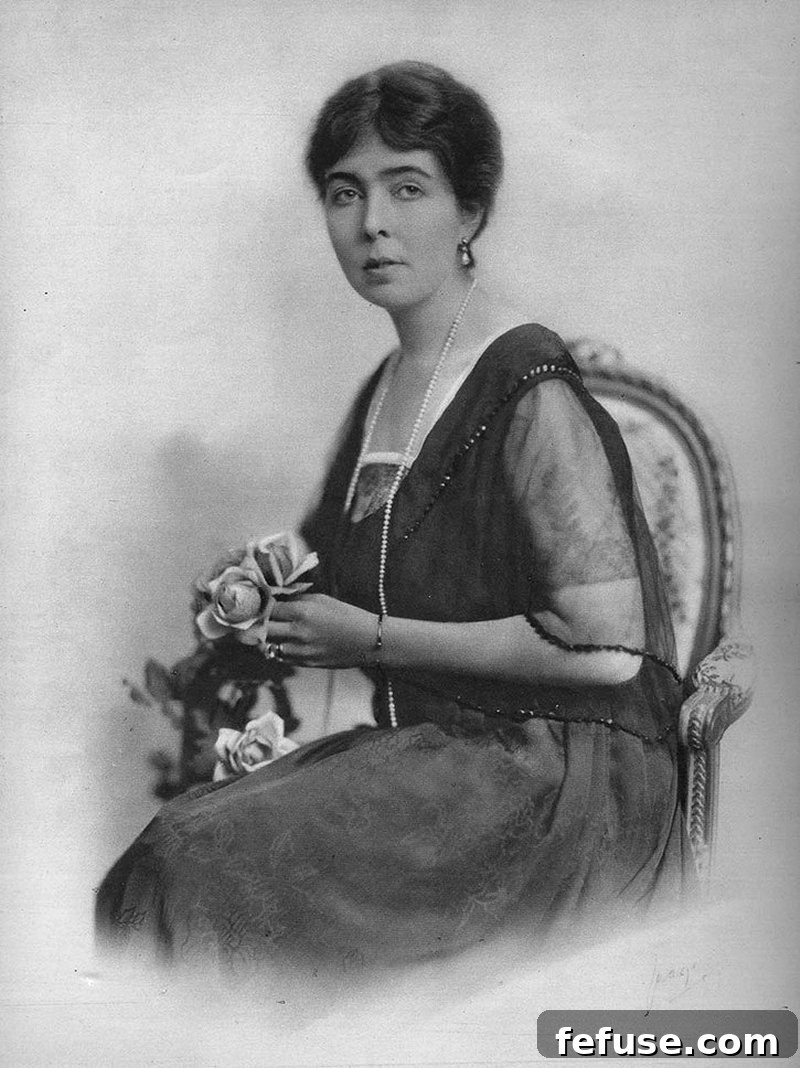
Even towards the end of her tragically short life, Crown Princess Margaret continued to wear her bracelet. This portrait, taken around 1919, shortly before her untimely death in 1920 at the age of 38, shows the bracelet still adorning her left wrist. Its consistent presence highlights its deep personal importance to her, a constant comfort amidst her royal duties and family life.
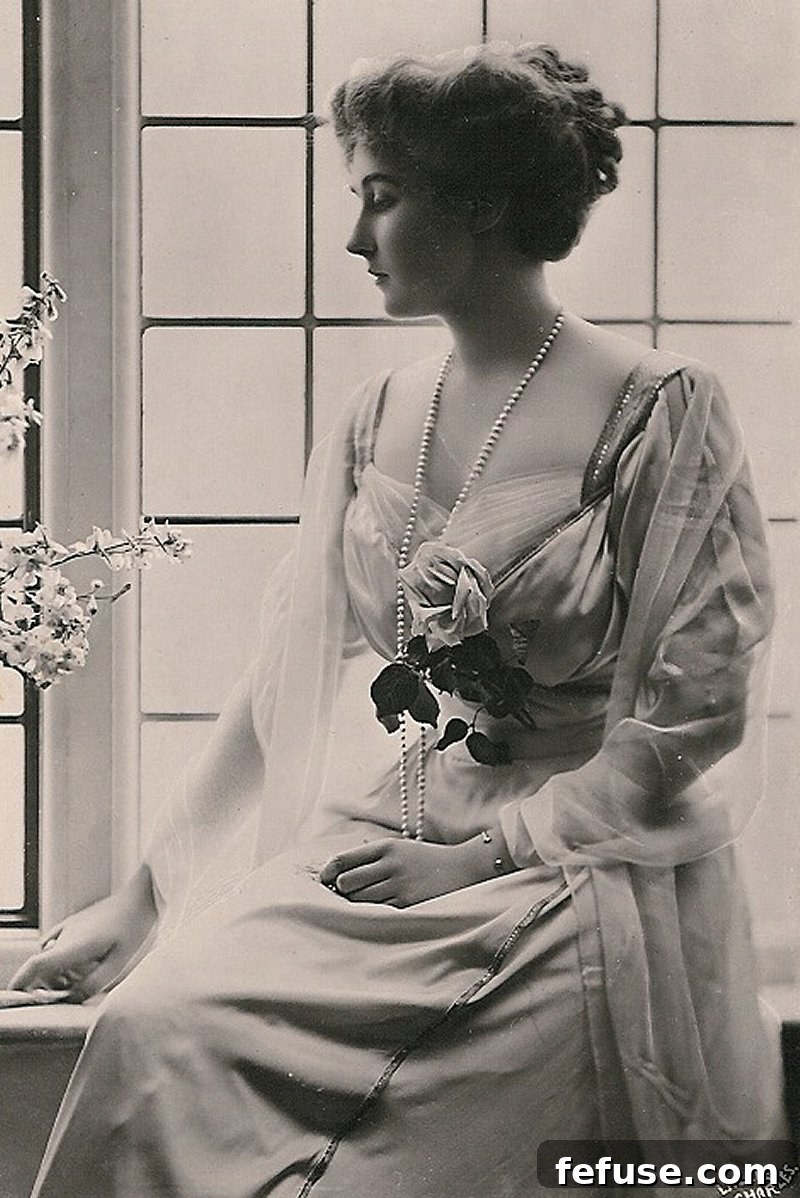
Princess Patricia of Connaught, Margaret’s younger sister, shared this personal jewelry custom. As Lady Patricia Ramsay, following her marriage to a commoner, she also frequently wore her own gold bracelet. This shared custom between the sisters reinforced the idea of the bracelet as a symbol of sisterly affection and family connection, laying the groundwork for a broader tradition that would span generations.
Queen Ingrid: The Tradition Bearer
It was Princess Margaret’s only daughter, Princess Ingrid of Sweden, who would become the pivotal figure in cementing this bracelet as a lasting family tradition, particularly within the Danish Royal Family. Born in 1910, Ingrid lost her mother at a tender age, making these personal connections to Margaret all the more precious.
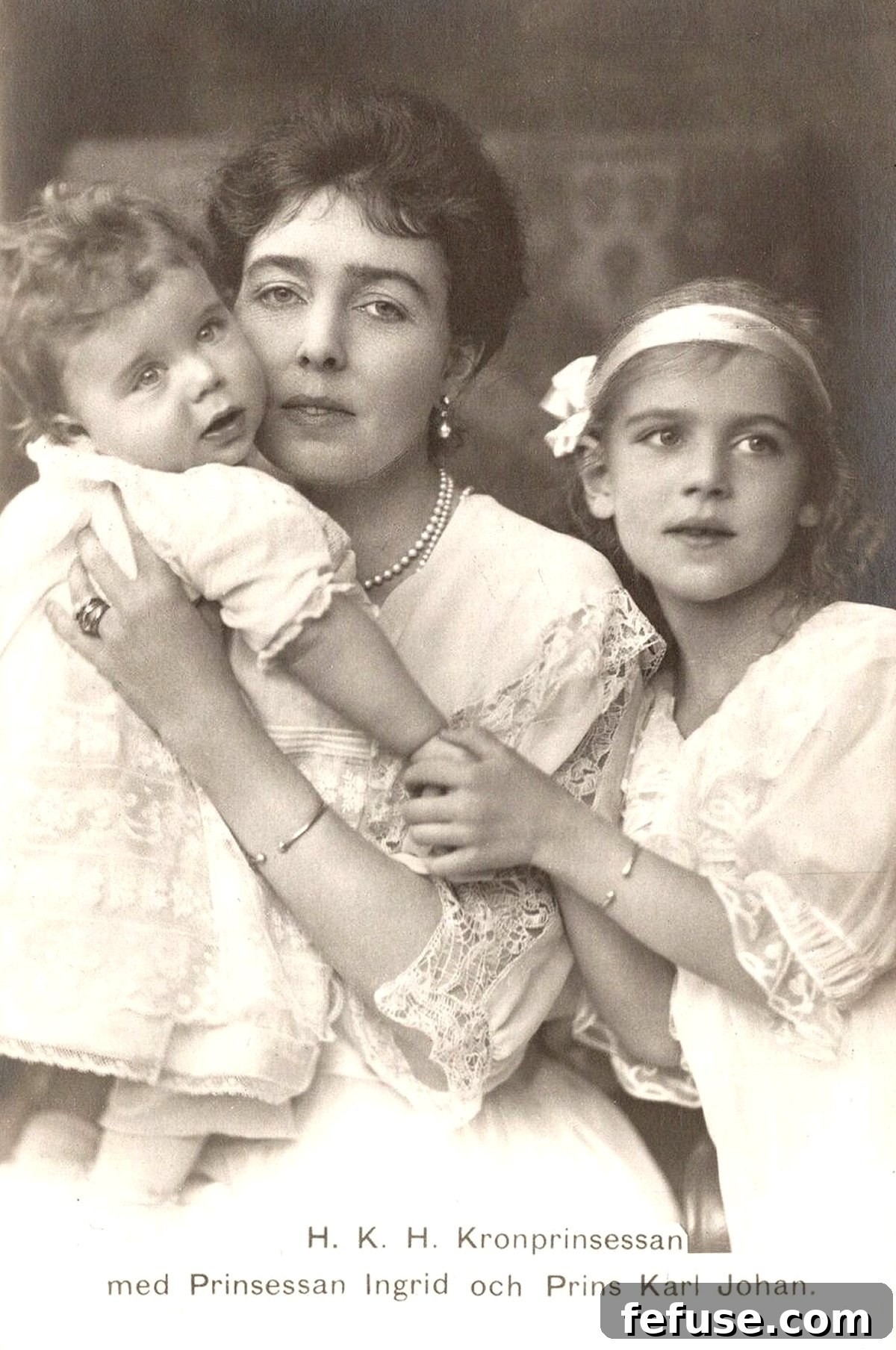
A beautiful photograph from around 1915 captures both Margaret and a young Ingrid wearing their respective gold bracelets. This image is especially poignant as it marks the formal beginning of the tradition for Ingrid. According to family custom, young princesses receive their own gold bracelet on their fifth birthday. This suggests the photograph was taken around the time Ingrid reached this milestone, solidifying the generational passing of this cherished item. The child-sized bracelets received by these young princesses would later be exchanged for a larger, adult size as they grew.
Ingrid’s dedication to this tradition speaks volumes about her desire to honor her mother’s memory and maintain a tangible link to her British and Swedish heritage within her own life and, subsequently, the life of her future family. When she married the future King Frederik IX of Denmark, she brought this unique custom to the Danish court, ensuring its continuation for many generations to come.
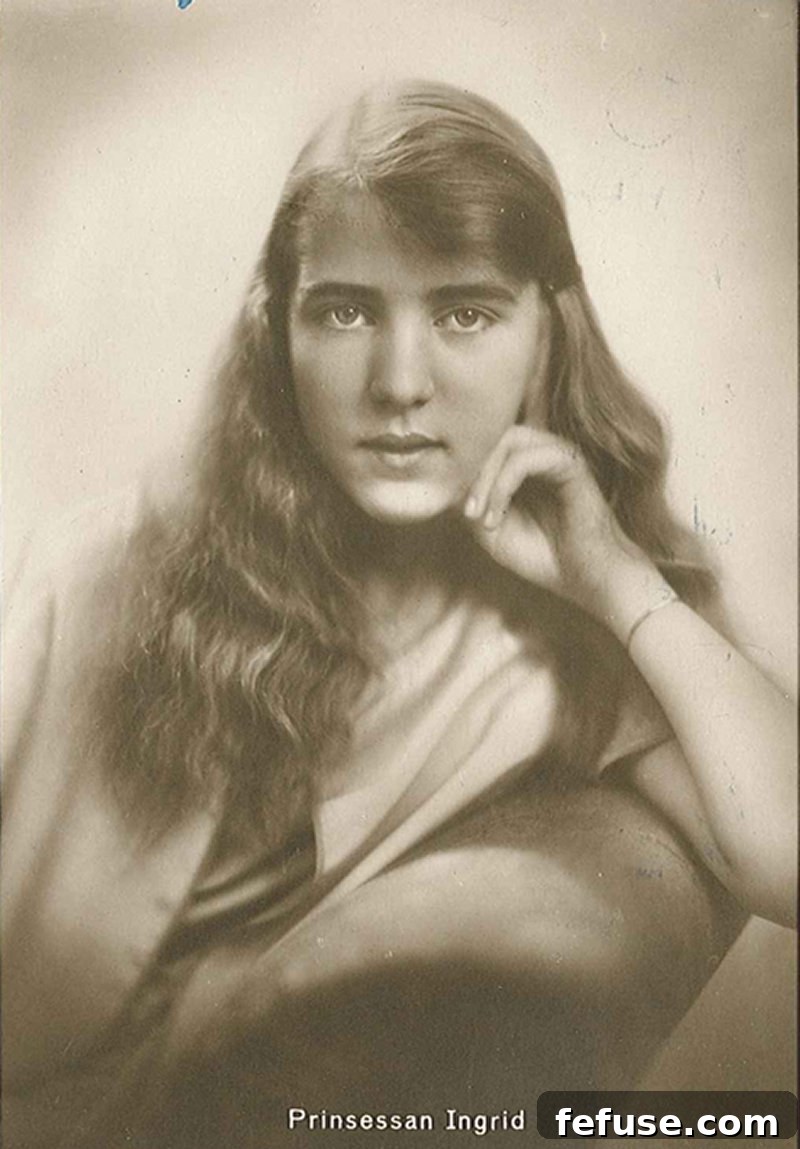
Following her mother’s passing, Princess Ingrid continued to wear her gold bracelet throughout her lifetime, a poignant reminder of her beloved mother. A portrait from the 1920s shows a young Ingrid with her bracelet, years before she would become Queen of Denmark. This consistent wearing underscores the deep personal attachment she held for this simple piece of jewelry, transforming it from a mere accessory into a potent symbol of family continuity and personal remembrance.
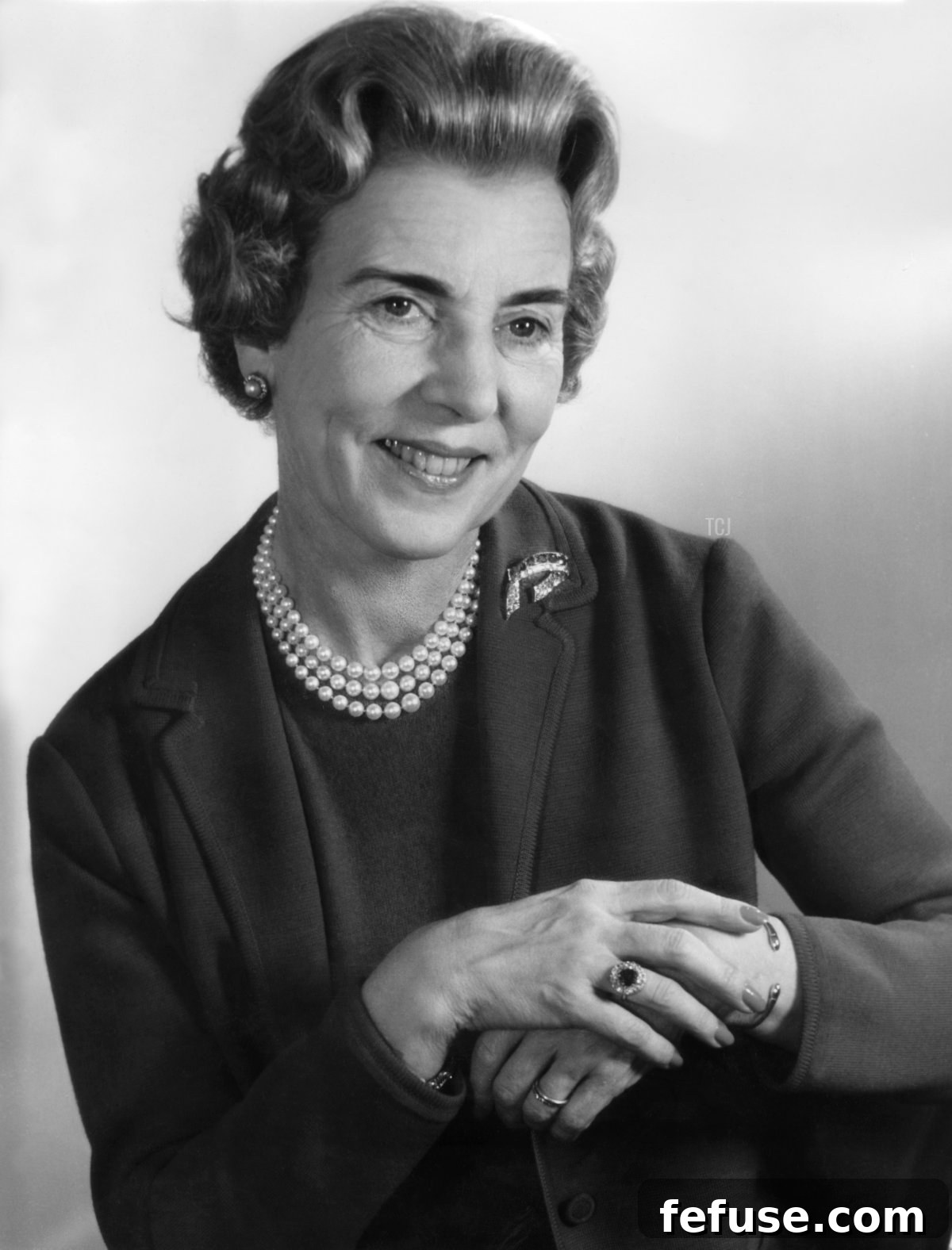
Decades later, as Queen Ingrid of Denmark, the bracelet remained a steadfast presence on her wrist. This striking photographic portrait from the 1960s clearly shows the subtle gleam of the gold bangle, a testament to its enduring significance to her. It was a private comfort and a public statement of her connection to her past, always present, whether she was performing official duties or in personal moments.
Queen Ingrid’s Daughters: Expanding the Legacy
Queen Ingrid and King Frederik IX had three daughters: Princess Margrethe (the future Queen Margrethe II), Princess Benedikte, and Princess Anne-Marie. Ingrid was dedicated to keeping her mother’s memory alive for her girls, not only through stories but also through tangible heirlooms. This included the use of one of Margaret’s exquisite tiaras as a family bridal diadem, but perhaps most intimately, it involved continuing the tradition of the gold bracelet.
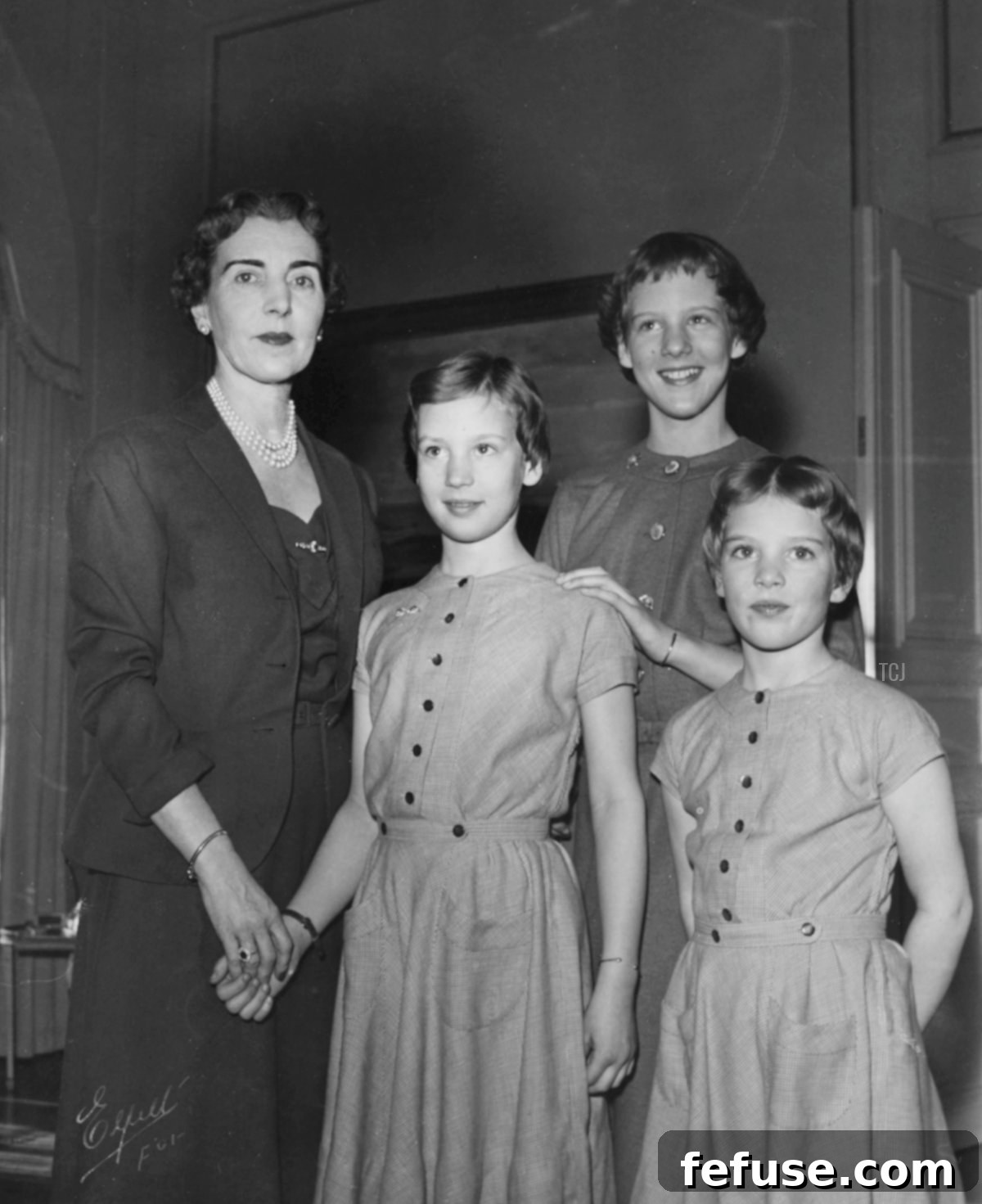
Following the established family tradition, Margrethe, Benedikte, and Anne-Marie each received their own gold bracelet on their fifth birthdays. This 1955 portrait of Queen Ingrid with her daughters beautifully captures the tradition in progress; Princess Margrethe and Princess Benedikte’s bracelets are visible on their left wrists. Although Queen Ingrid and Princess Anne-Marie’s bracelets aren’t fully visible in this specific shot, they too wore theirs, demonstrating the widespread adoption of this beloved custom within the immediate family. From childhood onwards, these bracelets became an integral part of their personal identity and a constant connection to their maternal lineage.
Queen Margrethe II: A Lifelong Wearer
Today, Queen Margrethe II of Denmark is a prominent custodian of this family tradition. She is rarely seen without her gold bracelet, wearing it for every conceivable occasion, from relaxed family holidays to the most formal state dinners and gala events. Its constant presence on her wrist speaks volumes about its personal importance, complementing her unique style and her role as monarch.

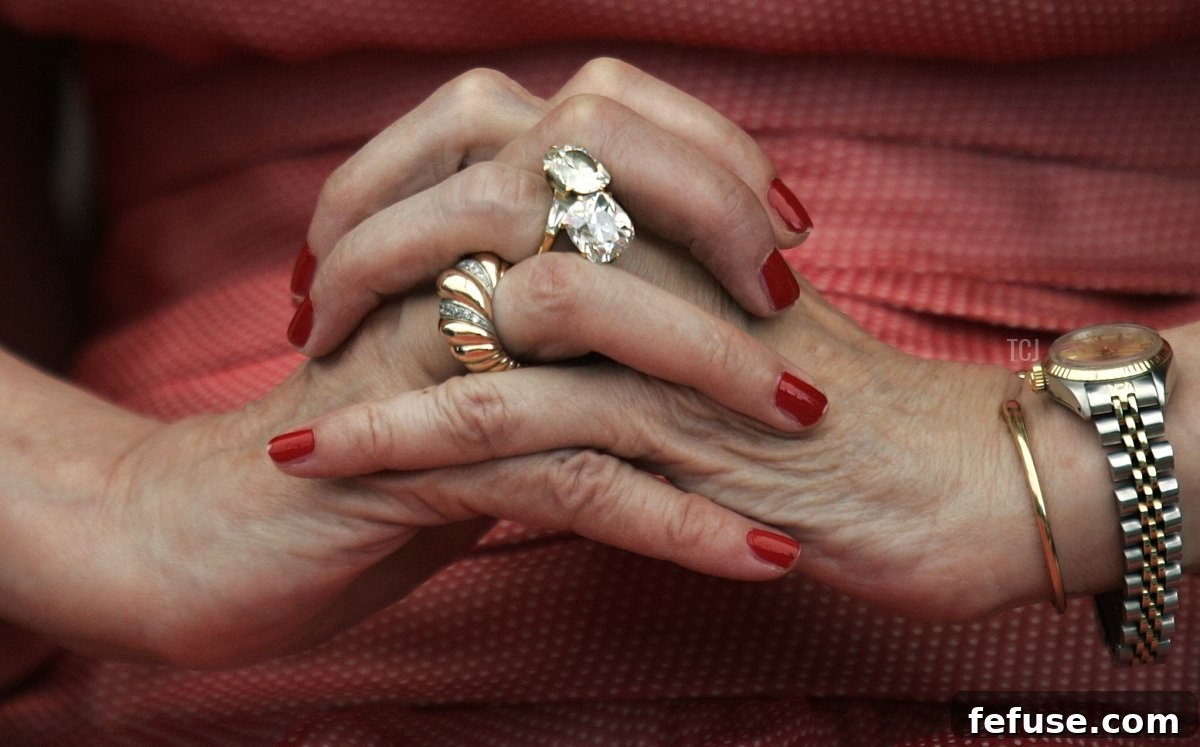
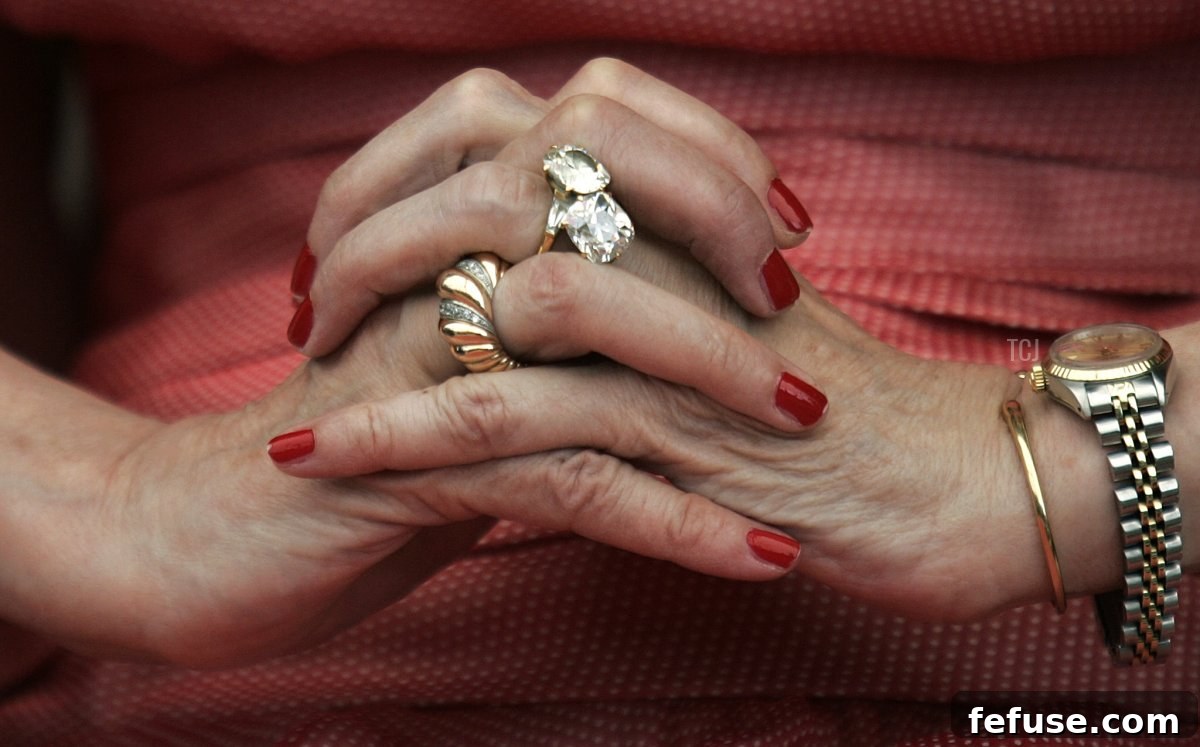
Here, during a summer visit to France in 2008 for a holiday photocall, Queen Margrethe’s gold bracelet is clearly visible on her left wrist. Even in more casual settings, this cherished piece remains. While her stunning diamond engagement ring naturally draws the eye, the simple gold bangle holds an equally significant, albeit quieter, place in her personal collection.
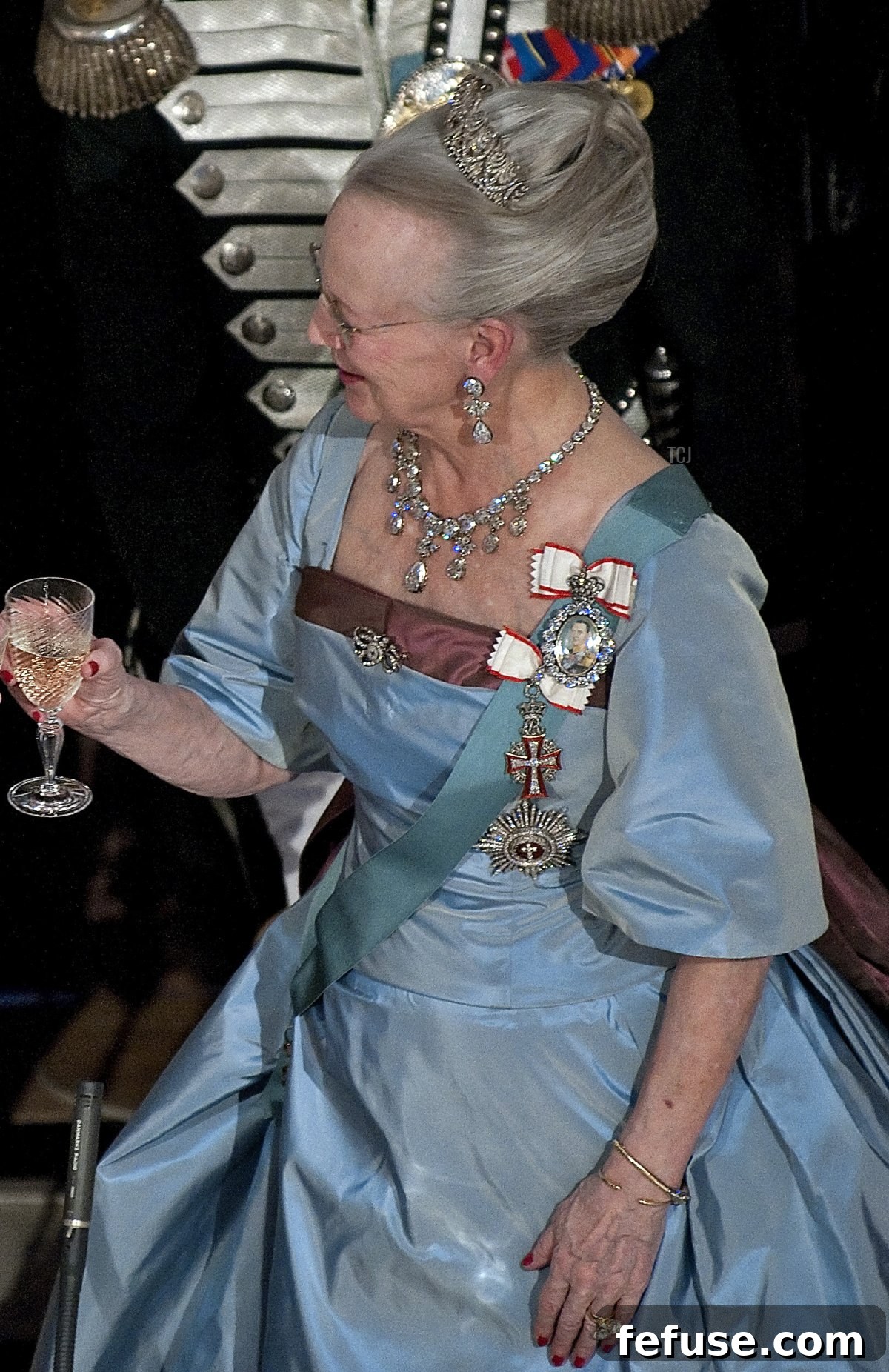
The open bangle is also a consistent feature even when Queen Margrethe adorns herself with the grandest of state jewels. In this photograph from a 2010 state dinner, the gold bracelet is noticeable, often stacked with another gold bangle, creating a subtle contrast against the splendor of magnificent pieces like the Baden Palmette Tiara and other diamonds from the Danish crown jewel collection. This versatility highlights the bracelet’s role as both a personal talisman and a stylish accessory.
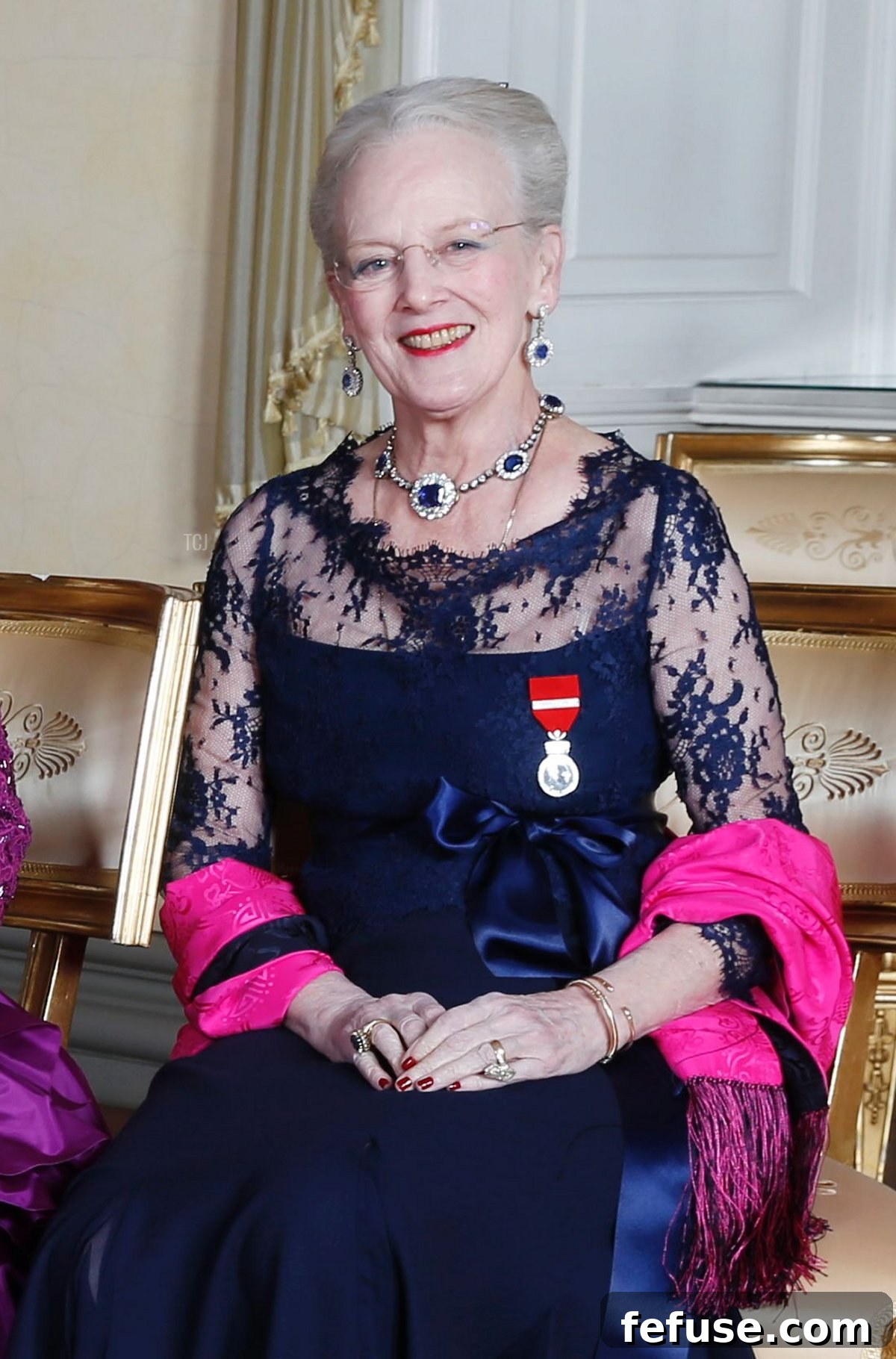
Another instance of Queen Margrethe seamlessly integrating her gold bracelet into a formal ensemble is seen in this 2016 picture taken in Oslo. Attending the 25th anniversary of Norway’s King Harald’s ascension to the throne, she wears her gold bracelet, again stacked with another bangle, alongside the stunning Queen Alexandrine’s Sapphires. This demonstrates the bracelet’s unwavering presence across diverse royal engagements, from the everyday to the extraordinary.
Princess Benedikte: A Steadfast Adherent
Princess Benedikte, Queen Margrethe’s younger sister, is another faithful wearer of the gold bracelet. Her commitment to the tradition is evident in numerous photographs throughout her life, reflecting the deep sentimental value this piece holds for her, as for her sisters.
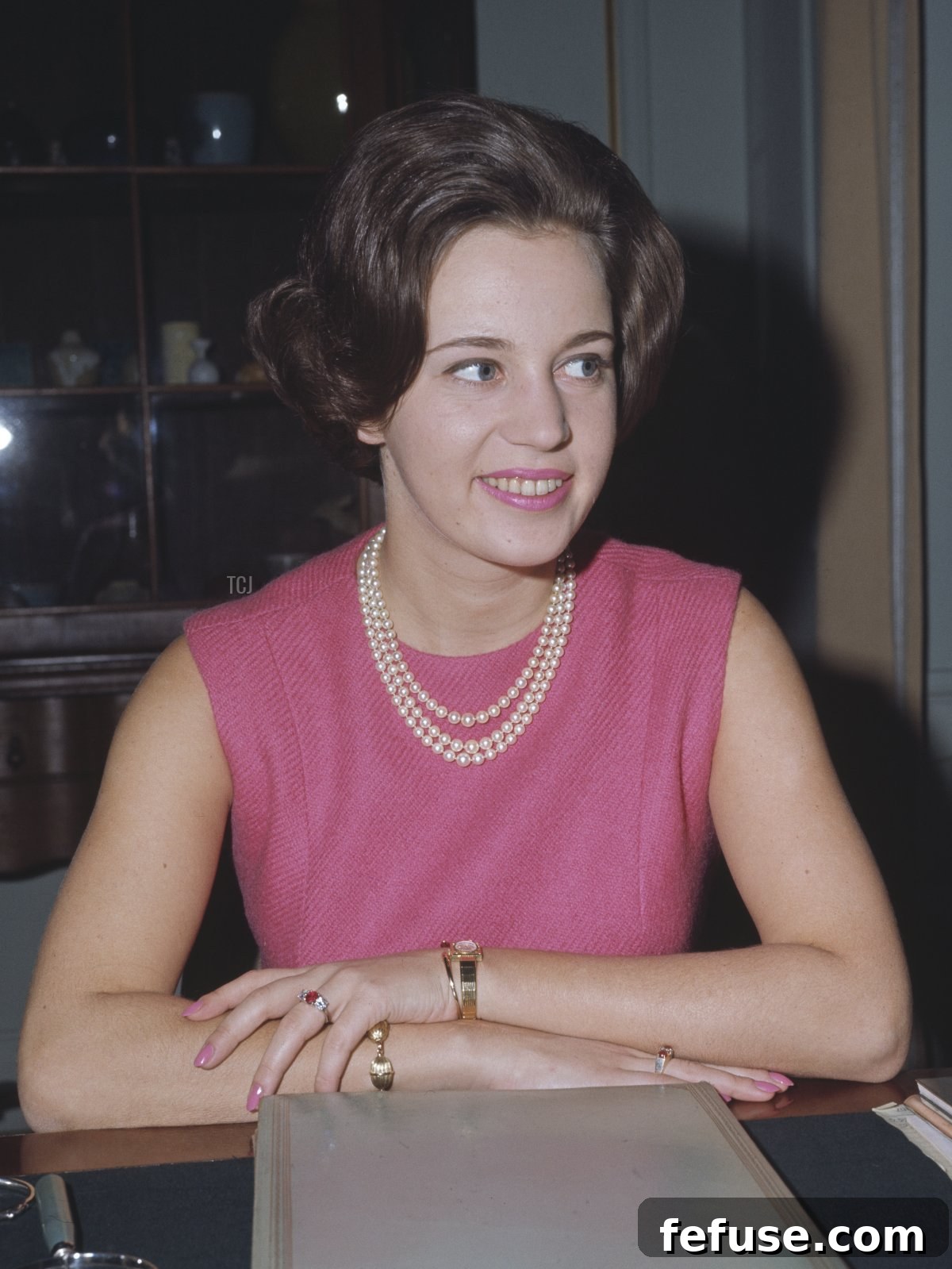
In this elegant portrait from 1971, a younger Princess Benedikte is seen wearing her gold bracelet alongside a stylish gold watch. This pairing suggests that the bracelet is not just a ceremonial item but a daily accessory, integrated into her personal style and routines. Its presence underscores the consistency of the tradition across the lives of Ingrid’s daughters.
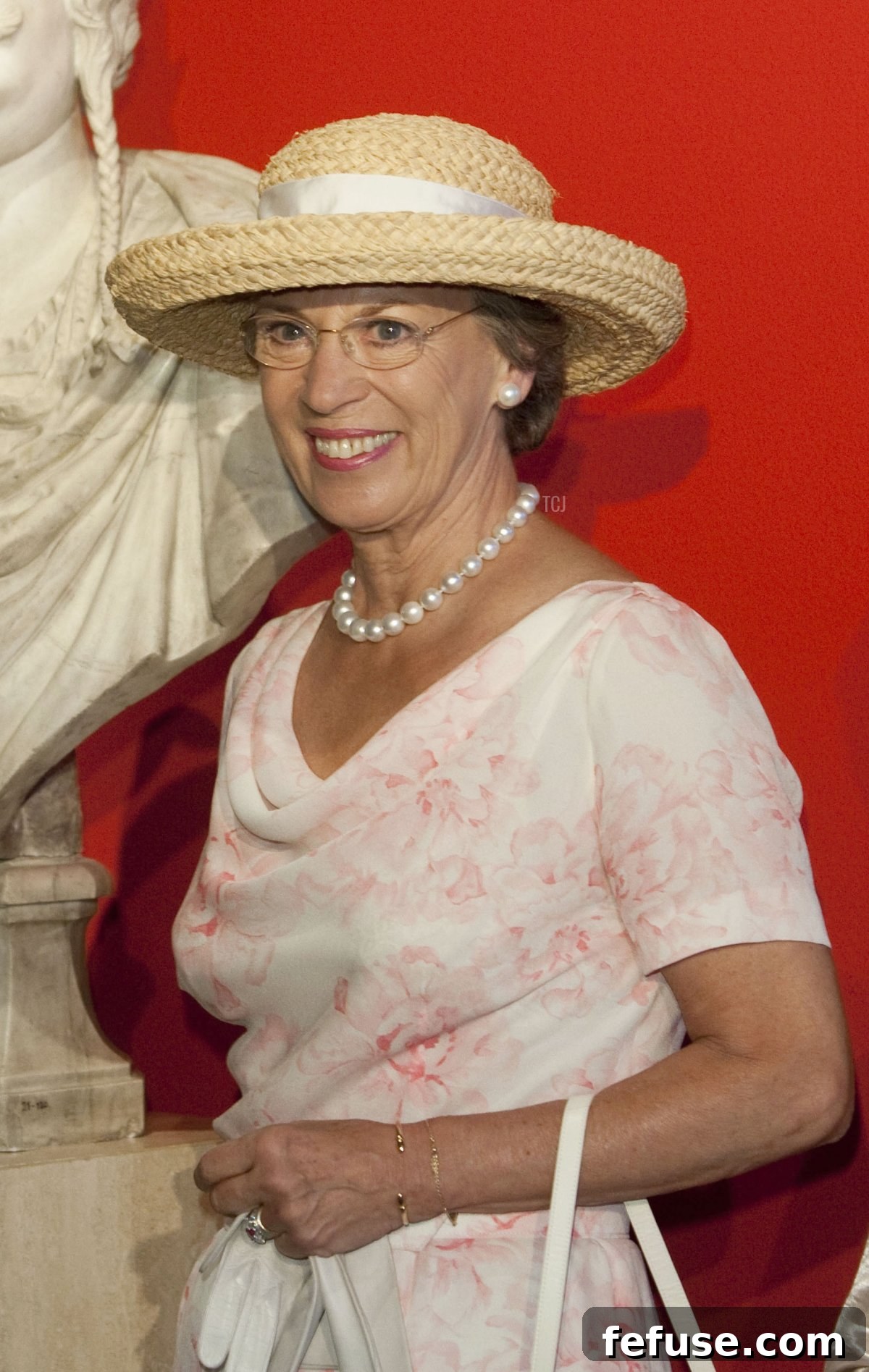
Years later, in 2009, Princess Benedikte continues to wear her bracelet, visible on her left wrist during Queen Margrethe’s visit to Germany for an art exhibition. Her continued dedication to wearing this simple yet powerful symbol reinforces the deep personal connection she maintains with her family’s history and the maternal legacy it represents.
Queen Anne-Marie: The Greek Connection
The youngest of Queen Ingrid’s daughters, Queen Anne-Marie of Greece (wife of the last King of Greece, Constantine II), also cherishes and frequently wears her gold bracelet. This tradition, therefore, has extended beyond the Danish and Swedish courts, creating a tangible link with the Greek Royal Family as well.
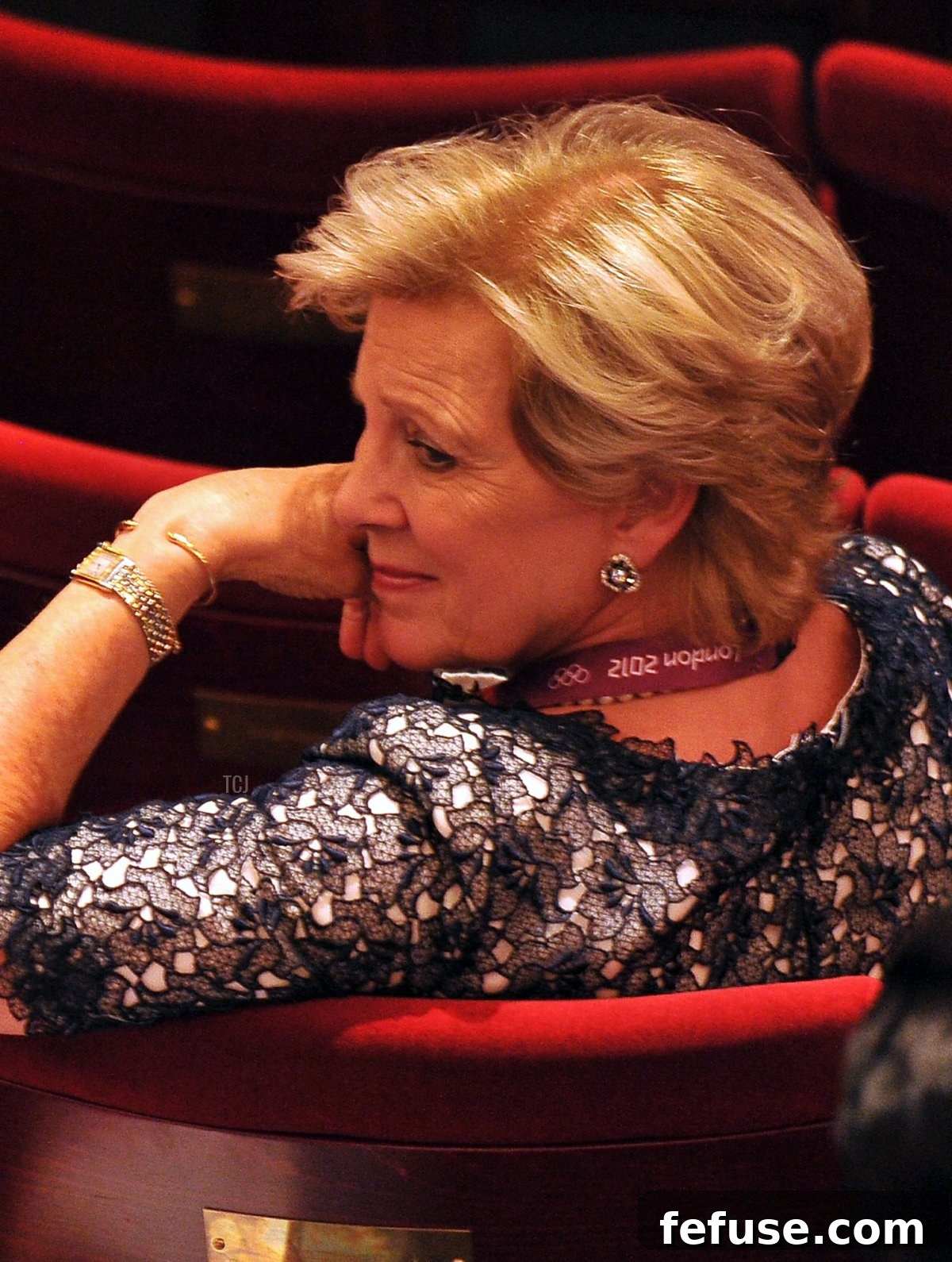
Here, during an IOC session in London in the summer of 2012, Queen Anne-Marie’s bracelet is discreetly visible beside her watch. Like her sisters, she integrates this sentimental piece into both her casual and formal attire, never letting it stray far from her. This illustrates its role as a constant, personal accessory rather than just a jewel for special occasions.
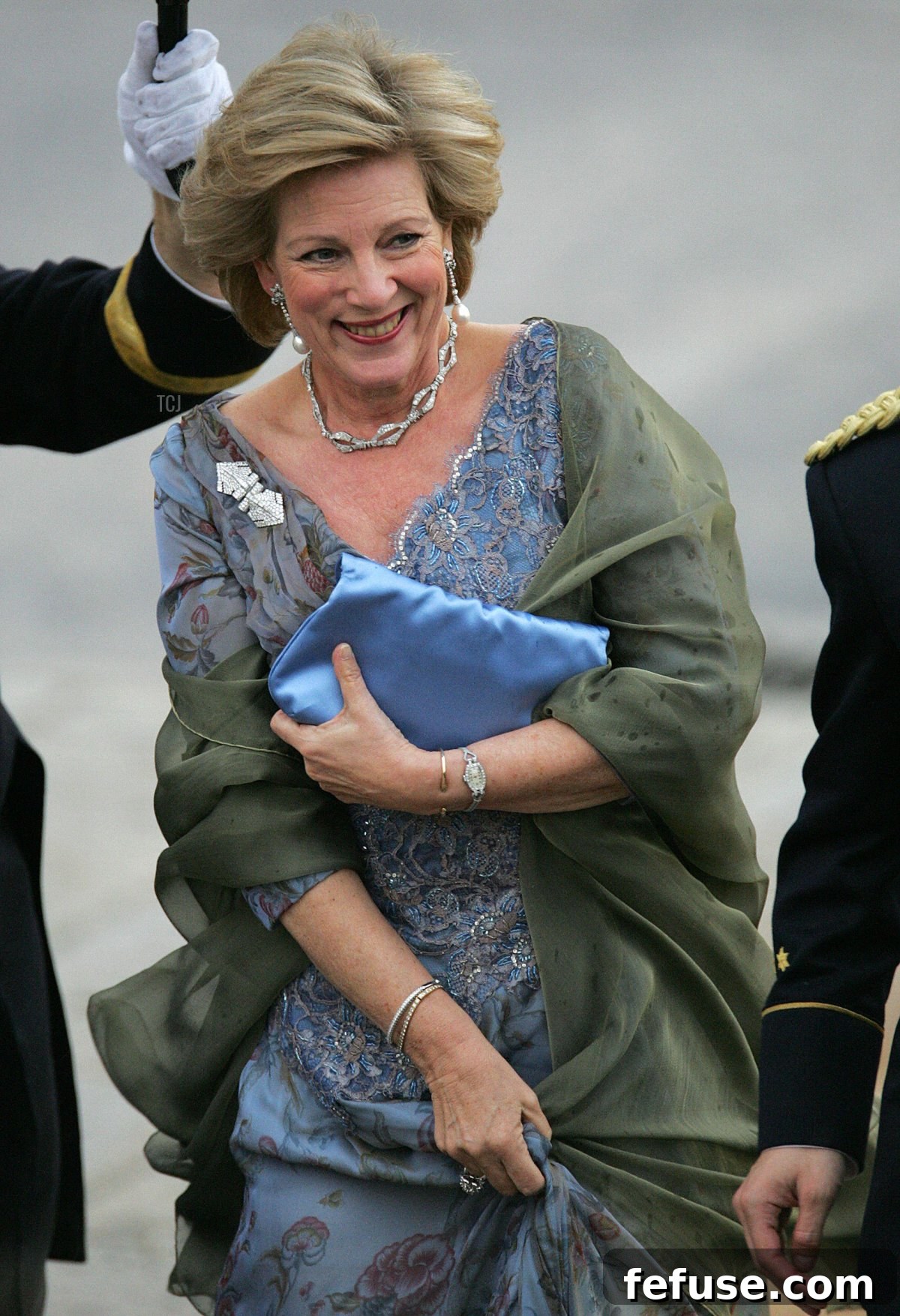
Queen Anne-Marie’s attachment to her bracelet is particularly highlighted by an incident she once shared. She wore her bracelet with diamonds, including Queen Alexandrine’s Diamond Necklace and elegant diamond clips, for the pre-wedding dinner of her nephew, Felipe of Spain, and Letizia Ortiz in 2004. On one occasion, her gold bracelet broke, causing her to be “deeply unhappy” until it could be repaired. This anecdote profoundly underscores the immense sentimental importance of these seemingly simple pieces to the royal women who wear them. It’s not just gold; it’s a piece of their heritage, a connection to their mother, grandmother, and great-grandmother.
The Next Generations: Carrying the Golden Torch
The tradition doesn’t end with Queen Ingrid’s daughters. Both Princess Benedikte and Queen Anne-Marie have proudly passed this treasured bracelet custom on to their own daughters, ensuring its continuation for yet another generation of royal women. This commitment to the lineage through a personal jewel is a beautiful testament to the strength of their family bonds.
Princess Benedikte’s Daughters
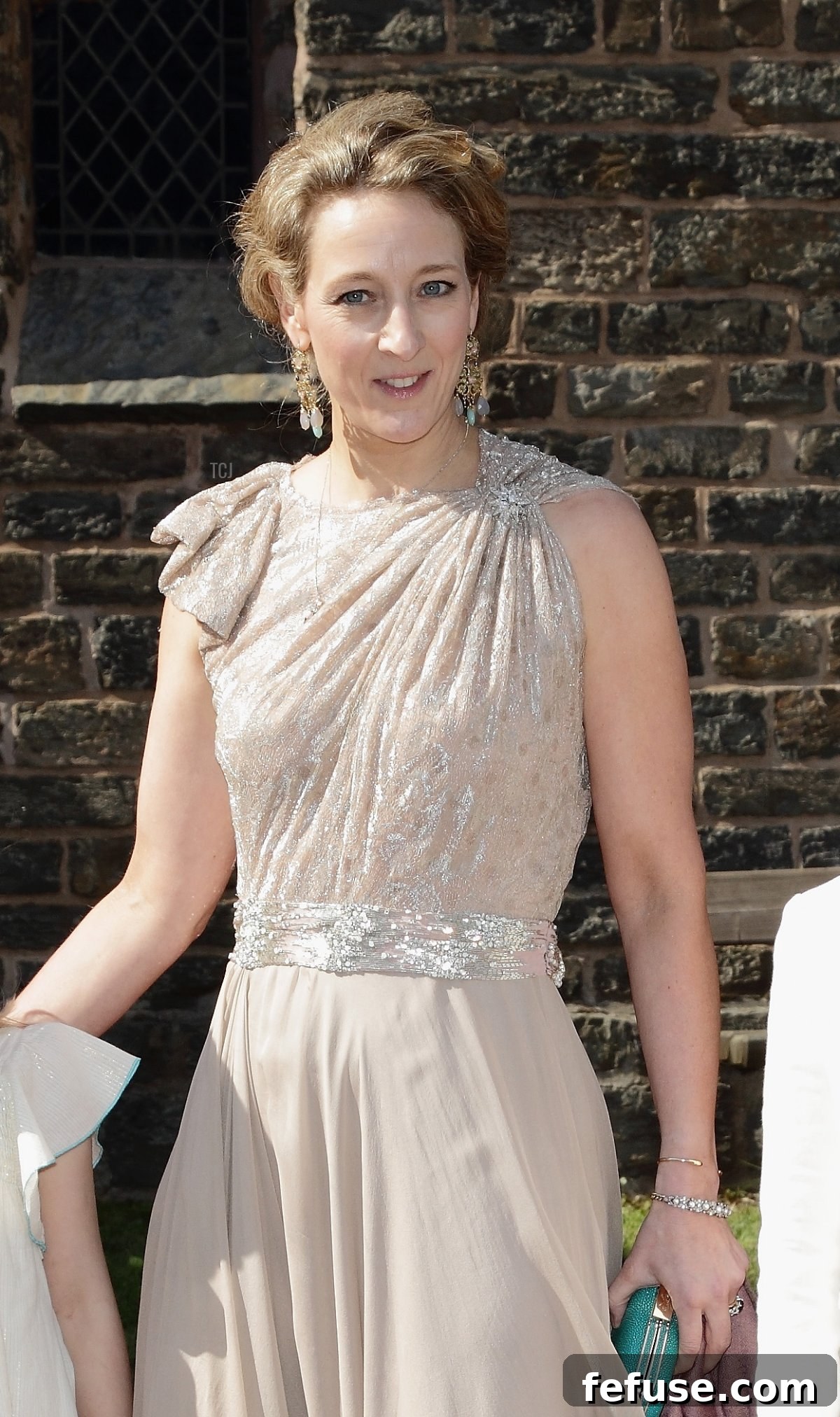
Princess Alexandra of Sayn-Wittgenstein-Berleburg, Princess Benedikte’s elder daughter, is a faithful wearer of her gold bracelet. She was seen wearing it prominently at her sister’s wedding in Germany in 2011, demonstrating its significance even on grand family occasions. Its simple elegance complements any outfit, allowing it to be a constant companion.
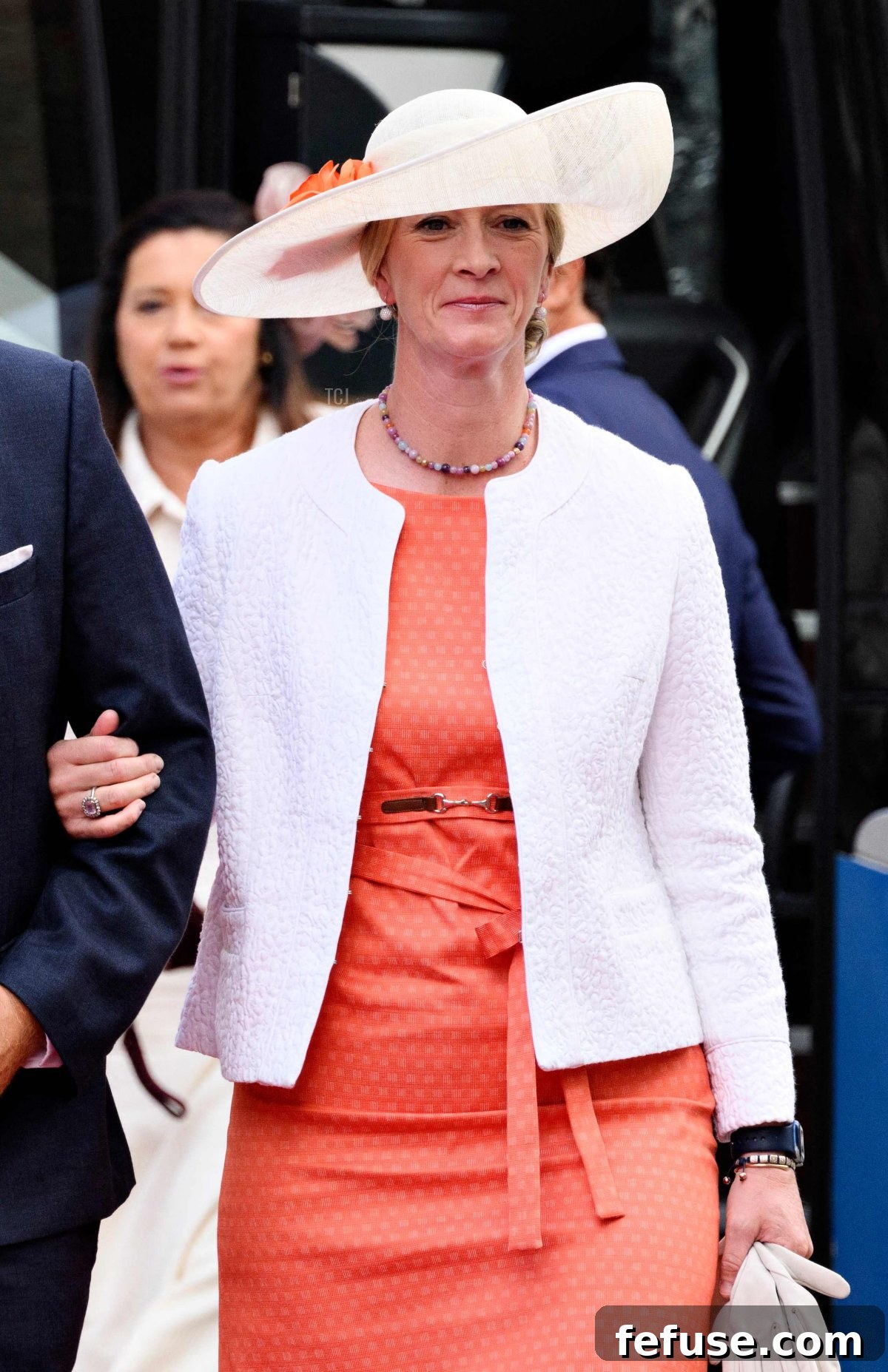
Princess Nathalie of Sayn-Wittgenstein-Berleburg, an accomplished equestrian and younger daughter of Princess Benedikte, also upholds the tradition. She was photographed wearing her gold bracelet in September 2022, while attending a church service celebrating Queen Margrethe’s Golden Jubilee in Copenhagen. This shows the bracelet continues to be worn and cherished during significant royal events, silently affirming the family’s shared history.
Queen Anne-Marie’s Daughters
Queen Anne-Marie’s daughters have similarly embraced this unique family heirloom, ensuring the “golden thread” extends further into the Greek branch of the family. This commitment underlines the cross-generational appeal and profound symbolism of the bracelet.

Princess Alexia of Greece and Denmark, Queen Anne-Marie’s elder daughter, is frequently seen wearing her bracelet. Its casual appearance in this 2004 photograph, prior to a boat race off the coast of Valencia, demonstrates its integration into her everyday life, reflecting its personal, rather than purely ceremonial, significance.

Princess Theodora of Greece and Denmark, Queen Anne-Marie’s younger daughter, is also a proud participant in this family tradition. Here, she wears her gold bracelet in Greece in 2010, ensuring the legacy continues through her generation. The simple gold bangle provides a constant, elegant link to her royal ancestors.
The Future of the Tradition: Queen Margrethe’s Granddaughters
Although Queen Margrethe II had only sons, the cherished gold bracelet tradition continues to flourish through her granddaughters, further extending the matrilineal legacy. It’s important to note that this specific tradition is reserved for direct female descendants, underscoring its unique personal nature. While other royal women, such as Crown Princess Mary and Princess Marie, may wear other exquisite pieces from Queen Ingrid’s jewelry collection, these particular bangles are strictly passed down through the direct female line.
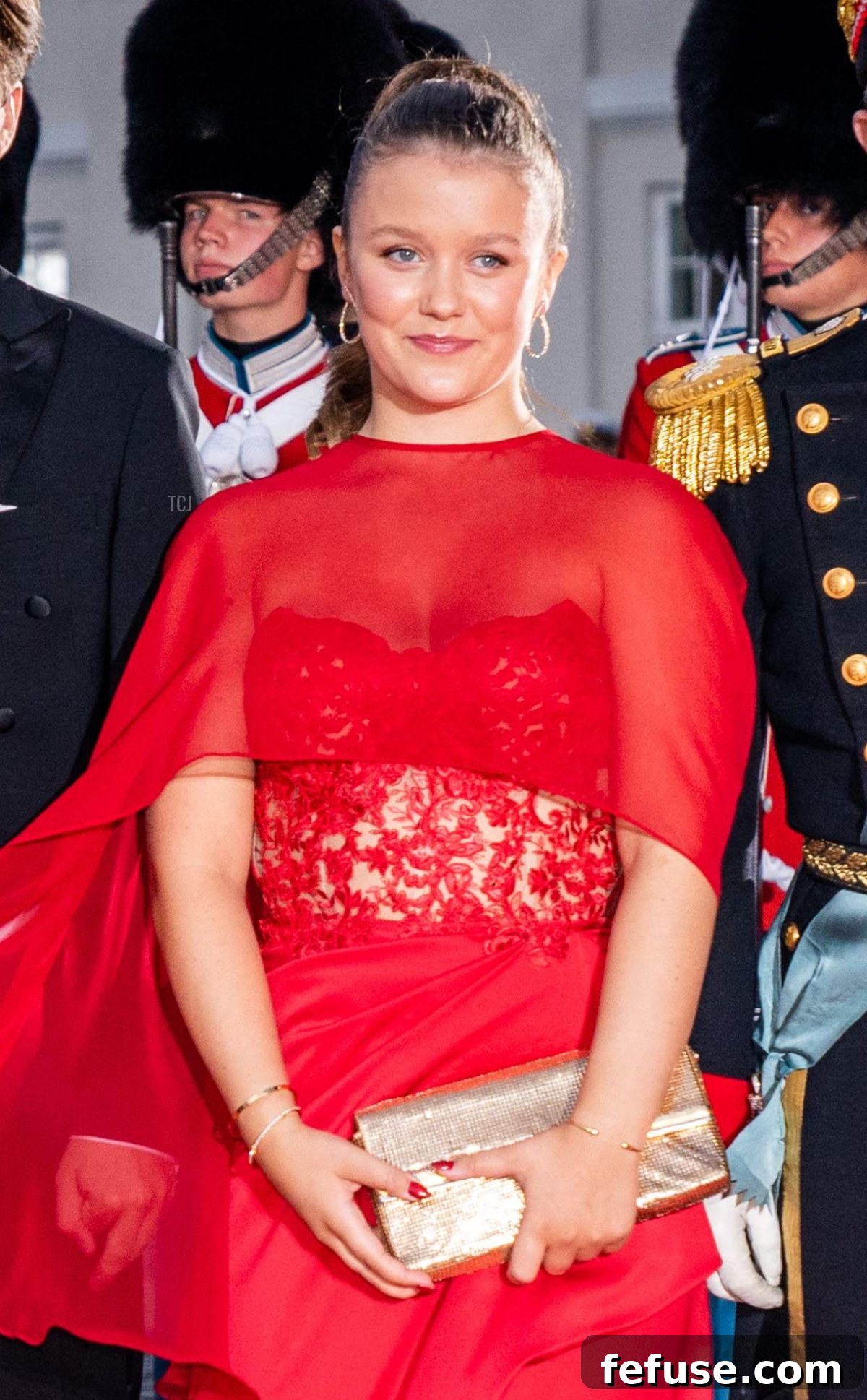
Princess Isabella of Denmark, daughter of Crown Prince Frederik, proudly showcased her gold bracelet during her grandmother’s Golden Jubilee festivities in September 2022, attending a gala concert at the Danish Royal Theatre. Her public display of the bracelet at such a significant event highlights its importance to the younger generation and their commitment to upholding family customs.
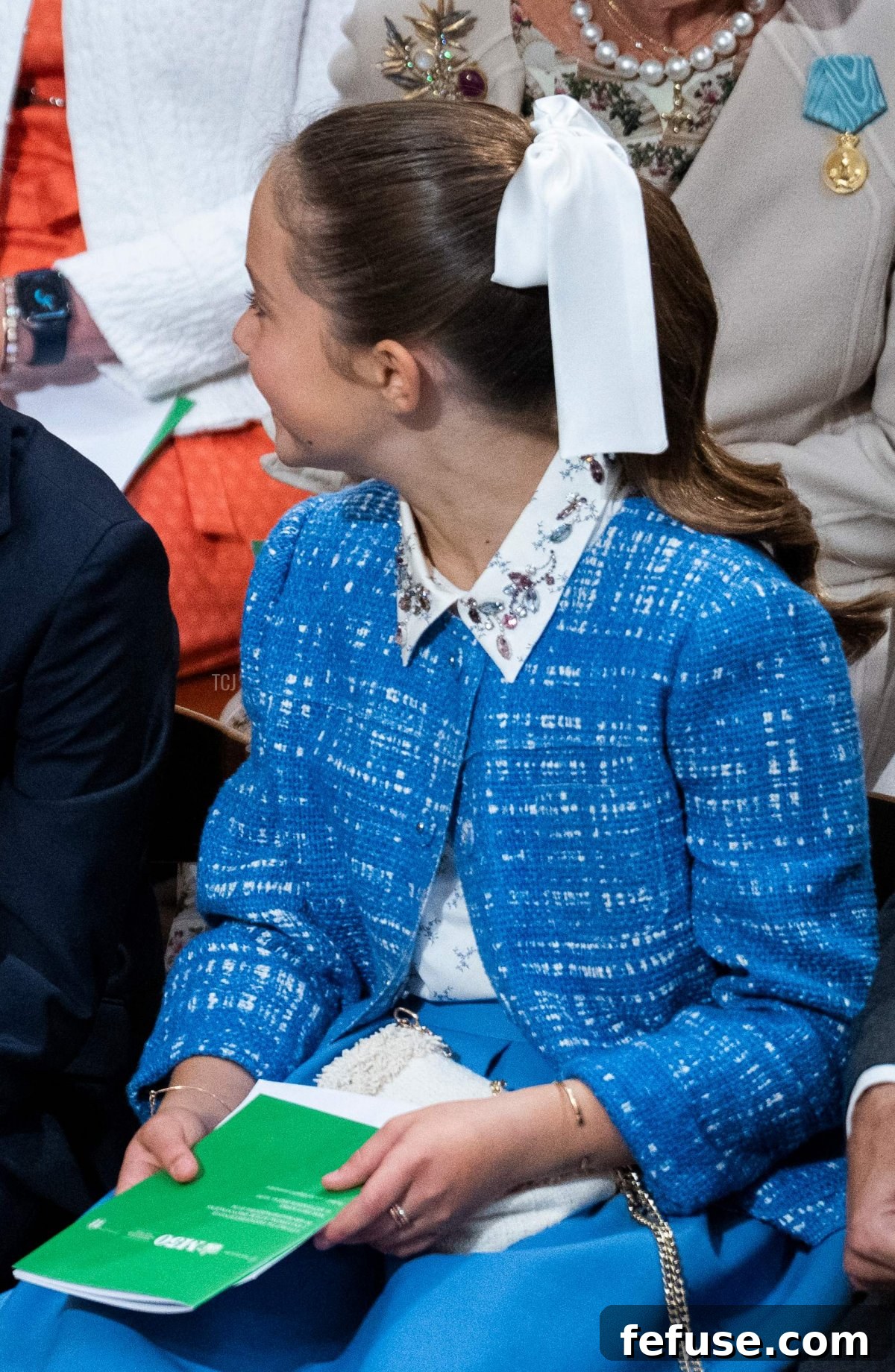
Princess Josephine of Denmark, Isabella’s younger sister, was also seen wearing her gold bracelet during the Golden Jubilee church service held the same weekend at Copenhagen Cathedral. These young princesses, along with other eligible wearers such as Countess Athena of Monpezat (daughter of Prince Joachim and Princess Marie); Countess Ingrid von Pfeil und Klein-Ellguth (daughter of Princess Alexandra of Sayn-Wittgenstein-Berleburg); Louisa Johannsmann (daughter of Princess Nathalie of Sayn-Wittgenstein-Berleburg); Arrietta, Anna Maria, and Amelia Morales y de Grecia (daughters of Princess Alexia of Greece and Denmark); and Princess Maria Olympia of Greece and Denmark (daughter of Crown Prince Pavlos of Greece), all contribute to the vibrant continuation of this beautiful family legacy. Each bracelet represents a silent testament to a remarkable lineage and the enduring power of family connection, proving that sometimes, the simplest jewels hold the deepest royal meaning.