
A Royal Bicentennial: Queen Elizabeth II’s Historic White House Visit in 1976
In the summer of 1976, as the United States brimmed with patriotic fervor, celebrating its monumental 200th anniversary of independence, the White House prepared for a truly special diplomatic event. Our ongoing “American Royal Jewelry” series today spotlights one of the most memorable visits by Queen Elizabeth II to the American capital: a state visit coinciding with the nation’s Bicentennial celebrations. This wasn’t merely a formal occasion; it was a vibrant affirmation of the “special relationship” between two nations, marked by grand festivities, insightful speeches, unique entertainment, and, of course, a dazzling display of royal jewels.
This article delves into the details of that historic day, exploring the meticulous preparations, the distinguished guest list, the cultural performances, and the spectacular diamond treasures worn by Her Majesty, offering a unique glimpse into a moment when history, diplomacy, and enduring friendship converged.
The Royal Arrival: Celebrating Two Centuries of American Independence
Queen Elizabeth II and her consort, Prince Philip, Duke of Edinburgh, embarked on a six-day state visit to the United States on July 7, 1976. The timing was highly symbolic, falling just three days after the United States had officially marked its bicentennial, a nationwide commemoration of the 200th anniversary of the Declaration of Independence. The entire country was still buzzing with patriotic events and celebrations, making the Queen’s visit a capstone moment for the historic milestone.
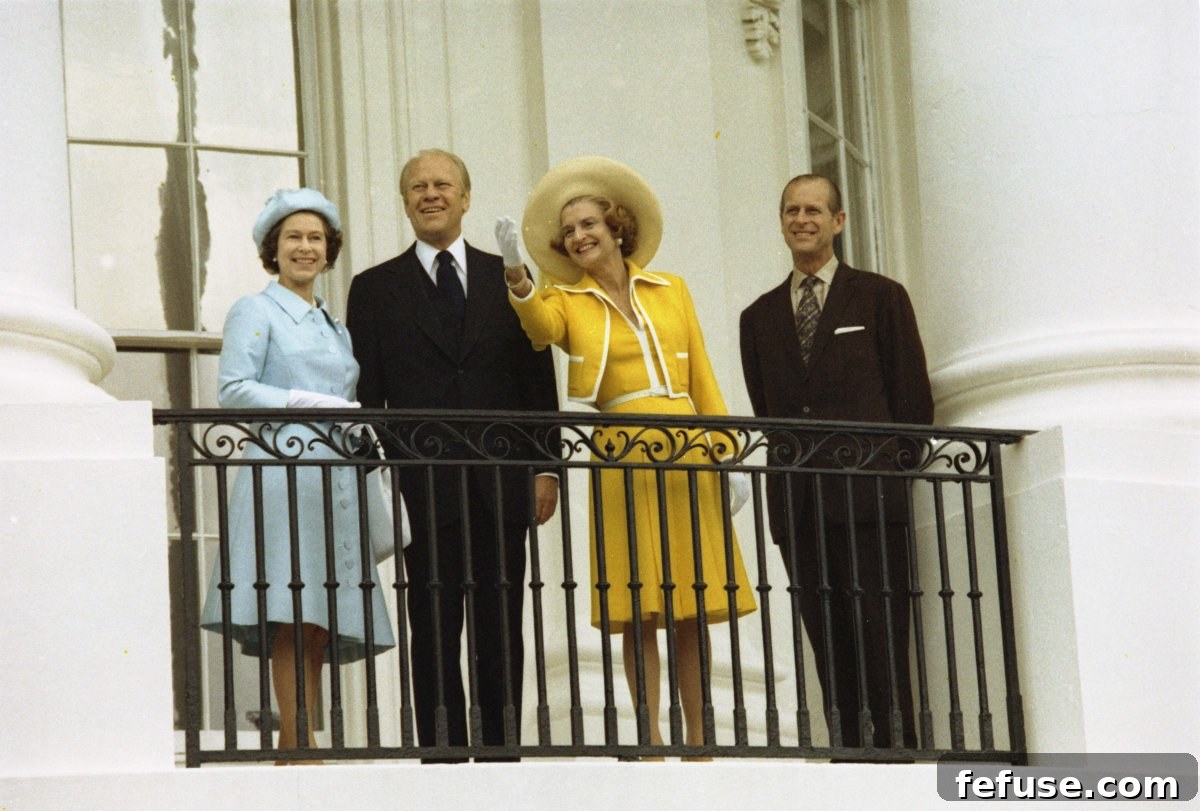
Upon their arrival at the White House, the royal couple was greeted by President Gerald R. Ford and First Lady Betty Ford. The official welcome ceremony saw them pose for photographs on the iconic Truman Balcony, a backdrop reserved for moments of significant state importance. For this daytime appearance, the Queen chose to wear the exquisite Cambridge Pearl Pendant Brooch, a piece with its own rich history, showcasing her characteristic blend of elegance and tradition.
Behind the Scenes: Crafting a Memorable Bicentennial Gala
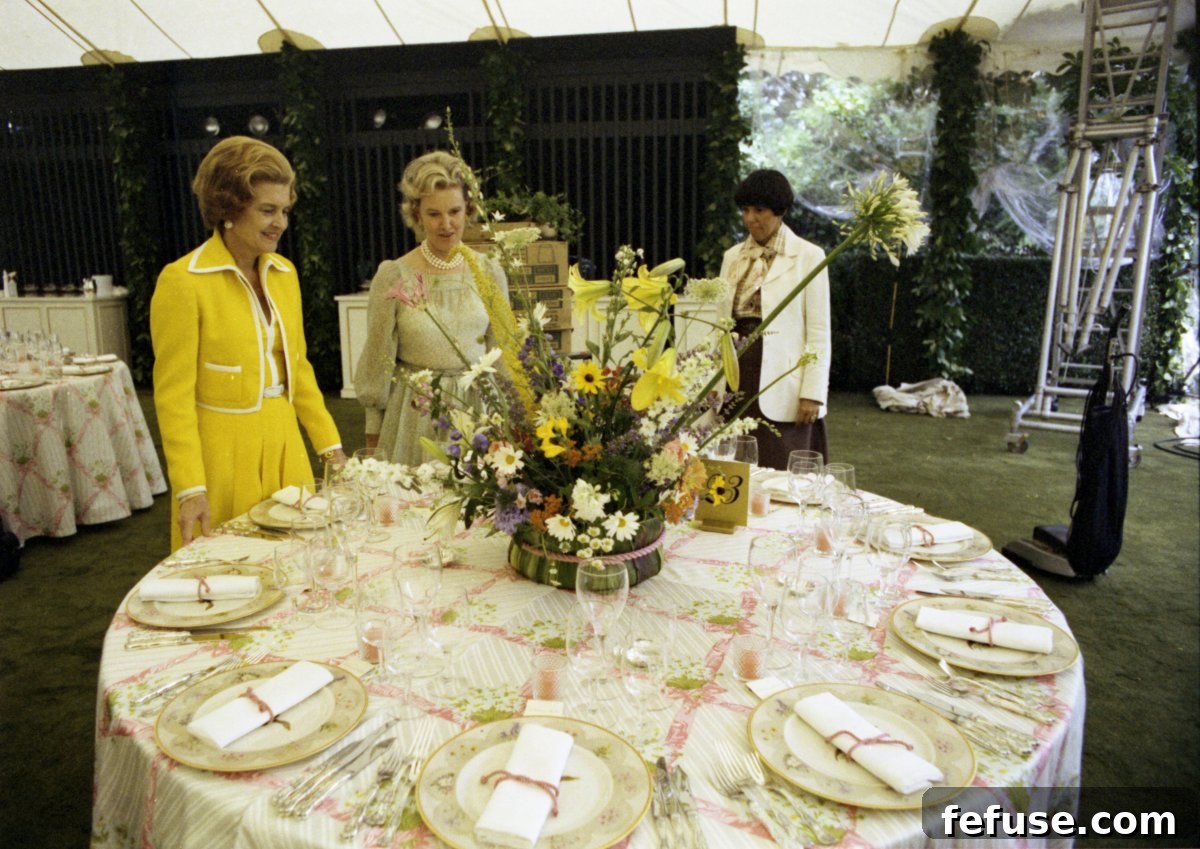
Following a private lunch within the White House, Queen Elizabeth and Prince Philip proceeded to Arlington National Cemetery to lay a wreath and pay their respects to fallen American service members. Meanwhile, back at the White House, First Lady Betty Ford and her dedicated team shifted into high gear, orchestrating the elaborate preparations for the evening’s state dinner. This particular dinner was envisioned as a grand outdoor affair, a testament to the Fords’ reputation for exceptional hospitality and their desire to make the Bicentennial celebration truly unforgettable. Instead of the traditional indoor setting, the decision was made to host the event under a magnificent tent erected in the White House Rose Garden.
The Fords were renowned for their vibrant social calendar, having hosted an impressive 33 state dinners during President Ford’s relatively brief presidency. The final year of his term alone saw an astonishing eleven state dinners held under this very Rose Garden tent, a testament to its popularity and the warm, inviting atmosphere it created for international guests and American dignitaries alike.
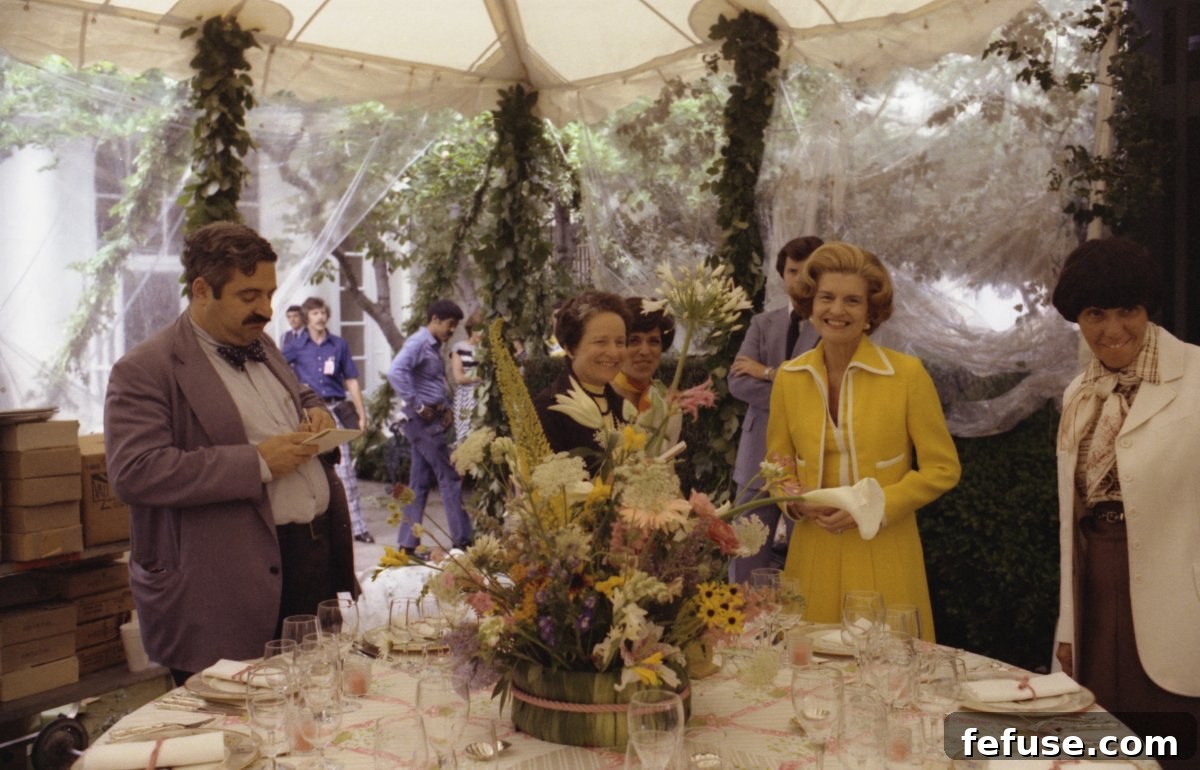
The outdoor setting transformed the Rose Garden into an enchanting wonderland. A sprawling 100-foot canopy stretched elegantly over the lawn, adorned with lavish garlands of fresh flowers and lush greenery, setting a romantic and celebratory tone. Each of the meticulously arranged round dining tables featured elaborate floral displays, mirroring the garden’s natural beauty. The tables were set with the exquisite floral-patterned Johnson china, adding a touch of classic elegance. Even the specially commissioned Scalamandré linens for the evening carried a delicate floral theme, tying every detail together harmoniously. Adding to the living décor, White House gardeners busily tended to vibrant pink Queen Elizabeth roses, ensuring every aspect of the outdoor decorations contributed to the overall grandeur and thematic cohesion of the Bicentennial celebration.
Anticipation and Entertainment: A Glimpse into the Evening’s Festivities
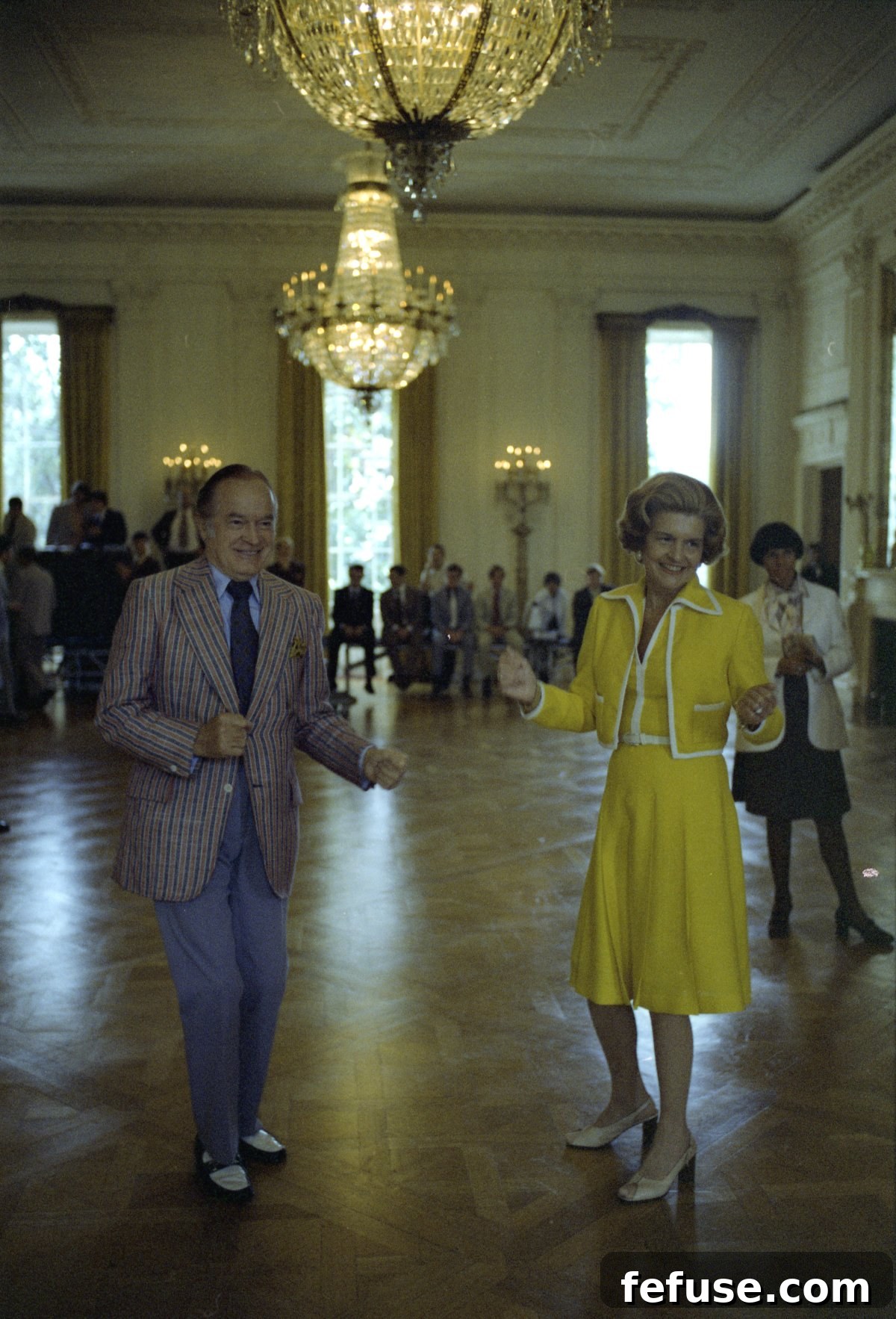
While the formal dinner was planned for the enchanting Rose Garden, the after-dinner entertainment and dancing were scheduled to take place inside the historic White House. Even before the guests arrived, the atmosphere was lively during rehearsals. Here, First Lady Betty Ford, known for her spirited personality and love of dance, shares a playful moment with one of the evening’s featured entertainers, the legendary comedian Bob Hope. Their impromptu boogie during preparations hinted at the convivial spirit that would permeate the entire evening.
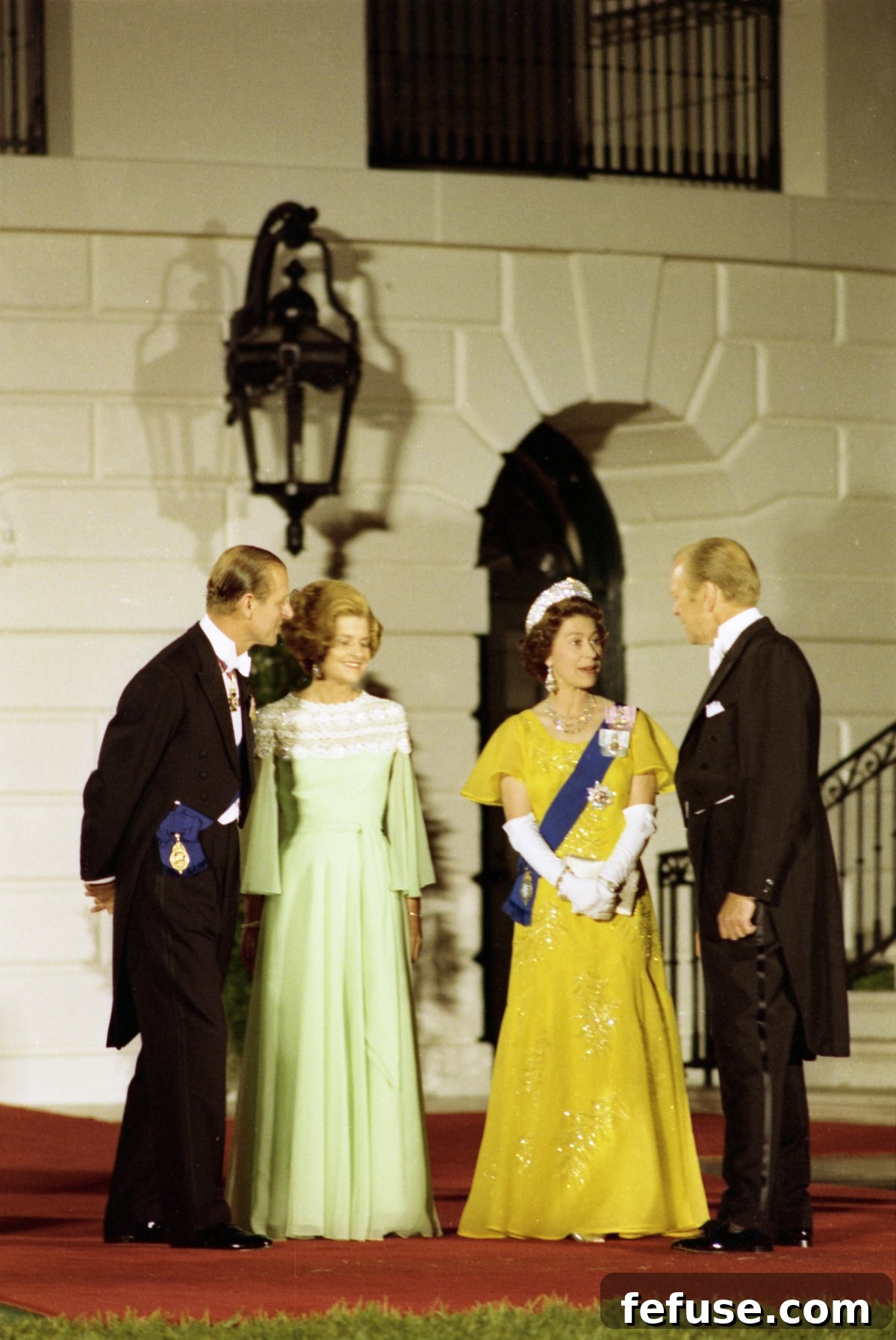
However, Washington’s unpredictable summer weather nearly put a damper on the elegant plans. Early on the evening of July 7, much to the dismay of the organizers, a summer downpour brought rain to the capital. The state dinner had to be temporarily postponed for an hour, allowing time for the skies to clear. Fortunately, the weather soon cooperated, and the distinguished royal and presidential couples were finally able to take their places on the South Lawn. Against the majestic backdrop of the gleaming White House, freshly adorned with a new coat of paint for the Bicentennial, they warmly greeted the 224 eagerly awaiting guests, signaling the official start of a memorable evening.
A Star-Studded Gathering: Dignitaries, Celebrities, and Icons
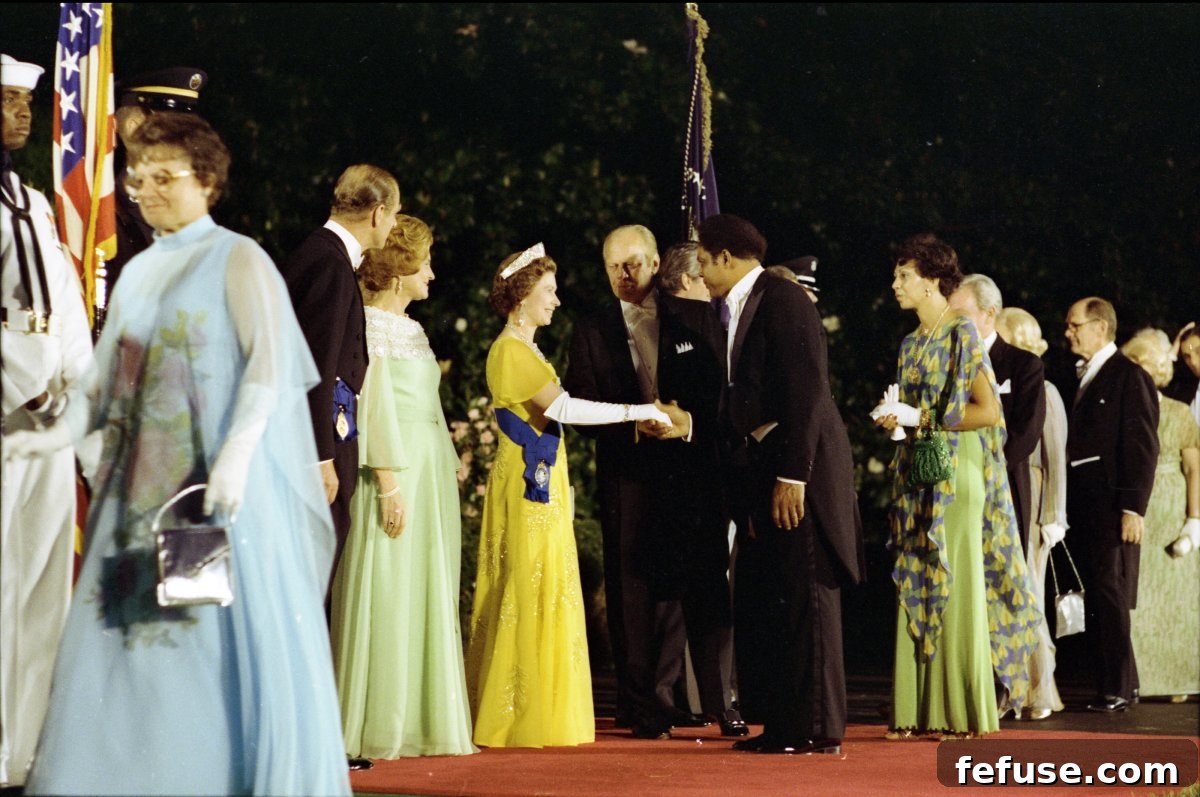
The guest list for this Bicentennial state dinner was truly exceptional, a carefully curated blend of political dignitaries, cultural luminaries, and American icons. As each guest arrived, they filed past the Queen, the Duke, the President, and the First Lady along a ceremonial red carpet. This elaborate receiving line was deemed significant enough to be broadcast live on PBS, allowing the American public a rare glimpse into the grandeur of the event. Intense floodlights illuminated the scene for the television cameras, creating a dazzling spectacle as notable figures from across society greeted the royal visitors.
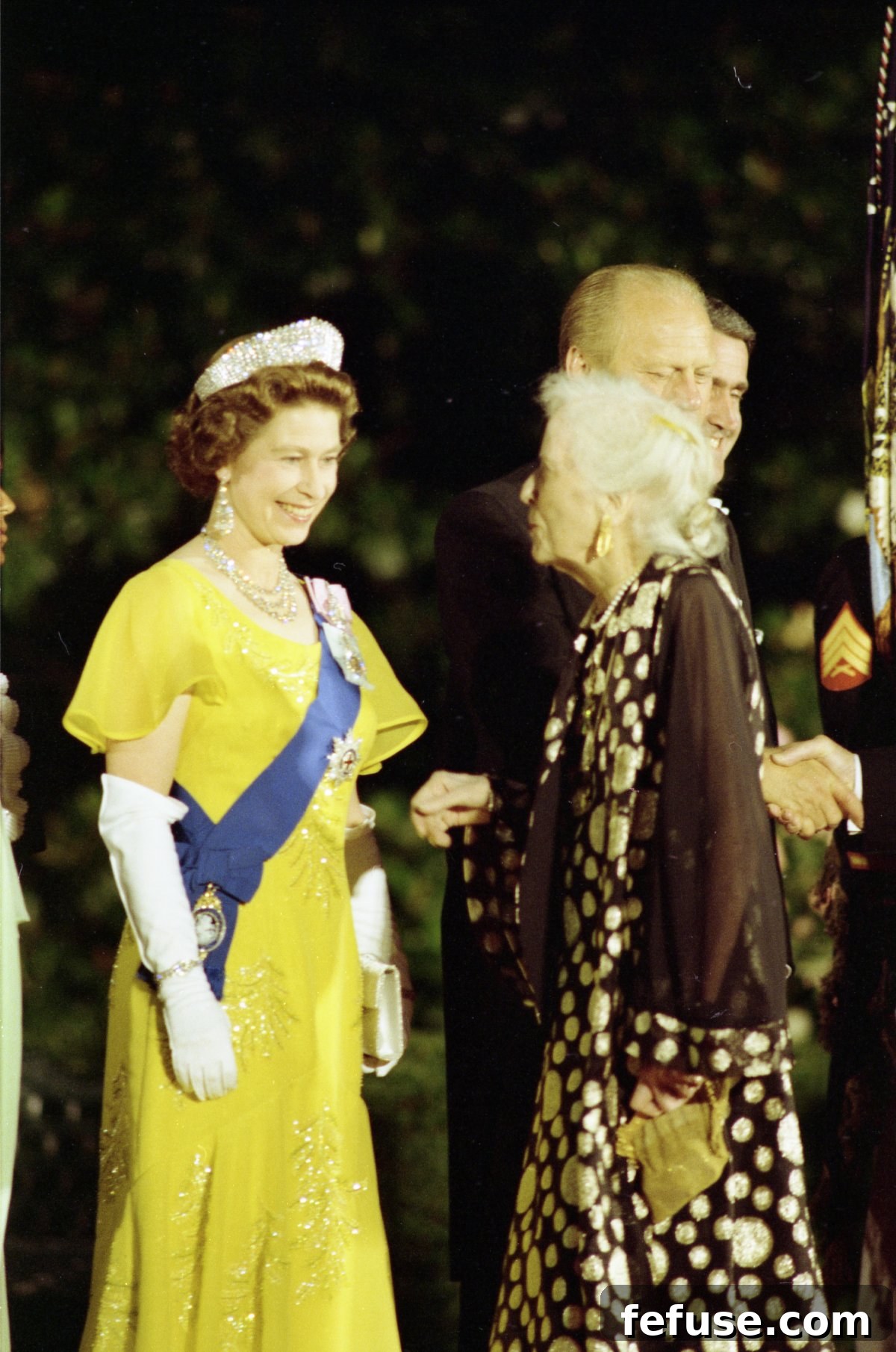
Among the distinguished guests, an especially poignant encounter occurred when the Queen had a moment to converse with 92-year-old Alice Roosevelt Longworth, the remarkable daughter of President Theodore Roosevelt. Having spent much of her life connected to American political history, Alice had witnessed countless events at the White House, making her a living bridge to the past. Interestingly, another former resident of the White House, Lady Bird Johnson, widow of President Lyndon B. Johnson, opted for a quieter entrance, skillfully avoiding the receiving line entirely.
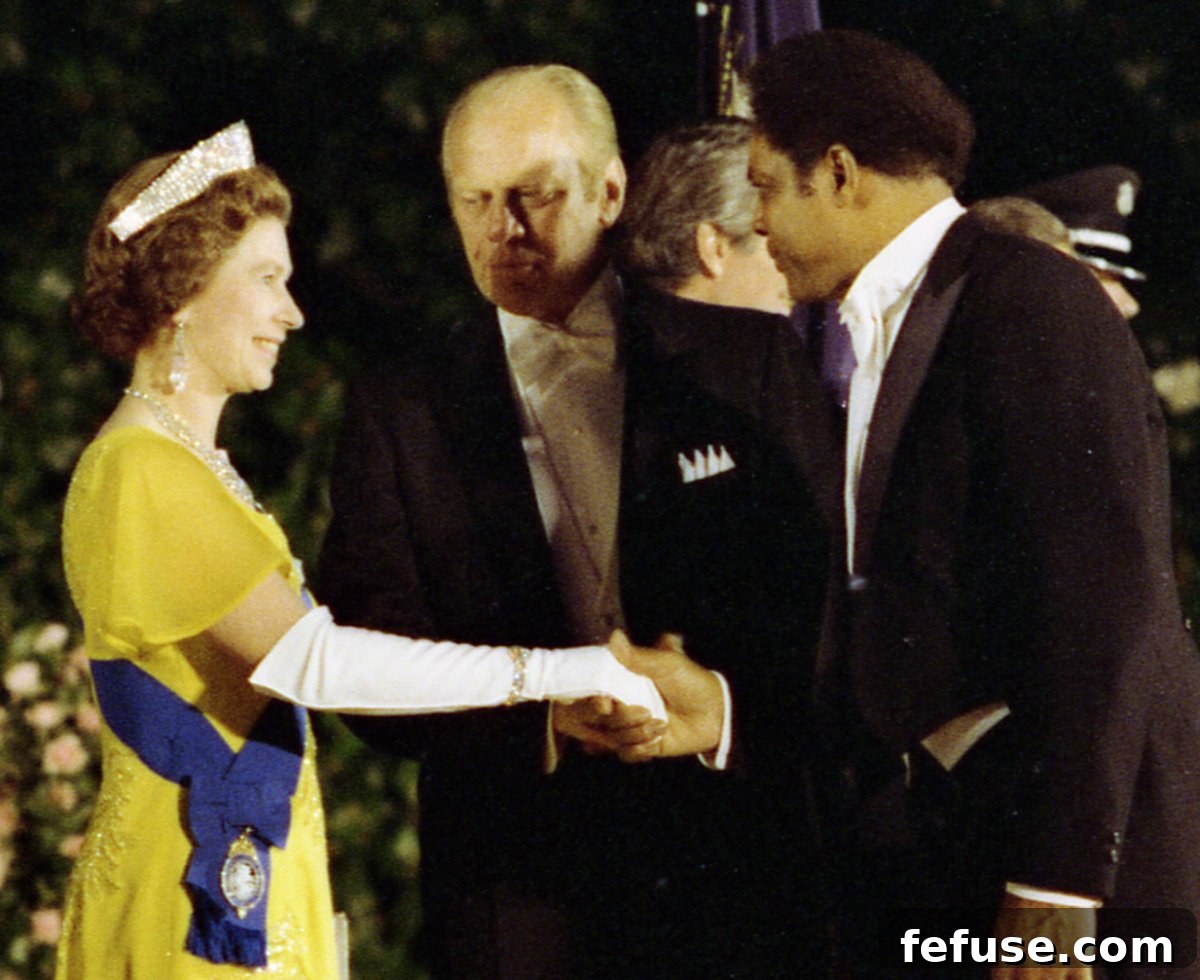
The blend of guests truly encapsulated the American spirit. President Ford took pleasure in introducing Her Majesty to baseball legend Willie Mays, who by then had retired after an extraordinary playing career. The guest list was a who’s who of the era, encompassing celebrated actors like Cary Grant, musical giants such as Ella Fitzgerald, and prominent journalists like Barbara Walters. Perhaps most notably, one of the Queen’s more unexpected but cherished friends, the influential evangelist Billy Graham, was also among those present, highlighting the broad spectrum of individuals touched by the royal visit.
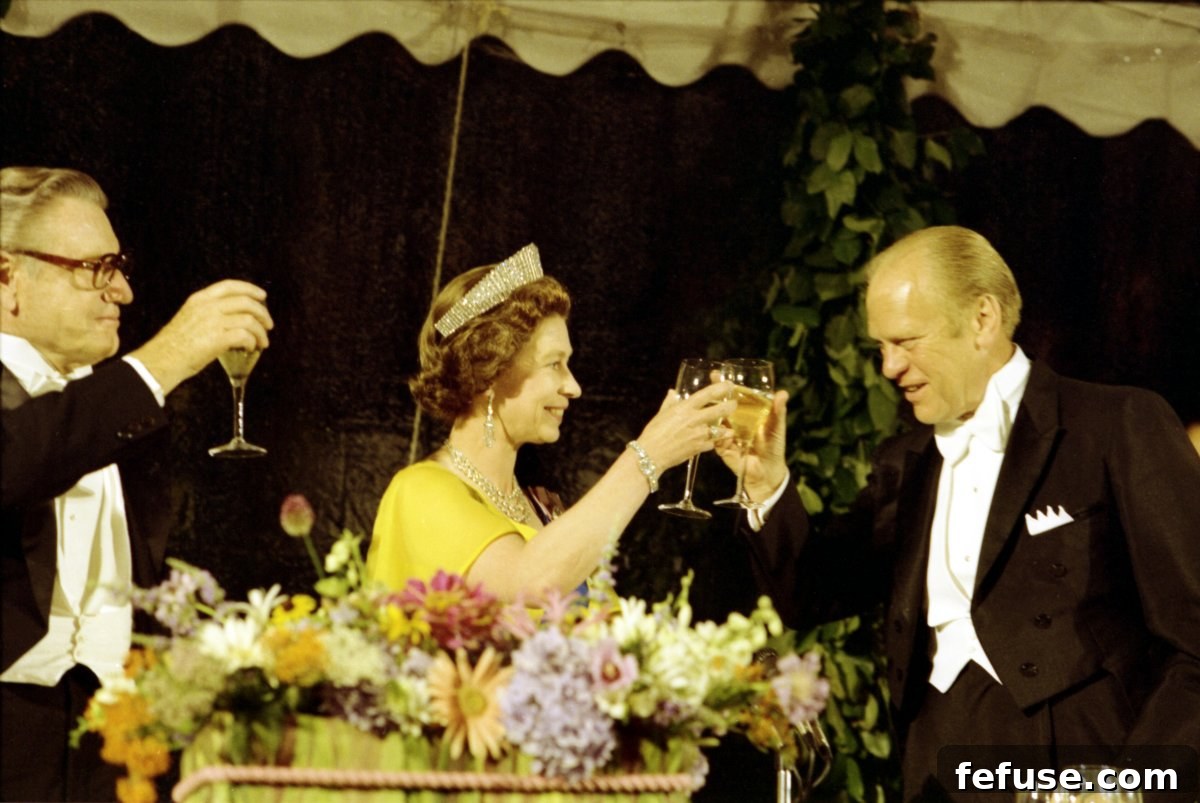
Toasts to an Enduring Friendship: Bridging Two Centuries
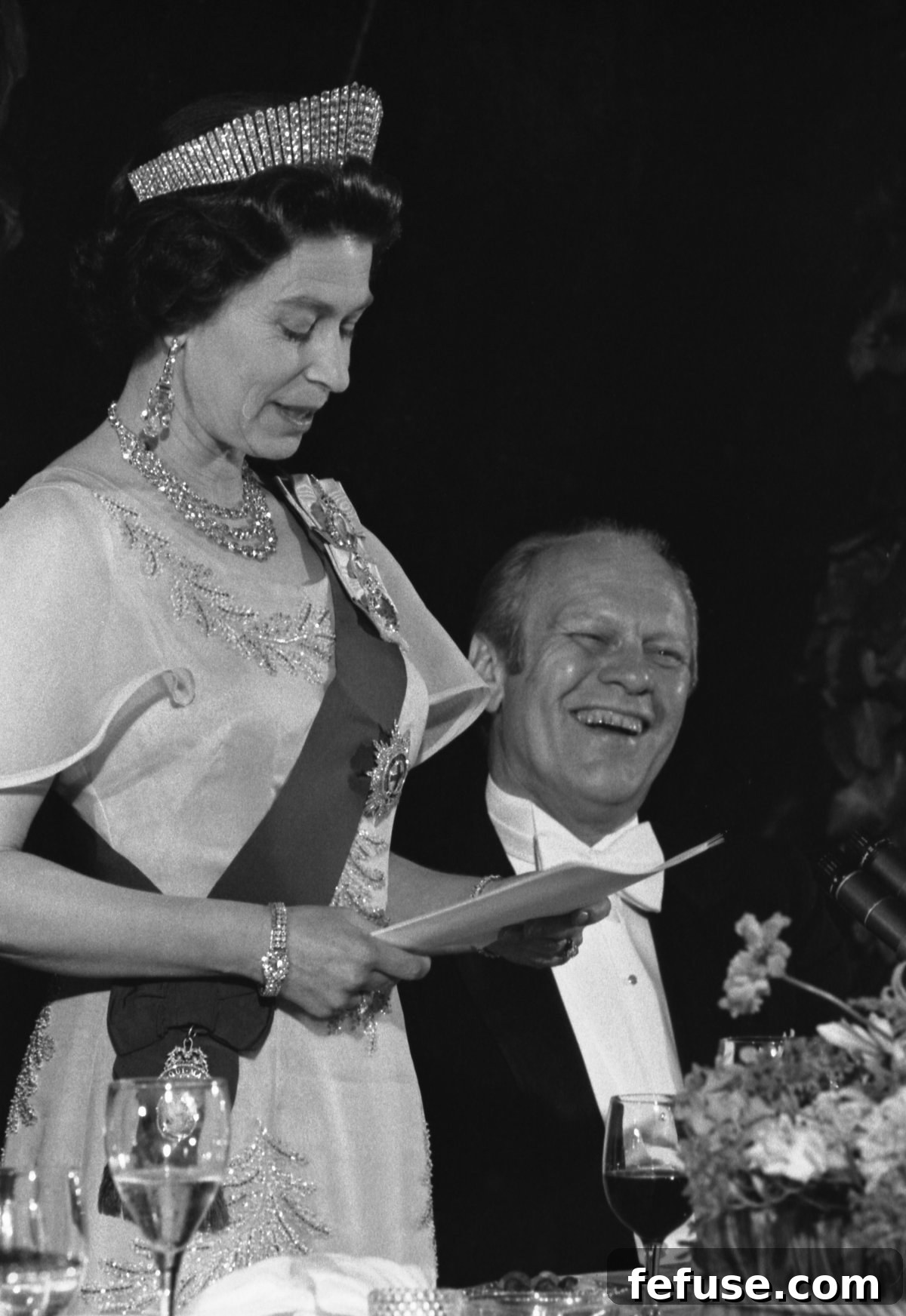
During the state dinner, both Queen Elizabeth II and President Gerald Ford delivered poignant remarks, culminating in a toast to the enduring friendship and shared future of their two nations. Their speeches served as a powerful reminder of the remarkable journey from the American colonies declaring independence from Great Britain two centuries prior to the robust alliance that stood in 1976. The Queen’s words, in particular, resonated deeply:
“Both our peoples believe in the world of the individual and the family, in freedom of religion and expression, in the right to change the government by the ballot box rather than the gun, perhaps the best definition of democracy. That is why, time and time again, in the testing days of war and the constructive years of peace, we have stood together on the things that matter.” Her Majesty’s statement beautifully articulated the core democratic values that bind the United States and the United Kingdom, reaffirming their historic and contemporary solidarity.
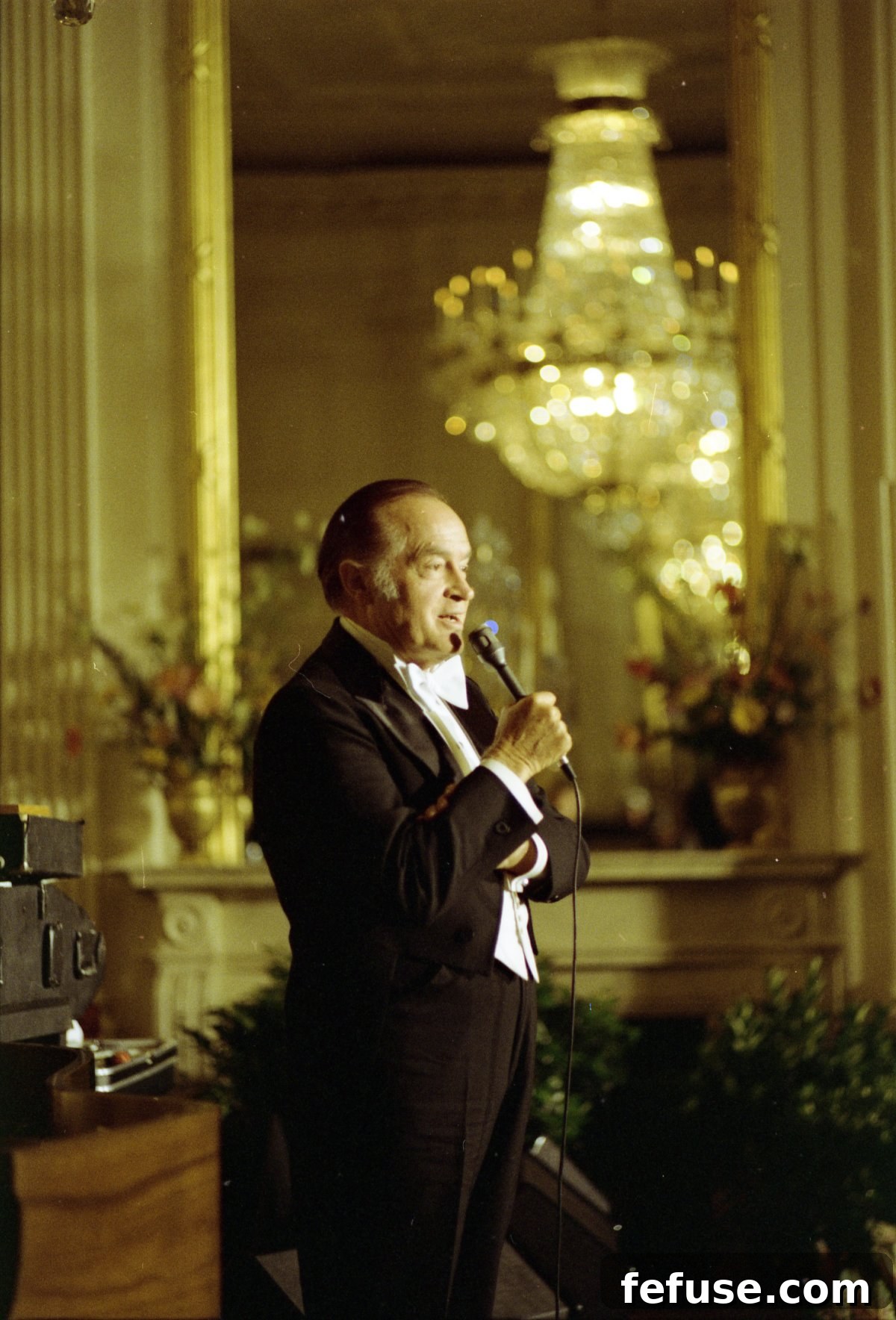
Laughter and Music: The Evening’s Entertainment
Following a delightful candlelight dinner featuring delectable courses of lobster and veal, the guests transitioned from the Rose Garden into the opulent East Room of the White House. There, they were treated to a stellar performance by the legendary British-born comedian, Bob Hope, whose wit and charm were perfectly suited for such an august audience. According to a UPI reporter, Hope’s comedic genius had Prince Philip “practically rolling in the aisle” with laughter, especially when he playfully quipped that “priests are complaining [that] their flock no longer comes to confession,” opting instead to go straight to the Washington Post. This timely joke, a nod to the recent Watergate scandal, showcased Hope’s ability to inject topical humor even into a royal setting, earning him roars of laughter from the distinguished guests.
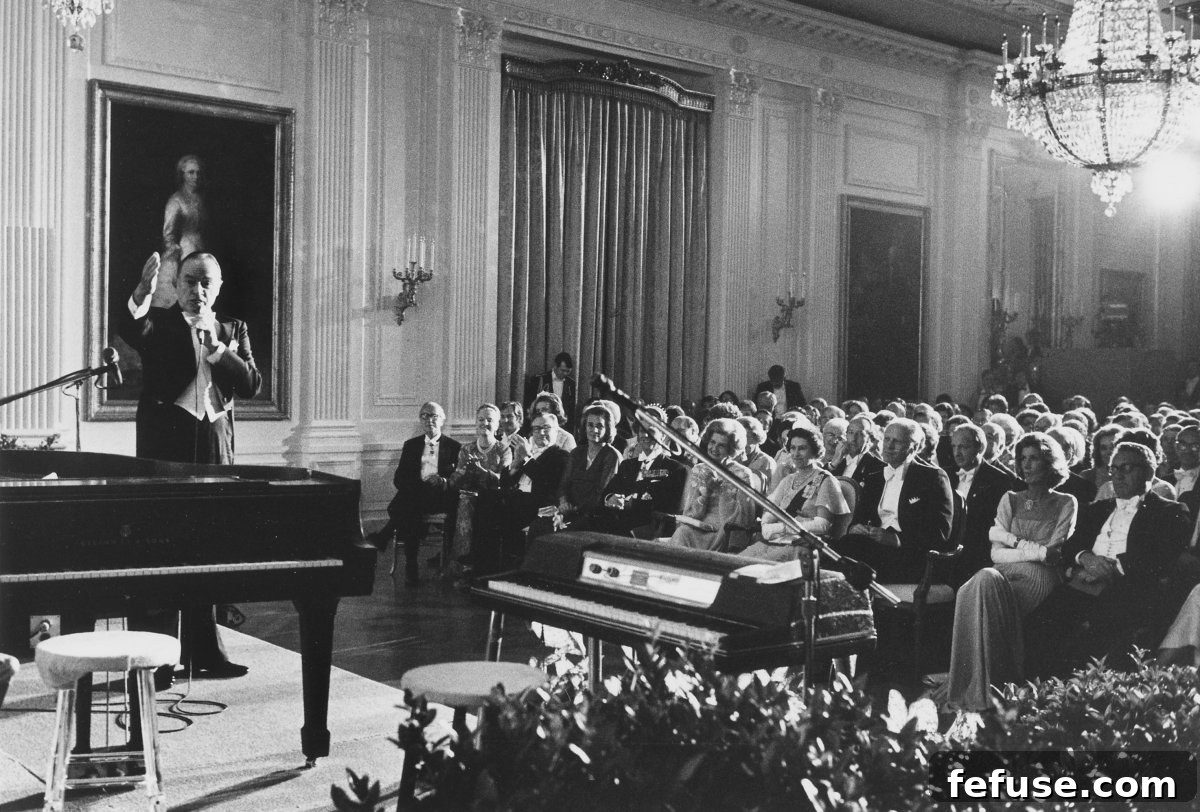
Bob Hope himself was captivated by the evening’s splendor, remarking, “I’ve never seen an affair as glamorous as this dinner. The diamonds, the jewels… The women look good too.” He also couldn’t resist a few good-natured jests at the expense of the royal guests. “I did a show for Prince Philip. There were 25 members of royalty. It looked like a chess game,” he quipped, drawing further amusement. Highlighting the cultural differences, he added, “In America, when we see a crown we expect to see a margarine commercial,” a line that perfectly underscored the unique dynamic between American and British perceptions of royalty.
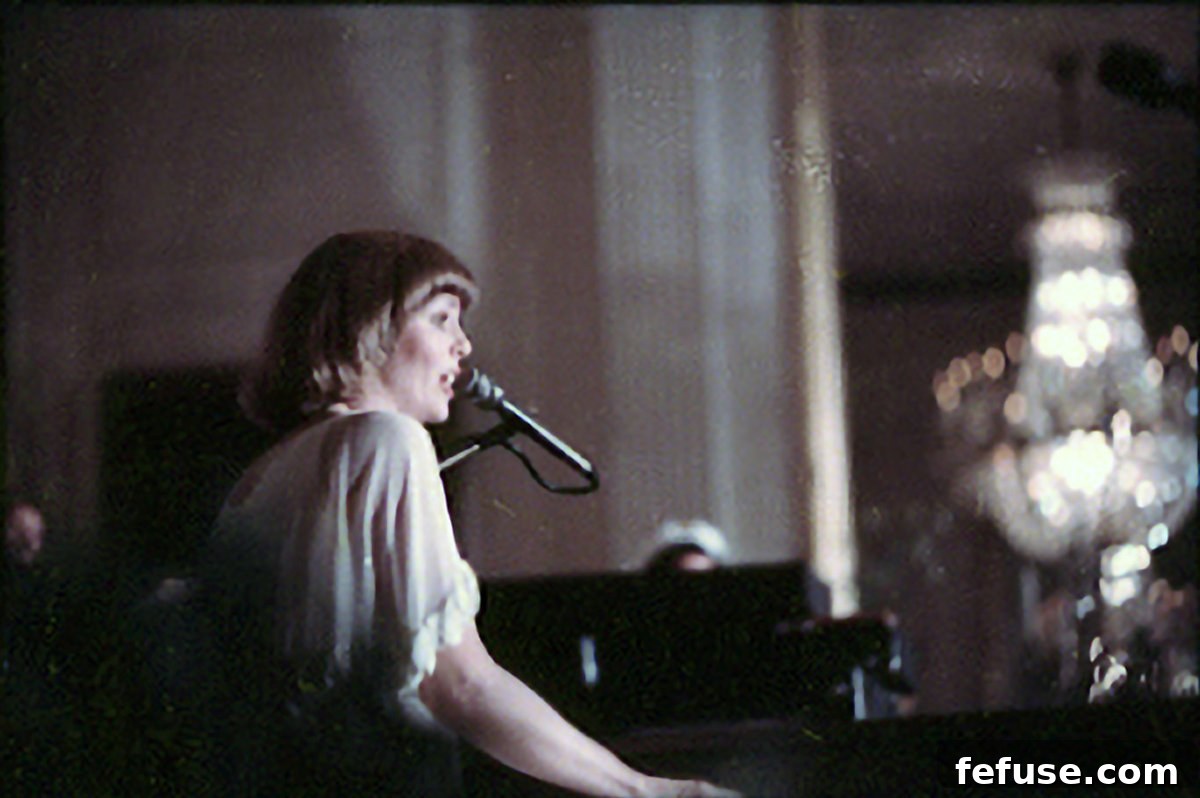
Continuing the musical segment, and truly reflecting the sounds of 1976, Bob Hope introduced the popular musical duo Captain & Tennille. They performed a set of four songs, including their monumental hit, “Love Will Keep Us Together,” and their then-upcoming single, “Muskrat Love.” The performance, particularly of “Muskrat Love,” stirred a surprising amount of debate. Toni Tennille later recounted that Henry Kissinger, seated prominently in the front row, “seemed miserable throughout the performance.” The sentiment wasn’t isolated; an unnamed “British dignitary” famously expressed his displeasure to Sally Quinn of the Washington Post, stating, “I bloody well didn’t come all the way over from England to come to the White House and listen to a couple of muskrats.” Lady Keith, wife of the esteemed banker Sir Kenneth Keith, publicly echoed the sentiment, deeming it “wasn’t a suitable song to sing for the Queen.” Tennille, however, gracefully brushed off the criticism, sagely observing to Rolling Stone, “They really try to protect her. It must be a drag to be a queen.” This amusing anecdote underscored the cultural clash and the unique challenges of entertaining royalty, while also adding a touch of unforgettable charm to the evening.
Dancing into the Early Hours: A Night of Royal Revelry
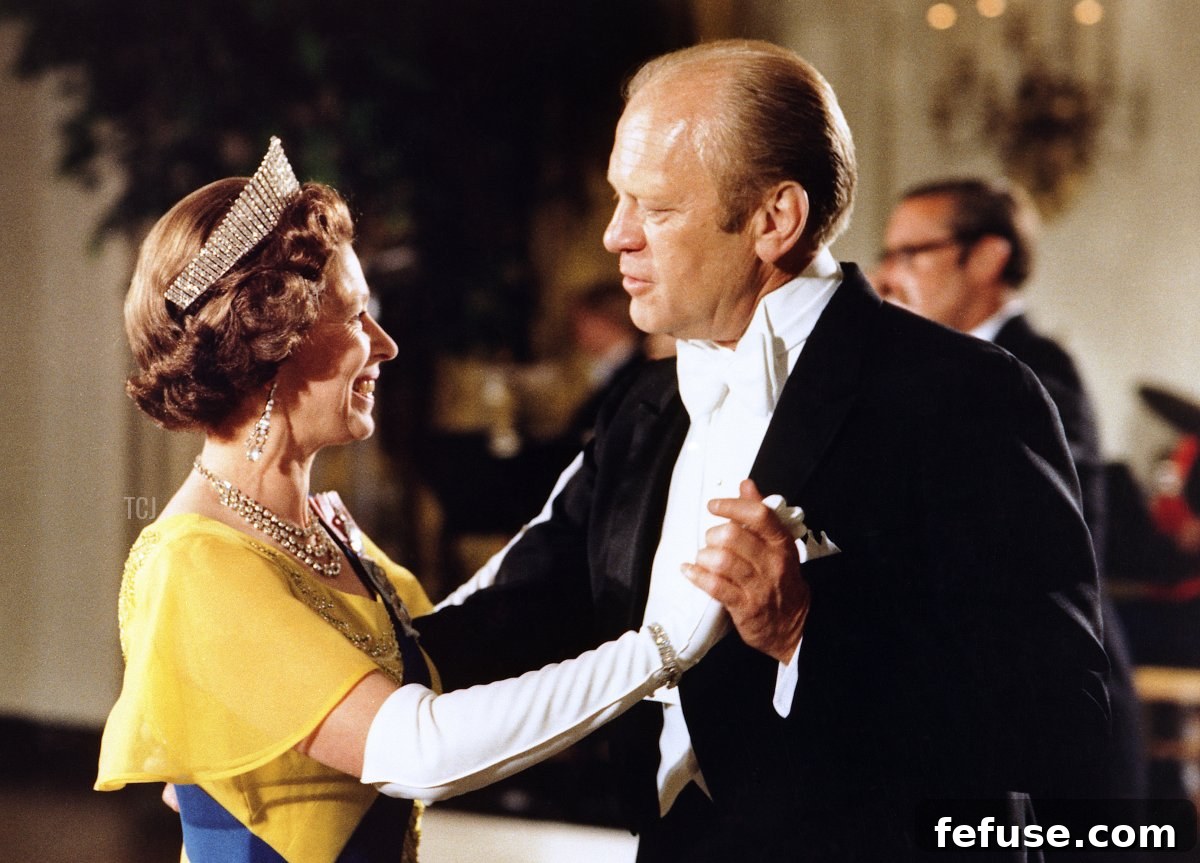
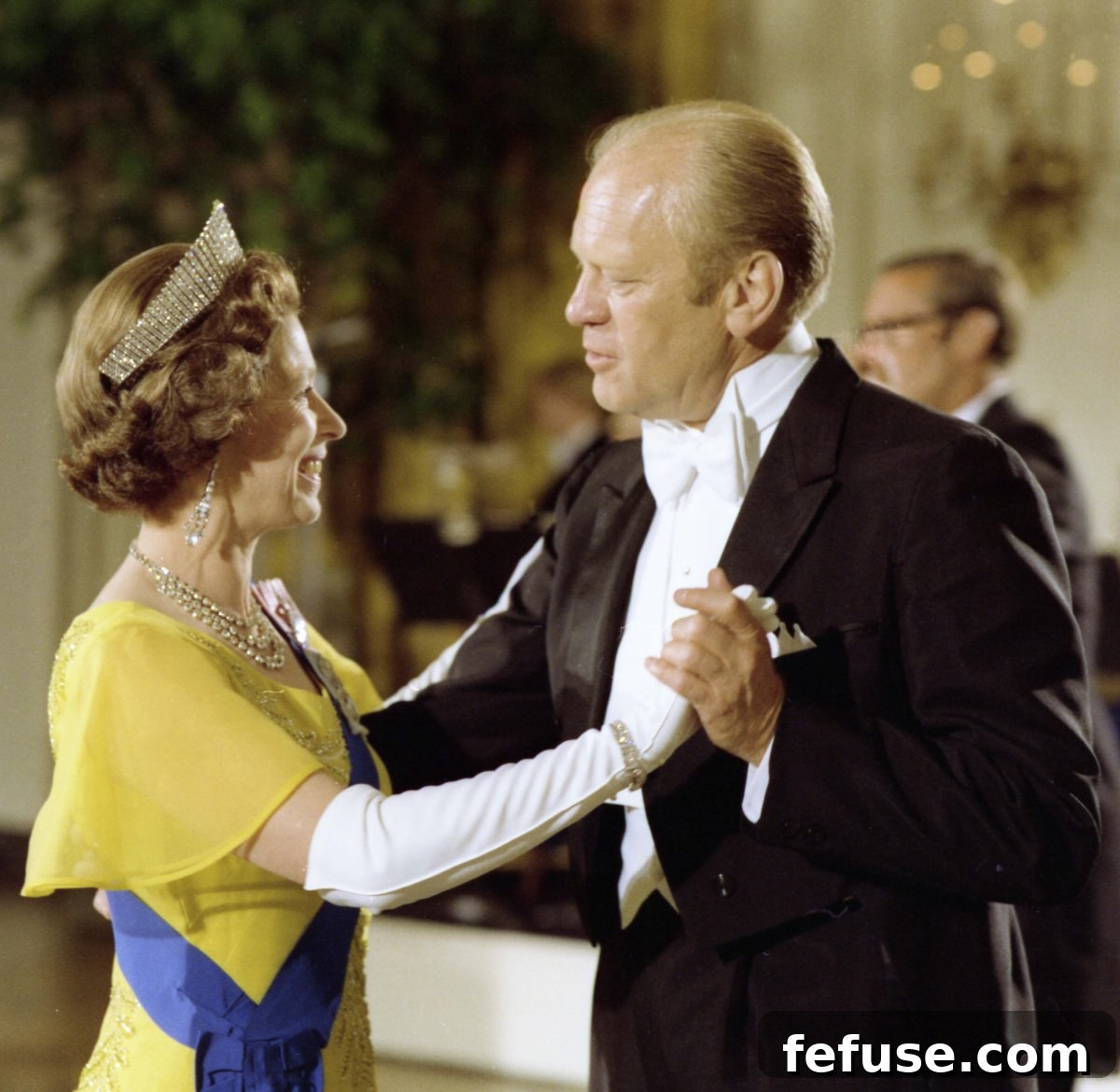
After the captivating performances, the festivities continued with lively dancing in the elegant State Dining Room. In a particularly delightful moment captured for posterity, Queen Elizabeth II was photographed gracefully dancing with President Ford, a rare and charming sight that further humanized the formal occasion. The party truly went on into the “wee hours of the morning,” testament to the warm atmosphere and enjoyable company. While Her Majesty retired to her private quarters at twenty minutes to one, signaling the end of her evening, the ever-energetic Fords continued to dance for another hour, showcasing their legendary stamina and love for entertaining their guests.
The Queen’s Radiant Attire: A Lemon Chiffon Dream
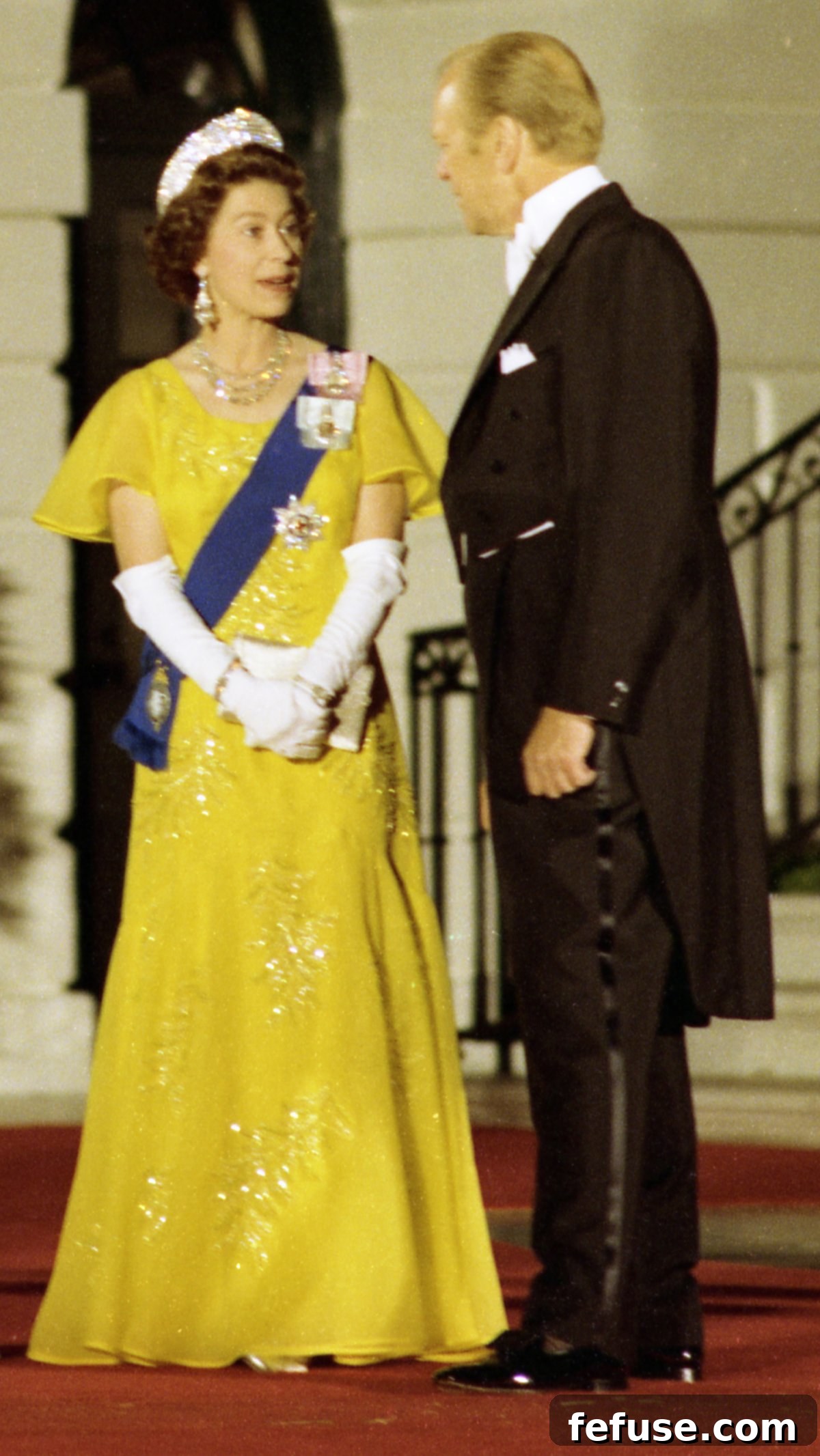
For this historic Bicentennial state dinner, Queen Elizabeth II chose a truly exquisite chiffon evening gown. Described by the press of the day as a vibrant “lemon” shade, the gown radiated a summery elegance that perfectly suited the outdoor garden setting. Its intricate design featured sparkling, leafy embroidery, adding a touch of subtle glamour and shimmer under the evening lights. In keeping with royal protocol for state occasions, Her Majesty proudly wore the sash and star of the prestigious Order of the Garter, the highest order of chivalry in the British honors system. She also displayed the Royal Family Orders of her beloved father, King George VI, and her grandfather, King George V, pinned to her gown, symbolizing her deep connection to her lineage and the Crown.
Dazzling Diamonds: The Queen’s Bicentennial Jewels
No account of a Queen Elizabeth II state appearance would be complete without a focus on her magnificent jewels, and for this Bicentennial dinner, she truly brought out the sparkle. The American press, captivated by the sheer brilliance, was particularly wowed by her diamond tiara, a breathtaking piece that commanded attention. This stunning kokoshnik-style diadem, known as Queen Alexandra’s Kokoshnik Tiara, was crafted in 1888 as a silver wedding anniversary gift for Elizabeth II’s great-grandmother, Queen Alexandra. Its striking design was inspired by a beloved jewel worn by Alexandra’s sister, Empress Marie Feodorovna of Russia, giving it a distinctive imperial flair and making it one of the most significant pieces in the royal collection.
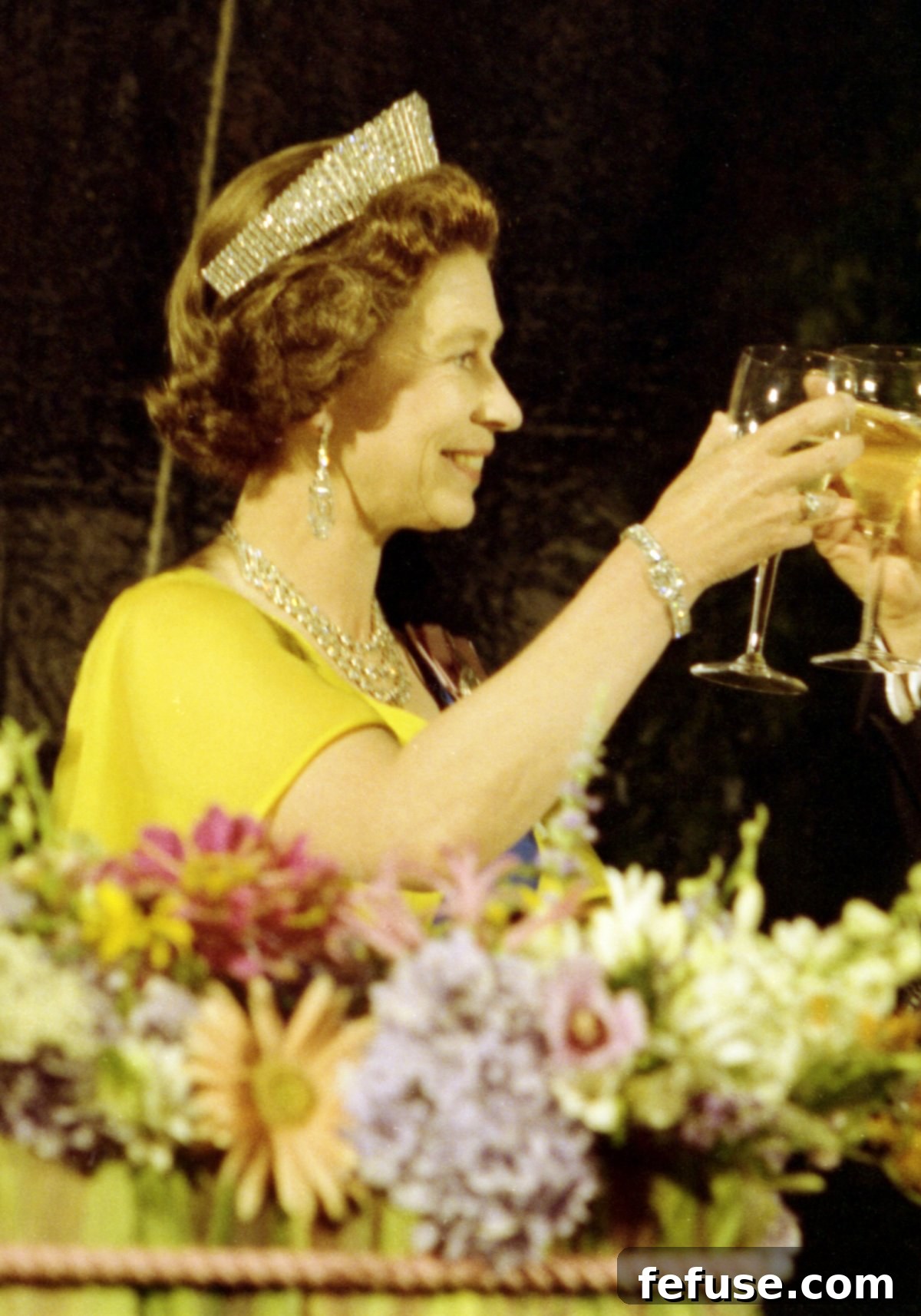
Complementing the magnificent tiara, the Queen adorned herself with an array of other exquisite diamonds from her unparalleled collection. Her elegant earrings, the Greville Chandeliers, were a cherished part of the remarkable 1942 jewelry inheritance received by her mother, Queen Elizabeth The Queen Mother. These dazzling earrings were then gifted to Elizabeth as a wedding present in 1947, holding deep sentimental value. They were most recently seen worn by the Princess of Wales, Catherine, in Jordan, demonstrating their enduring relevance within the royal family.
Around her neck, the Queen wore a breathtaking diamond festoon necklace, a piece specially commissioned by her father, King George VI, in 1950. This necklace, too, has been a favorite of younger royals, with the Princess of Wales recently wearing a similar festoon necklace at the coronation of King Charles III in May. Completing her arm candy, a distinctive diamond bracelet, featuring a unique twisted design, was another precious gift from her father, received in 1949. A sparkling diamond ring on her right hand added the finishing touch to her magnificent Bicentennial ensemble, ensuring she radiated regal splendor worthy of the momentous occasion.
Betty Ford’s Style and a Lasting Souvenir
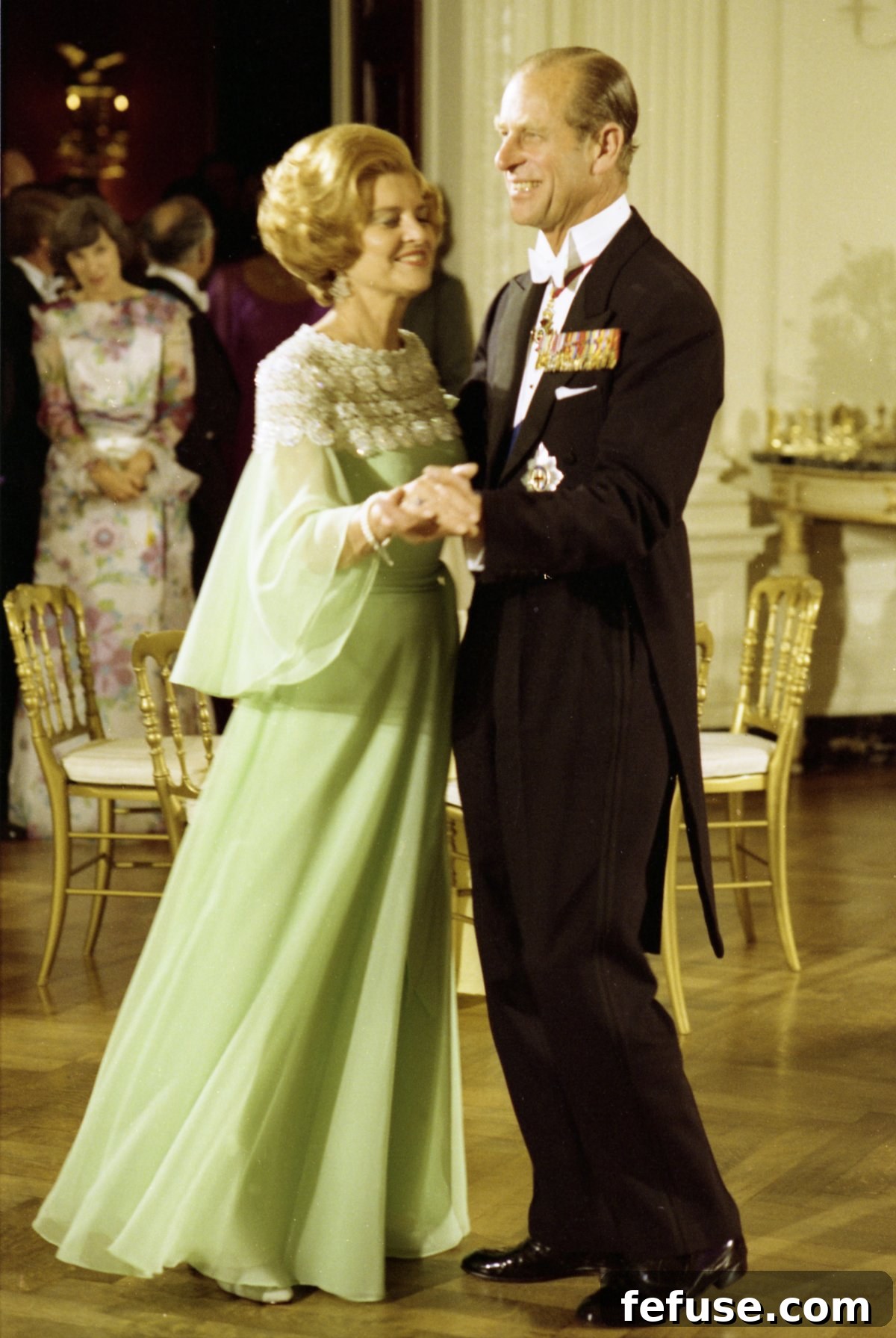
As Queen Elizabeth II gracefully glided across the dance floor with President Ford, Prince Philip engaged in an equally charming dance with First Lady Betty Ford. Betty, renowned for her vibrant personality and infectious love for dancing, undoubtedly enjoyed the moment. It was even rumored that she attempted to teach President Ford “The Hustle” at another Bicentennial celebration just weeks after this grand event. After the royal guests had retired for the night, reporters delightedly observed Mrs. Ford and Bob Hope still showcasing their impressive dance moves as the band struck up the lively tune of “Chattanooga Choo-Choo,” underscoring the truly joyous and relaxed atmosphere of the evening.
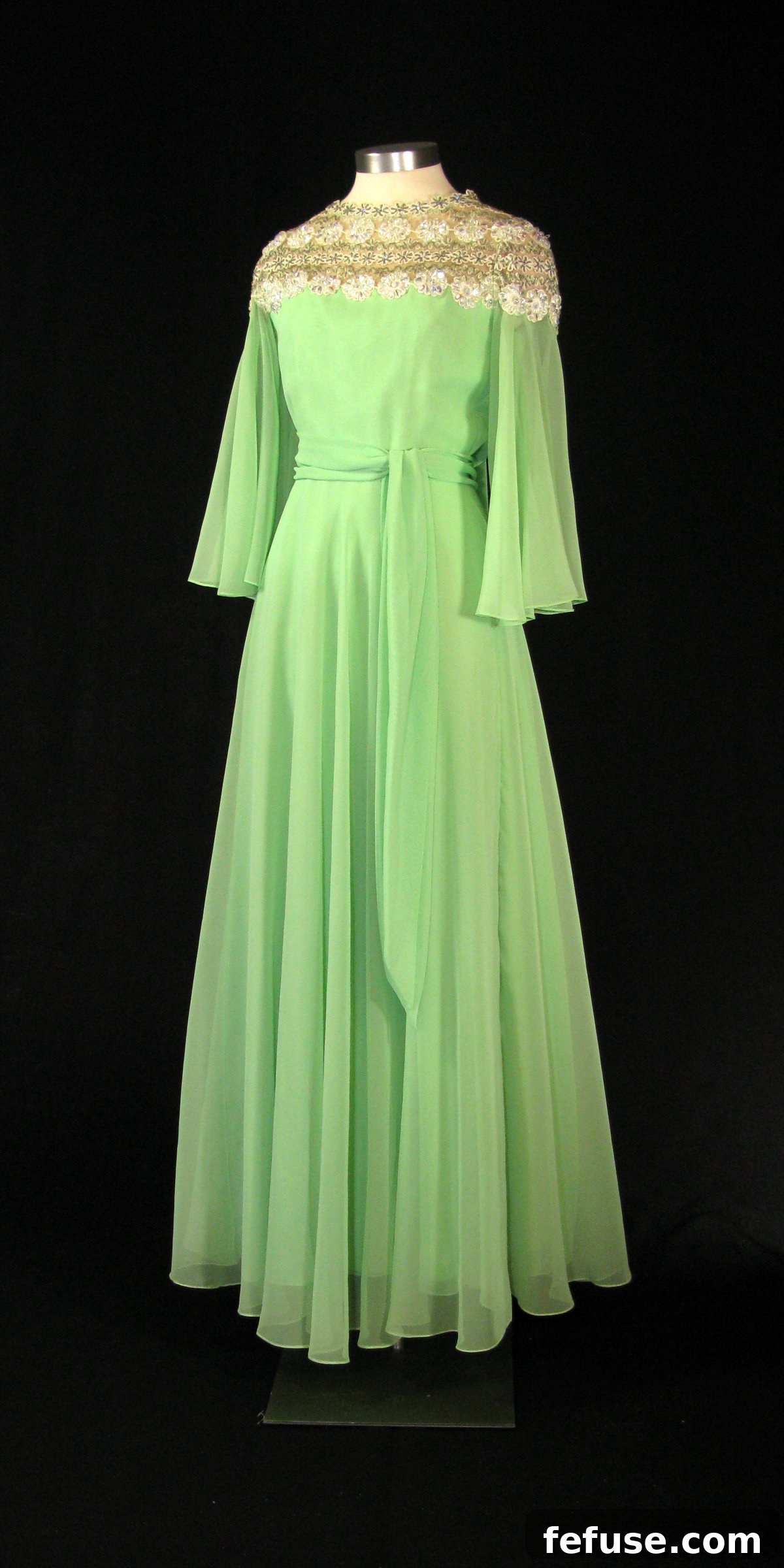
First Lady Betty Ford’s gown for the evening was a vision in brightly colored chiffon, a popular fabric choice among many attendees for its summery elegance, as noted by an AP reporter who observed “chiffon of every shade.” Her vibrant green dress, a creation by the esteemed designer Luis Estevez, perfectly harmonized with the garden party theme of the event. The gown featured a beautifully designed neckline adorned with delicate lace and sparkling sequined flowers, adding a touch of sophisticated charm. This iconic dress is now a treasured part of the collection at the Gerald R. Ford Presidential Museum in Grand Rapids, Michigan, serving as a tangible reminder of that historic night.
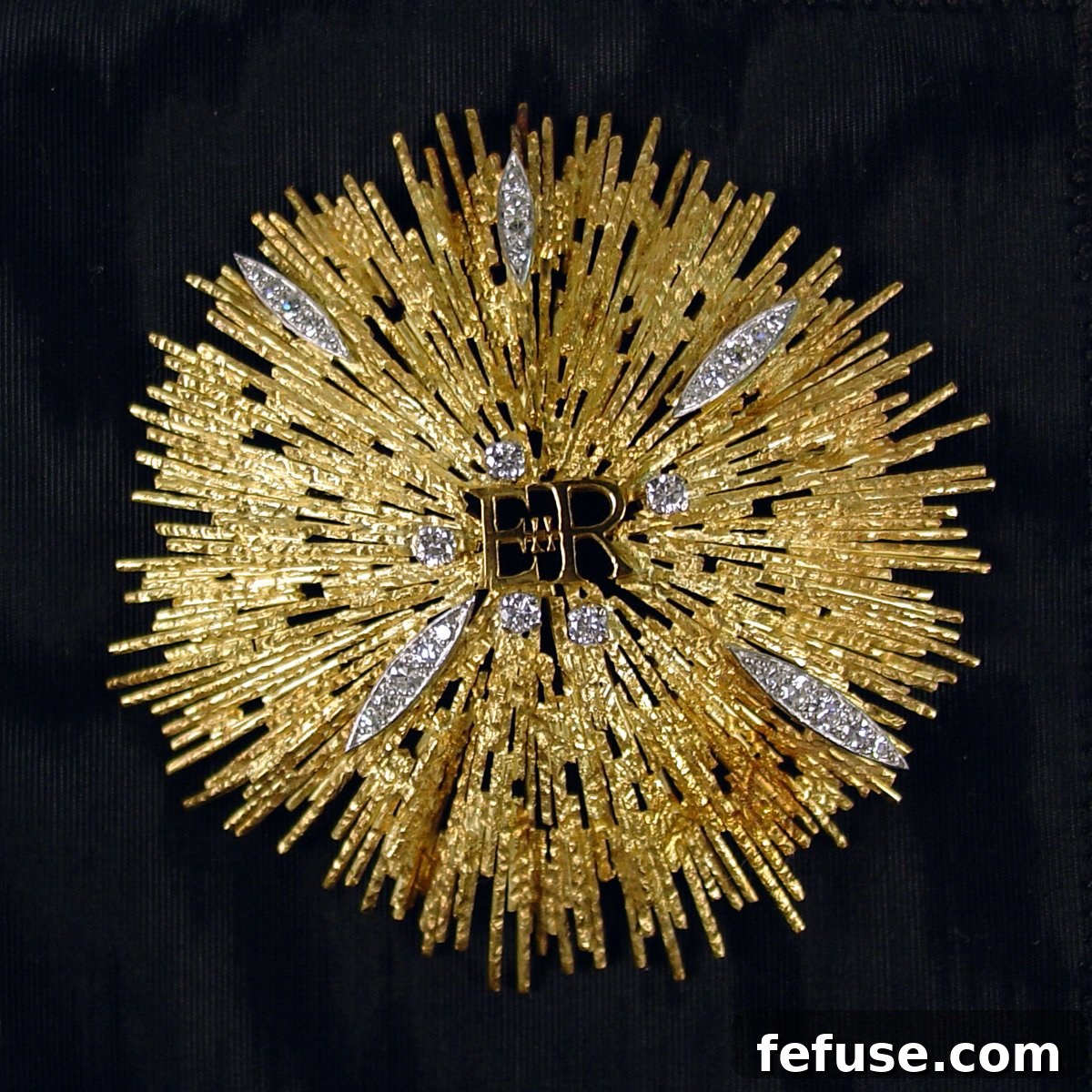
The museum’s collection proudly also houses a magnificent souvenir from the state visit: a custom-designed brooch presented by Queen Elizabeth II and Prince Philip to Mrs. Ford prior to the dinner. This special piece was commissioned from Andrew Grima, one of the royal couple’s favored jewelry designers, renowned for his innovative and organic designs. The striking starburst jewel is crafted from lustrous gold and set with exquisite marquise-cut diamonds, with the Queen’s royal cypher elegantly placed at its center. This extraordinary piece perfectly encapsulated the spirit of the Bicentennial: a dazzling, bejeweled “firework” celebrating the enduring diplomatic relationship between the United States and Great Britain – a relationship that began with the explosive declarations of independence and has since evolved into a bond of sparkling strength and mutual respect.
Conclusion: A Bicentennial Legacy of Friendship
Queen Elizabeth II’s 1976 state visit, culminating in the dazzling White House Bicentennial dinner, was more than just a ceremonial occasion. It was a powerful affirmation of the enduring “special relationship” between the United States and the United Kingdom, a bond forged through shared values and historical significance. From the meticulous preparations in the Rose Garden to the star-studded guest list, the witty entertainment, and the magnificent display of royal jewels, every aspect of the evening was meticulously crafted to honor two centuries of American independence and strengthen the ties between the two nations.
The memories of President Ford dancing with the Queen, Bob Hope’s irreverent humor, and the striking elegance of the First Lady and Her Majesty, complete with the thoughtful gift of the Grima brooch, all contribute to a rich tapestry of diplomatic history. This visit remains a testament to the power of cultural exchange, personal connections, and the timeless appeal of royalty in marking significant global milestones.