
The Alarming Rise of Diamond Deception: IGI Unmasks Sophisticated Lab-Grown Impostors
In an era where technological advancements increasingly blur the lines between natural and manufactured, the diamond industry faces unprecedented challenges. The sophistication of lab-grown diamonds has reached a point where even seasoned professionals must exercise extreme vigilance. Recent incidents, particularly one involving a meticulously crafted lab-grown diamond designed to mimic a natural counterpart, highlight the critical role of advanced gemological verification in safeguarding consumer trust and market integrity. This evolving landscape underscores the urgent need for ongoing research, development, and robust detection protocols by leading laboratories like the International Gemological Institute (IGI).
A Deceptive Masterpiece: The 6.01-ct Pear-Cut Impostor
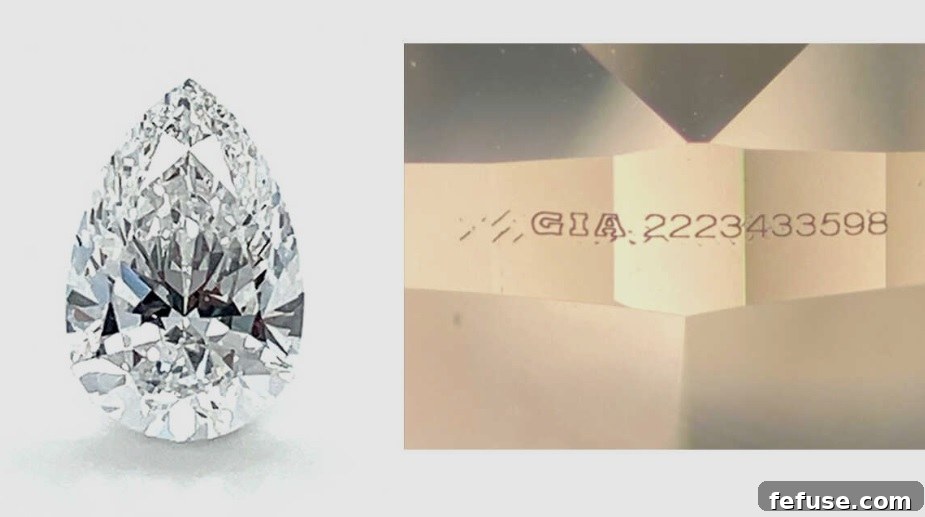
The latest alarm was sounded when a striking 6.01-carat, pear-cut diamond was submitted for grading at an IGI laboratory. Initially presenting all the hallmarks of a genuine article, this stone bore a GIA laser inscription—a globally recognized hallmark of authenticity for natural diamonds. Its physical attributes, including its precise carat weight, elegant physical spread, and primary aesthetic qualities, were remarkably consistent with the data associated with the inscribed GIA report. On the surface, it was a near-perfect match, raising no immediate red flags to the untrained eye or even to preliminary inspection. This level of mimicry is a stark indicator of the advanced techniques now being employed by fraudsters aiming to exploit the differences in value and perception between natural and lab-grown stones.
However, the journey of this particular diamond took a swift and unexpected turn. Despite its convincing facade, the stone’s true identity was soon unmasked by the meticulous gemologists at IGI’s Tel Aviv laboratory. Their comprehensive analysis quickly revealed that this seemingly natural gem was, in fact, a sophisticated lab-grown diamond produced via the Chemical Vapor Deposition (CVD) process. This discovery sent ripples through the industry, serving as a powerful reminder of the persistent and growing threat of fraudulent practices within the global diamond market.
IGI’s Call for Vigilance: Protecting Consumers from Misrepresentation
“Everyone in our industry must be vigilant,” asserted Tehmasp Printer, CEO at IGI, emphasizing the gravity of the situation. His statement resonates deeply with the core mission of gemological laboratories: to ensure transparency and protect consumers from deceptive practices. “As attempted fraud increases, the need for ongoing verification is a necessary step to protect consumers from purchasing misrepresented gems and jewelry.” This call to action is not merely a warning but a foundational principle that guides IGI’s commitment to advancing detection technologies and sharing critical insights with the broader industry. The proliferation of highly convincing lab-grown imitations makes robust, independent verification an indispensable component of every diamond transaction.
The Science of Unmasking: IGI’s Advanced Detection Methods
The ability of IGI gemologists to differentiate these highly deceptive lab-grown diamonds from natural stones lies in their sophisticated analytical techniques and unparalleled expertise. Their laboratories are equipped with cutting-edge instrumentation capable of detecting subtle, yet definitive, indicators of a diamond’s origin. In the case of the 6.01-carat pear-cut diamond, IGI employed a multi-faceted approach to conclusively identify its lab-grown nature.
Photoluminescence Spectroscopy: The Definitive Indicator
One of the most crucial tools in IGI’s arsenal is photoluminescence (PL) spectroscopy. This advanced technique involves exciting the diamond with a laser and analyzing the unique light spectrum emitted. For CVD-grown diamonds, specific defects are inherent to their growth process. In this instance, “photoluminescence spectroscopy revealed a doublet at 737 nm due to SiV defects,” IGI reported. The presence of silicon-vacancy (SiV) defects, manifesting as a distinct “doublet” signal at the 737 nanometer wavelength, is a definitive fingerprint of laboratory growth using the Chemical Vapor Deposition (CVD) process. Natural diamonds do not exhibit these specific spectroscopic signatures, making PL spectroscopy an indispensable diagnostic tool for differentiating between natural and CVD lab-grown stones.
Microscopy: Uncovering Microscopic Discrepancies
Beyond spectroscopic analysis, detailed microscopic examination provides further crucial evidence. While the impostor diamond attempted to match the physical characteristics of its natural counterpart, high-magnification microscopy uncovered subtle yet significant discrepancies. “This was further supported by microscopy,” IGI explained, “which showed a carbon inclusion in place of the feather indicated by GIA, and a cloud, resulting in a lower clarity grade from IGI.” A “feather” is a common type of natural inclusion, often appearing as a fine crack. The presence of a carbon inclusion, a characteristic more often associated with the conditions of lab growth, directly contradicted the GIA report’s description of a feather. Furthermore, the identification of a “cloud”—a grouping of minute inclusions that can affect transparency and brilliance—was another critical detail. These differences in inclusions led to a significantly lower clarity grade from IGI, fundamentally altering the stone’s perceived quality and value compared to the original natural diamond’s report. The meticulous observation of these minute details under powerful microscopes allows expert gemologists to discern inconsistencies that are invisible to the naked eye or even standard magnification.
Subtle Structural Differences: The Depth Mismatch
In addition to these internal characteristics, physical measurements also played a role. “A slight depth mismatch was also revealed,” IGI noted. While often subtle, discrepancies in dimensions, such as the stone’s depth relative to its girdle diameter, can be indicative of a different cutting history or even growth structure. Such a mismatch, when combined with other scientific evidence, further strengthened the conclusion regarding the diamond’s true origin.
The Broader Implications: A Threat to Trust and Value
The successful impersonation of a natural diamond, particularly one bearing a legitimate GIA inscription, carries significant implications for the entire diamond pipeline. “Such discrepancies could go unnoticed outside of a laboratory,” IGI warned, “particularly once the stone is set into a piece of jewelry.” This statement highlights a crucial vulnerability: once a diamond is mounted, many of its defining characteristics become obscured, making thorough inspection significantly more challenging. This risk underscores why purchasing loose, independently certified diamonds is always recommended, and why continuous vigilance is paramount even for mounted jewelry.
The prevalence of these sophisticated fakes poses a substantial threat to consumer confidence. Buyers, often making significant emotional and financial investments, rely on the integrity of certifications and the expertise of jewelers. If fraudulent lab-grown diamonds can masquerade as natural ones, the trust underpinning the entire market begins to erode. This affects not only the value perception of natural diamonds but also the reputation of legitimate lab-grown diamonds, which are sold as distinct products with transparent disclosures.
Echoes of Deception: A Recurring Pattern
This recent incident is not an isolated occurrence. In June 2021, IGI reported a strikingly similar incident that transpired in Thailand. In that case, a 6.18-carat D color, flawless clarity diamond—a rare and exceptionally valuable combination—was submitted as a natural diamond. Subsequent investigation by IGI revealed it to be a lab-grown replica that had been cut and polished with extreme precision specifically to match the data on an existing GIA report for a natural stone. This recurring pattern of high-carat, high-quality lab-grown diamonds being deliberately manufactured and inscribed to mimic specific natural counterparts points to a calculated and growing criminal enterprise. It highlights the urgent need for a robust, industry-wide response and continuous technological innovation in detection.
Safeguarding the Future: IGI’s Unwavering Commitment
The ongoing battle against diamond fraud is a testament to the ingenuity of both those who seek to deceive and those who commit to upholding truth and transparency. IGI’s proactive approach, combining cutting-edge scientific methods with a deep understanding of diamond geology and growth processes, positions it at the forefront of this fight. By continuously investing in research and development, IGI ensures its laboratories remain equipped to detect even the most advanced forms of deception.
For consumers, the message is clear: always insist on independent certification from reputable gemological laboratories like IGI. These certifications provide an unbiased assessment of a diamond’s characteristics and, crucially, its origin. For jewelers and retailers, the onus is on adopting rigorous internal verification processes and partnering with trusted labs to ensure every stone they handle is accurately represented. The integrity of the diamond industry hinges on this collective commitment to transparency and vigilance.
In conclusion, while the beauty and accessibility of lab-grown diamonds offer exciting possibilities, the fraudulent misrepresentation of these stones as natural diamonds poses a severe threat. The recent unmasking of the 6.01-carat pear-cut impostor by IGI serves as a powerful reminder of this challenge. Through continuous innovation in detection technology, unwavering vigilance, and collaborative industry efforts, laboratories like IGI are pivotal in protecting consumers and preserving the trust and value that define the world of diamonds.