
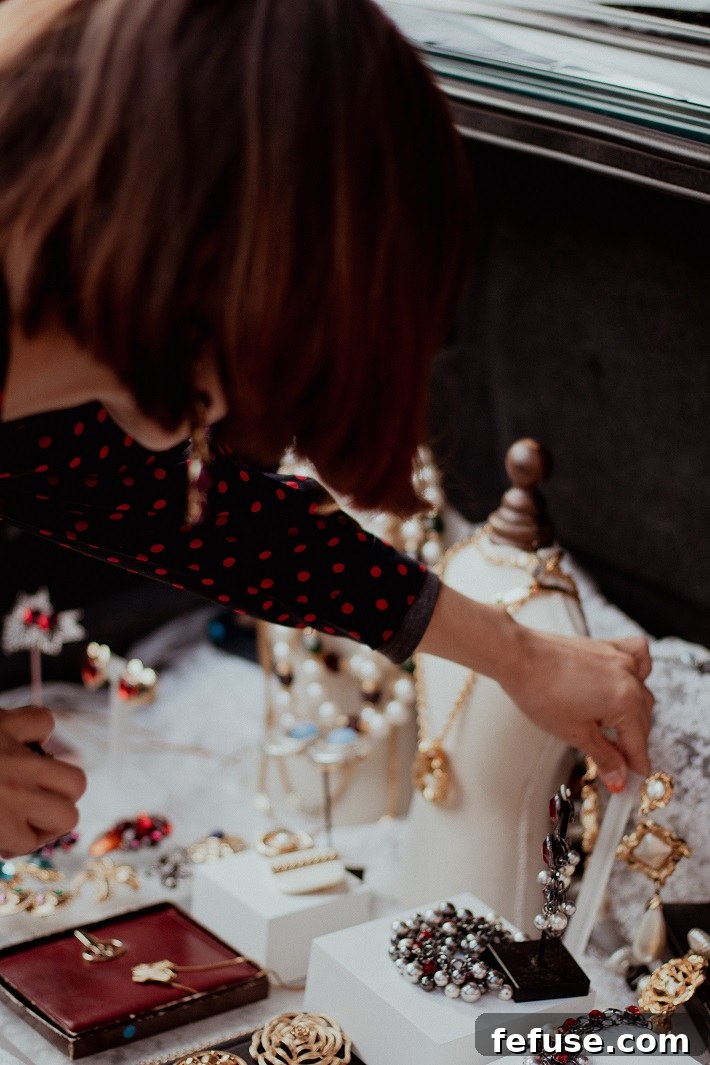
From the opulent grandeur of the Victorian era to the sleek lines of Art Deco, and the vibrant flair of Mid-Century Modern, vintage jewelry possesses an undeniable and enduring allure. More than just an accessory, each piece tells a unique story, offering a tangible connection to a bygone era of elegance, glamour, and exceptional craftsmanship. Its timeless appeal ensures it remains a highly coveted and perpetually fashionable choice, often appreciating in value over the decades.
The mystique surrounding vintage jewelry stems not only from its aesthetic beauty but also from the rich tapestry of history it embodies. Imagine the hands that have adorned it, the celebrations it has witnessed, and the secrets it might hold. This deep sense of nostalgia and the whisper of untold stories make vintage pieces profoundly personal and utterly captivating. Their one-of-a-kind designs and meticulous artistry stand in stark contrast to much of today’s mass-produced items, making them highly sought after by fashion enthusiasts, collectors, and those seeking truly unique gifts.
Investing in vintage jewelry can be a deeply rewarding experience, but it requires a discerning eye and a solid understanding of what to look for. To help you navigate this fascinating world and make informed decisions, this comprehensive guide will outline key considerations when purchasing vintage jewelry, ensuring your next acquisition is both a wise investment and a cherished treasure.
The Enduring Allure of Vintage Jewelry: A Journey Through Time
What truly sets vintage jewelry apart? It’s a combination of factors that resonate deeply with collectors and admirers alike. Beyond mere adornment, these pieces are fragments of history, miniature works of art that reflect the prevailing aesthetics, social norms, and technological advancements of their time. Understanding the different periods can significantly enhance your appreciation and aid in your search for the perfect piece.
Historical Significance and Unique Craftsmanship
Each epoch brought its distinct styles and techniques. Victorian jewelry, for instance, often features intricate scrollwork, dark gemstones like garnets and onyx, and sentimental motifs reflecting Queen Victoria’s long reign. The Edwardian era, on the other hand, is renowned for its delicate, lacy platinum settings, often adorned with diamonds and pearls, showcasing an ethereal lightness. The Roaring Twenties ushered in Art Deco, characterized by bold geometric patterns, vibrant colored gemstones (emeralds, rubies, sapphires), and the innovative use of platinum and white gold. Mid-Century Modern pieces (1940s-1960s) often exhibit sculptural forms, yellow gold, and colorful semi-precious stones, reflecting a post-war optimism and a move towards more organic shapes.
The craftsmanship of these periods is often unparalleled. Before mass production, jewelers were artisans, dedicating countless hours to hand-setting stones, intricate filigree work, and hand-engraving. This level of detail and quality is a hallmark of true vintage jewelry, giving each item a unique character that is hard to replicate today. Many pieces were crafted using techniques and materials that are rarely employed in contemporary jewelry making, making them truly special.
Uniqueness, Sustainability, and Investment Value
One of the most compelling aspects of vintage jewelry is its inherent uniqueness. While modern designs may be replicated thousands of times, a vintage piece is often one-of-a-kind, or at least part of a very limited production run. This exclusivity means you’re wearing something truly distinctive, a conversation starter that sets you apart from the crowd.
Furthermore, choosing vintage jewelry is an inherently sustainable practice. By opting for pre-owned items, you contribute to a circular economy, reducing the demand for new mining operations and the environmental impact associated with new jewelry production. It’s a beautiful way to embrace eco-conscious living without compromising on style or luxury.
Finally, certain vintage pieces can be excellent investments. Jewelry from renowned makers, rare designs, or pieces containing significant gemstones or precious metals tend to hold, and often increase, their value over time. Unlike fashion trends that come and go, truly classic vintage designs possess an enduring appeal that transcends fleeting fads, making them valuable heirlooms for future generations.
Essential Pre-Purchase Inspection: Ensuring Quality and Longevity
Given the long and storied life many vintage pieces have led, a meticulous inspection is paramount. While minor signs of age are often part of a piece’s charm, it’s crucial to differentiate between acceptable patina and significant damage that could compromise its value or wearability. A thorough examination will help you determine the integrity and long-term viability of your potential purchase.
Detailed Examination of the Piece
Begin by examining the item under good lighting, preferably using a jeweler’s loupe or magnifying glass. Pay close attention to every angle and surface:
- Metalwork: Look for any significant dents, deep scratches, or structural weaknesses such as bends or breaks in the metal. Ensure the metal isn’t excessively thin or worn, particularly on ring shanks or bracelet links. Check for discoloration or tarnish, which can often be cleaned, but also for pitting or corrosion that indicates more serious issues. For gold pieces, confirm there are no signs of plating wear that reveal a base metal underneath.
- Gemstones: Carefully inspect each gemstone for chips, cracks, or abrasions, especially around the girdle (the widest part) and facets. Use the loupe to check for any internal inclusions that might affect durability or clarity. Ensure all gemstones are securely set within their mountings. Wiggle each stone gently with a fingertip to confirm it doesn’t move or rattle. Mismatched or clearly replaced stones can sometimes detract from a piece’s originality, though not always its beauty.
- Mountings and Settings: The security of the gemstones relies heavily on the quality of the setting. Examine all prongs and claws to ensure they are intact, evenly aligned, and firmly grasp the stone. Look for any worn-down or bent prongs that could lead to a stone falling out. For bezel or channel settings, ensure the metal tightly encloses the stone without gaps or looseness.
- Clasps and Fasteners: Test all clasps, clips, and fasteners to ensure they operate smoothly and securely. For necklaces and bracelets, confirm the clasp mechanism (e.g., spring ring, lobster, box clasp, toggle) snaps shut firmly and doesn’t easily come undone. For earrings, check the posts, backs, and hinges for stability. A faulty clasp is not just an inconvenience but a security risk for your precious item.
- Hinges and Joints: For articulated pieces like bracelets, lockets, or certain earrings, examine any hinges or joints. They should move smoothly without excessive play or stiffness. Look for signs of stress, cracking, or amateur repairs in these areas.
While some minor wear and tear is expected and even desirable in vintage pieces, signifying their authenticity and history, any damage that compromises the structural integrity or security of the item should be noted. Don’t hesitate to ask the seller detailed questions about the condition and any repairs that might have been undertaken.
Unveiling Its Past: Repairs, Alterations, and Authenticity
It’s quite common for beloved vintage jewelry, having passed through multiple owners and generations, to have undergone some form of restoration or repair. A ring might have been resized, a gemstone polished to restore its brilliance, or a worn clasp replaced. While repairs themselves are not inherently problematic, the quality of the workmanship is paramount and can significantly impact the piece’s value and aesthetic appeal.
Assessing the Quality of Repairs
When inspecting for repairs or alterations, your goal is to determine if the work was executed professionally, seamlessly, and without compromising the original integrity or beauty of the piece. Here’s what to look for:
- Seamless Integration: High-quality repairs should blend almost imperceptibly with the original design. If a ring has been resized, for instance, the solder joint should be smooth, strong, and difficult to detect without close inspection. Obvious seams, rough edges, or mismatched metal tones indicate a less-than-expert repair.
- Metalwork Consistency: Examine the metal surfaces around any potential repair areas. Are there inconsistencies in texture, finish, or color? Poor soldering can leave behind pitting, discoloration, or an uneven surface. Any visible tool marks or signs of hurried work should raise a red flag. The metal should flow smoothly and uniformly.
- Gemstone Setting Repairs: If a stone has been replaced or re-set, ensure the new setting is as robust and well-executed as the original. Check that the prongs or bezel are securely holding the stone without gaps and that the stone itself is appropriate for the piece’s era and design. A modern cut diamond in an antique setting, for example, might detract from its historical accuracy.
- Disruption of Patina: Over time, metals develop a natural patina, a gentle darkening or dulling that adds character. Poor repairs can often disrupt this patina, leaving bright, shiny patches against an otherwise aged surface. While some cleaning is acceptable, overly aggressive polishing during a repair can strip away this valuable historical layer.
- Structural Integrity: Ultimately, any repair should enhance, or at least maintain, the structural integrity of the piece. Ensure that the repair doesn’t leave the item feeling flimsy, unbalanced, or prone to further damage. A well-executed repair should restore the piece to a condition where it can be worn and enjoyed safely for many more years.
It is always advisable to ask the seller about any known repairs or alterations. A reputable dealer will be transparent about a piece’s history and any work performed on it. Understanding the extent and quality of past repairs is crucial for an informed purchase, ensuring you invest in a piece whose value has been preserved, not diminished.
The Mark of Authenticity: Decoding Hallmarks and Signatures
Hallmarks are the silent storytellers of vintage jewelry, tiny inscriptions stamped into the metal that reveal a wealth of information about a piece. These distinctive markings serve as a pedigree, providing crucial details about its origin, age, and metal content. Learning to identify and interpret hallmarks is an indispensable skill for any vintage jewelry enthusiast.
Key Hallmarks to Identify and Their Significance
- Purity Marks (Metal Content): This is arguably the most critical hallmark, indicating the precious metal content and purity.
- Gold: Marked in karats (K or kt) or parts per thousand. Common marks include 10K (41.7% gold), 14K (58.3% gold), 18K (75% gold), and 22K (91.7% gold). European gold is often marked in parts per thousand, such as 750 for 18K.
- Platinum: Typically marked PT950 (95% pure platinum) or PLAT.
- Silver: Sterling silver is usually marked 925 (92.5% pure silver), STERLING, or often with a lion passant symbol in the UK.
- These marks assure the buyer of the precious metal content, which directly impacts the intrinsic value of the piece.
- Maker’s Marks: Often in the form of initials, a logo, or a full name, the maker’s mark identifies the company or individual jeweler responsible for creating the piece. Discovering a maker’s mark from a renowned atelier like Tiffany & Co., Cartier, or a celebrated artisan can significantly enhance a piece’s value, desirability, and historical provenance. Researching these marks can unlock fascinating details about the piece’s lineage.
- Date Letters and Assay Marks: Predominantly found on British and some European jewelry, date letters indicate the specific year a piece was assayed (tested and marked for purity) at a particular assay office. Coupled with assay office marks (e.g., an anchor for Birmingham, a crown for Sheffield), these offer a precise dating for the piece, invaluable for collectors and historians.
- Country of Origin Marks: Some pieces may include marks indicating the country where they were manufactured, providing additional historical and geographical context.
Location of Hallmarks and Considerations
Hallmarks are typically discreetly placed to avoid detracting from the design. You’ll often find them:
- On the inside of ring bands.
- On the clasp or an end link of necklaces and bracelets.
- On the back of pendants, brooches, or earrings.
It’s important to remember that not all vintage jewelry, especially very old pieces (pre-1900s) or items from certain regions, may have clearly legible hallmarks, or any at all. In such cases, expert assessment becomes even more critical. Conversely, be wary of pieces with seemingly perfect, pristine hallmarks on otherwise heavily worn items, as this could sometimes indicate a fake or added mark. Always use a jeweler’s loupe to inspect hallmarks for clarity and authenticity.
Understanding and verifying hallmarks provides a powerful layer of authentication, ensuring you are purchasing a genuine article with an accurate representation of its metal quality and origin. It transforms a beautiful object into a documented piece of history.
Beyond the Basics: Additional Considerations for the Savvy Buyer
While condition, repairs, and hallmarks form the foundation of an informed vintage jewelry purchase, there are several other factors that can elevate your buying experience and ensure you acquire a truly exceptional piece.
Provenance and Rarity
Provenance: The documented history of ownership of a piece can add immense value and intrigue. If a seller can provide details about previous owners, especially if they were notable figures or if the piece has a unique story, its allure and monetary value can increase significantly. Provenance connects you not just to an era, but to specific lives and events.
Rarity and Collectibility: Certain vintage styles, specific materials, or pieces from renowned but rare makers are inherently more collectible. Limited edition pieces, designs that represent a pivotal moment in jewelry history, or those featuring unusual gemstones or innovative techniques will often command higher prices and are considered stronger investments. Researching what makes a piece rare within its category can be highly beneficial.
Seller Reputation and Professional Guidance
Reputable Dealers: Always purchase vintage jewelry from trusted sources. Established brick-and-mortar stores, well-reviewed online retailers specializing in vintage items, and reputable auction houses provide a layer of assurance regarding authenticity and fair pricing. Check customer reviews and their track record. A good dealer will be knowledgeable, transparent, and willing to answer all your questions.
Certification and Appraisal: For higher-value items, especially those featuring significant diamonds or precious gemstones, consider seeking an independent appraisal or certification from a recognized gemological laboratory (e.g., GIA, AGS). This provides an unbiased assessment of the piece’s authenticity, characteristics, and estimated value, offering peace of mind for your investment.
Pricing, Returns, and Care
Understanding Pricing: The price of vintage jewelry is influenced by a multitude of factors: the type and purity of metal, the quality and rarity of gemstones, the craftsmanship, the maker’s reputation, the historical period, the piece’s condition, and its overall rarity. Educate yourself on fair market values for similar items to ensure you’re getting a reasonable deal. Don’t be afraid to compare prices across different sellers.
Returns Policy: Before finalizing any purchase, thoroughly understand the seller’s return policy. A generous return window allows you to have the piece professionally inspected after purchase if you wish, or simply to ensure it meets your expectations in person. This is especially crucial for online purchases where you cannot physically inspect the item beforehand.
Cleaning and Care: Once you’ve acquired your vintage treasure, proper care is essential to preserve its beauty and value. Different materials require different cleaning methods. Generally, avoid harsh chemicals or ultrasonic cleaners for delicate pieces, antique settings, or certain gemstones (like pearls, opals, or emeralds). Consult with a professional jeweler for appropriate cleaning and maintenance advice.
By considering these additional factors, you empower yourself to make not just a purchase, but a truly informed acquisition, ensuring your vintage jewelry piece brings joy, beauty, and lasting value for generations to come.
Embarking on the journey to find the perfect piece of vintage jewelry is a delightful adventure. By meticulously checking the condition, discerning the quality of any repairs, understanding the story told by hallmarks, and considering the broader context of provenance and seller reputation, you can approach your next purchase with confidence and expertise.
Each piece of vintage jewelry is a miniature artifact, a wearable testament to human artistry and history. When you choose vintage, you’re not merely acquiring an accessory; you’re adopting a legacy, embracing unique style, and making a sustainable choice that stands the test of time. May your next vintage jewelry acquisition be a cherished adornment that sparks conversation, evokes wonder, and continues to tell its magnificent story for many years to come.