
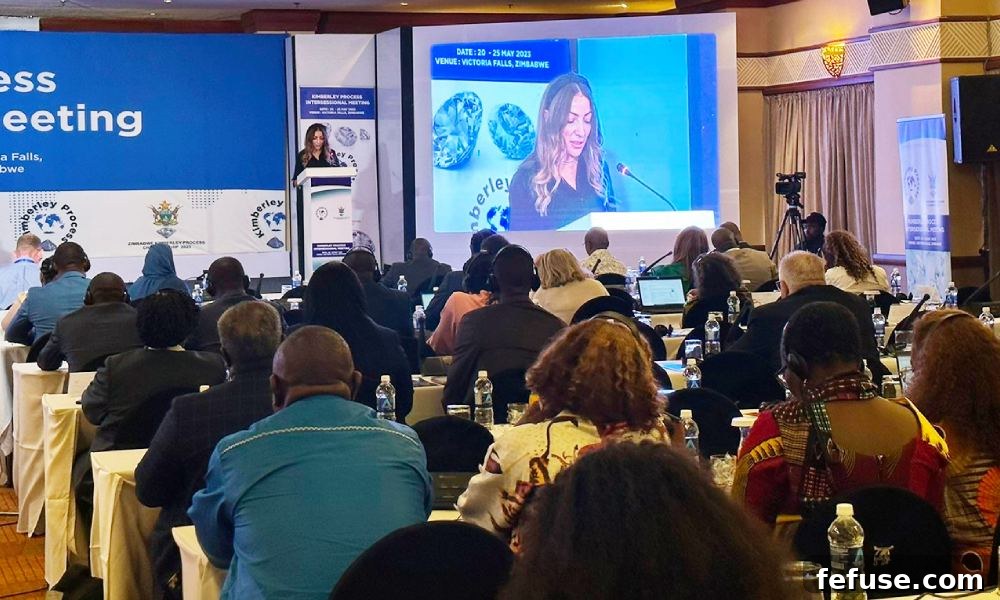
Advancing Ethical Diamond Trade: Insights from the 2023 Kimberley Process Intersessional Meeting
The global diamond industry, a complex web of extraction, trade, and luxury, operates under the vigilant oversight of the Kimberley Process Certification Scheme (KPCS). This vital international initiative is dedicated to eradicating the trade in ‘conflict diamonds’ – rough diamonds used by rebel movements to finance wars against legitimate governments. In late May 2023, the picturesque setting of Victoria Falls, Zimbabwe, played host to a pivotal gathering: the Kimberley Process Intersessional Meeting. This four-day summit brought together representatives from governments, industry, and civil society, all committed to reinforcing the integrity and effectiveness of the KP. Emerging from these crucial discussions, World Diamond Council (WDC) President Feriel Zerouki expressed considerable satisfaction with the tangible progress achieved, signaling a renewed impetus for the organization’s critical mission.
The very essence of the KP Intersessional Meetings lies in their dedicated purpose: to meticulously track and record the strides made on decisions originating from the higher-level Plenary Meetings. These intersessional sessions serve as indispensable forums for deep dives into specific issues, allowing for detailed deliberation and the formulation of actionable strategies before the next Plenary. In her compelling address during the Closing Session of the Victoria Falls meeting, Zerouki meticulously highlighted several key areas where significant and positive steps had been taken, underscoring the collective commitment of all stakeholders to the ongoing evolution and strengthening of the KPCS.
Redefining Conflict Diamonds: A Critical Evolution for the Kimberley Process
One of the most pressing and widely discussed subjects during the Intersessional Meeting was the ongoing Review and Reform Cycle, a comprehensive initiative aimed at modernizing the KP’s framework to address contemporary challenges. Central to this reform effort is the profound work being undertaken by a dedicated sub-team tasked with refining and potentially expanding the definition of “conflict diamonds.” For years, the WDC has been a fervent advocate for broadening this crucial definition. Zerouki passionately reiterated the WDC’s steadfast conviction that the existing definition, while groundbreaking at its inception, must evolve to encompass a wider spectrum of violence and human rights abuses that are often intrinsically linked to diamond mining and trade. She firmly emphasized that the Kimberley Process has been explicitly given the mandate, through prior Plenary decisions, to pursue this fundamental reform, acknowledging the urgent need to ensure the KP remains relevant and robust in safeguarding ethical sourcing.
Achieving a consensus on such a pivotal issue, along with other complex matters deliberated by the Ad Hoc Committee on Review and Reform, necessitates an environment of profound understanding and collaboration. Zerouki wisely underscored the absolute necessity of candidness, mutual trust, and unwavering respect among all participants. She lauded the open, vibrant, and remarkably robust discussions that characterized the event in Victoria Falls. Such an atmosphere, she explained, fostered the essential “psychological safety” required for delegates to freely share diverse views and potentially diverging positions, all in the spirit of supporting and advancing the critical reform agenda. This emphasis on transparent dialogue and respectful engagement is paramount for navigating the sensitivities inherent in redefining a core tenet of the global diamond trade.
Forging a Permanent Secretariat: A Pillar for KP’s Future Operations
Another landmark achievement highlighted at the Intersessional Meeting concerned the Kimberley Process Secretariat Task Force. Chaired by the esteemed WDC representative, Wim Soons, this task force is charged with the monumental responsibility of establishing a permanent secretariat for the KP. Zerouki enthusiastically reported that a crucial consensus had been successfully achieved regarding the comprehensive terms of reference for this new and long-awaited body. This agreement marks a significant leap forward, providing a clear roadmap for the secretariat’s operational framework, responsibilities, and governance structure. The establishment of a permanent secretariat is widely seen as a foundational step toward enhancing the KP’s administrative efficiency, institutional memory, and overall effectiveness, moving beyond its historical reliance on the rotating Chair for administrative functions.
Anticipated to commence its vital operations in Gaborone, Botswana, beginning next year, the Kimberley Process Secretariat is poised to usher in a new era of stability and professionalization for the KP. Furthermore, the task force is reportedly nearing agreement on issuing a formal call for candidates for the newly created, pivotal position of KP Executive Secretary. This role will be instrumental in providing consistent leadership, coordination, and administrative support to the entire KPCS. However, Zerouki also candidly acknowledged that certain outstanding matters still require resolution. These include the crucial determination of the Secretariat’s precise legal entity status – a complex legal undertaking – and the finalization of a comprehensive host country agreement with Botswana, which will legally underpin the secretariat’s presence and operations within the nation. Addressing these remaining logistical and legal hurdles is essential for the smooth and effective launch of this vital institution.
Addressing Challenges in the Central African Republic: A Focus on Peace and Prosperity
The situation in the Central African Republic (CAR) remains a matter of deep concern and a priority for the WDC and the entire Kimberley Process community. Zerouki expressed particular apprehension regarding the complex socio-political and economic landscape within CAR, emphasizing the WDC’s profound desire to see the nation achieve lasting peace, stability, and genuine prosperity, particularly through the responsible and transparent exploitation of its rich mineral resources. The diamond sector, when managed ethically, holds immense potential to contribute significantly to CAR’s economic recovery and development, providing livelihoods and funding for essential public services. The WDC’s commitment extends to ensuring that the country’s natural wealth truly benefits its people, rather than fueling further conflict or illicit activities.
In this regard, Zerouki unequivocally voiced robust support for the diligent work and critical objectives of the CAR Monitoring Team. This dedicated team plays an indispensable role in overseeing diamond production and exports from the Central African Republic, working tirelessly to prevent conflict diamonds from re-entering the legitimate supply chain. However, a significant challenge highlighted by Zerouki involved persistent discrepancies in the determination of diamond values for export. These valuation inconsistencies directly contradict the fundamental purpose of the monitoring team’s revised operational framework. This framework was meticulously established with dual objectives: first, to substantially increase revenue generation for the government and people of CAR, thereby empowering their journey towards self-sufficiency and development; and second, to ensure enhanced security and stability within the diamond-producing regions, directly tackling issues of illicit trade and potential exploitation. Addressing these valuation discrepancies is paramount to ensuring the full efficacy of the monitoring mechanism and maximizing legitimate economic benefits for CAR.
While the WDC unequivocally supports the concept of a Kimberley Process Review Visit to CAR, a crucial mechanism for independent assessment and verification, Zerouki firmly stressed that the safety and security of any Review Team must be absolutely guaranteed before such a visit can be seriously contemplated or undertaken. The paramount importance of ensuring the well-being and protection of KP delegates engaged in such sensitive missions cannot be overstated. This cautious approach underscores the KP’s commitment to both fulfilling its mandate and safeguarding its personnel in challenging environments.
A Spirit of Collaboration and a Vision for the Future
Bringing her insightful address to a close, Zerouki extended a heartfelt tribute to the gracious hosts of the Intersessional Meeting: the esteemed KP Chair and the Government of Zimbabwe. She acknowledged with profound gratitude their exceptional hard work, meticulous organization, and warm hospitality, stating unequivocally that all these elements “contributed immensely to the spirit of collaboration that we have experienced over the past several days.” This emphasis on the collaborative spirit highlights a fundamental strength of the Kimberley Process – its unique tripartite structure bringing together governments, industry, and civil society to tackle complex issues. The success of such international endeavors hinges on the ability of diverse stakeholders to work in concert, transcending individual interests for a common, ethical goal.
On a more personal note, Feriel Zerouki took the opportunity to express her sincere thanks to all the dedicated participants in the Intersessional Meeting. She remarked on the profound significance of the event for her personally, acknowledging it as her “first major Kimberley Process gathering as President of the World Diamond Council.” This personal reflection underscored the importance of the meeting not just for the KP, but also for the WDC’s leadership in guiding the industry towards greater transparency and responsibility. The collective efforts, robust discussions, and genuine spirit of partnership witnessed in Victoria Falls served to make this significant occasion truly memorable, reaffirming the WDC’s unwavering commitment to the Kimberley Process’s mission of fostering a responsible and ethical global diamond trade. The productive outcomes of this meeting set a promising trajectory for the ongoing efforts to strengthen the KP and ensure that diamonds truly remain symbols of love and beauty, free from the stain of conflict.