
The Essential Guide to Vintage & Antique Jewelry: Why Education Empowers the Modern Buyer
 In the enchanting world of fine jewelry, the journey of discovery is often as captivating as the pieces themselves. For decades, customer education has stood as a cornerstone of the sales process, transforming casual browsers into confident, invested collectors. This principle holds especially true in the specialized realm of vintage and antique jewelry, where each piece carries a unique story, a history, and distinct characteristics that demand a discerning eye and an informed perspective.
Antique and vintage jewelry dealers, perhaps more than any other segment of the retail market, have long understood that an educated consumer is inherently a more engaged and satisfied consumer. They recognize that transparency and knowledge build trust, which is paramount when dealing with items of significant historical and monetary value. However, the landscape of consumer inquiry has evolved dramatically. Modern shoppers are increasingly turning to the internet – seeking answers and insights online rather than through traditional phone calls or visits to brick-and-mortar stores. This shift underscores the critical need for comprehensive digital resources that can demystify the complexities of buying heirloom pieces.
Responding to this evolving consumer behavior, Topazery, a distinguished online retailer specializing in vintage and antique jewelry based in Atlanta, recently unveiled its pioneering Learning Center. This innovative online resource serves as a vital hub, addressing a multitude of fundamental questions prospective buyers often have about purchasing vintage and estate jewelry and precious gemstones. It’s an initiative that not only meets the modern shopper where they are but also elevates the entire online purchasing experience by prioritizing knowledge and confidence.
Navigating the World of Vintage Jewelry: A Robust Educational Resource
The Topazery Learning Center is far more than a simple FAQ section; it functions as a comprehensive, mini-encyclopedia tailored specifically for enthusiasts and first-time buyers alike. Its robust structure offers over 30 distinct modules of invaluable information, each meticulously crafted to illuminate various facets of the vintage jewelry market. This extensive collection of resources covers everything from practical purchasing advice to in-depth historical context, ensuring that every visitor can find answers to their specific queries and deepen their appreciation for these unique treasures.
Empowering Your Purchase: Practical Tips for Buying Older Pieces
One of the most crucial sections within the Learning Center provides practical tips designed to guide consumers through the nuances of acquiring older jewelry. It emphasizes the importance of transparency, advising shoppers to “Look for disclosures…about the vintage jewelry itself. [Sellers] may try to gloss over any indications of wear. A reputable seller will disclose what’s going on with a piece.” This advice is foundational. In the vintage market, minor wear is often expected and part of a piece’s charm and history. However, understanding the true condition, including any repairs, alterations, or significant damage, is vital for an informed decision. A trustworthy seller will provide detailed descriptions, high-resolution images, and be forthright about any imperfections or signs of age, fostering trust and ensuring buyers know exactly what they are investing in. Beyond disclosures, the Learning Center also guides buyers on assessing the overall condition, understanding hallmarks and maker’s marks—tiny inscriptions that reveal a piece’s origin and purity—and even offers insights into basic care and maintenance to preserve the beauty of these timeless heirlooms.
A Journey Through Time: Understanding Jewelry Eras and Styles
Another captivating feature is the extensive rundown of major jewelry eras, from the romantic flourishes of the Victorian period to the bold statements of the Retro era. Each era is brought to life with descriptive text and illustrative images, showcasing the distinctive aesthetics, popular materials, and cultural influences that defined jewelry design during those times. This historical overview is essential for collectors seeking specific styles or for those simply wishing to appreciate the evolution of design. The center delves into key periods such as:
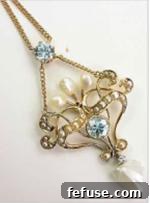
- Victorian Era (1837-1901): Characterized by sentimentality, naturalistic motifs, and often elaborate designs. Jewelry from this period reflects Queen Victoria’s long reign, evolving from romantic and mourning pieces to more elaborate and eclectic styles, often incorporating gold, silver, pearls, garnets, and jet.
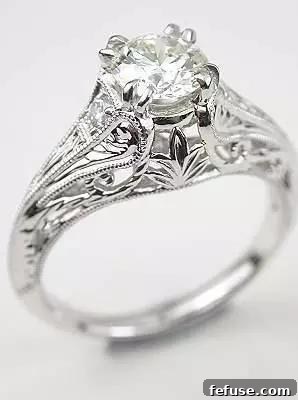
- Edwardian Era (1901-1910): Known for its delicate, lacy, and elegant designs, often made with platinum and diamonds. Influenced by Parisian haute couture, this era emphasized filigree work, bows, garlands, and the lavish use of diamonds and pearls.
- Art Nouveau (c. 1890-1910): A movement focused on organic forms, flowing lines, and nature-inspired motifs like flora, fauna, and the female form. Jewelry often featured enameling, opals, and semi-precious stones, prioritizing artistic expression over intrinsic material value.
- Art Deco Era (1920-1939): Defined by geometric patterns, bold colors, and streamlined designs reflecting the machine age and modernism. Platinum, diamonds, sapphires, emeralds, and rubies were prominent, often set in striking, symmetrical compositions.
- Retro Era (1940-1960): A period marked by large, bold, and often sculptural pieces, frequently crafted in rose gold and yellow gold due to wartime restrictions on platinum. Designs were inspired by Hollywood glamour, machinery, and patriotic themes, often featuring oversized gemstones or intricate settings.
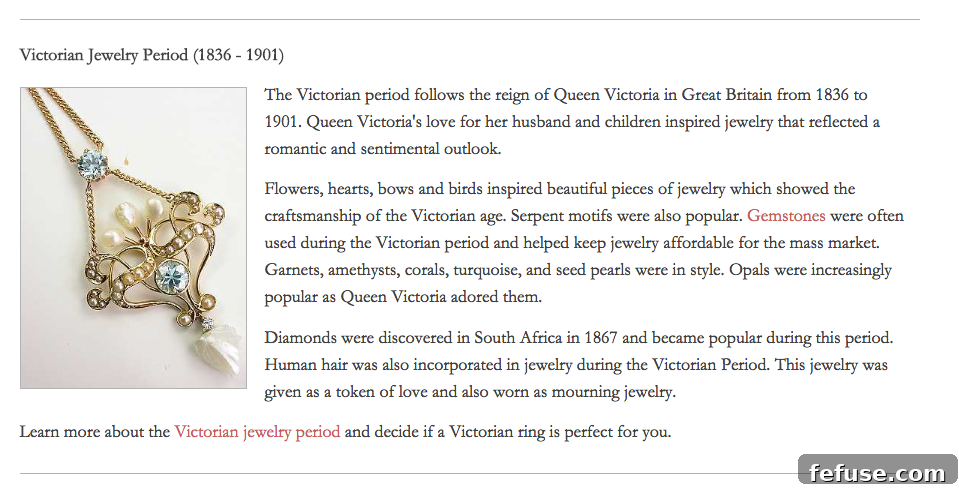
The section on Victorian-era jewelry on Topazery provides a vivid illustration of this rich historical narrative, helping buyers connect with the pieces on a deeper, more personal level.
Unveiling the Beauty: A Comprehensive Gemstone Guide
For those fascinated by the dazzling world of precious stones, the Learning Center features an invaluable Gemstone Guide. This guide begins by explaining the Mohs’ scale of mineral hardness, a fundamental concept for understanding gemstone durability and suitability for everyday wear. It then delves into the unique attributes, origins, and characteristics of major gemstones that frequently adorn vintage pieces. This includes:
- Emeralds: Known for their verdant green hue, often associated with rebirth and love. The guide might touch upon their common inclusions (“jardins”) and famous origins like Colombia.
- Rubies: Revered for their intense red color, symbolizing passion and protection. Details could include their hardness and significant sources such as Myanmar (Burma).
- Opals: Celebrated for their mesmerizing play-of-color, these unique stones are often found in Art Nouveau and Victorian pieces. The guide explains their delicate nature and diverse types.
- Diamonds (Colored and Colorless): The quintessential gemstone for engagement rings, covered comprehensively from the 4 Cs (carat, cut, color, clarity) to the allure of fancy colored diamonds.
- Alexandrites: A rare and remarkable color-changing gemstone, shifting from green in daylight to red under incandescent light. The guide explores this fascinating optical phenomenon.
- Citrines: Warm and sunny yellow to orange-brown quartz, often found in larger, bold settings of the Retro era, symbolizing success and prosperity.
Each gemstone profile offers crucial insights into what makes these stones unique, how to identify them, and what to consider when evaluating their quality and value. This depth of information empowers buyers to appreciate the artistry and natural wonder encapsulated in each piece.
Beyond the practical and historical, the Learning Center also indulges the romantic spirit with a dedicated section exploring great Hollywood love stories from the past, viewed through the lens of iconic jewelry. Yes, the legendary romance of Elizabeth Taylor and Richard Burton, famous for their extravagant jewelry gifts, is spotlighted. But the narrative also extends to other beloved couples like Marilyn Monroe and Joe DiMaggio, and Vivien Leigh and Laurence Olivier, illustrating how jewelry often became tangible symbols of their enduring affections and public personas. These narratives add a layer of human connection and emotional resonance, reminding us that vintage jewelry carries not just material value, but also the echoes of past passions and indelible memories.
The Vision: Cultivating Appreciation and Confidence
Jan Walden, the insightful founder of Topazery, articulated the core philosophy behind this ambitious endeavor in a recent statement: “Our goal in creating the Learning Center is to give consumers the information they need, not only to make purchase decisions with confidence, but to enjoy their purchases through an appreciation of the uniqueness that can be found only in vintage and antique pieces. By accessing information in our Learning Center, people can gain a greater appreciation for the world of vintage and antique jewelry.”
Walden’s vision encapsulates the true essence of vintage and antique jewelry retail: it’s not merely about selling products, but about fostering a profound appreciation for their unparalleled craftsmanship, rich history, and individual character. Each piece is truly one-of-a-kind, holding stories from bygone eras that cannot be replicated by mass-produced modern jewelry. By providing a platform where knowledge is readily accessible, Topazery ensures that every purchase is made with genuine understanding and enthusiasm, transforming a simple transaction into a deeper, more meaningful connection with history and art. This commitment to education not only builds loyal customers but also safeguards the legacy of these magnificent jewels for future generations.
In an increasingly digital marketplace, Topazery’s Learning Center sets a new benchmark for how online retailers can empower consumers. It underscores the belief that an informed shopper is indeed an invested shopper – one who not only buys a piece of jewelry but also embraces its history, appreciates its artistry, and cherishes its enduring legacy. This comprehensive educational resource ensures that the beauty and intricacy of vintage and antique jewelry are understood, valued, and enjoyed for years to come.
News Source : JCKOnline.com