
Queen Elizabeth II’s Cherished Sapphires: A Journey Through Royal History
The extensive jewelry collection of Queen Elizabeth II was a testament to her long and illustrious reign, brimming with glittering treasures and historic gemstones. Yet, among these magnificent pieces, some held a uniquely deep sentimental value. The antique sapphire and diamond parure, a radiant wedding gift from her beloved father, King George VI, stands out as one of the most cherished and frequently worn suites of jewels throughout her seventy years on the throne. These sapphires didn’t just adorn a monarch; they witnessed countless historic moments, evolving in form and significance as Elizabeth herself transformed from a young princess into an iconic queen.
From their origins as a thoughtful parental offering to their modern-day wear by Queen Camilla, these stunning blue gems tell a captivating story of personal affection, regal adaptation, and enduring legacy within the British Royal Family. Join us as we delve into the fascinating history and evolution of Queen Elizabeth II’s iconic sapphire parure.
The Royal Wedding Gift: Sapphires from a Loving Father
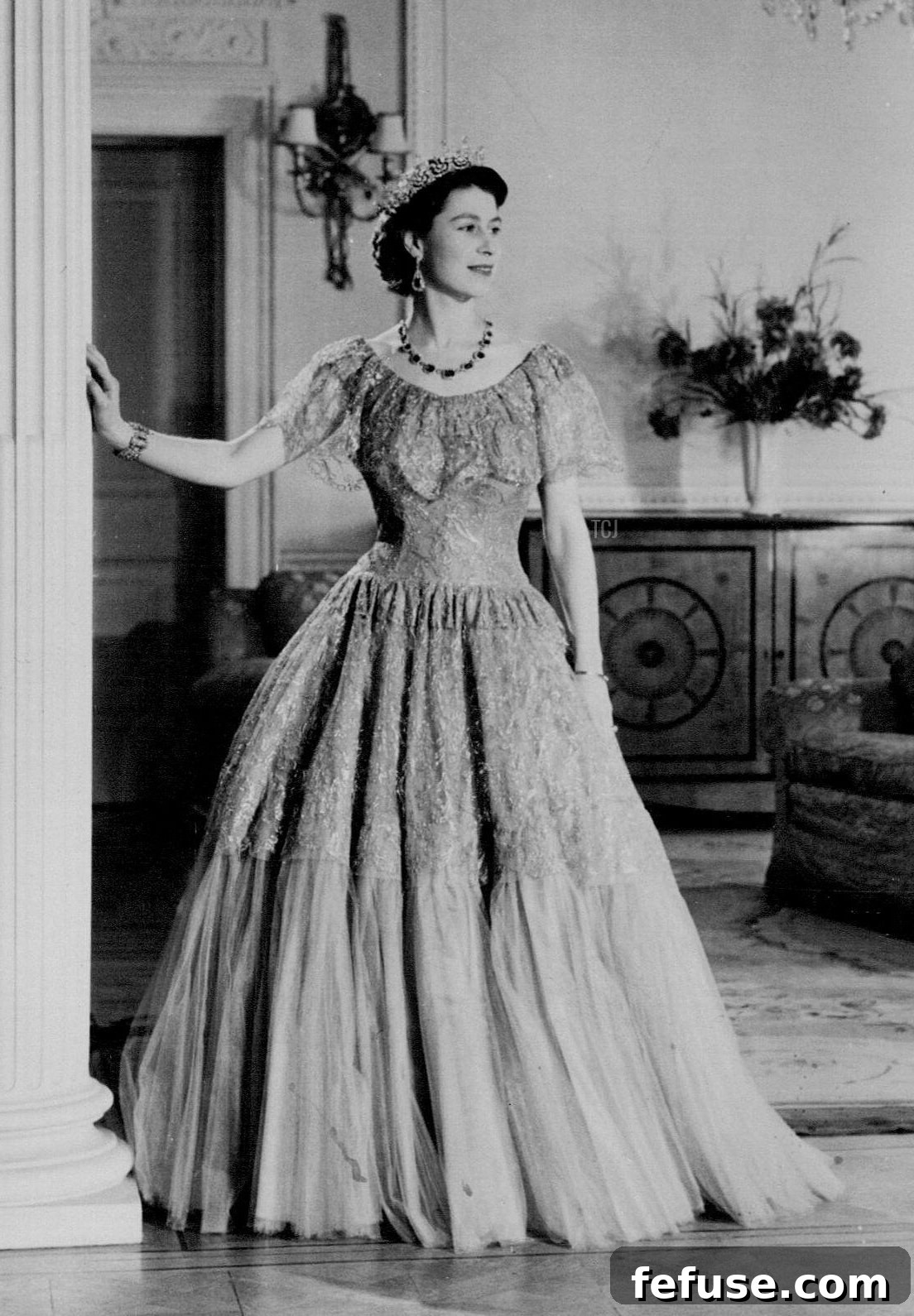
When Princess Elizabeth prepared to marry Lieutenant Philip Mountbatten in November 1947, the occasion was marked by an outpouring of affection, not least in the form of lavish wedding presents. Among the most precious of these was a breathtaking suite of antique sapphire and diamond jewelry, a personal gift from her father, King George VI. This exquisite set initially comprised a stunning necklace and a pair of perfectly matching earrings. While the exact provenance of the stones remains a closely guarded secret, jewelry historian Leslie Field dates these magnificent pieces to around 1850, placing their creation squarely within the reign of Elizabeth’s great-grandmother, Queen Victoria.
The choice of sapphires was undoubtedly significant, symbolizing loyalty, wisdom, and nobility – qualities fitting for a future queen. The deep blue hue of the sapphires, expertly complemented by brilliant diamonds, offered a timeless elegance that would perfectly suit Elizabeth’s burgeoning royal persona. This initial gift laid the foundation for what would become one of the most distinguished sapphire parures in the royal collection.
The young Princess Elizabeth wasted no time in integrating these precious sapphires into her wardrobe, showcasing her appreciation for her father’s thoughtful gift from the very beginning of her public life.
Early Adornments: Necklace Debuts and Earring Anticipation
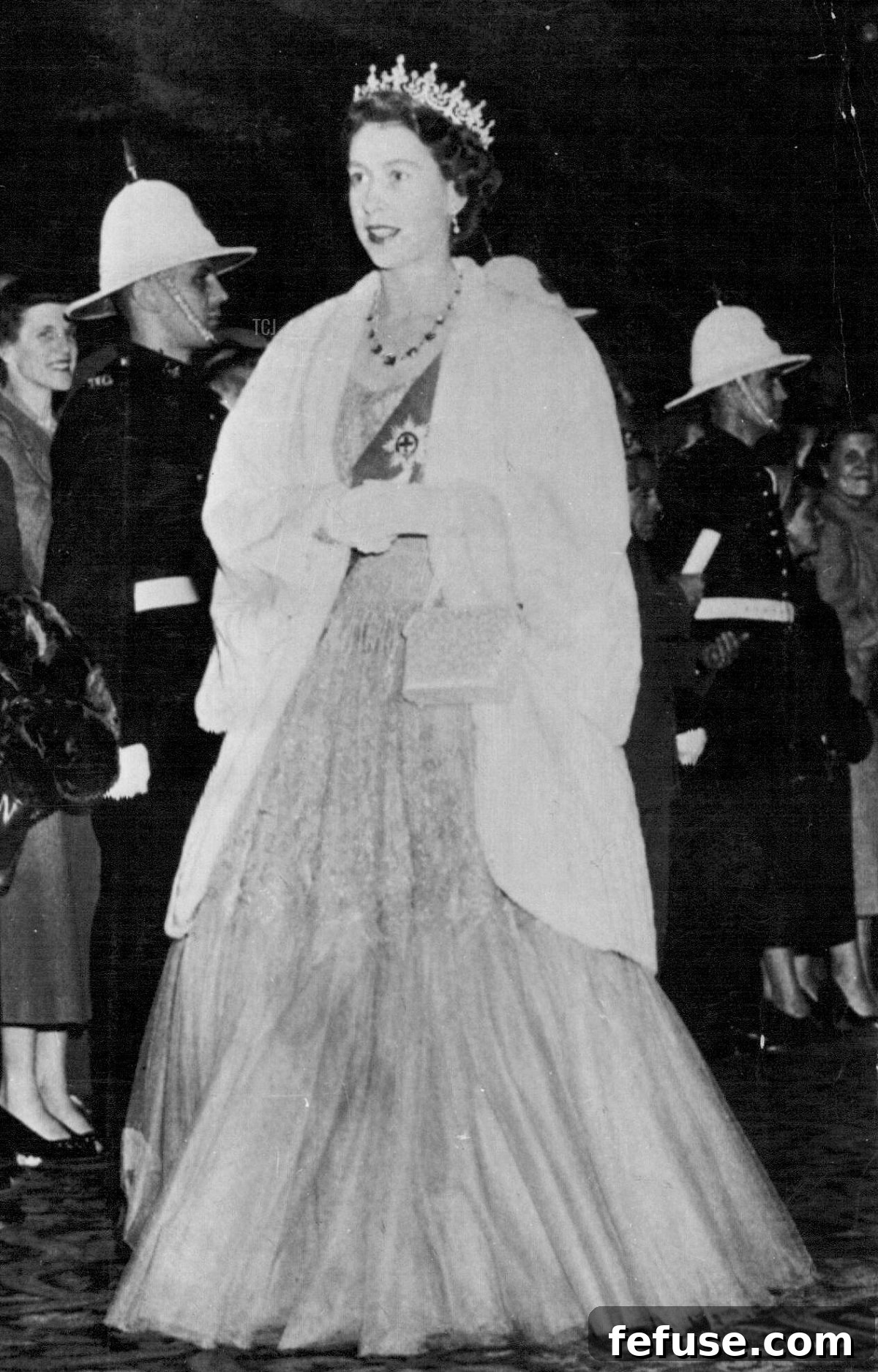
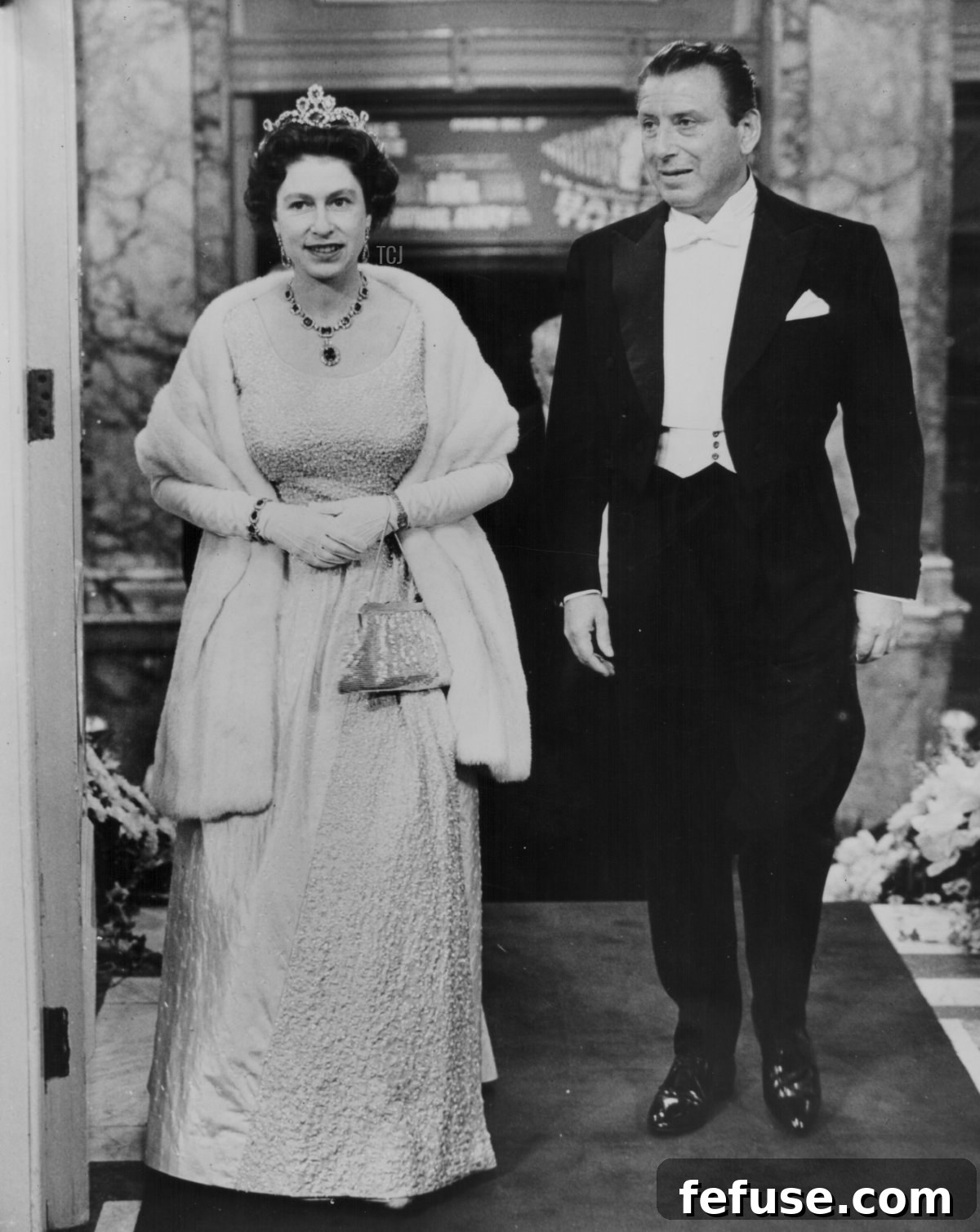
Princess Elizabeth began wearing the sapphire necklace almost immediately after receiving it, frequently pairing it with other significant royal jewels she received as wedding gifts. One notable combination was with the Girls of Great Britain & Ireland Tiara, a piece of immense historical importance. In this captivating photograph, taken during her royal tour of Canada in November 1951, Princess Elizabeth is seen gracefully arriving for a dinner at the Chateau Frontenac in Quebec, adorned with both the cherished sapphire necklace and the glittering tiara. This early appearance underscored the sapphire necklace’s status as a staple in her growing collection.
The matching sapphire earrings, however, had a slightly delayed debut. Being substantial pieces crafted in the 19th century, they were considerably heavier than many of the lighter, platinum-set earrings popular in the mid-20th century. Princess Elizabeth had her ears pierced in the summer of 1951, but patience was required for the piercings to fully heal before she could comfortably wear such weighty antique jewels. This careful consideration speaks volumes about the value she placed on these particular pieces, ensuring they would be worn correctly and comfortably for years to come.
As Elizabeth ascended to the throne and embraced her role as Queen, her approach to her extensive jewelry collection became increasingly practical and reflective of contemporary trends, even for her most treasured pieces.
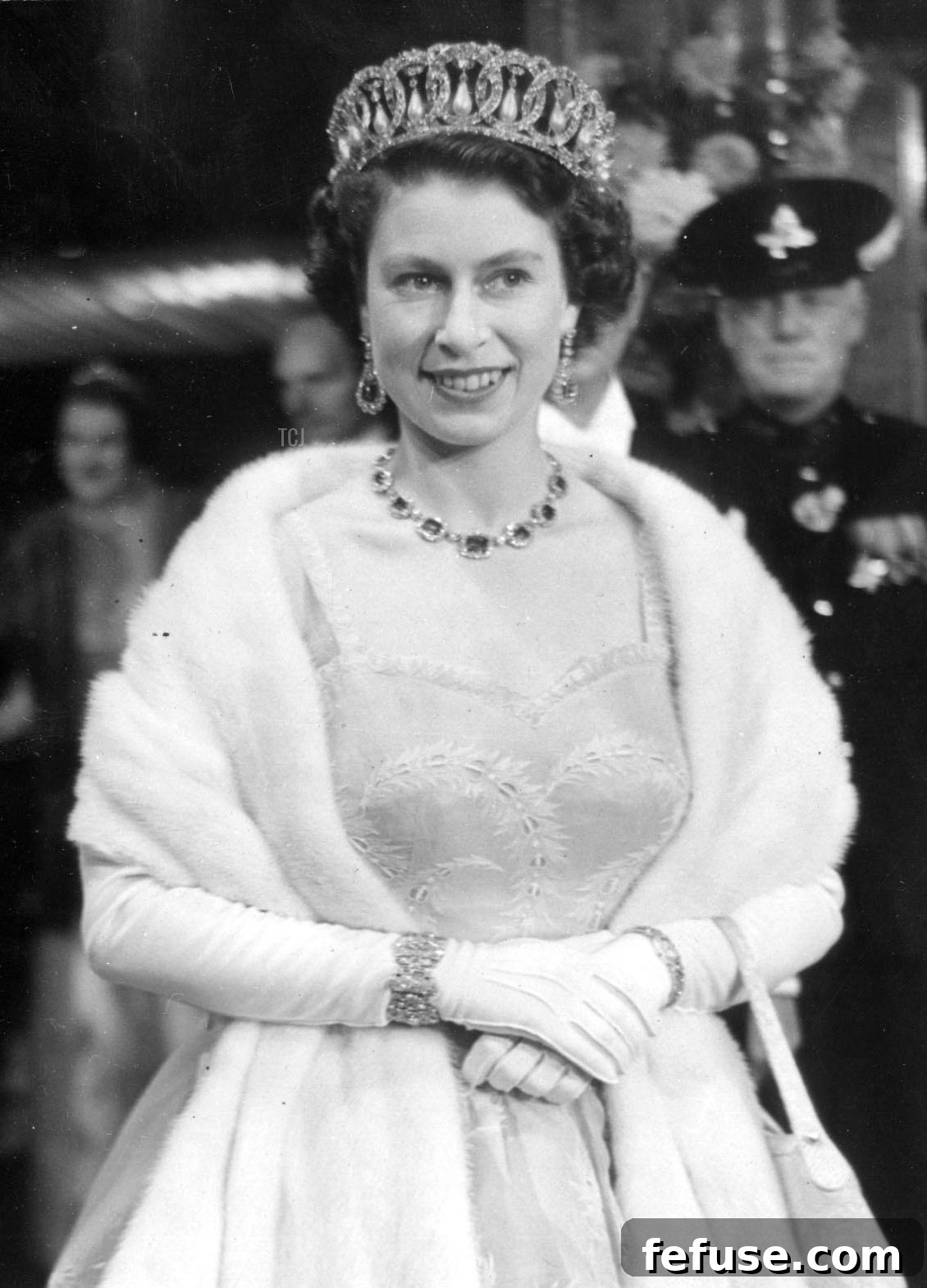
Queen Elizabeth’s Personal Touch: Adapting the Necklace for a Modern Era
Early in her reign, Queen Elizabeth II made a subtle yet significant alteration to her beloved sapphire necklace. Reflecting the prevailing fashion trends of the 1950s, which favored jewels sitting higher and closer to the throat, she had the necklace ever-so-slightly shortened. This adjustment, a common practice for the Queen with many pieces in her collection, ensured the antique jewel would sit perfectly in line with her preferred style. This meticulous attention to detail allowed her to seamlessly integrate historic pieces into her evolving royal image.
In the photograph above, taken at the Royal Film Performance in the autumn of 1953, the shortened necklace is clearly visible, elegantly gracing her neckline. She pairs it confidently with the matching sapphire earrings, showcasing the complete initial set. Her ensemble is further enhanced by the Edinburgh Wedding Bracelet and the exquisite pearl setting of the Vladimir Tiara, a majestic piece she had recently inherited from her grandmother, Queen Mary. This combination illustrates the Queen’s masterful ability to blend different elements of her royal jewelry collection to create a harmonious and regal appearance.
Recognizing the growing importance of a complete matching set for state occasions, Queen Elizabeth II soon began to envision expanding her sapphire jewels into a full parure.
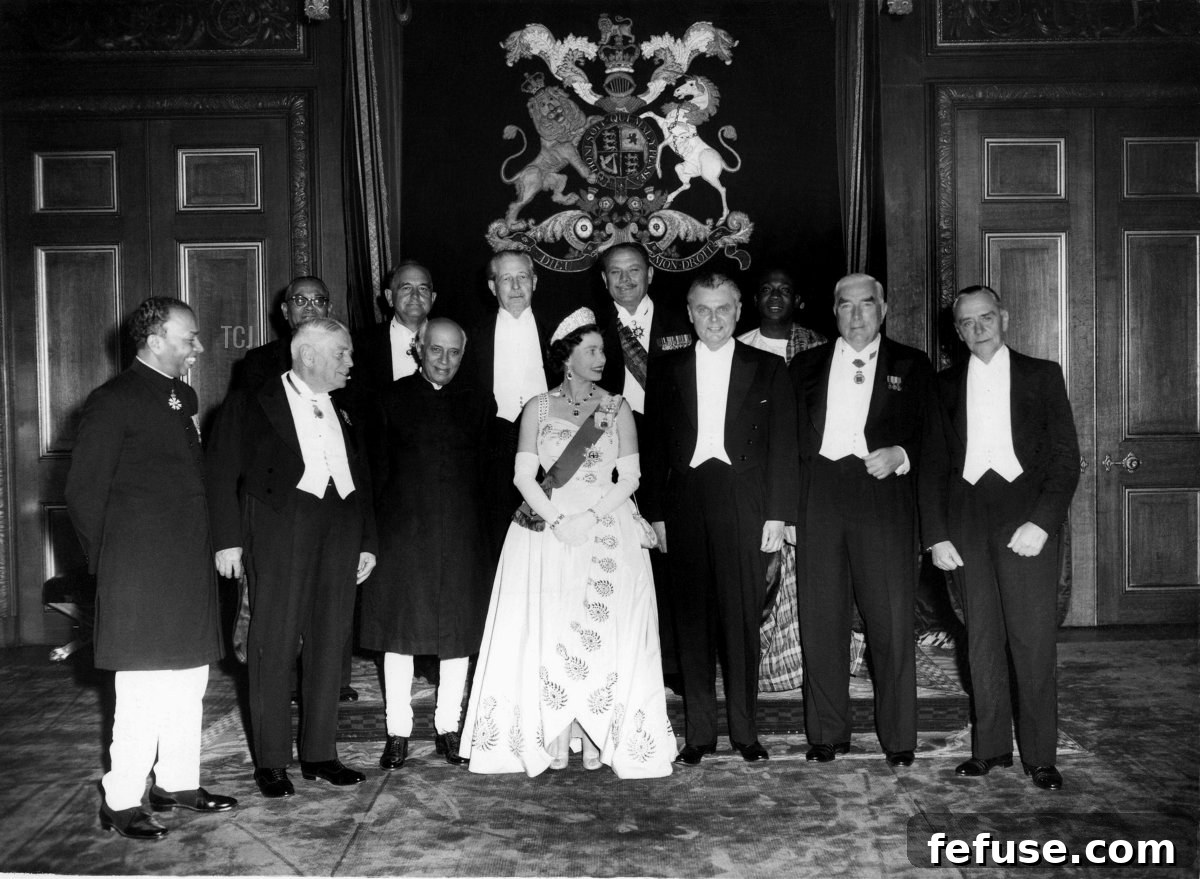
Expanding the Sapphire Parure: The Kokoshnik and a New Pendant
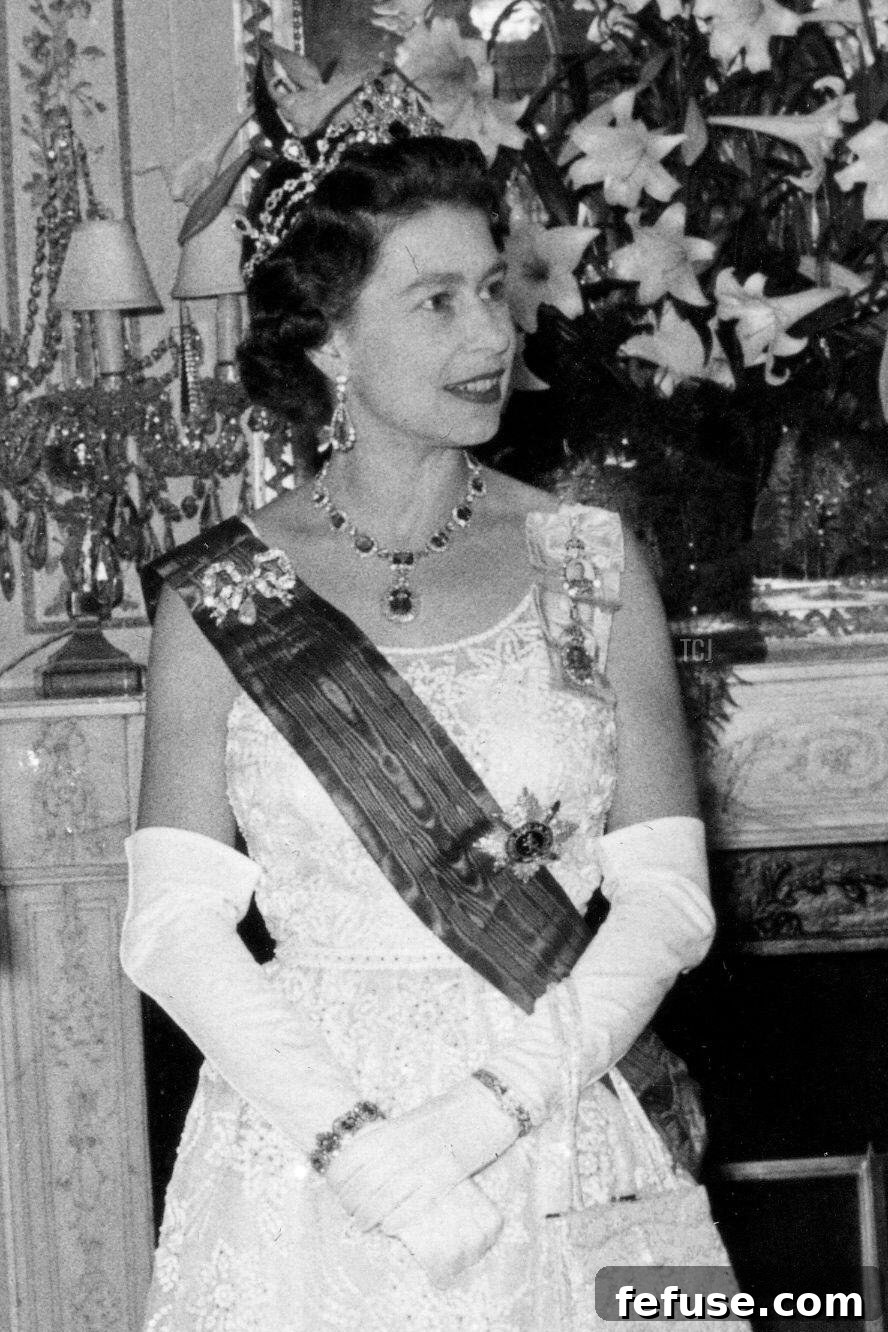
Initially, the sapphire necklace and earrings were gifted without a corresponding tiara. To create a cohesive look for formal events, Queen Elizabeth II often paired her cherished sapphires with various coordinating pieces from her extensive collection. She particularly favored all-diamond tiaras or those featuring a blend of diamonds and pearls, which harmonized beautifully with the blue and white sparkle of the sapphires. In this elegant image from 1960, during a dinner for Commonwealth prime ministers at Windsor Castle, Her Majesty demonstrates this pairing perfectly.
Here, she wears the sapphire necklace and earrings alongside Queen Alexandra’s Kokoshnik Tiara. This magnificent diamond tiara, an inheritance from her great-grandmother, Queen Alexandra, presented a particularly glittering backdrop to the deep blue of the sapphires, creating an effect of unparalleled grandeur. The choice of the Kokoshnik underscored the importance of the occasion and Elizabeth’s commitment to presenting a regal and unified image.
Further enhancements were made to the sapphire necklace, demonstrating the Queen’s ongoing engagement with and thoughtful curation of her royal jewelry collection.
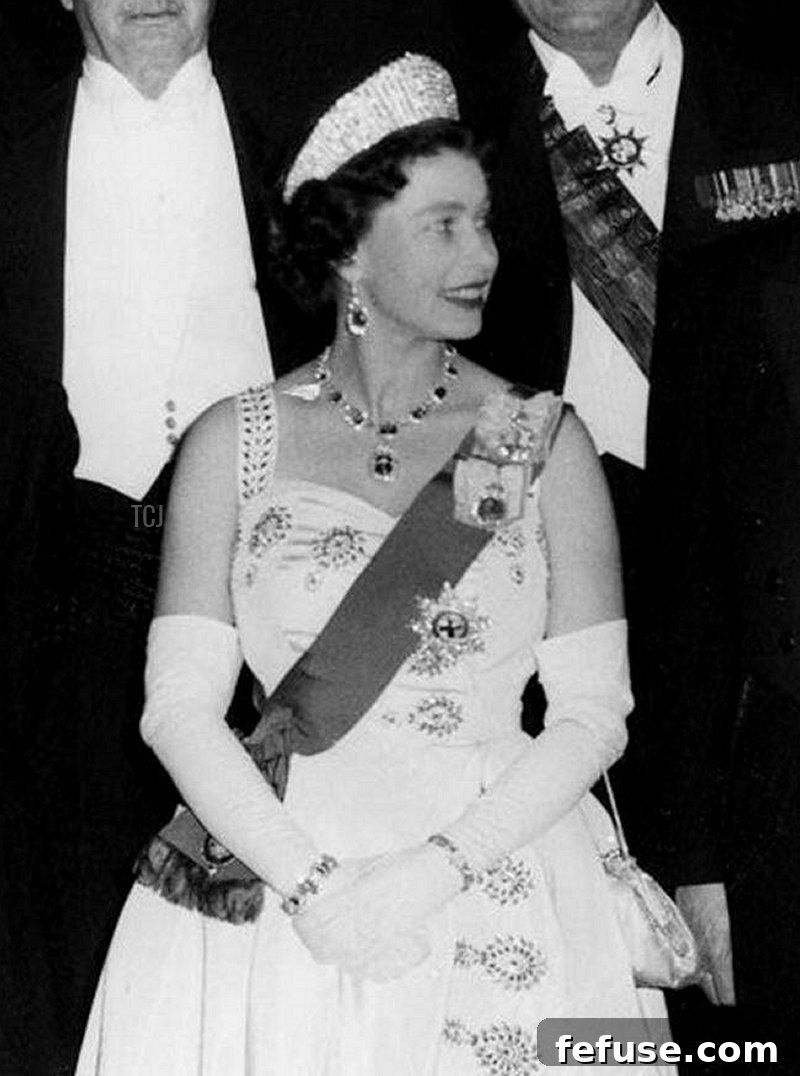
A Versatile Addition: The Detachable Sapphire Pendant
This closer view of the 1960 appearance at Windsor Castle reveals yet another subtle transformation made to the sapphire necklace. For this occasion, a substantial diamond and sapphire pendant was added to the piece, enhancing its sparkle and giving it an even grander appearance. This new pendant was ingeniously designed to be detachable, offering the Queen greater versatility. The necklace could still be worn in its original, slightly shorter format for less formal events or when paired with other necklaces, or it could be adorned with the magnificent pendant for full ceremonial splendor. This clever adaptation ensured the heirloom jewel remained dynamic and relevant throughout her long reign, capable of suiting a variety of occasions and gowns.
Among the countless events Queen Elizabeth II attended, certain moments stand out as particularly iconic, with her sapphire parure often playing a starring role in the global spotlight.
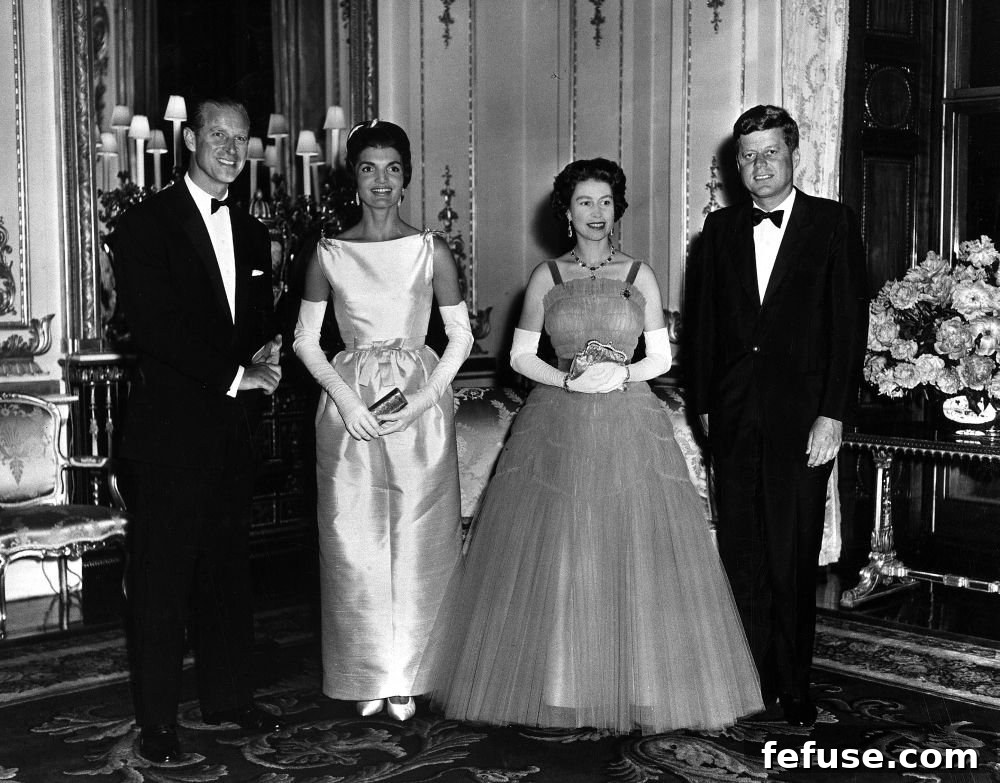
A Moment in History: The Kennedy Visit of 1961
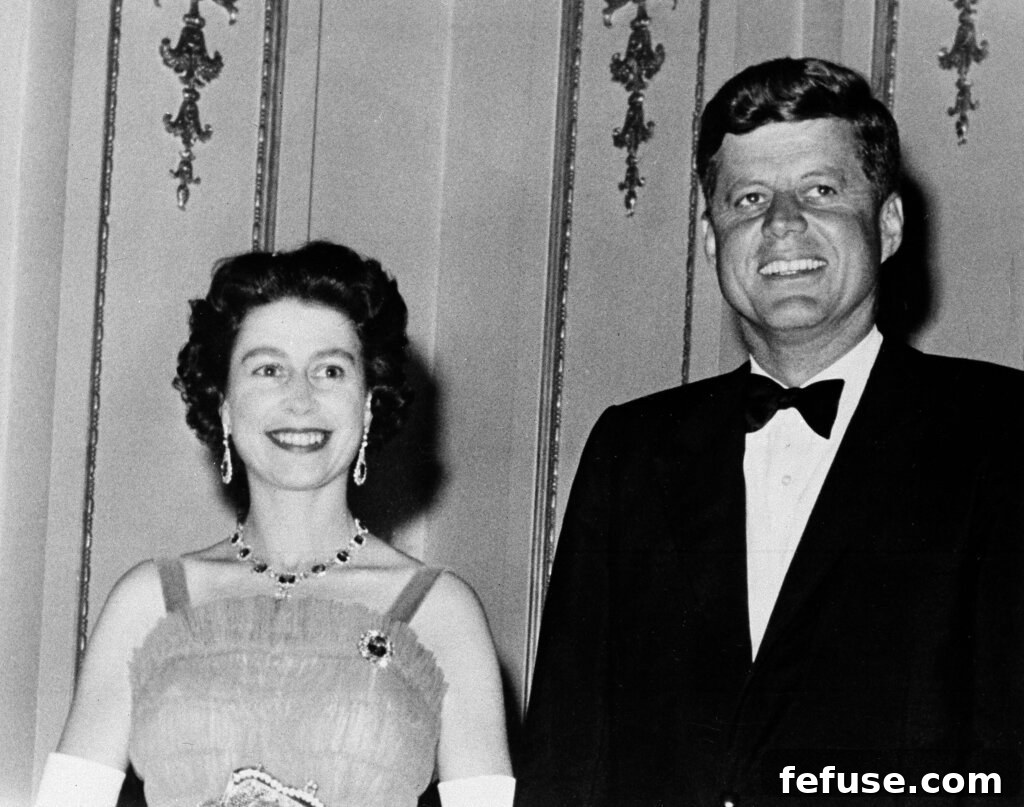
One of Queen Elizabeth II’s most memorable and historically significant appearances while wearing the sapphire parure occurred in the spring of 1961. This was the occasion when she and Prince Philip hosted a grand dinner at Buckingham Palace for then-President John F. Kennedy of the United States and his captivating wife, Jacqueline Kennedy. The meeting of these two formidable couples was a defining moment of the era, a fusion of Old World royalty and New World glamour.
For this pivotal event, the Queen chose her exquisite sapphires, knowing they would perfectly convey the dignity and prestige of the British monarchy. Her decision to wear such a significant and beautiful set of jewels for this particular occasion underscored the immense diplomatic importance of the state visit, leaving an indelible image in the annals of transatlantic relations.
The Queen’s choice of complementary jewels for such high-profile events was always meticulous, often drawing upon other treasured pieces from the royal vaults.
Completing the Look: Prince Albert’s Brooch
At the memorable 1961 dinner with the Kennedys, Queen Elizabeth II paired her cherished sapphire necklace and earrings with an elegant blue gown, creating a striking and harmonious ensemble. To further elevate her attire, she added another incredibly important diamond and sapphire piece from the British royal vaults: Prince Albert’s Brooch. This celebrated brooch holds immense historical significance, having been presented to Queen Victoria by Prince Albert on the eve of their wedding in 1840. Its deep blue sapphire, surrounded by diamonds, perfectly complemented the sapphires in her necklace and earrings, adding another layer of royal history and grandeur to her appearance. The thoughtful selection of these jewels demonstrated Elizabeth’s deep understanding of royal symbolism and her desire to present an impeccable image on the world stage.
As the 1960s progressed, the Queen made another significant decision, one that would truly complete her sapphire collection as a dedicated parure.
The Birth of the Belgian Sapphire Tiara: A Complete Parure Emerges
By the early 1960s, Queen Elizabeth II decided it was time to create a fully matching sapphire and diamond tiara to complement her cherished necklace and earrings. This desire would result in the formation of a proper sapphire parure, a complete set of matching jewels reserved for the most important state occasions. Her Majesty acquired a magnificent 19th-century necklace that had once been part of the jewelry collection of Princess Louise of Belgium. With expert craftsmanship, this antique necklace was skillfully repurposed and mounted onto a tiara frame, bringing into existence what is now famously known as the Belgian Sapphire Tiara.
This photograph captures one of her earliest appearances in the newly formed sapphire parure, attending the Royal Variety Performance in November 1965. The addition of the tiara transformed the set, allowing for an unprecedented level of coordination and grandeur, solidifying its place as a premier suite of royal jewels.
The newly completed sapphire parure quickly became a favorite for state visits, making its international debut in a highly fitting location.
A European Debut: The Belgian Sapphire Tiara in Brussels
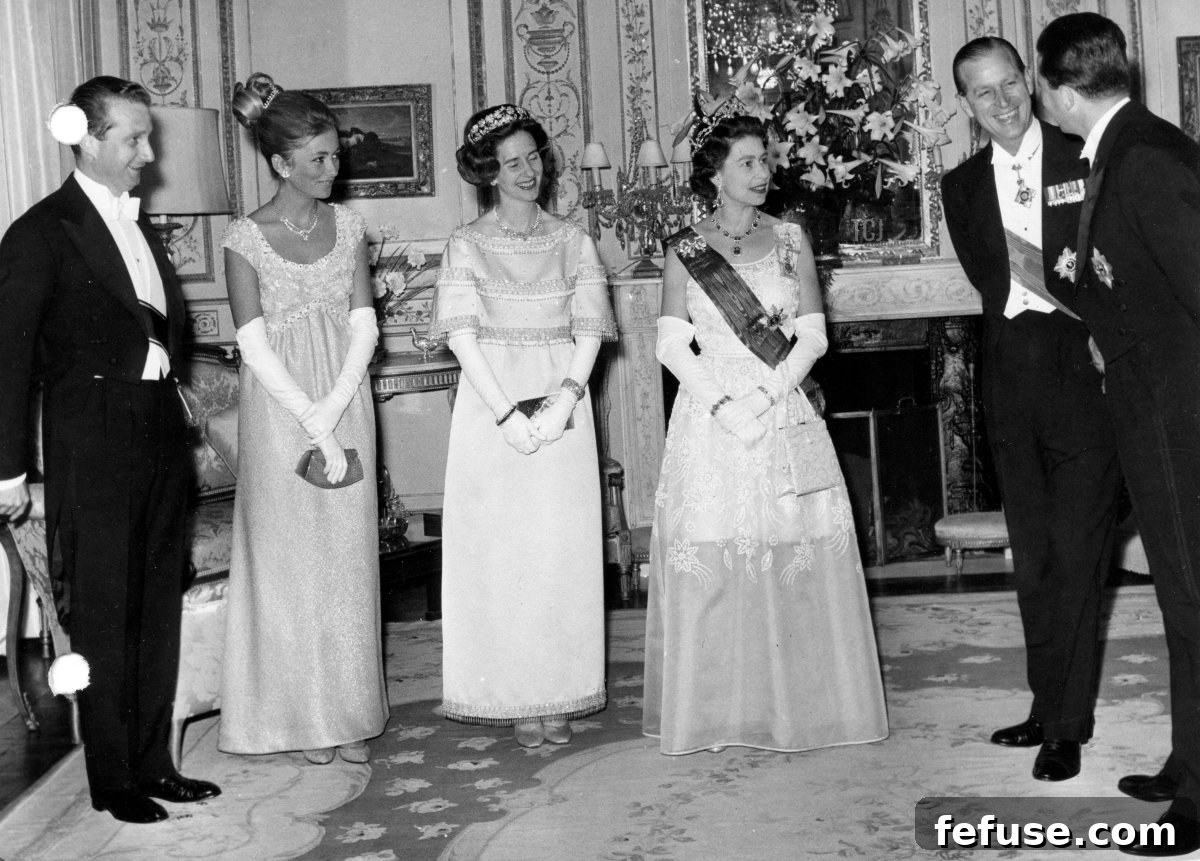
Fittingly, one of the first major international outings for the Belgian Sapphire Tiara and its accompanying parure occurred in Brussels during Queen Elizabeth II’s state visit to Belgium in the spring of 1966. This particular image captures a significant moment: the return dinner hosted at the British Embassy, where Her Majesty proudly wore the complete sapphire set.
The visual context of this photograph is also fascinating: beside her, Queen Fabiola of the Belgians is seen wearing her Spanish Wedding Gift Tiara paired with the magnificent Wolfers Necklace. Princess Paola of Belgium also makes a stunning appearance, adorned with one of her elegant diamond necklaces, artfully mounted on a tiara frame. This grand occasion perfectly showcased the splendor of royal jewelry and the international connections forged through state visits.
The pursuit of a truly complete parure saw the addition of one final, elegant piece to the sapphire collection, ensuring a perfectly coordinated ensemble.
The Final Touch: A Coordinated Sapphire Bracelet
In both the Royal Variety Performance appearance of 1965 and this prominent state visit outing in Brussels in 1966, an observant eye will spot one more exquisite sapphire jewel that completed the parure: a striking diamond and sapphire bracelet. Queen Elizabeth II had this magnificent bracelet specially made during this era to perfectly complement the newly established tiara, necklace, and earrings. This addition solidified the collection as a truly comprehensive sapphire and diamond parure, a masterpiece of royal adornment that would serve her for decades. The creation of this bracelet underscored the Queen’s commitment to presenting perfectly coordinated and visually stunning ensembles for her most important engagements, highlighting the enduring beauty and versatility of her sapphire collection.
Throughout her extensive reign, the complete sapphire parure became a reliable choice for significant gala events across the globe, symbolizing the majesty of the British crown.
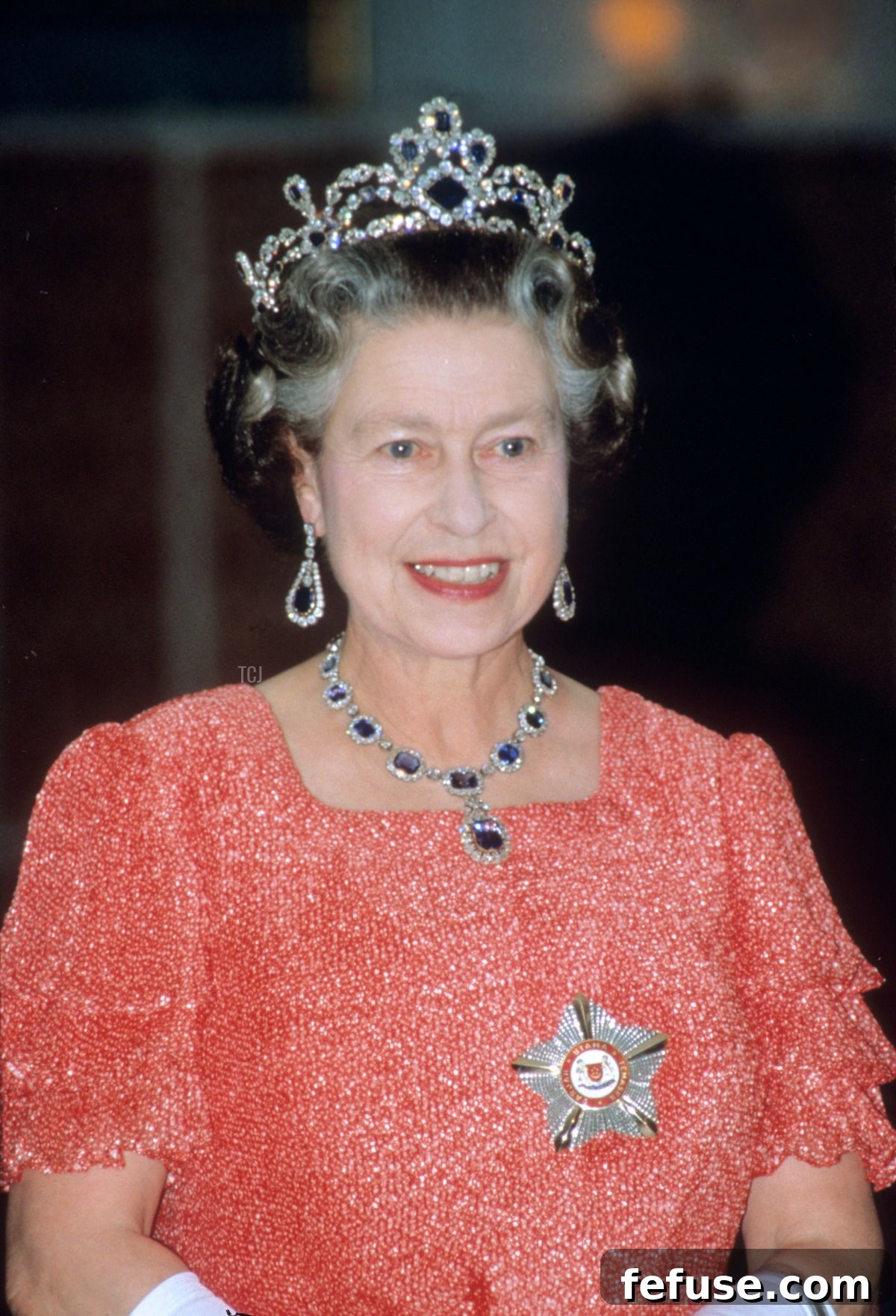
Global Diplomacy: The Sapphire Parure on State Visits
Queen Elizabeth II consistently relied on her magnificent married parure of sapphires for numerous gala events over the course of her remarkably long reign. These jewels, deeply sentimental and historically rich, were perfect for representing the prestige of the British monarchy on the global stage. Here, in this stunning image, she wears the full suite during her state visit to Singapore in 1989. The vibrant blue of the sapphires stood out beautifully against her elegant evening wear, making a powerful visual statement as she engaged in diplomatic duties and celebrated cultural exchanges. The parure truly became a symbol of her enduring presence and grace in international affairs.
The sapphire parure traveled far and wide with the Queen, making memorable appearances in some of the world’s most prominent settings.
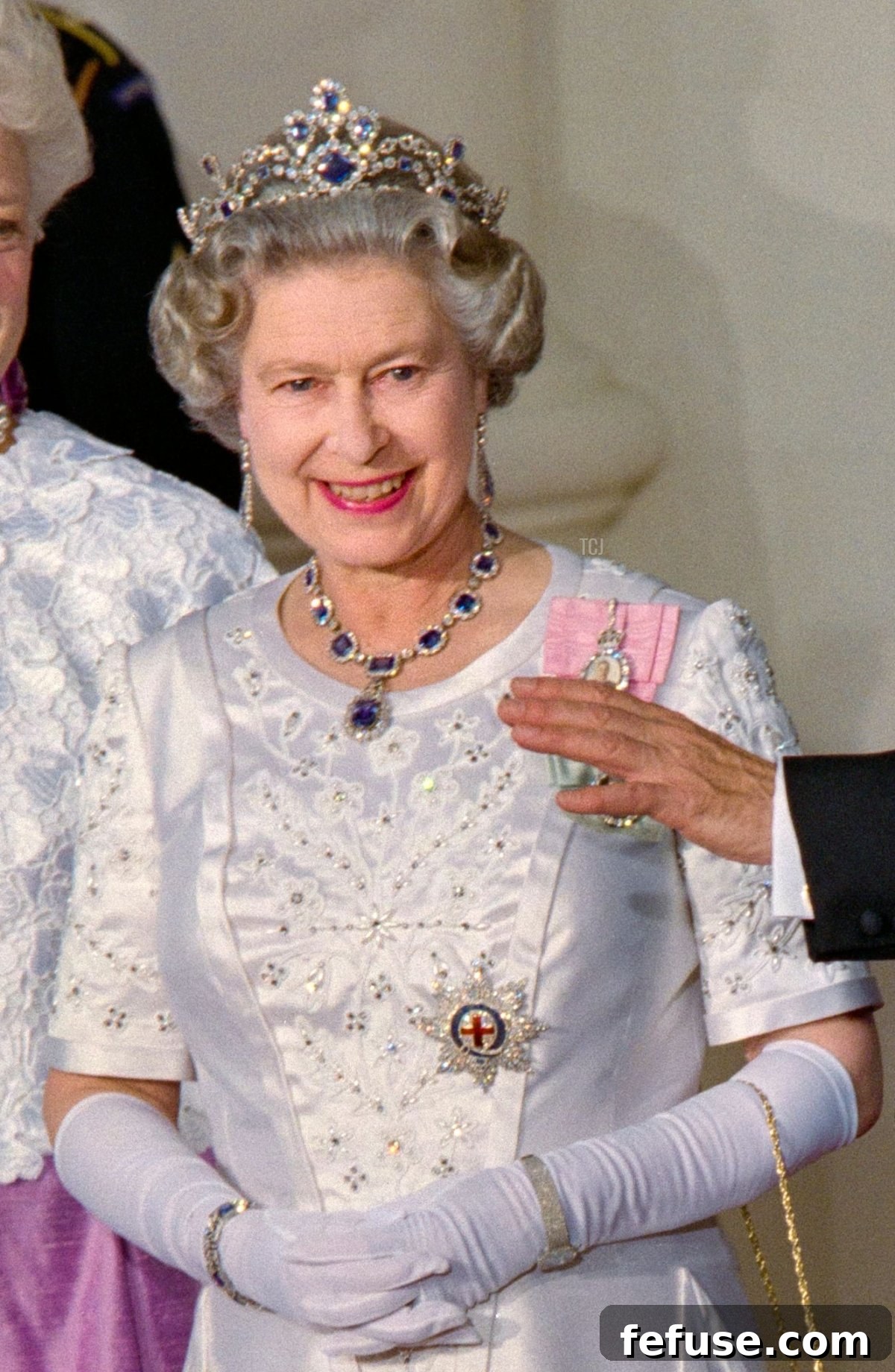
An American Rendezvous: Sapphires at the White House
The majesty of Queen Elizabeth II’s sapphire parure also graced the most significant political stage in the United States. In this iconic photograph, she is seen wearing the complete sapphire set at a state dinner held at the White House in Washington, D.C., in May 1991. Her presence, adorned in these historic jewels, symbolized the deep-rooted “special relationship” between the United Kingdom and the United States. Such occasions, where diplomacy and grandeur converged, perfectly highlighted the regal elegance and enduring appeal of the sapphires, making them a fixture at the highest echelons of global diplomacy.
Across continents, the sapphires continued to mark moments of international significance for the British monarchy.
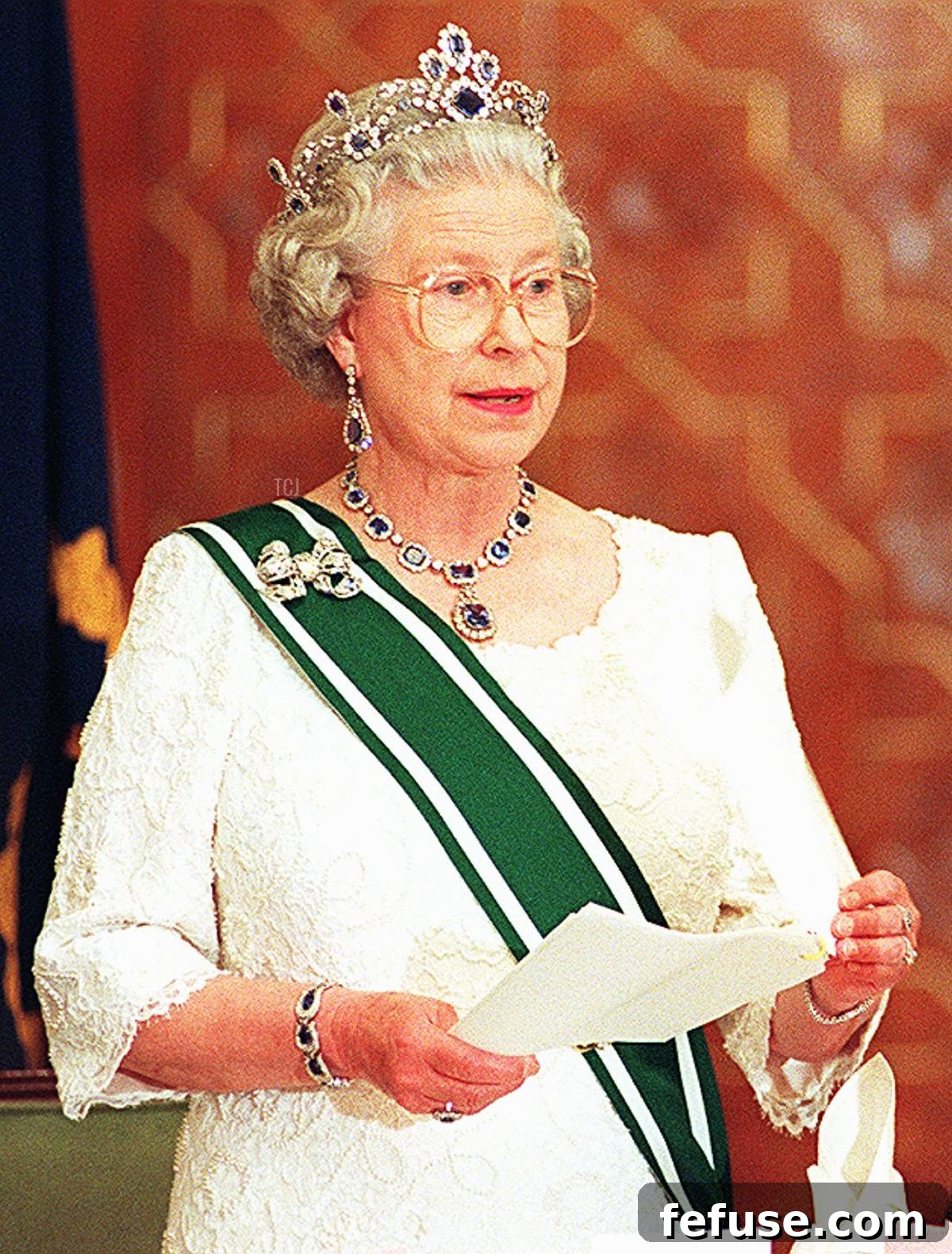
Symbol of Unity: The Sapphires in Pakistan
Continuing its extensive international travels, the sapphire parure also journeyed with Queen Elizabeth II during her significant trip to Pakistan in October 1997. In this image, she is pictured wearing the radiant sapphires at a banquet hosted by President Farooq Leghari in her honor. The choice of such a distinguished set of jewels for this occasion underscored the importance of the Commonwealth ties and diplomatic relations between the two nations. The glimmering blue of the sapphires, a symbol of stability and prestige, added a touch of timeless elegance to the formal proceedings, demonstrating the Queen’s unwavering commitment to her global role.
While often seen as a complete parure, the flexibility of the sapphire set allowed the Queen to wear individual pieces for slightly less formal, yet still significant, private celebrations.
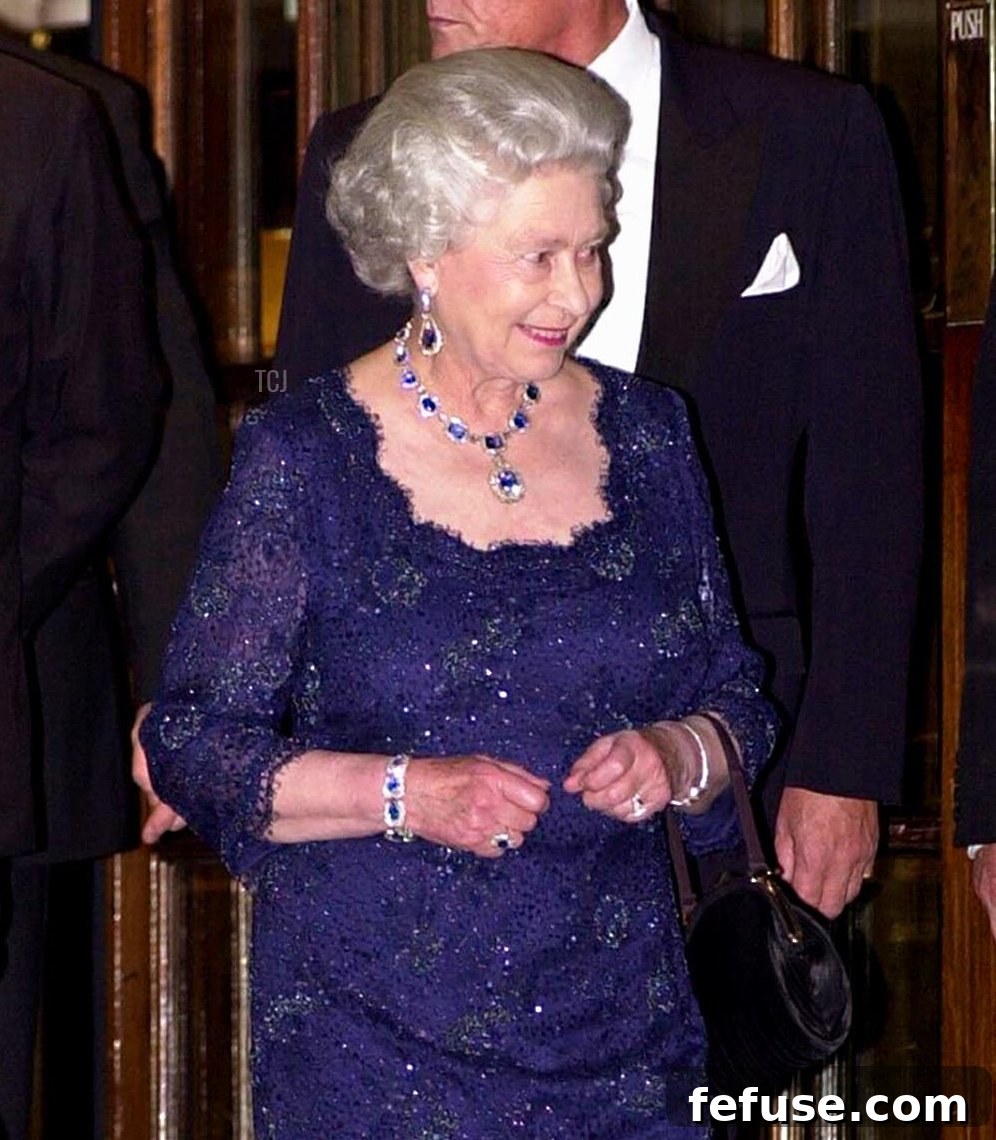
A Personal Celebration: Sapphires for the Golden Jubilee
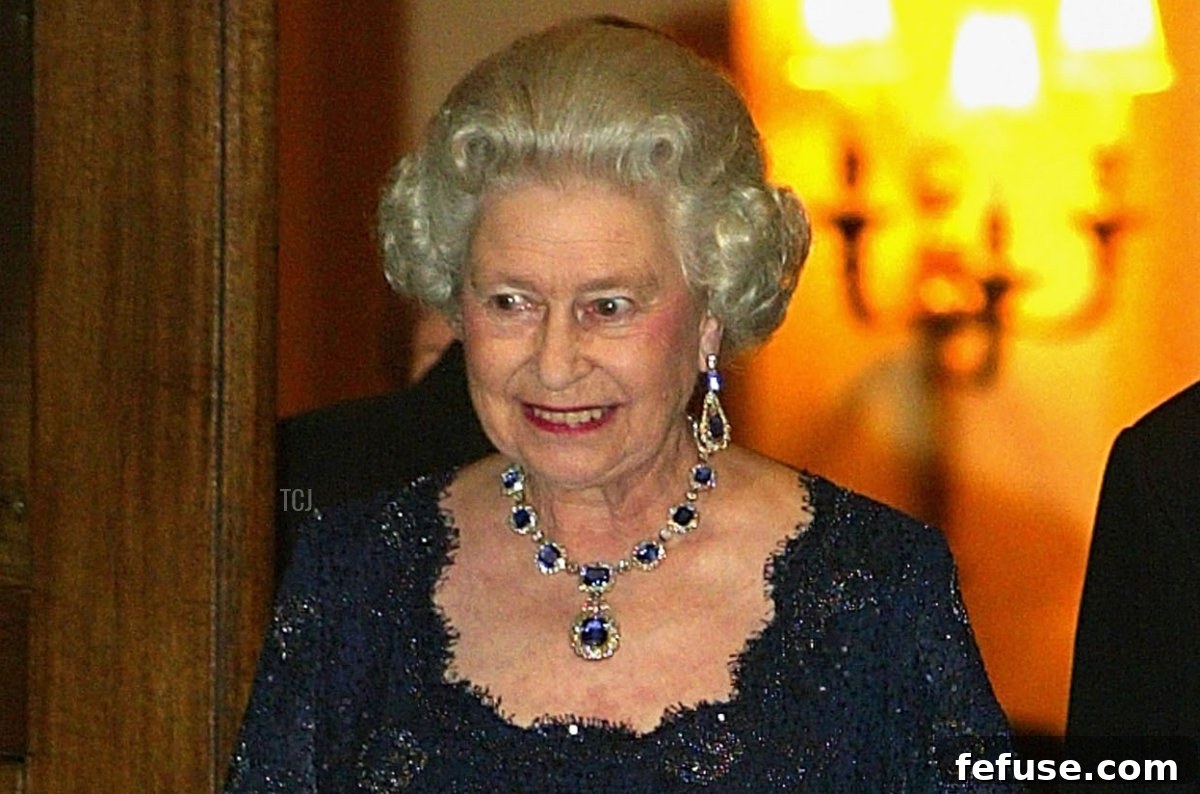
Even after the full sapphire parure was established, Queen Elizabeth II occasionally opted to wear only the original sapphire necklace and earrings, choosing to forgo the tiara for certain events. This provided a more understated, yet still incredibly elegant, look. A wonderful example of this can be seen above, as she leaves the Ritz Hotel in London after a private party in the autumn of 2002. This celebration marked the triumphant success of her Golden Jubilee year, a momentous milestone in her reign. Wearing just the necklace and earrings for a personal celebration highlighted the intimate and sentimental connection she had with these particular jewels, reiterating that they were not merely state regalia but cherished personal gifts.
Towards the later years of her remarkable reign, the sapphire parure enjoyed a resurgence in prominence, making two significant public appearances that captivated royal observers.
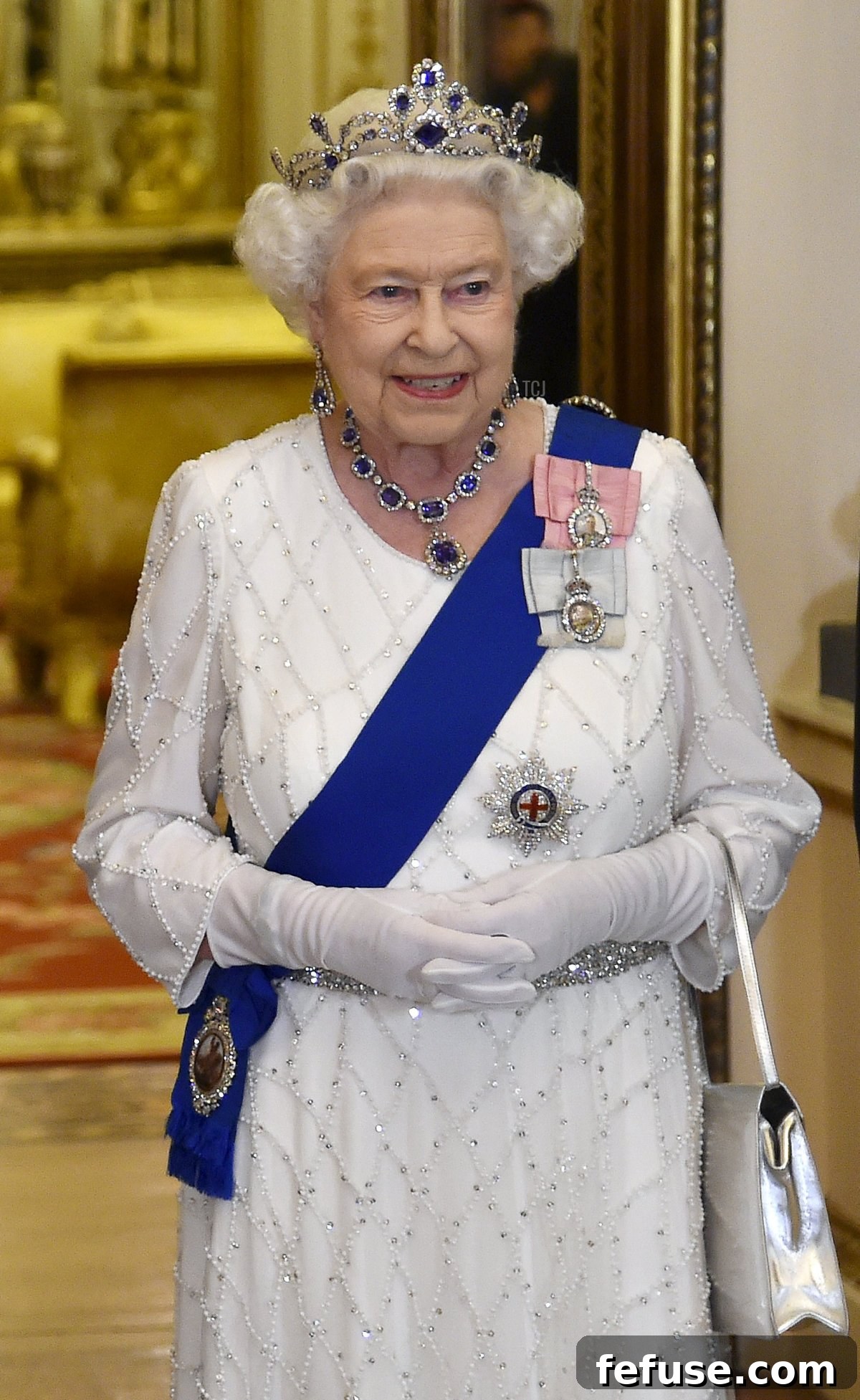
Late Reign Resurgence: A State Banquet for China
For several years, the sapphire parure was one of Queen Elizabeth’s less frequently seen sets of jewels. However, towards the end of her reign, these stunning blue gems were brought out for two highly significant public appearances, reaffirming their status as premier royal treasures. In October 2015, Her Majesty wore the full sapphire parure for a grand state banquet at Buckingham Palace, hosted in honor of the visiting President Xi Jinping of China. The choice of such a magnificent and historically rich set for this high-profile diplomatic occasion underscored the importance of the state visit and demonstrated the Queen’s enduring commitment to showcasing the splendor of the British monarchy.
The very next year, the sapphires once again took center stage at another important diplomatic event, highlighting their continued role in the Queen’s royal engagements.
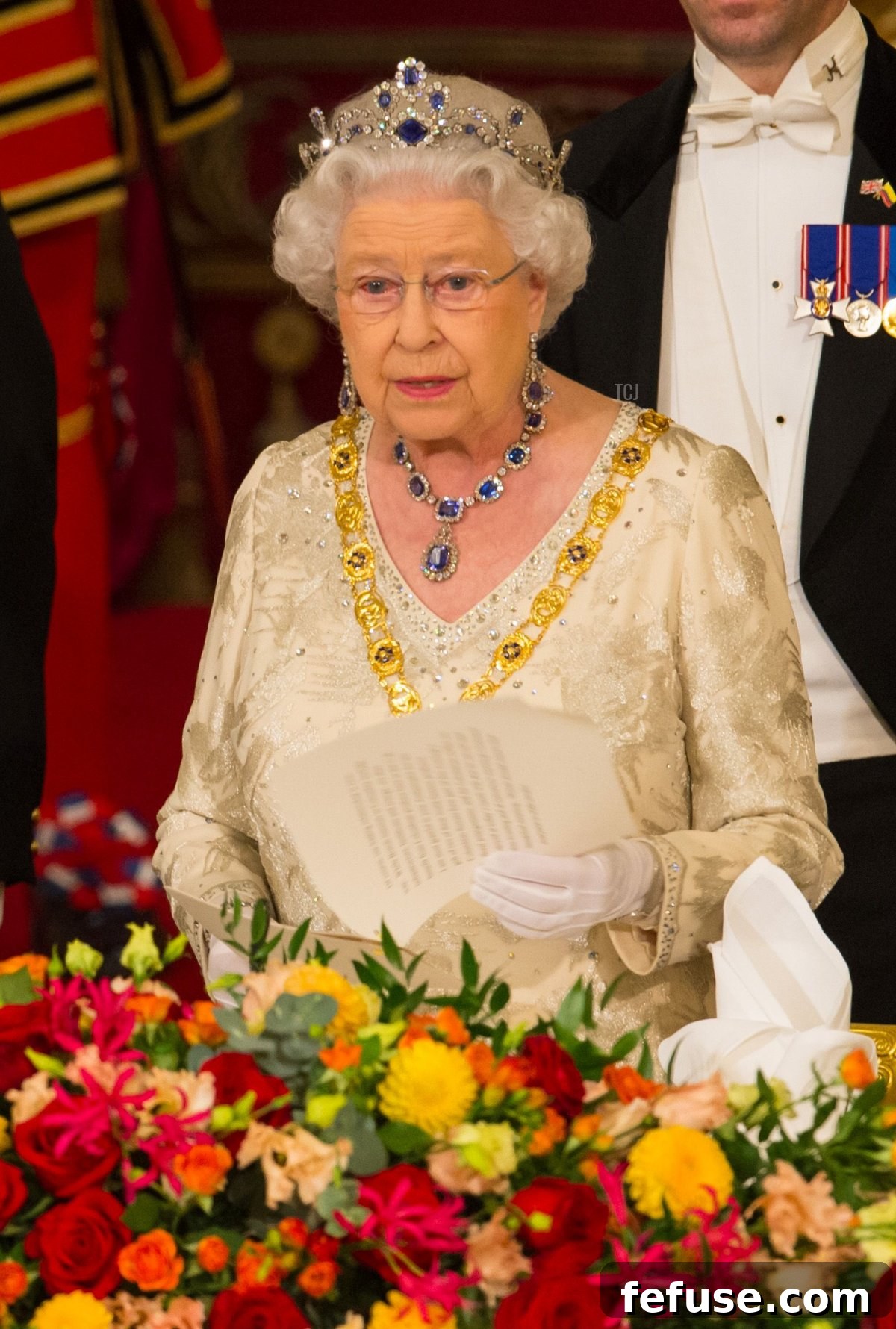
A Further Appearance: Honoring Colombia’s President
Just a year after their prominent showing for the Chinese state visit, in November 2016, Queen Elizabeth II once again donned her beloved sapphire parure for another significant state banquet at Buckingham Palace. This time, the occasion was in honor of President Juan Manuel Santos of Colombia. The Queen’s choice of these particular jewels for consecutive major state events signaled their renewed prominence and favored status within her collection during her later years. The deep blue of the sapphires, radiating warmth and regality, continued to be a magnificent symbol of her unwavering dedication to duty and diplomacy.
The final recorded instance of Queen Elizabeth II wearing these treasured sapphires captured a poignant moment, cementing their place in her personal history.
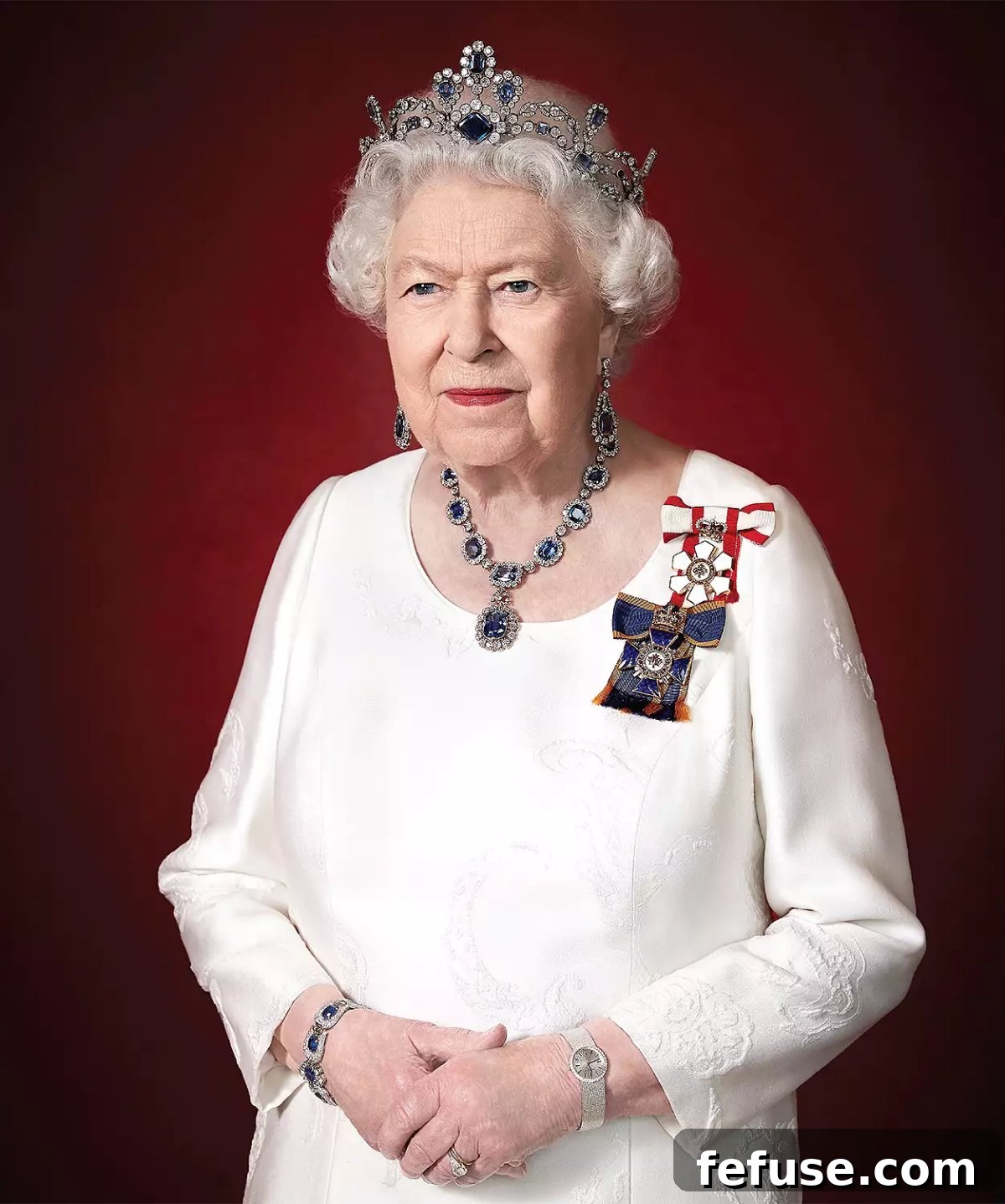
A Farewell in Sapphires: The 2019 Canadian Portrait
Queen Elizabeth II’s final recorded appearance in her beloved sapphire parure came in March 2019. For this occasion, she wore the full set at Windsor Castle while posing for a deeply meaningful photographic portrait commissioned by the Canadian government. This official portrait, now a cherished historical record, perfectly captured the monarch in her majestic splendor, adorned with jewels that held decades of personal and historical significance. It served as a beautiful culmination of her long association with these sapphires, a poignant final visual testament to a lifetime of royal service and an enduring connection to a treasured gift from her father.
The story of these royal sapphires, however, did not end with Queen Elizabeth II. Like many historic British royal jewels, they have found a new custodian, ensuring their legacy continues into the next generation of the monarchy.
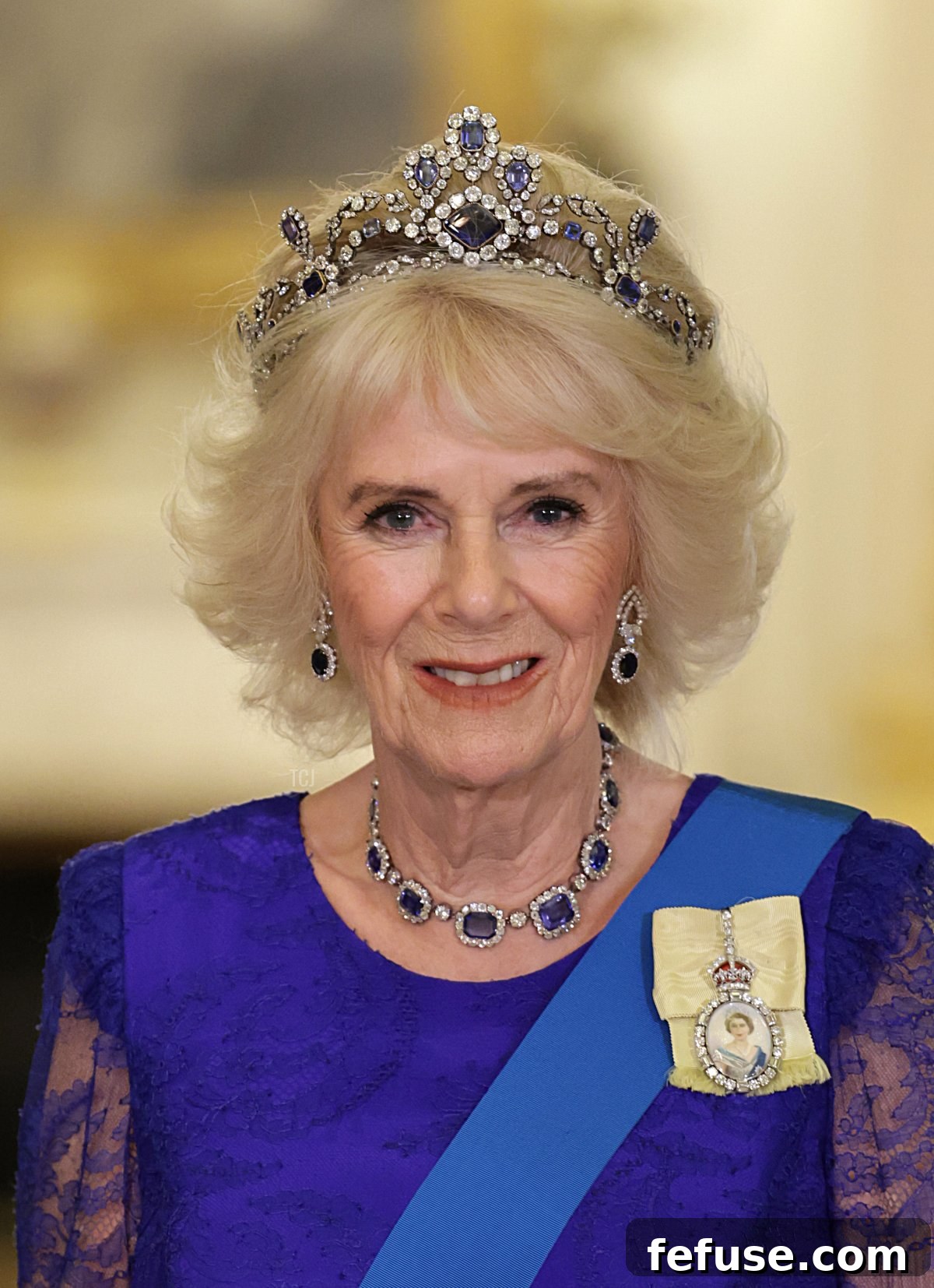
A New Chapter: Queen Camilla Embraces the Sapphire Legacy
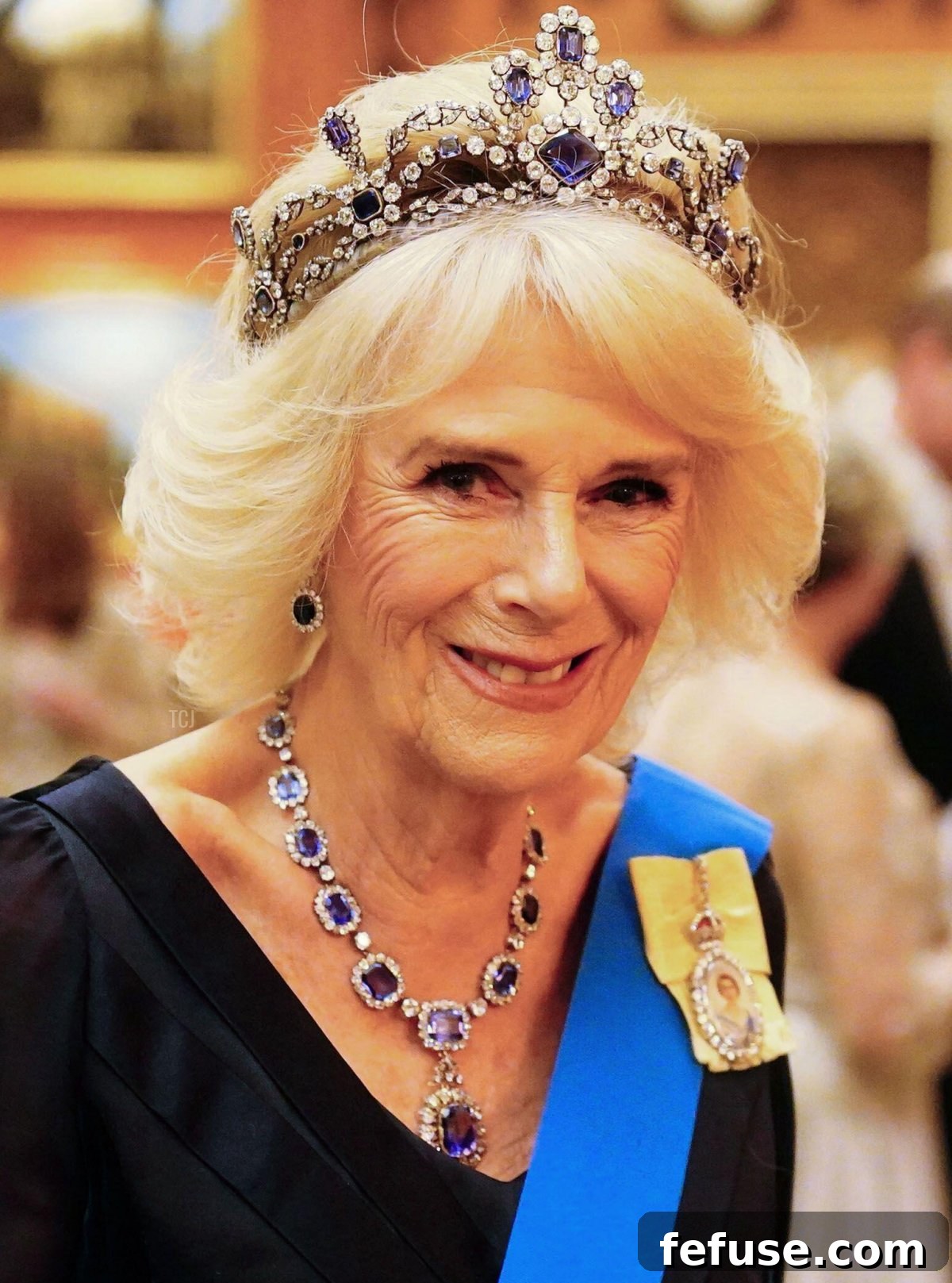
Far from gathering dust in the royal vaults, Queen Elizabeth II’s magnificent sapphire parure has found a vibrant new life with her daughter-in-law, Queen Camilla. The set has quickly become a firm favorite of Camilla’s, signaling a continuation of the sentimental legacy these jewels carry. In a truly significant moment, Queen Camilla chose the sapphires for the very first state banquet of her husband, King Charles III’s reign, in November 2022. This choice was a powerful statement, linking the new reign to the traditions and cherished history of the previous one, and demonstrating the enduring importance of these royal treasures within the British monarchy.
Queen Camilla’s personal style has also influenced the way these historic sapphires are now worn, demonstrating a respectful yet individualistic approach to royal heirlooms.
Camilla’s Adaptations: Modernizing a Classic
Queen Camilla further showcased her fondness for the sapphire suite when she wore it again in December 2022 for the annual Diplomatic Corps reception at Buckingham Palace. Much like Queen Elizabeth II before her, Camilla has begun to experiment with the necklace, wearing it both with and without the detachable pendant. She has also had some of the original length of the necklace restored, allowing it to sit more comfortably on her neck, a personal adaptation that honors her own preferences while respecting the jewel’s history.
In another notable adaptation, Camilla has opted to wear her own sapphire and diamond clip earrings in place of the antique pierced earrings. This practical choice mirrors Queen Elizabeth’s initial experience with the heavy 19th-century earrings and accommodates Camilla’s personal preference, as she does not have pierced ears. These subtle yet significant changes demonstrate how royal jewels continue to evolve, adapting to the wearer while retaining their magnificent historical essence, adding yet another layer to the rich and unfolding story of Queen Elizabeth II’s beloved sapphires.