
As the United Kingdom celebrated Her Majesty The Queen’s Platinum Jubilee, a magnificent exhibition at Sotheby’s London offered a rare glimpse into centuries of royal and aristocratic splendor. Titled “Power & Image: Royal & Aristocratic Tiaras,” this showcase brought together over 40 breathtaking tiaras, each with a unique story of heritage, craftsmanship, and profound historical significance. Far beyond mere adornments, these exquisite jewels served as potent symbols of status, power, and enduring legacy. From pieces designed for queens to those gracing the heads of prominent aristocratic brides, the exhibition provided an unparalleled journey through the dazzling world of high jewelry. This article delves deeper into some of the most spectacular tiaras featured in this landmark event, exploring their origins, notable wearers, and lasting impact, offering readers an exclusive insight into these cherished artifacts of history.
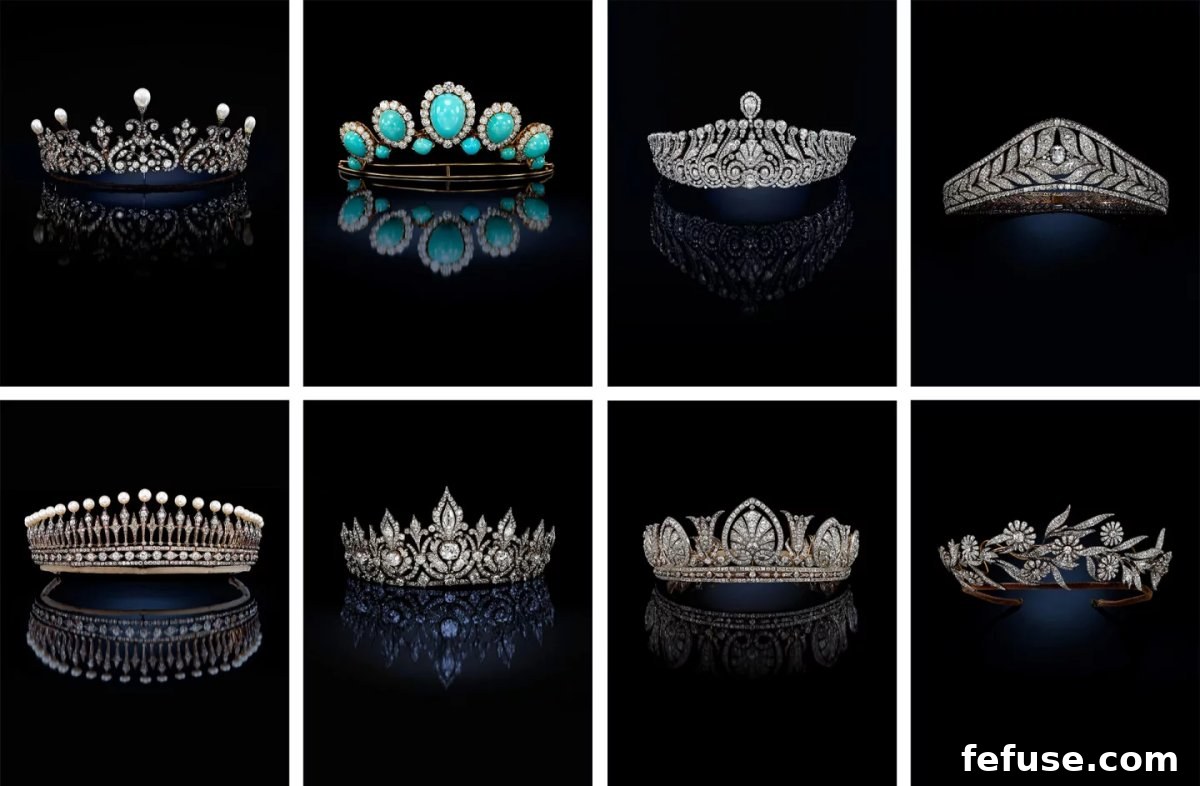
The “Power & Image” exhibition, which ran from May 28 to June 15, was a cornerstone event of the Platinum Jubilee celebrations, captivating jewelry enthusiasts and history buffs alike. Sotheby’s, a world-renowned auction house, curated an extraordinary collection that included several tiaras with direct royal or aristocratic lineage, offering both public display and discreet opportunities for acquisition. While many pieces were graciously loaned for public viewing, a select few were indeed available for sale, creating a buzz within the collecting community. Among the speculated sale pieces, as we previously explored, was the intriguing Kent Pearl Fringe Tiara, adding an element of suspense and intrigue to the proceedings. Today, we turn our attention to seven prominent examples from this magnificent exhibition, each a testament to unparalleled artistry and captivating history. It’s important to note that this is merely a highlight reel, capturing the essence of the exhibition rather than an exhaustive catalog of all the splendid tiaras on display.
Queen Victoria’s Emerald and Diamond Tiara: A Royal Masterpiece
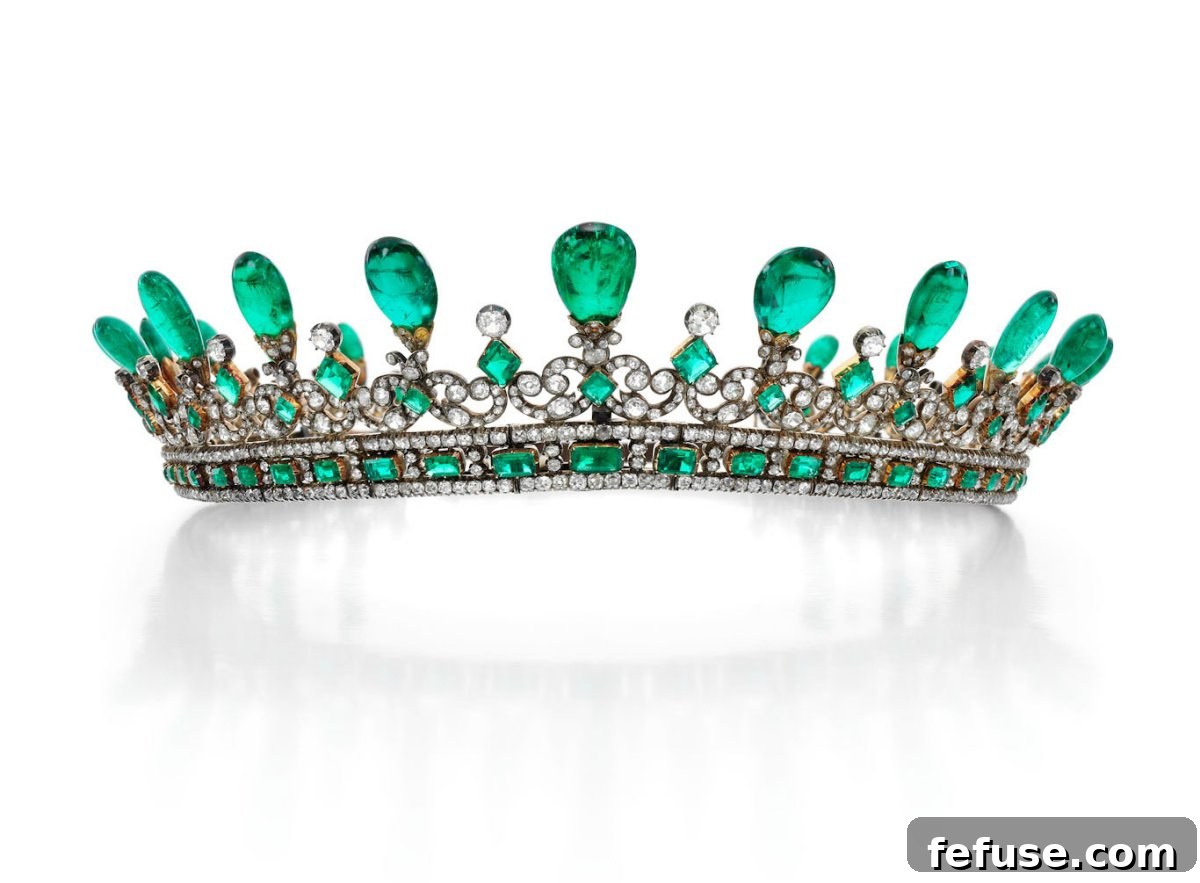
Undoubtedly one of the most historically significant and visually stunning pieces in the Platinum Jubilee exhibition was the Emerald and Diamond Tiara commissioned for Queen Victoria in 1845. This remarkable jewel represents a perfect fusion of royal patronage and exceptional craftsmanship, having been designed by Queen Victoria’s beloved consort, Prince Albert. Crafted by Joseph Kitching, who also created a magnificent coordinating parure, the tiara is a testament to the mid-19th century’s romantic aesthetic and technical prowess. Historic Royal Palaces describes this breathtaking piece as being “set with cushion-shaped diamonds and step-cut emeralds, and surmounted by a graduated row of 19 inverted pear-shaped emeralds, the largest of which weighs an astonishing 15 carats.” The deep green emeralds, juxtaposed with brilliant diamonds, create a truly regal spectacle. This particular tiara eventually passed down through the lineage of one of Victoria’s granddaughters, Princess Louise, Duchess of Fife. For several years, starting in 2018, these exceptional emeralds have been on long-term display at Kensington Palace alongside other revered Fife family jewels, a loan from the estate of the late 3rd Duke of Fife, who passed away in 2015. Its presence at Sotheby’s was a rare opportunity to see this iconic royal tiara in a fresh context.
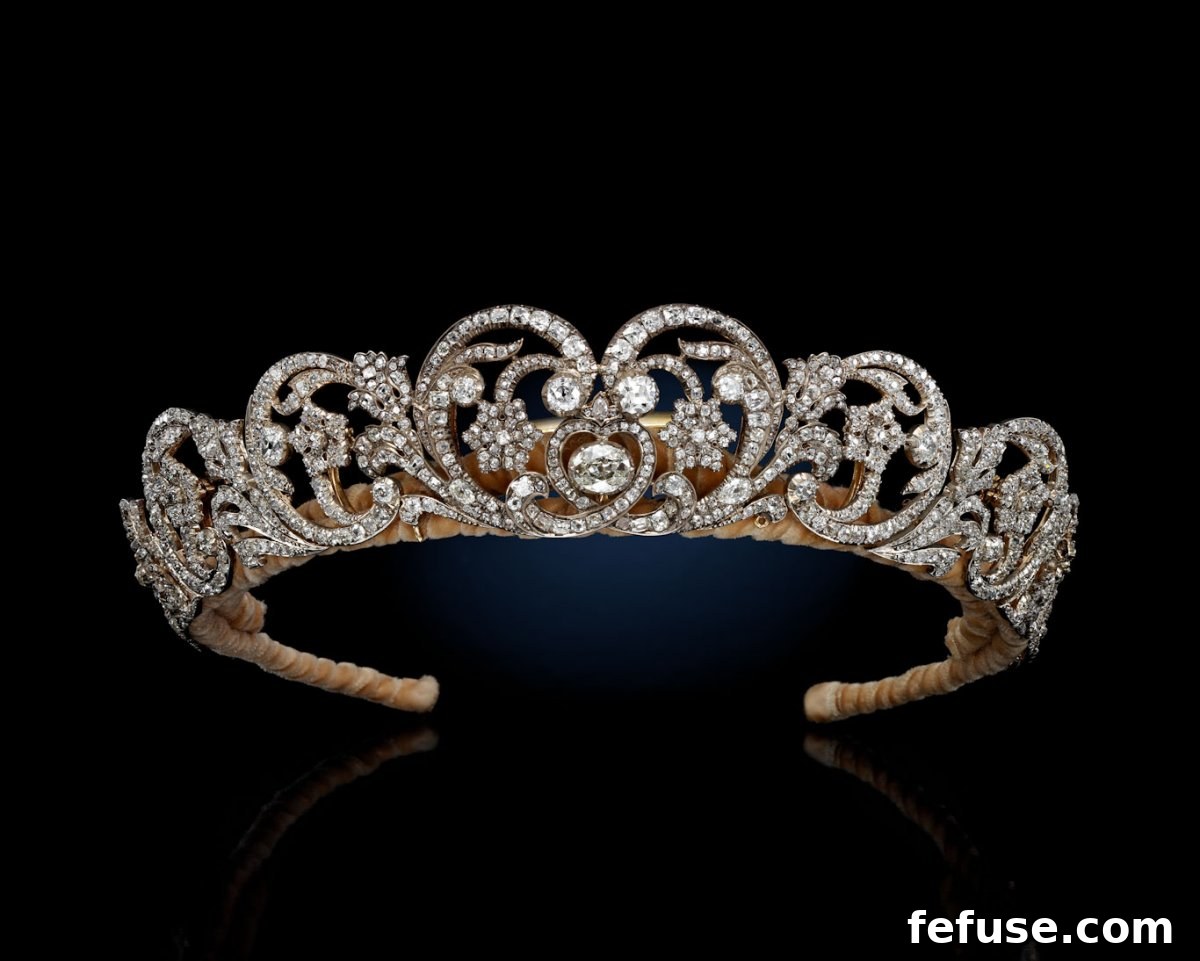
The Spencer Tiara: A Symbol of Modern Royalty
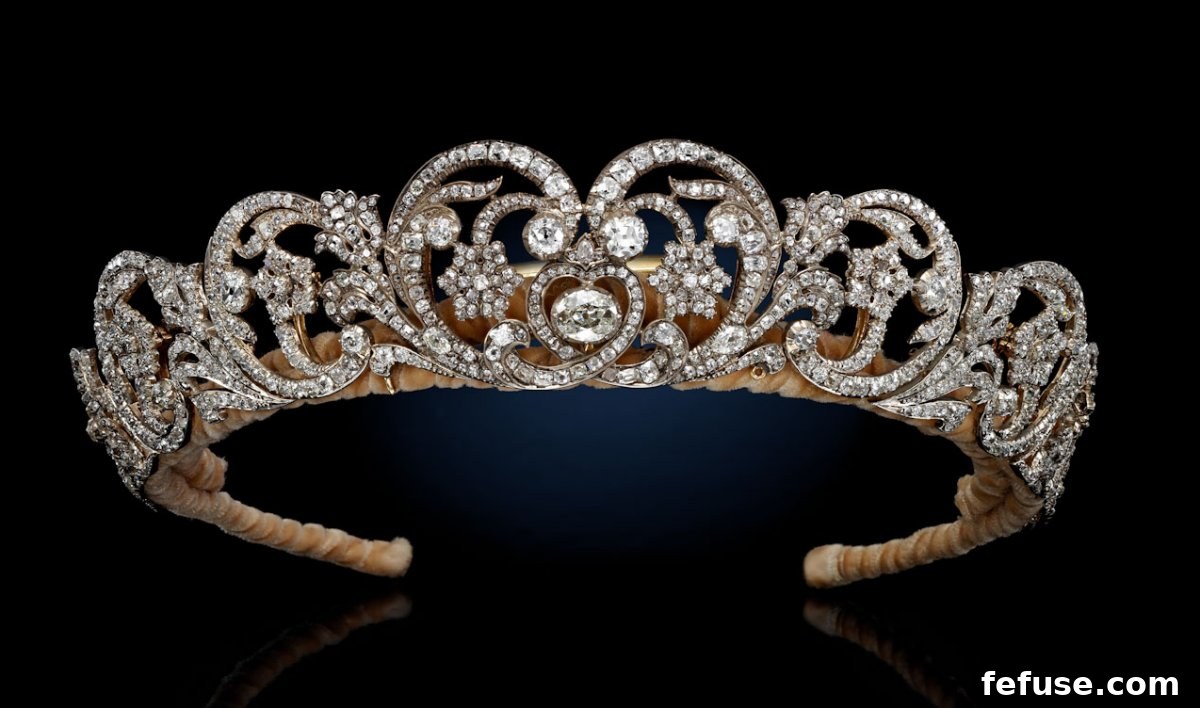
Among the many dazzling exhibits, one particular diamond tiara holds a special place in public affection and memory: The Spencer Tiara. This iconic piece became globally recognized when Lady Diana Spencer famously wore it for her wedding to HRH The Prince of Wales in the summer of 1981, marking her transition into royal life. Beyond its most famous wearer, the tiara itself boasts a rich family history. It was meticulously crafted in the 1930s, incorporating a collection of existing diamond pieces that had been cherished within the esteemed Spencer family for generations. Its intricate design, featuring delicate floral motifs and scrolling elements, perfectly embodies the romantic aesthetics of the era. Prior to Diana, the tiara had already adorned the heads of several other Spencer family brides, including both of Diana’s sisters, making it a beloved bridal heirloom. Many, including myself, have been fortunate enough to witness its sparkle before, as it toured in various exhibitions celebrating the life and legacy of Diana, Princess of Wales, for several years. The Spencer Tiara remains a treasured possession of the Spencer family, currently owned by Diana’s brother, Earl Spencer. Despite persistent speculation and rumors often found in tabloid media, rest assured that it is set to remain within the Spencer lineage, preserving its powerful connection to one of the most beloved figures in modern royal history.
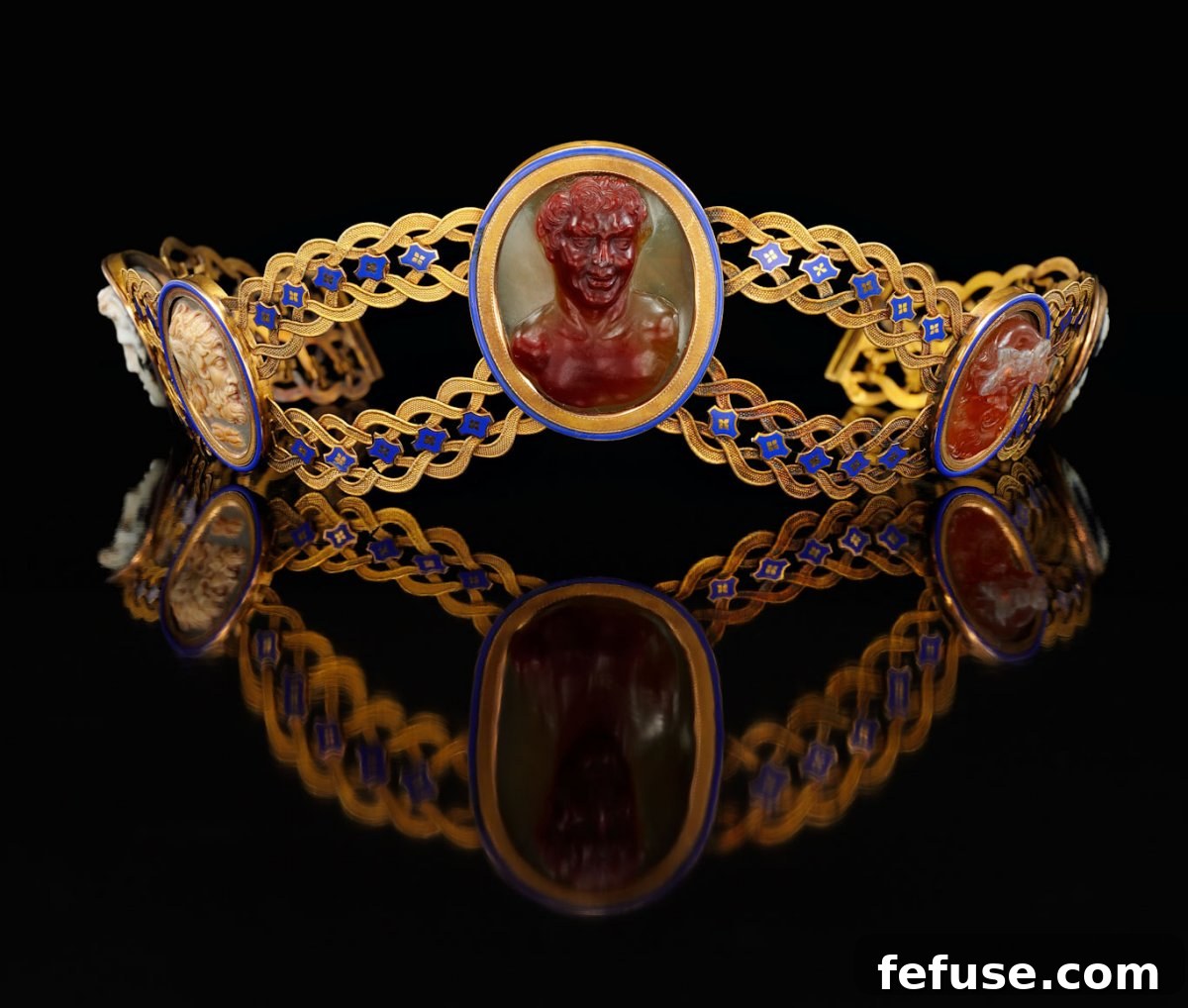
Empress Joséphine’s Gold, Enamel, and Cameo Tiara: A Napoleonic Treasure
The exhibition also proudly presented a truly captivating piece of history: Empress Joséphine’s Gold, Enamel, and Cameo Tiara. This fascinating artifact, with its unique blend of materials and distinctive Neoclassical style, was previously sold by Sotheby’s in a London auction held in December of last year. Crafted circa 1805 by the skilled hands of Jacques-Ambroise Oliveras, this tiara is widely believed to have been made specifically for Empress Joséphine of France, the revered first wife of Napoleon Bonaparte. Joséphine was known for her exquisite taste and her influence on the Empire style, making this tiara a perfect embodiment of the era’s aesthetic. The piece, richly detailed with gold, vibrant enamel work, and exquisitely carved cameos, reflects the prevailing fascination with classical antiquity that characterized the Napoleonic period. Following its initial royal ownership, the tiara eventually found its way into the esteemed collection of the Lascelles family, where it remained for generations, adding another layer to its storied provenance. We delved into the detailed chain of ownership and the historical context of its sale in our comprehensive article published at the time of the auction. Its display at Sotheby’s allowed a wider audience to appreciate its artistic merit and profound historical significance, linking directly to one of history’s most powerful empresses.
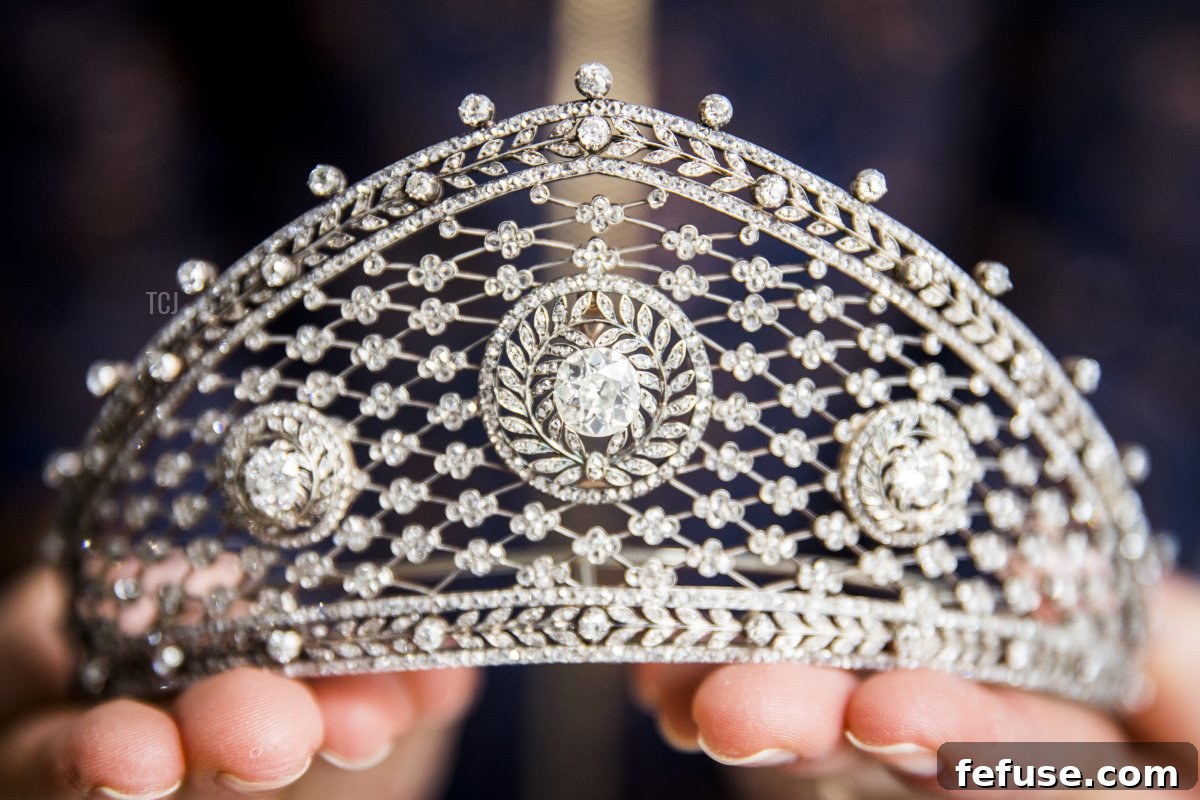
Crown Princess Cecilie’s Fabergé Tiara: A Royal Wedding Gift
Another captivating royal tiara showcased in the Sotheby’s exhibition, with a history tied to the auction house itself, was Crown Princess Cecilie’s Fabergé Tiara. This magnificent diamond and platinum creation, dating back to around 1903, is widely attributed to the legendary jeweler Fabergé. It was originally commissioned for Duchess Cecilie of Mecklenburg-Schwerin, a woman of significant European royal lineage. The tiara served as one of the spectacular wedding gifts presented to Cecilie when she married Crown Prince Wilhelm, the eldest son of Kaiser Wilhelm II of Germany, in a grand ceremony in June 1905. The connection to Fabergé is further strengthened by Cecilie’s mother, Grand Duchess Anastasia Mikhailovna of Russia, who was a well-known and dedicated patron of the esteemed Russian jewelry firm. The tiara’s elegant design, characteristic of the Belle Époque era, features graceful diamond scrolls and subtle platinum settings, exemplifying Fabergé’s mastery beyond their famous eggs. Years later, this cherished family heirloom was worn by Crown Princess Cecilie’s daughter, also named Cecilie, on her own wedding day when she married American designer Clyde Harris. Their meeting was a fascinating tale of wartime romance, as Harris was serving as one of the Monuments Men during World War II. This historic tiara eventually found a new owner when it was sold at a Sotheby’s auction in Geneva in May 2019, but its exhibition in London rekindled its historical narrative for a new generation of admirers.
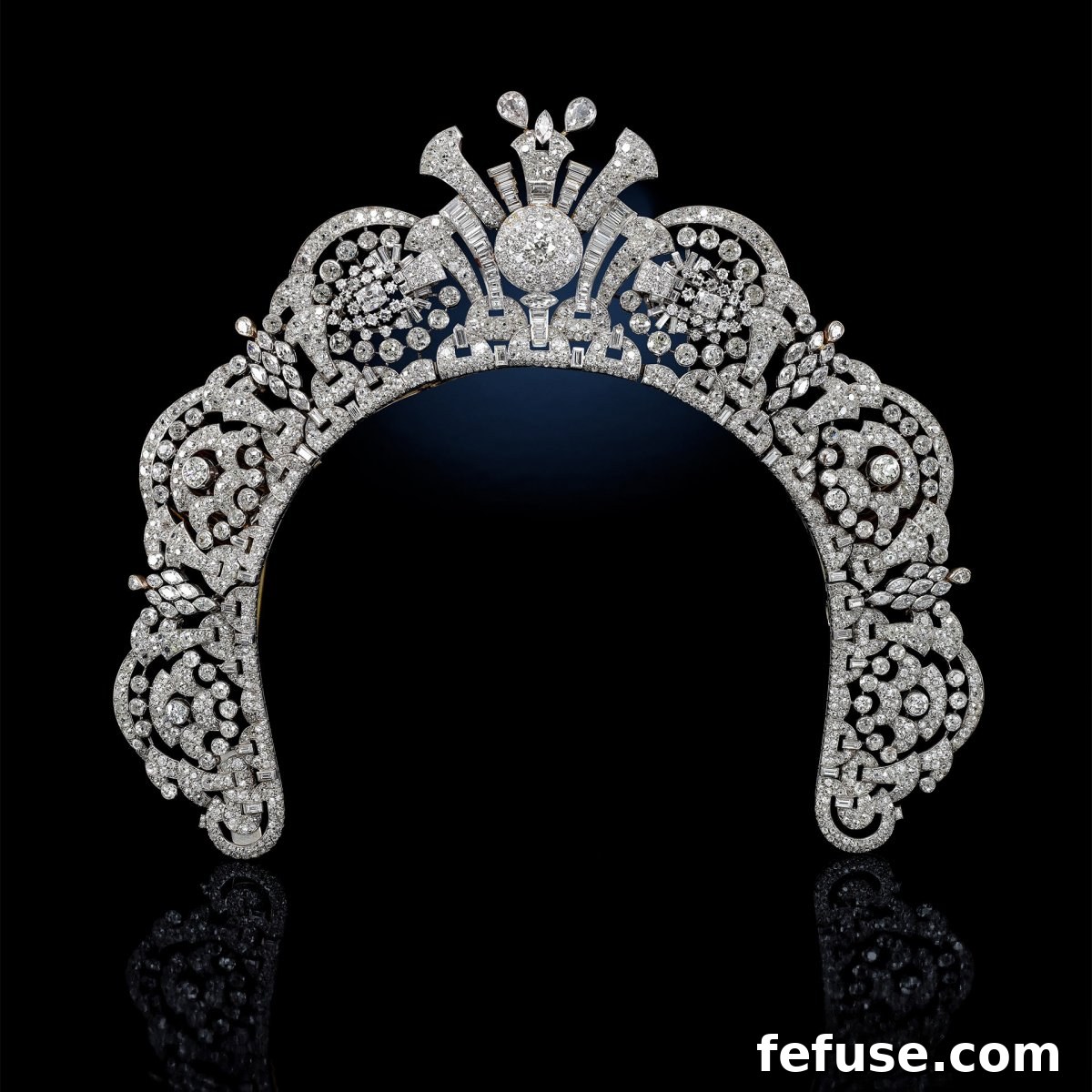
The Westminster Halo Tiara: Art Deco Elegance Personified
A shining example of the revolutionary Art Deco movement in jewelry design, The Westminster Halo Tiara, created around 1930, captivated visitors with its distinctive geometric lines and sophisticated charm. This remarkable piece was crafted by the renowned French firm Lacloche Frères for Loelia Ponsonby, who became the third wife of the incredibly wealthy and influential 2nd Duke of Westminster. The tiara’s debut was as grand as its design; Loelia Ponsonby introduced it to the world in the pages ofVoguein 1930, immortalized in a stunning portrait captured by the famed society photographer Cecil Beaton. This cemented its status not just as a piece of jewelry, but as a fashion statement of its era. Its journey continued when it was later worn by the Duke’s fourth wife, Anne Sullivan, at the coronation of Queen Elizabeth II in 1953, linking it to another pivotal moment in British royal history. A fascinating detail of its history involves the legendary Arcot Diamonds. The tiara originally incorporated two of these historic diamonds, which once belonged to Queen Charlotte and were later acquired by the Grosvenor family (the Dukes of Westminster). However, when the tiara was subsequently sold to the prestigious jewelry house Harry Winston, the original Arcot Diamonds were carefully removed and replaced with smaller, exquisite diamond clusters, marking a significant evolution in its composition and provenance.
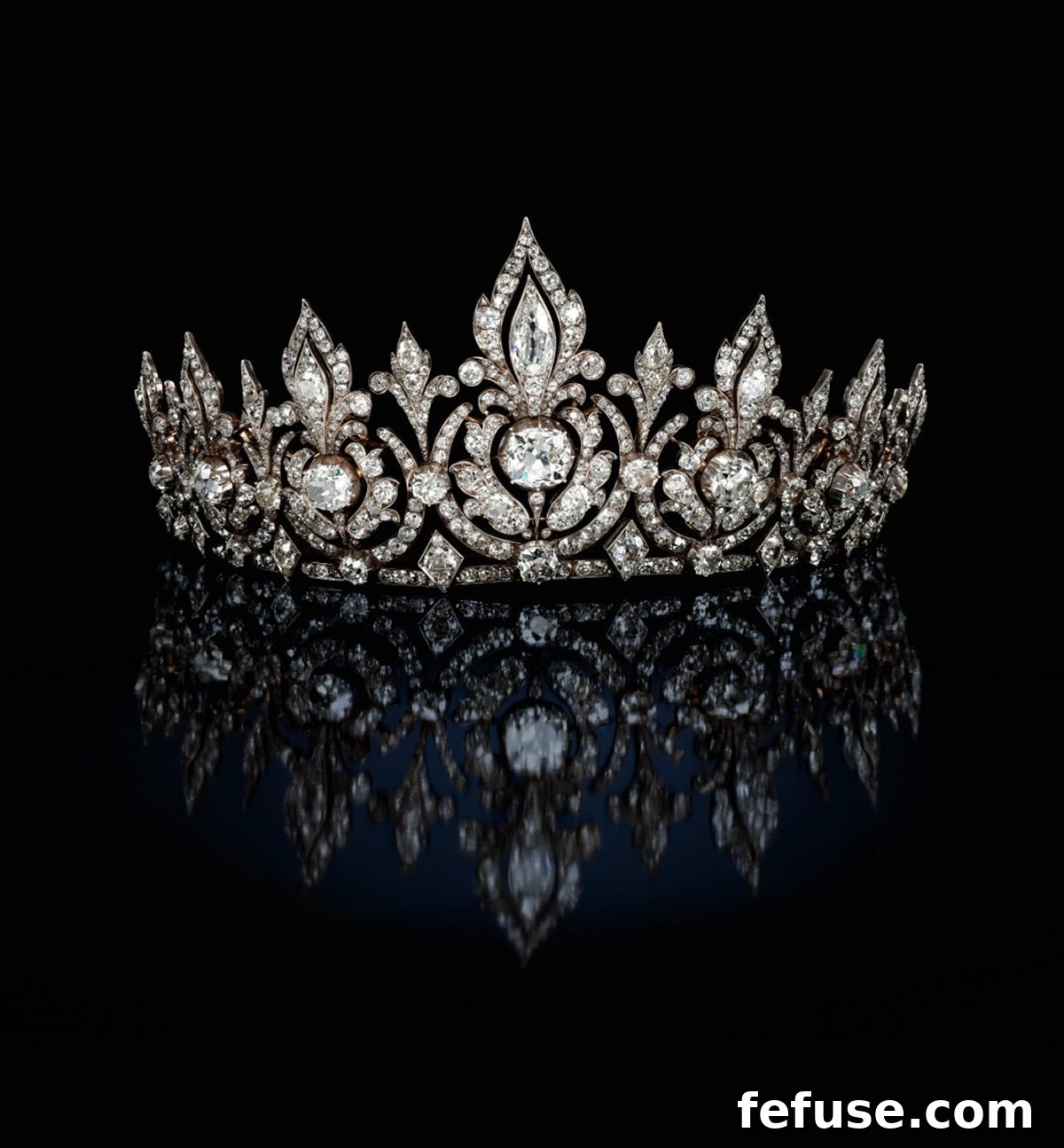
The Rosebery Tiara: Aristocratic Heritage and Romantic Gifts
The “Power & Image” exhibition was greatly enriched by the generous contributions of numerous prominent aristocratic families, who opened their private vaults to share their ancestral treasures. Among these esteemed houses were the Cavendishes, known as the Dukes of Devonshire, and the Fitzalan-Howards, the Dukes of Norfolk, each lending pieces that spoke volumes of their family histories. The Primroses, the Earls of Rosebery, also made a significant contribution, loaning not one, but a pair of magnificent diamond tiaras that highlight their family’s rich legacy. The jewel prominently pictured here is the illustrious Rosebery Tiara. Crafted in France in 1878, this exquisite piece was a lavish wedding gift from the 5th Earl of Rosebery – a distinguished statesman who notably served as one of Queen Victoria’s prime ministers – to his bride, Hannah de Rothschild. Hannah, herself an heiress to the vast Rothschild fortune, brought immense wealth and influence, making their union a significant event of the era. The tiara’s French origins hint at the sophisticated Parisian jewelers favored by European aristocracy. In addition to the Rosebery Tiara, the Primroses also loaned a second, equally enchanting piece to Sotheby’s for the exhibition, appropriately named the Primrose Tiara. This jewel is a charming example of a romantic 19th-century wreath tiara, delicately fashioned with diamond daisies, symbolizing innocence and beauty. It served as a beautiful bridal tiara for Deidre Reid when she married the current Earl of Rosebery in 1955, continuing a cherished family tradition and ensuring these magnificent pieces remain central to their history.
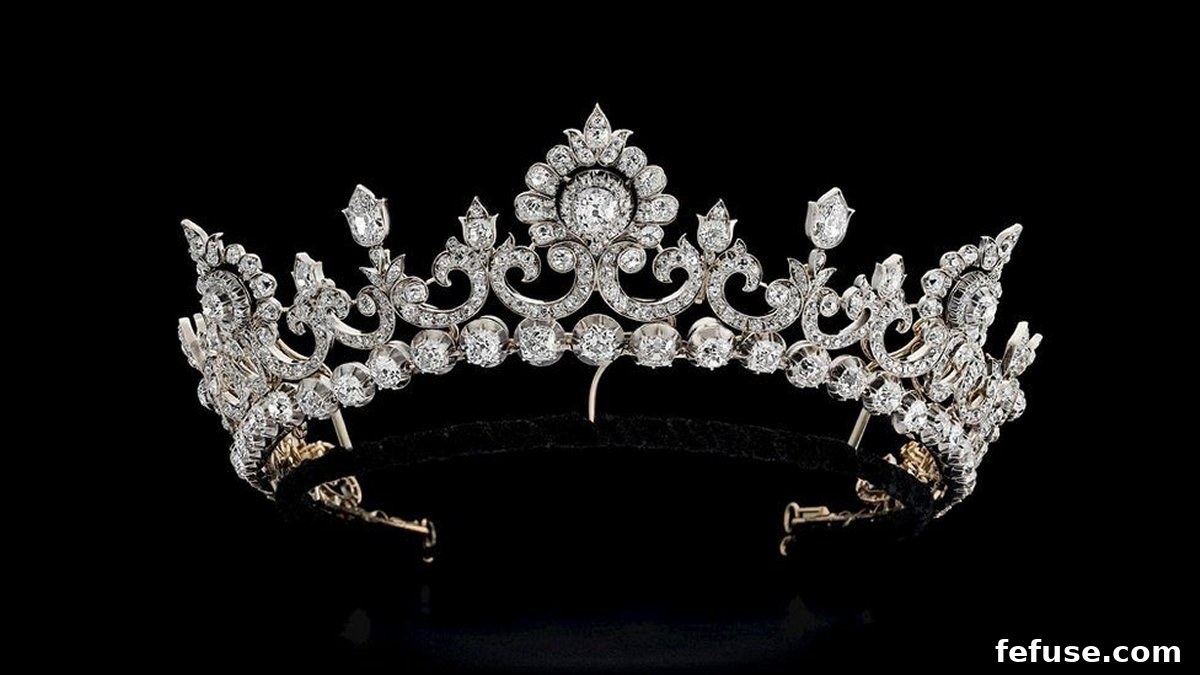
The Anglesey Tiara: A Rare Male Commission
Among the extraordinary collection, The Anglesey Tiara stands out as a truly unique and fascinating exhibit, representing a very rare instance of an aristocratic tiara originally commissioned for a man. This spectacular diamond creation was ordered in the 1890s by Henry Paget, the 5th Marquess of Anglesey, a figure renowned for his flamboyant personality and extravagant lifestyle. Henry Paget was known for his profound love of theatrical costumes and magnificent jewels, often incorporating dazzling accessories into his elaborate ensembles. Sadly, despite his ostentatious nature, there appear to be no existing photographs of him actually wearing this remarkable tiara, adding a layer of mystery to its early history. After his passing, the jewel transitioned into more conventional usage, being worn by the wives of his cousins and heirs, the 6th and 7th Marquesses of Anglesey, at the historic coronations of 1937 and 1953 respectively. This pivot in its usage highlights the evolving roles and interpretations of ceremonial jewels within aristocratic families. The Anglesey Tiara is particularly notable as it was one of the esteemed jewels displayed in this exhibition that was also available for purchase, offering a unique opportunity for a discerning collector to own a piece of such rare historical significance. The collection of tiaras offered for sale included several other antique examples, such as a beautiful tiara that belonged to the late Countess Mountbatten of Burma, as well as the highly anticipated Kent Pearl Fringe Tiara. For those interested in the full list of these extraordinary pieces on the market, the Forbes article on the exhibition provides a comprehensive overview.
The “Power & Image: Royal & Aristocratic Tiaras” exhibition at Sotheby’s was more than just a display of exquisite jewelry; it was a profound celebration of history, artistry, and the enduring allure of royal and aristocratic heritage. Each tiara, with its unique design and storied past, served as a tangible link to pivotal moments in history and the lives of influential figures. From Queen Victoria’s personal emeralds to Princess Diana’s iconic wedding tiara, and from Napoleonic treasures to unique male commissions, the exhibition offered a rare and intimate encounter with these magnificent symbols of power and prestige. It highlighted the meticulous craftsmanship of renowned jewelers like Fabergé and Lacloche Frères, and the deep personal connections that families hold with these precious heirlooms. For those fortunate enough to witness it, the exhibition was an unforgettable journey, underscoring the timeless beauty and historical importance of these dazzling masterpieces. As these tiaras continue their journeys, whether returning to private collections or finding new homes, their stories will undoubtedly continue to captivate and inspire future generations.