
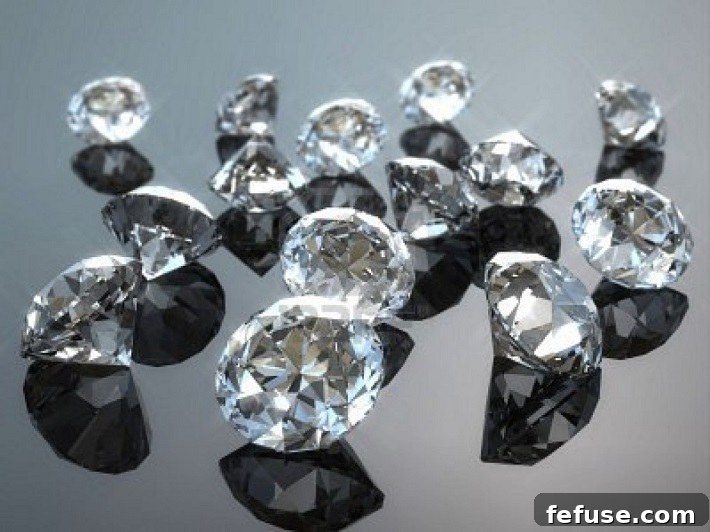
The ASSURE Program: Pioneering Universal Standards for Diamond Verification in the Modern Jewelry Industry
In an era where technological advancements increasingly influence the global diamond market, the ability to accurately distinguish between natural diamonds, synthetic diamonds, and diamond simulants has become paramount. Responding to this critical need, a landmark industry initiative known as the ASSURE Program, a collaborative effort spearheaded by the Diamond Producers Association (DPA) and Signet Jewelers, has taken significant strides. Its primary mission is to establish and implement a universal standard for consistently testing the performance and reliability of diamond verification instruments. The program recently unveiled the comprehensive results of its rigorous testing, made publicly available online through the ASSURE Directory, marking a pivotal moment for transparency and trust within the jewelry sector.
Why Diamond Verification Instruments Are Crucial for Industry Integrity
A diamond verification instrument is more than just a piece of equipment; it is a vital safeguard. These sophisticated devices are specifically engineered to identify and/or separate natural diamonds from their laboratory-grown counterparts (synthetic stones) and various diamond simulants. The emergence and increasing availability of synthetic diamonds in the market, while offering consumers new choices, also present unique challenges for jewelers, retailers, and even the end-consumer. Undisclosed synthetics can erode consumer trust and disrupt the natural diamond value chain. Therefore, ensuring that every diamond presented is accurately identified is not just a best practice; it is fundamental to maintaining the integrity and reputation of the entire diamond industry.
The ASSURE Program was born out of a collective recognition of this need. Its goal is not to promote one instrument over another, but rather to provide objective, third-party verified data that enables industry professionals to make informed decisions about the tools they use. By fostering a common standard for testing, the program ensures that instruments are evaluated against a consistent benchmark, giving users confidence in their performance and capabilities. This systematic approach helps to protect both the consumer, who deserves full disclosure, and the industry, which relies on transparency and ethical practices.
The Genesis of the ASSURE Test Process: Setting the Standard
The initial phase of the ASSURE Program saw active collaboration with 11 leading manufacturers of diamond verification technology. This diverse group included highly reputable entities such as the Gemological Institute of America (GIA), HRD Antwerp, and De Beers’ International Institute of Diamond Grading & Research (IIDGR). From their extensive portfolios, 18 of the most widely used and globally recognized diamond verification instruments were selected for testing. This broad selection ensured that the program’s evaluation encompassed a representative sample of the technologies currently available to the worldwide diamond industry, from established, high-volume devices to more specialized tools.
The meticulous selection of instruments and manufacturers underscored the program’s commitment to creating a truly comprehensive and relevant assessment. By engaging with key players from the outset, the ASSURE Program established a foundation of credibility and expertise, ensuring that the standards developed and the tests conducted were reflective of real-world industry demands and technological landscapes. This initial collaboration was crucial in laying the groundwork for a robust and respected universal testing protocol that could genuinely elevate the standards of diamond verification globally.
Rigorous and Independent: A Deep Dive into the ASSURE Test Protocol
To guarantee impartiality and scientific rigor, the ASSURE Test Process was entrusted to UL, a globally recognized independent testing specialist. UL’s expertise in product safety and performance validation provided an invaluable layer of objectivity to the program. The core of this rigorous testing involved a meticulously curated sample designed to challenge the instruments to their maximum capacity. This sample consisted of 1,000 natural diamonds, 200 synthetic diamonds, and, where applicable to the instrument’s stated capabilities, 200 diamond simulants.
What makes the ASSURE sample particularly unique and challenging is its significantly higher proportion of synthetic diamonds compared to what one might typically find in a contaminated parcel. This elevated ratio was deliberately chosen to push each instrument to its limits, simulating extreme conditions rather than average market scenarios. Furthermore, the sample included very challenging custom-made synthetic diamonds, which are not currently commercially available for gem applications. These cutting-edge synthetics, specifically engineered to be difficult to detect, were included to assess the “future-proof” nature of the instruments, testing their ability to identify even the most advanced and complex laboratory-grown stones that may eventually enter the market. Consequently, the results published in the ASSURE Directory must be interpreted within the context of this highly challenging and representative sample, understanding that they reflect performance under stringent conditions.
Deconstructing the ASSURE Core Sample: A Comprehensive Mix
The integrity and effectiveness of the ASSURE Program’s evaluations rest heavily on the composition of its core sample. This meticulously assembled collection of stones is designed to represent the full spectrum of challenges faced by diamond verification instruments. The ASSURE Core Sample contains:
- Natural Diamonds with a Controlled Type I/II Distribution: Natural diamonds are broadly categorized into Type I and Type II based on the presence or absence of nitrogen impurities. Type I diamonds, containing nitrogen, are the most common (about 98%), while Type II diamonds, with little to no nitrogen, are rarer and often exhibit unique properties (e.g., Type IIa diamonds are highly valued for their exceptional purity and often account for large, colorless stones). Including both types in a controlled distribution ensures that instruments are tested against the full range of natural diamond characteristics that can influence detection, preventing any bias towards detecting only one type.
- HPHT Synthetic Diamonds and CVD Synthetic Diamonds: The sample features both High-Pressure/High-Temperature (HPHT) and Chemical Vapor Deposition (CVD) synthetic diamonds. These are the two primary methods for laboratory-growing diamonds, each producing stones with distinct growth patterns and characteristics that can pose different identification challenges. Crucially, some of these synthetic diamonds have received specialized treatments during and after their growth process. These treatments, which can alter color, clarity, or even mimic natural inclusions, are designed to make synthetic diamonds more difficult to distinguish from natural ones, thereby providing a more rigorous test for the instruments.
- Diamond Simulants: Beyond synthetic diamonds, the market also features numerous materials that visually resemble diamonds but are chemically and physically different. The ASSURE core sample includes a variety of these simulants, such as cubic zirconia (CZ), foil-backed glass crystals, synthetic moissanite, and colorless synthetic corundum. These materials are chosen for their ability to deceive the untrained eye and sometimes even less sophisticated instruments. It’s important to note that only instruments explicitly claiming the capability to identify or differentiate diamond simulants are tested against these specific samples, ensuring a fair and relevant evaluation of their stated functionalities.
- Sourcing Strategy for the Sample: The natural diamonds and diamond simulants used in the ASSURE core sample are commercially sourced, reflecting what is readily available in the market. Most of the synthetic diamonds are also commercially sourced. However, as previously mentioned, a strategic portion of the synthetic diamonds are not yet available on the commercial market. These specialized, custom-made stones are currently both too difficult and prohibitively costly to produce for widespread commercial purposes. Their inclusion is a forward-thinking measure, designed to rigorously assess the extent to which the instruments tested are “future-proof,” capable of identifying even the most advanced and challenging synthetics that may emerge in the coming years.
All stones within the ASSURE core sample adhere to specific parameters for consistency and relevance. They are all larger than 2 mm in girdle diameter, falling within the popular D-J color range, are cut in the classic round brilliant style, and exhibit mixed clarity. These characteristics represent common stone types encountered in the jewelry trade, ensuring that the test results are highly applicable to everyday industry scenarios. The results initially published in the ASSURE Directory are all directly derived from the comprehensive testing conducted with this meticulously prepared ASSURE core sample.
Implications for the Industry and Consumers: Fostering Confidence and Transparency
The publication of the ASSURE Program’s test results in the ASSURE Directory marks a significant milestone for the entire diamond pipeline. For jewelers and retailers, it provides an invaluable resource for making informed purchasing decisions about diamond verification instruments. Instead of relying on manufacturer claims alone, they now have access to independent, standardized performance data, allowing them to select the most appropriate tools for their specific business needs and risk profiles. This empowers them to confidently assure their customers about the authenticity and nature of the diamonds they sell.
For consumers, the ASSURE Program translates directly into enhanced confidence. Knowing that the industry is proactively investing in rigorous testing and promoting transparency through universal standards helps to alleviate concerns about undisclosed synthetics. It reinforces the value proposition of natural diamonds while also providing clarity for those interested in purchasing lab-grown alternatives. This commitment to truth in disclosure is vital for maintaining consumer trust, which is the cornerstone of a healthy and sustainable diamond market.
The Future of Diamond Verification: A Commitment to Ongoing Excellence
The ASSURE Program is not a static initiative but an ongoing commitment to excellence in diamond verification. As technology evolves and new challenges emerge, the program is poised to adapt and continue providing the industry with up-to-date and reliable information. Its pioneering work in developing universal standards, conducting independent and rigorous testing, and openly publishing results sets a precedent for transparency and accountability. By continuously striving for higher standards in identifying natural diamonds, synthetic diamonds, and simulants, the ASSURE Program is playing a crucial role in safeguarding the integrity of the diamond industry and ensuring a trustworthy experience for consumers worldwide.