
Navigating the Shifting Tides: A Deep Dive into the 2023 Luxury Watch Auction Market
The global luxury watch auction market experienced a significant “severe downturn” in 2023, marking a notable shift from the record-breaking performance of the preceding year. Total sales for the major international auction houses plummeted by 13 percent compared to 2022, signaling a period of recalibration as both seasoned collectors and opportunistic speculators adjusted their spending habits amidst evolving economic landscapes.
According to the comprehensive data compiled by Switzerland-based Hammertrack, a leading authority monitoring the intricate dynamics of the watch auction market, the collective sales figure for powerhouse institutions such as Antiquorum, Bonhams, Christie’s, Phillips (in association with Bacs & Russo), Polyauction, and Sotheby’s amounted to CHF 610 million (approximately $691 million). This aggregated total clearly underscores a deceleration in a critical segment of the pre-owned luxury watch industry, a trend that Hammertrack notes had already begun to manifest in the final quarter of 2022.
The End of an Era: From Boom to Bust (or Balance)?
The year 2022 had been an unprecedented period of growth and exuberance for the watch auction market. Fueled by pandemic-era liquidity, booming asset prices, and a surge in interest for tangible luxury assets, prices for highly sought-after timepieces, particularly from iconic brands like Rolex, Patek Philippe, and Audemars Piguet, reached dizzying heights. Collectors, old and new, flocked to auctions, driving intense bidding wars and setting numerous records. However, as global economic conditions began to shift, marked by rising inflation, increasing interest rates, and geopolitical uncertainties, the fervor started to wane. The 2023 figures represent not just a dip, but a broader market correction, reflecting a more cautious approach from buyers.
The 13 percent decline, though substantial, should be viewed within the context of the extraordinary performance of 2022. It suggests a return to more sustainable growth patterns rather than a complete collapse. Nevertheless, for auction houses, the challenge became palpable. They grappled with a shrinking supply of exceptional pieces entering the market, as potential consignors either held back their most valuable assets in anticipation of better market conditions or opted for private sales channels. Concurrently, buyer sentiment shifted, with many collectors and investors seemingly diverting their attention and capital towards other, perceived more attractive, luxury auction markets, such as high-value jewelry or fine art.
Understanding the Market’s Nuances: Supply, Demand, and Discerning Tastes
The dynamics of the secondary watch market are intrinsically linked to the delicate balance of supply and demand. In a seller’s market, characterized by high demand and limited supply, prices naturally surge. The inverse holds true during a market slowdown. The “shrinking supply” mentioned by Hammertrack is a critical factor. Many elite collectors may have been hesitant to part with their prized possessions when prices were softening, hoping for a resurgence. Furthermore, the sheer volume of high-quality watches that changed hands during the 2021-2022 boom meant that fewer truly “fresh to market” pieces were available to stimulate excitement among bidders in 2023.
On the demand side, the profile of the buyer became more discerning. Speculators, who might have entered the market during the boom hoping for quick returns, likely retreated as the upward trajectory of prices became less certain. This left the field more to genuine horology enthusiasts and long-term investors who prioritize provenance, rarity, and intrinsic value over fleeting trends. The shift in buyer behavior is also influenced by broader economic confidence. When disposable income is squeezed by inflation or investment portfolios take a hit, luxury purchases, while still desired, often become subject to more rigorous scrutiny and a longer decision-making process.
Moreover, the allure of other luxury categories cannot be understated. High-end jewelry, rare gemstones, and iconic art pieces often serve as alternative investment vehicles for ultra-high-net-worth individuals. If these markets offered perceived greater stability or higher potential returns in 2023, it stands to reason that a portion of capital previously earmarked for watch auctions might have been redirected.
The Unyielding Strength of “Millionaire Lots”
Despite the overarching downturn, one segment of the market demonstrated remarkable resilience: the “millionaire lots.” These are timepieces that command prices exceeding CHF 1 million (approximately $1.13 million). While the *number* of such ultra-high-value lots declined considerably – dropping from 98 in 2022 to 58 in 2023 – their total realized value actually increased slightly. The sum garnered from these elite watches reached an impressive CHF 122.6 million (approximately $138.9 million). This particular statistic offers crucial insights into the enduring strength of the upper echelon of the luxury watch market.
The continued robustness of “millionaire lots” highlights a fundamental principle of the luxury goods market: rarity and exceptional quality will almost always hold their value, and often appreciate, regardless of broader market fluctuations. These are not merely watches; they are often historically significant artifacts, masterpieces of haute horlogerie, or extremely limited-edition pieces from revered brands. Their appeal lies in their investment potential, their status as generational assets, and their undeniable allure to the most discerning collectors who operate with a different set of financial parameters than the broader market.
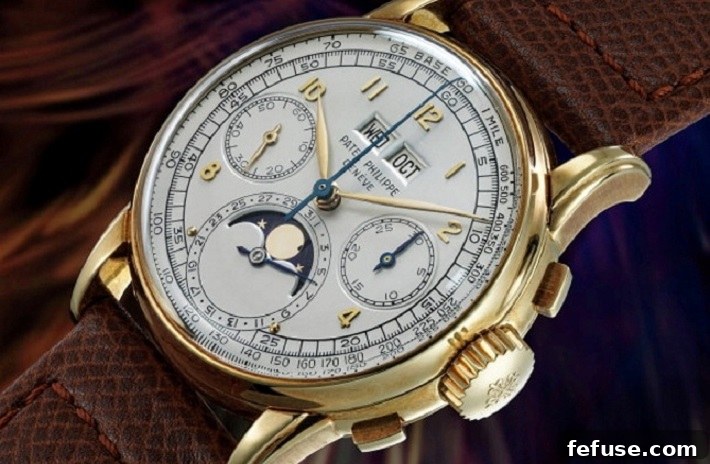
The fact that fewer lots generated a higher cumulative value suggests that competition for these truly extraordinary pieces remained fierce. Bidders for watches like a unique Patek Philippe perpetual calendar chronograph or an exceptionally rare early Rolex Daytona “Paul Newman” dial continued to show strong conviction, demonstrating that for the very best, demand remains unwavering. This segment often acts as a barometer for the underlying health of the collector community, indicating that while general market enthusiasm might ebb and flow, the core desire for horological greatness persists at the top.
Impact on the Broader Pre-Owned Watch Market
The trends observed in the auction segment often serve as leading indicators for the wider secondary watch market, encompassing online retailers, specialized dealers, and private sales platforms. A slowdown in auctions suggests a broader rebalancing. For dealers, this could mean increased inventory holding times or a need to adjust pricing strategies. For consumers looking to enter the market, a less frenetic environment might present opportunities to acquire desirable pieces at more reasonable valuations than during the peak boom.
This market adjustment encourages a pivot from “hype-driven” purchasing to “heritage-driven” collecting. Instead of chasing models simply because they are trending or perceived as hot investments, buyers are likely to revert to valuing craftsmanship, historical significance, brand legacy, and long-term value retention. This shift fosters a healthier, more sustainable collecting environment, rewarding genuine passion and informed decision-making over speculative gambles.
Looking Ahead: The Future of Luxury Watch Auctions
As the industry moves forward into 2024 and beyond, several factors will undoubtedly shape the trajectory of the luxury watch auction market. Global economic stability, interest rate policies, and geopolitical events will continue to influence consumer confidence and spending power. Innovation within the watchmaking industry, the emergence of new collector demographics (such as younger, digitally native buyers), and the evolving strategies of auction houses in sourcing and marketing exceptional timepieces will also play pivotal roles.
Auction houses will likely redouble their efforts to secure rare and historically significant consignments, leveraging their expertise and global reach to attract both sellers and buyers. Furthermore, increased transparency, detailed provenance, and educational content for collectors will become even more crucial in fostering trust and stimulating interest in a more discerning market. The enduring appeal of horology, with its blend of intricate mechanics, artistic design, and rich history, ensures that the market will continue to evolve, adapt, and ultimately thrive, even if the pace of growth fluctuates.
Conclusion: A Maturing Market Adapts
The 2023 performance of the luxury watch auction market, as detailed by Hammertrack, signals a significant cooling off from the feverish pace of 2022. The 13 percent decline in total sales to CHF 610 million underscores a period of market recalibration, influenced by broader economic headwinds, a tightening supply of prime assets, and a shift in buyer sentiment towards other luxury categories. However, the remarkable resilience of the “millionaire lots,” which saw increased total value despite fewer items, highlights the robust and unwavering demand for ultra-rare and investment-grade timepieces at the very top of the market.
This period of adjustment should not be viewed as a negative indicator for the long-term health of the watch collecting world. Instead, it signifies a maturing market, one that is shedding some of its speculative froth and returning to its core values of craftsmanship, heritage, and genuine connoisseurship. For serious collectors, this shift may present unique opportunities, while for auction houses, it reinforces the imperative to innovate and focus on quality and provenance. The world of luxury watch auctions remains a vibrant and essential pillar of the global horological landscape, perpetually adapting to the discerning tastes and investment strategies of its dedicated clientele.