
Discovering Dazzling Indian Royal Jewels in Qatar: A Treasure Trove at the National Museum
The global community we cherish here at The Court Jeweller is truly remarkable, bringing together enthusiasts from every corner of the world. This vibrant, geographically diverse network often leads to shared discoveries of local treasures, enriching our collective appreciation for historical artistry and royal heritage. Today, we are immensely privileged to embark on a captivating journey guided by one of our esteemed readers, Joey, who resides in Qatar. He offers us an exclusive glimpse into a breathtaking collection of Indian royal jewels, currently on display in Doha, showcasing centuries of unparalleled craftsmanship and regal opulence.
This virtual tour highlights not only the exquisite beauty and intrinsic value of these historic pieces but also the fascinating story behind their significant presence in Qatar. From intricate emerald carvings that tell tales of ancient courts to dazzling diamonds reflecting boundless wealth, and a unique fusion of Eastern and Western artistic traditions, these jewels represent a rich tapestry of history, culture, and profound personal passion. Join us as we explore the grandeur of Indian princely adornments, now proudly exhibited in the heart of the Arabian Peninsula, offering a rare window into the world of royal splendor and master craftsmanship.
A Glimpse into Royal Splendor: Indian Jewels in Doha’s Museums
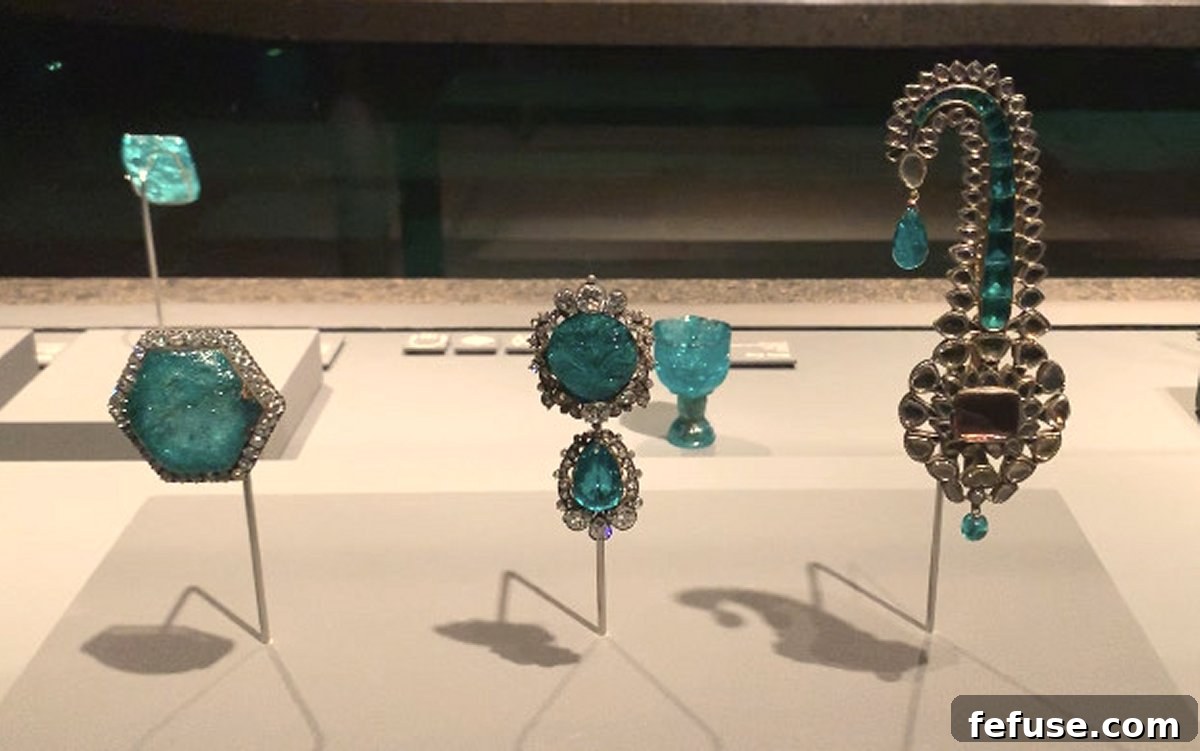
Joey, our gracious contributor from Qatar, recently made an enriching visit to the prestigious National Museum of Qatar in Doha. During his visit, he meticulously captured several stunning photographs of the magnificent jewels on display, allowing us to share this extraordinary exhibition with our global readership. As you will immediately observe, a significant portion of these exquisite pieces originate from India, believed to have once graced the maharajahs, nawabs, and other influential princes of the subcontinent. These jewels are not merely adornments; they are historical artifacts, each telling a story of power, tradition, and artistic prowess.
Among the captivating exhibits, a striking diamond and emerald sarpech immediately draws the eye, prominently positioned on the right side of the photograph above. A sarpech is a traditional turban ornament, historically worn by Indian royalty and nobility, symbolizing immense power, prestige, and regal authority. The intricate design and the sheer brilliance of the diamonds and emeralds in this piece underscore the unparalleled skill of Indian jewelers.
While these treasures are currently housed at the National Museum of Qatar, Joey informs us that their usual home is the esteemed Museum of Islamic Art (MIA) in Doha. The temporary relocation is due to ongoing renovations at the latter, offering a unique opportunity for visitors to experience these masterpieces within the contemporary architectural marvel of the National Museum. This strategic display underscores Qatar’s commitment to presenting world-class cultural artifacts to a broader audience, reinforcing Doha’s growing reputation as a vibrant hub for art and culture in the Middle East.
The Visionary Behind the Collection: Sheikh Hamad Al Thani and His Passion for Indian Jewels
The presence of such a significant and comprehensive collection of Indian royal jewelry in Qatar naturally sparks curiosity regarding its origins and curatorial vision. The answer lies largely within the discerning eye and profound passion of the Al Thani royal family, the ruling dynasty of Qatar. A key figure in this remarkable narrative is Sheikh Hamad bin Abdullah Al Thani, a first cousin of the current Emir of Qatar. Sheikh Hamad is renowned globally as an avid art collector with an exceptionally profound and particular interest in acquiring extraordinary Indian jewels and other objects of art from the subcontinent.
His passion for these historical artifacts solidified around 2009, a pivotal year when he attended a seminal exhibition of Indian jewels, famously titled “Maharaja: The Splendour of India’s Royal Courts,” at the Victoria & Albert Museum in London. This immersive experience ignited a fervent drive in Sheikh Hamad to build his own unparalleled collection, leading to the meticulous acquisition of an astounding array of pieces that span centuries of Indian jewelry-making. His collection quickly grew to be one of the most important private holdings of Indian and Mughal jewels in the world.
So extensive and valuable did his holdings become that in 2019, Sheikh Hamad made the strategic decision to sell numerous items from his celebrated Al Thani Collection at a high-profile Christie’s auction in New York. This landmark event garnered nearly $110 million, an impressive sum that further underscored the global appeal and intrinsic value of these historical pieces. The proceeds from this auction were reportedly allocated to fund the construction of dedicated galleries in Paris, designed specifically to house and showcase a substantial portion of his remaining collection to the public. This act not only highlights the immense cultural and monetary value of these Indian royal jewels but also Sheikh Hamad’s unwavering dedication to their preservation, academic study, and public appreciation, ensuring their legacy endures for future generations.
The Al Thani Collection, therefore, is more than just a private accumulation of treasures; it represents a significant contribution to global cultural heritage, facilitating cross-cultural understanding and artistic appreciation. Its prominent display in Qatar, even temporarily, underscores Doha’s burgeoning role as a major international cultural hub, committed to fostering dialogue between different civilizations through the universal language of art and history.
A Kaleidoscope of Craftsmanship: Intricately Carved Emeralds and Dazzling Designs
The jewels currently gracing the halls of the National Museum of Qatar are a powerful testament to the extraordinary skill, artistic vision, and innovative techniques employed by Indian artisans over centuries. A defining characteristic and hallmark of royal jewelry from India, particularly during the glorious Mughal era and subsequent periods, is the exquisite gemstone carving. This technique, often applied to emeralds, sapphires, and rubies, transforms raw stones into miniature works of art.
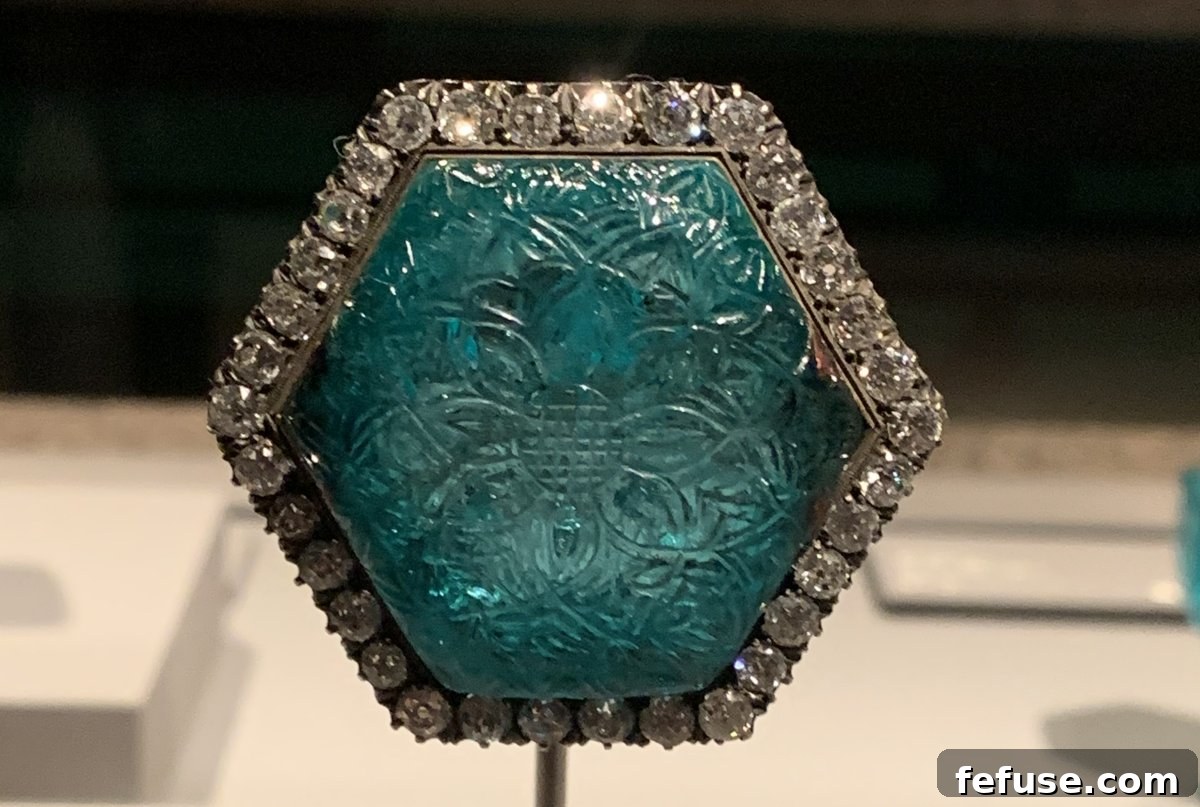
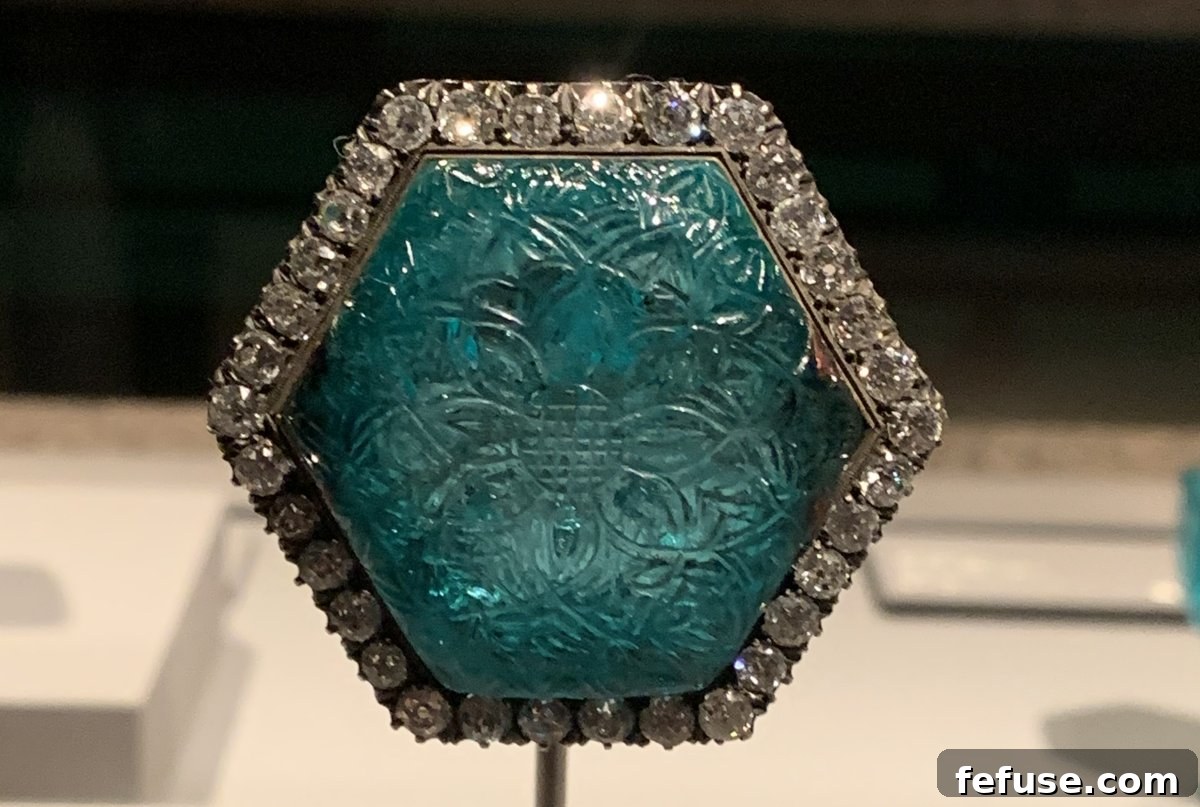
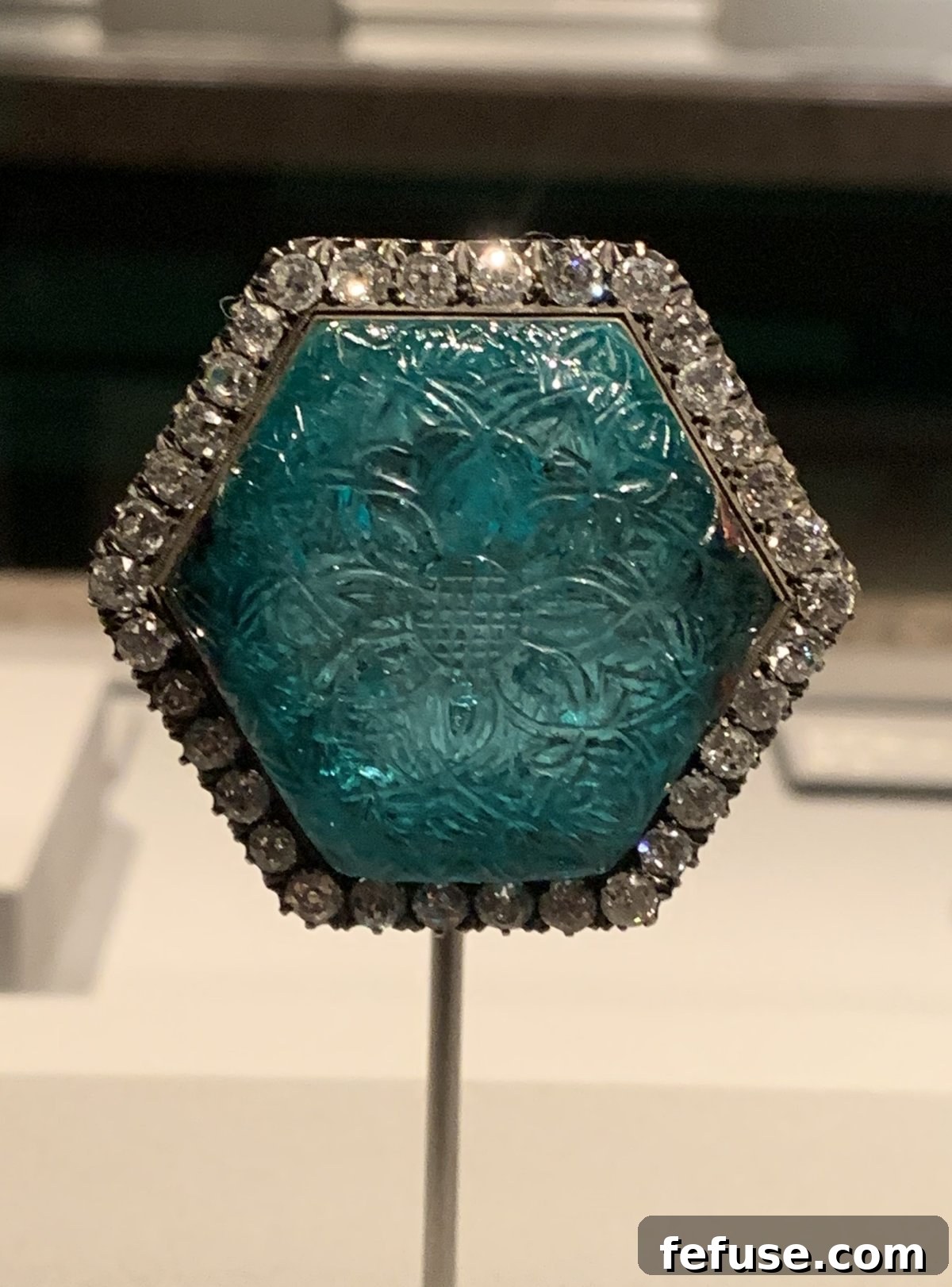
One striking example captured by Joey is a magnificent hexagonal piece featuring an intricately carved emerald at its heart, encircled by a brilliant border of glittering diamonds. The detailed artistry in the emerald’s carving speaks volumes about the mastery of Indian lapidaries, who possessed the ability to transform rough gems into delicate, three-dimensional sculptures. These carvings often depicted floral motifs, calligraphy, or even miniature scenes, reflecting the natural beauty and rich cultural symbolism prevalent in Indian art.
This particular piece evokes a striking resemblance to a similar brooch found within the British royal collection. That historic piece was a significant gift presented to Queen Mary by several Indian royal ladies during the opulent Delhi Durbar of 1911. The Delhi Durbar, a grand imperial assembly, was a pivotal moment showcasing the deep political connections and vibrant cultural exchange of royal treasures between India and the British Empire. Such comparisons not only highlight the enduring influence and universal appeal of Indian jewelry design but also the intricate web of historical connections that link royal courts worldwide.
Further Emerald Masterpieces
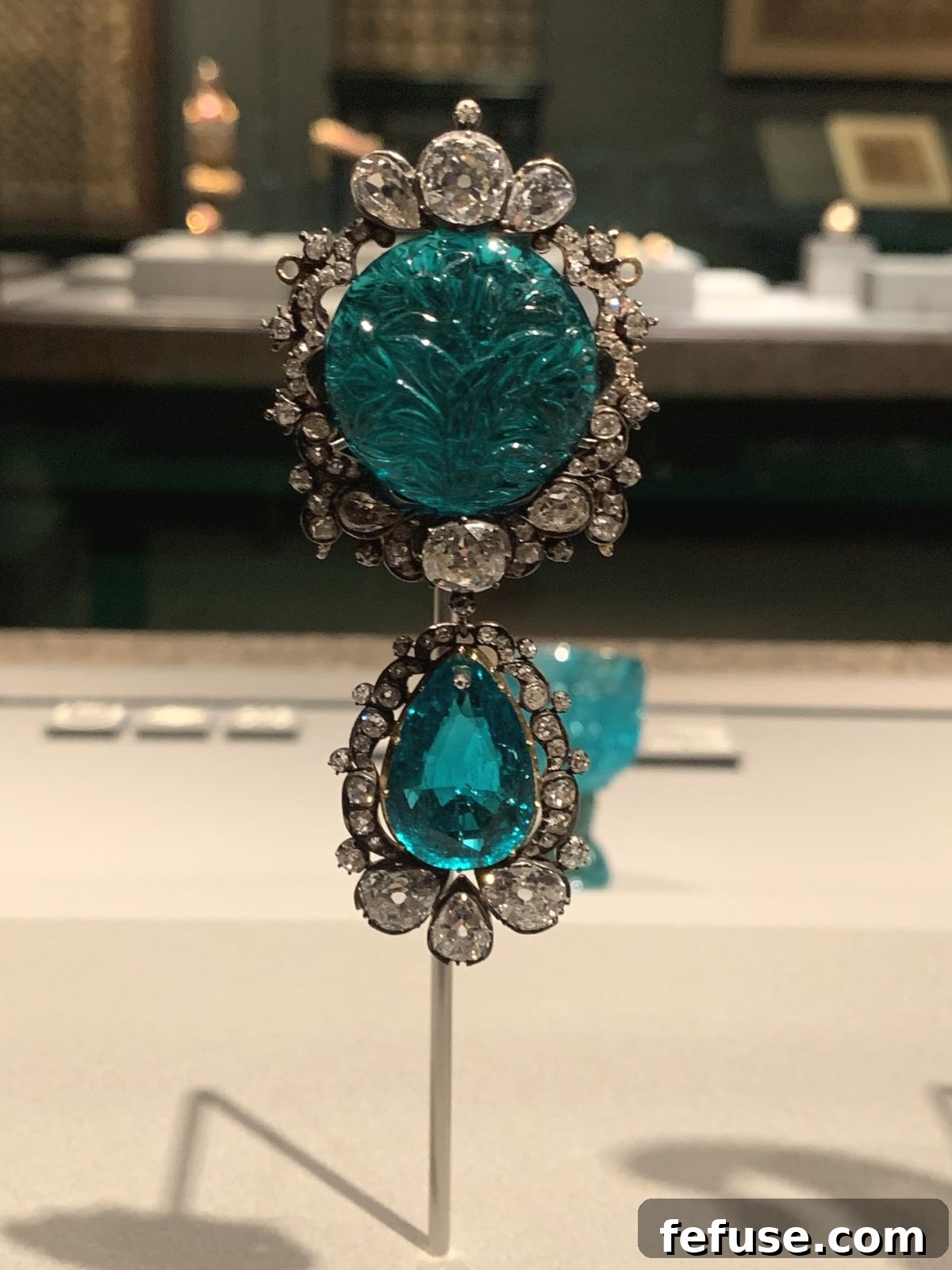
The exhibition continues to impress with another breathtaking exhibit: a brooch featuring yet another beautifully carved emerald, exquisitely framed by a dazzling halo of glittering diamonds. Adding to its allure and visual dynamism, a faceted emerald and diamond pendant elegantly suspends from the main piece, creating a captivating play of light and color with every movement. The sophisticated combination of both carved and faceted emeralds within a single design underscores the versatility and sophisticated techniques employed by Indian jewelers, showcasing their ability to create pieces that are both historically rich and aesthetically innovative.
A Glimpse into the Past: Seventeenth-Century Royal Necklace
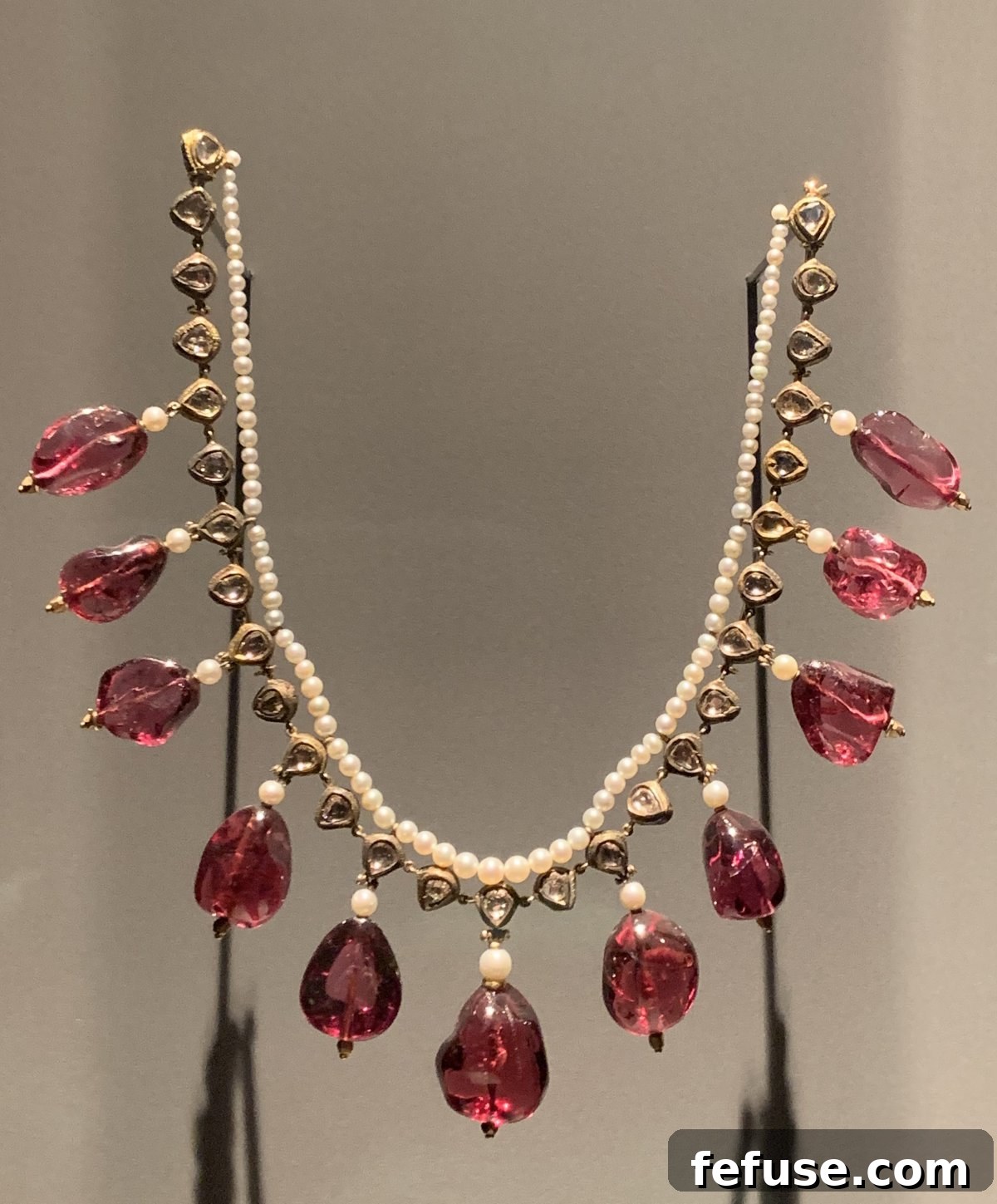
Among the older masterpieces within this remarkable collection, a stunning necklace dating back to the seventeenth century stands out prominently. This piece offers a tangible and precious link to India’s rich jewelry-making heritage from centuries past, showcasing the enduring appeal of traditional designs and materials. Its intricate design seamlessly incorporates lustrous pearls, brilliant diamonds, and vibrant spinels, creating a harmonious blend of textures, hues, and historical significance.
The use of spinels, often historically mistaken for rubies due to their similar rich red color, adds an intriguing layer to this necklace’s story, highlighting the precious gemstones favored during that era and the sophisticated aesthetic sensibilities of its original royal patrons. This antique necklace is a powerful reminder of the grandeur and artistic sophistication that characterized Indian royalty during a period of immense cultural flourishing.
Dazzling Diamond and Emerald Drop Earrings
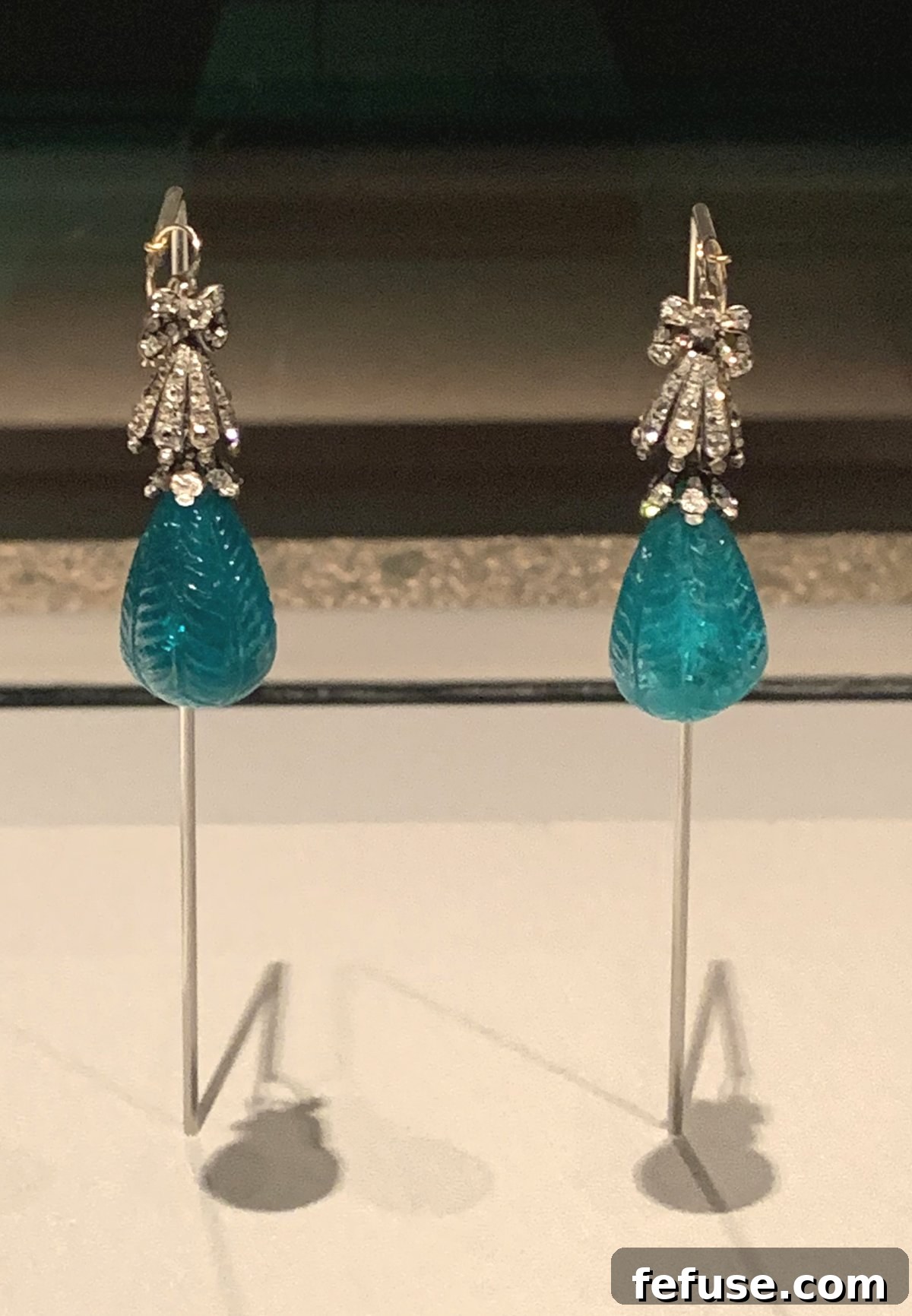
The exhibition also proudly showcases an exquisite pair of magnificent diamond and emerald drop earrings. These captivating adornments feature striking cabochon emeralds, once again demonstrating the signature intricate carvings that are a distinguished hallmark of Indian royal jewelry. Unlike faceted gems that emphasize sparkle, cabochon cuts highlight the color and clarity of the stone, providing a smooth, domed surface that serves as a perfect canvas for the delicate, detailed artistry of the carvings.
The rich, deep green of the emeralds truly shines in these earrings, while the delicate patterns etched into their surfaces add an unparalleled layer of artistic depth. The brilliant sparkle of the surrounding diamonds beautifully complements the profound hue of the emeralds, creating pieces of timeless elegance and undeniable grandeur that would have adorned a royal ear with unmatched sophistication.
A Fusion of Masters: The Fabergé Box with an Ancient Indian Emerald
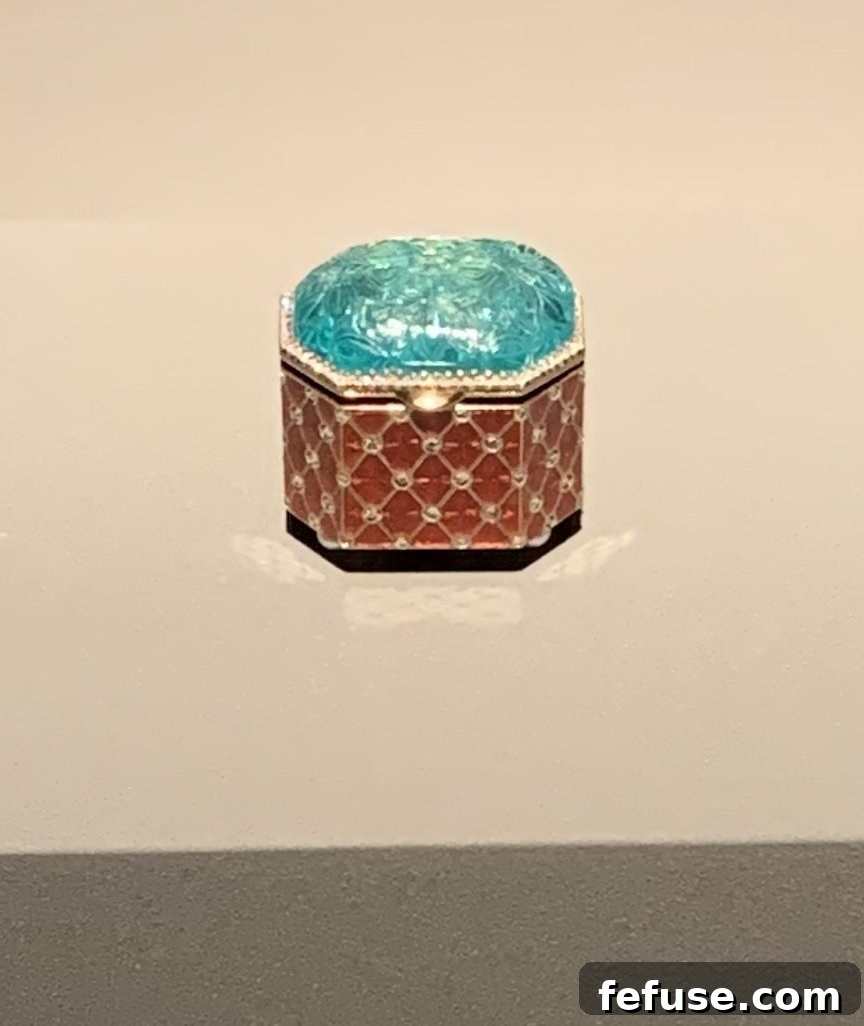
Perhaps the most unexpected and truly enchanting piece shared by Joey from his memorable visit is a small, jeweled objet d’art that beautifully embodies a rare and magnificent convergence of East and West. This exquisite piece seamlessly blends the masterful carving tradition of Indian artisans, honed over millennia, with the peerless craftsmanship of one of the most celebrated historical jewelry firms in the world, Fabergé.
The base of this remarkable creation is a resplendent gold, diamond, pearl, and enamel box, meticulously crafted in Fabergé’s renowned Russian workshops during the nineteenth century. This era marked the zenith of Fabergé’s artistry, characterized by innovative design and technical perfection. The box proudly bears the signature of Mikhail Perkhin, one of their most famous and prolific workmasters, attesting to its exceptional pedigree and the highest standards of European jewelry design. However, what truly elevates this piece and makes it utterly unique is its lid: a much older, breathtakingly carved emerald from India, dating back to the seventeenth century. This ancient Indian gemstone, a testament to centuries of subcontinental artistry, is masterfully integrated into the opulent Fabergé design, creating a captivating dialogue between two distinct artistic traditions spanning different eras and continents.
This “East meets West” masterpiece is more than just an artifact; it is a powerful symbol of artistic cross-pollination and cultural exchange. It vividly showcases how different cultures, separated by vast geography and centuries of time, can contribute their unique aesthetics and technical prowess to form a single, extraordinary object of beauty. The meticulous detail and symbolic depth of the Indian emerald carving find a perfect complement in the intricate enamel work, precise gem-setting, and sophisticated design of Fabergé. The result is a unique historical artifact that transcends its individual components, offering a profound commentary on the global reach of beauty, luxury, and craftsmanship across the ages. It is truly a fabulous merging of jewelry talents, an unexpected yet harmonious collaboration that continues to fascinate and inspire.