
Finance Minister Clarifies Equalisation Levy on Rough Diamonds, Bringing Relief to India’s Gems & Jewellery Sector
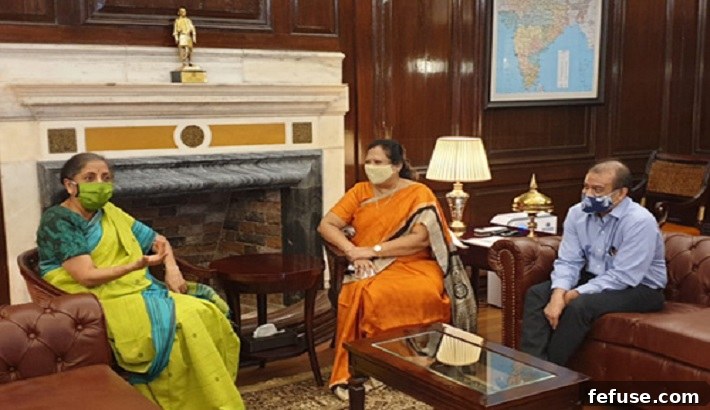
In a significant development for India’s thriving gems and jewellery industry, the Finance Minister, Smt. Nirmala Sitharaman, has provided crucial clarification regarding the applicability of the 2% Equalisation Levy (EL) on the e-trade of rough diamonds. This clarification, issued during a high-level meeting with a delegation from the Gem & Jewellery Export Promotion Council (GJEPC) led by Chairman Colin Shah on August 26th in New Delhi, brings much-needed relief and certainty to a sector grappling with economic pressures. The Minister explicitly stated that the procurement of rough diamonds through digital platforms, which constitutes a vital business-to-business (B2B) transaction, does not fall under the purview of the Equalisation Levy and assured the industry of an official clarification to be issued shortly.
Understanding the Equalisation Levy and Its Expanding Scope
The Equalisation Levy, first introduced and subsequently amended through the Finance Act 2020, came into effect on April 1, 2020. This 2% levy is designed to tax the digital economy, specifically targeting consideration received or receivable by e-commerce operators from a range of online transactions. These include the online sale of goods owned by the e-commerce operator, the online provision of services by the operator, or the online facilitation of goods or services (or both) by an e-commerce operator. The legislative intent behind the EL was primarily to level the playing field between traditional businesses and their digital counterparts, ensuring that foreign e-commerce entities deriving revenue from Indian consumers contribute their fair share of taxes. It was conceived as a mechanism to tax non-resident e-commerce operators on revenue generated from transactions with Indian residents.
Initially, the levy focused on B2C (business-to-consumer) transactions where digital platforms connected foreign sellers directly with Indian end-consumers. However, the broad wording and subsequent interpretation of its expanded scope raised concerns within various industries, including the diamond sector, about its potential application to B2B transactions conducted via digital means. This ambiguity led to widespread apprehension that even the procurement of essential raw materials, like rough diamonds, through global e-auction platforms might inadvertently attract this additional tax burden.
The Diamond Industry’s Apprehensions and GJEPC’s Advocacy
The Indian diamond industry, a global leader in cutting and polishing, relies heavily on the efficient and cost-effective import of rough diamonds. With the increasing digitalization of trade, a significant portion of these rough diamond procurements from global miners and traders now takes place through sophisticated e-auction processes and digital platforms. The expansion of the Equalisation Levy’s scope, without explicit exclusions for B2B transactions, sparked serious concerns among industry stakeholders.
Mr. Colin Shah, Chairman of GJEPC, articulated these concerns during the meeting, explaining the potential ramifications. “Due to the application of 2% EL effective from this fiscal year, it was perceived that it would now apply on all overseas e-commerce transactions completed with Indian tax residents or those who purchase using an Indian IP address,” Mr. Shah stated. “This meant that the procurement of rough diamonds from global miners and traders, through the e-auction process, would attract an additional 2% due to the application of EL.” While the levy is structured to be borne by the foreign entity, global miners and traders were highly likely to revise their pricing structures to account for this additional cost, effectively passing the burden onto Indian buyers. Leading international diamond miners had already approached GJEPC for clarification, highlighting the immediate real-world impact of this uncertainty.
This potential additional tax burden came at a particularly challenging time for the Indian gems and jewellery exports industry, which has been severely impacted by the COVID-19 pandemic. As businesses rapidly shifted to online platforms for continuity during lockdowns and travel restrictions, the prospect of an extra 2% levy on essential raw materials threatened to erode profit margins, stifle recovery efforts, and ultimately diminish India’s global competitive edge in diamond manufacturing and export. The industry urged the Finance Minister to issue appropriate amendments or clarifications to ensure the diamond sector remained unburdened by the EL, especially for procurements through digital platforms used for core business operations.
Finance Minister’s Assurances and Legislative Intent
Responding to the GJEPC’s detailed representation, Smt. Nirmala Sitharaman offered a reassuring perspective. She unequivocally clarified that the legislative intent behind the introduction of the Equalisation Levy was solely to tax the digital economy when it utilized e-commerce means to reach end-consumers. Crucially, she distinguished this from B2B transactions, such as the procurement of rough diamonds by Indian businesses from international suppliers through digital platforms for manufacturing and subsequent export. Such transactions, being integral to the supply chain for business purposes, were never intended to be subject to the levy.
The Finance Minister assured the GJEPC delegation that she would positively look into the matter and engage in discussions with concerned officials to address the provisions and their interpretation. This commitment to clarify the scope of the EL marks a significant step towards removing the ambiguity that had cast a shadow over the diamond trade. The confirmation that a formal clarification will be issued soon provides the industry with the confidence and stability it needs to plan its operations without the looming threat of an unexpected tax imposition on its raw material imports.
The Broader Impact: Securing India’s Global Leadership in Gems and Jewellery
India holds an undisputed leadership position in the global gems and jewellery exports market, especially in diamond processing. As Mr. Sabysachi Ray, Executive Director, GJEPC, highlighted, “Over 95% of diamonds imported in India are for manufacturing purposes and are subsequently exported and sold in international markets.” This underscores the highly export-oriented nature of the industry and its critical contribution to India’s economy and foreign exchange earnings. Any measure that increases the cost of raw materials directly impacts the industry’s competitiveness on the world stage.
The potential application of the 2% EL on rough diamonds would have made the primary raw material significantly more expensive for Indian diamond exporters. This would grant an unfair advantage to competing nations, potentially diverting global orders away from India and undermining years of established leadership. With the global demand for jewellery expected to rebound, especially around major international festivals like Christmas, the gifting season, and New Year, a clear and supportive tax regime is paramount for Indian manufacturers to capitalize on this recovery. The Finance Minister’s clarification ensures that India’s “Make in India” initiative and its status as a premier manufacturing hub are not inadvertently hampered by tax policies.
A Win-Win Resolution and Future Outlook
The proactive engagement between the GJEPC and the Ministry of Finance exemplifies a collaborative approach to policy refinement. Mr. Colin Shah expressed optimism, stating, “The Hon’ble Finance Minister has taken note of our concerns with respect to the Equalisation Levy and has assured of taking appropriate measures to make it a win-win situation for both the government of India and the gems and jewellery exports Industry. We are hopeful that the Hon’ble Minister will look into this matter and address our issues.” This sentiment reflects the industry’s relief and confidence in the government’s understanding of their operational realities.
The forthcoming official clarification will solidify the position that B2B transactions, particularly those involving the procurement of rough diamonds through digital platforms for legitimate business purposes, are exempt from the Equalisation Levy. This clear policy stance is crucial for fostering an enabling business environment, promoting transparency, and ensuring predictability in tax regulations. It will allow Indian diamond manufacturers and exporters to continue their operations efficiently, competitively, and without the burden of unwarranted additional costs, thereby sustaining India’s preeminence in the global gems and jewellery trade and supporting its post-pandemic economic recovery.
News Source: gjepc